
7 Signs Your Shower Door Sweep Needs Replacement
A shower door can look perfectly fine while its bottom sweep slowly stops doing its job. Once that flexible seal hardens, shifts, or develops gaps, water can reach the bathroom floor, baseboards, and nearby walls.
For homeowners in Fort Myers and throughout Southwest Florida, humidity can keep those damp areas wet longer. Shower door sweep replacement is often a small repair, but recognizing the warning signs early can help prevent mildew and water damage.
What a Shower Door Sweep Does
A shower door sweep is the flexible vinyl or plastic strip attached to the bottom edge of a glass door. When the door closes, the sweep creates a contact point against the curb or threshold. That contact redirects water back into the shower instead of allowing it to run outside.
Some doors use a simple bottom sweep. Others use a sweep with a drip rail, a side seal, or a channel that fits over the glass. Frameless and framed shower doors also use different profiles, so a replacement that looks similar may not fit correctly.
Southwest Florida bathrooms face regular moisture, warm temperatures, and mineral buildup from water. Those conditions can shorten the life of a vinyl seal. A sweep may last for years, but it can wear sooner when it receives harsh cleaners, frequent use, or constant exposure to standing water.
A failing sweep doesn't always cause a dramatic leak at first. You might notice a few drops outside the shower, a damp corner, or mildew that keeps returning after cleaning. Those small clues deserve attention.
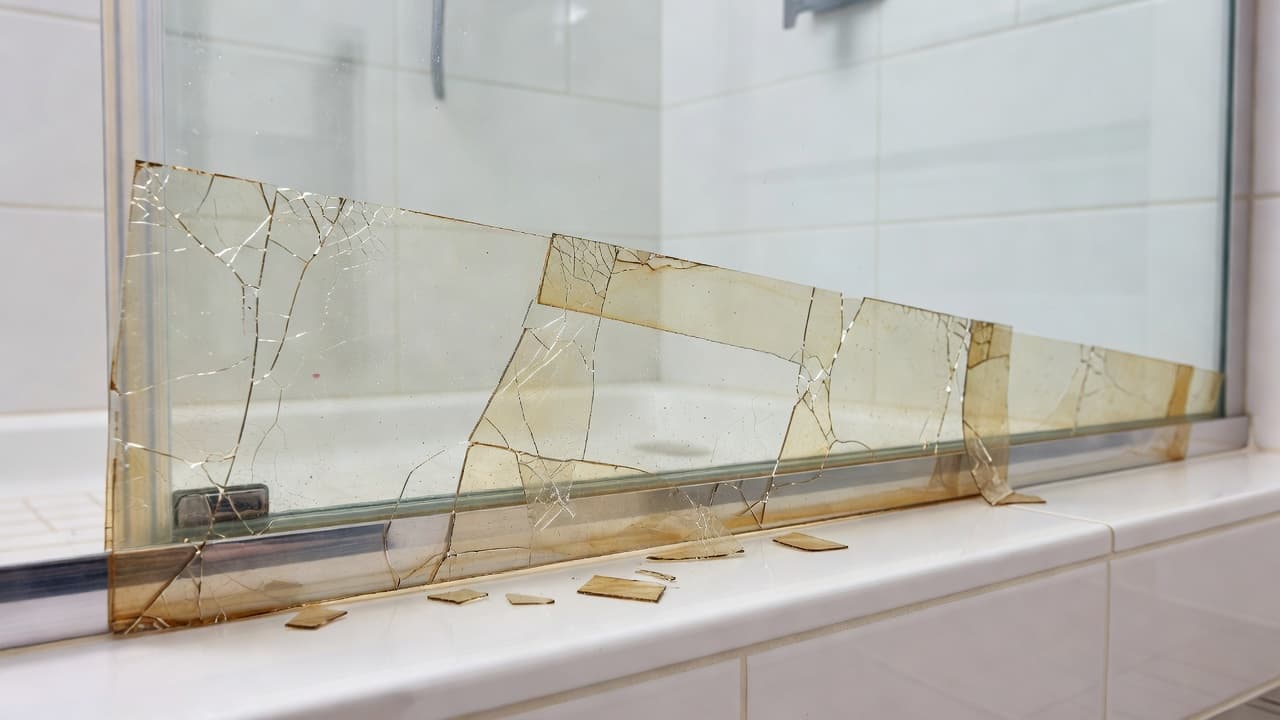
7 Signs Your Shower Door Sweep Needs Replacement
1. Water is collecting outside the shower
The clearest warning sign is water on the bathroom floor after someone showers. A few drops may come from normal movement around the door, but a growing puddle points to a sealing problem.
Watch where the water appears. If it collects directly below the door or along the outside edge of the curb, the bottom sweep may no longer be making proper contact. Water can also travel under mats and sit against flooring before you notice it.
Dry the area, then run the shower briefly while watching the door. Keep the spray pointed away from the hinges and frame. If water escapes from the bottom edge, inspect the sweep before assuming the glass door itself needs replacement.
A leaking seal can damage wood trim, soften caulk, and leave mineral deposits on tile. Quick action is easier than repairing the surrounding bathroom.
2. You can see a gap beneath the glass
Close the shower door and look along the bottom edge from both sides. A sweep should sit evenly along the door. If part of it hangs lower, curls upward, or leaves a visible opening, water has a clear path out.
The gap may appear after the strip shifts sideways. It can also develop when vinyl shrinks or bends with age. Even a narrow opening can send water toward the floor when the shower spray hits the lower section of the door.
Use a flashlight if the bathroom lighting makes the gap difficult to see. Don't press hard on the glass while inspecting it. Glass shower doors are heavy, and forcing the door or seal can affect its alignment.
An uneven gap usually calls for a new sweep rather than more caulk. Caulk cannot replace the flexible barrier that moves with the door.
3. The sweep is cracked, split, or brittle
Run your eyes along the entire strip. Cracks, tears, split corners, and missing sections indicate physical wear. A healthy sweep should remain flexible enough to touch the threshold without folding or breaking.
Older vinyl often becomes hard and brittle after years of moisture, cleaning products, and temperature changes. When that happens, the strip may crack as the door opens and closes. Small damage can spread across the seal within a short time.
Avoid pulling on a brittle sweep to test it. Pieces may break away and leave sharp edges or a rough surface against the glass. Instead, examine the seal with the door open and dry.
A cracked sweep cannot hold a reliable line against the curb. Replacing it is safer and more effective than trying to glue the damaged section.
4. The material has turned yellow, cloudy, or distorted
Discoloration alone doesn't always mean a sweep has failed. Clear vinyl can yellow with age, and mineral deposits can make a seal look cloudy. However, heavy discoloration often appears alongside hardening, warping, or loss of flexibility.
Place the door in its normal closed position and check whether the strip follows a straight line. A curled or wavy sweep won't guide water consistently, even if it has no obvious crack.
Some cleaning products can leave a film or weaken the material. Scrubbing with an abrasive pad may also roughen the surface. Use mild soap and a soft cloth for routine cleaning. If the strip stays cloudy, sticky, stiff, or misshapen, cleaning won't restore its original fit.
Homeowners in Cape Coral may notice mineral residue more quickly when deposits build up along the lower edge. The appearance matters, but the change in shape matters more.
5. Mildew keeps returning along the bottom edge
Mildew around the sweep can develop when water remains trapped in the seal or beneath the door. A dirty sweep doesn't always need replacement, but recurring dark spots deserve a closer look.
Clean the area with a bathroom-safe product and dry it thoroughly. Then check whether the sweep holds water in folds, gaps, or loose sections. A seal that stays damp after ordinary cleaning creates a place for mildew to return.
Bonita Springs and Estero bathrooms often stay humid, especially when exhaust fans don't remove moisture well. A worn sweep can add to that problem by allowing water to spread across the floor and remain near the door.
Replace the sweep when it has porous-looking damage, permanent staining, or folds that you can't clean. Also inspect the threshold and nearby caulk. Mildew may have more than one source, so replacing the strip won't solve moisture trapped beneath damaged caulk or grout.
A clean bathroom can still develop recurring mildew when the door seal leaves water behind after every shower.
6. The door drags, catches, or stops closing normally
A sweep should help contain water without making the door difficult to operate. If the strip drags heavily on the curb, catches at one corner, or folds under the door, it may have warped or become too long for the current position.
Door movement can also point to a hinge or alignment problem. A sagging door may push the sweep into the threshold on one side while leaving a gap on the other. In that situation, replacing the strip alone may not stop the leak.
Open and close the door slowly. Notice whether the resistance occurs across the full width or at one spot. Check for loose hardware, but don't adjust heavy glass hinges unless you know the door system.
A professional can determine whether the problem involves the sweep, the hinges, the curb, or the glass panel. That inspection prevents you from installing a new seal on a door that still sits out of square.
7. The sweep is loose, sliding sideways, or partly missing
A bottom seal should stay in position during normal door use. If it slides along the glass, pulls away from one end, or leaves an exposed section, it no longer protects the full width of the opening.
Loose strips may result from age, repeated cleaning, an incorrect profile, or a sweep that was cut too short. Adhesive residue can also prevent a replacement from gripping correctly. Don't rely on tape or household glue to hold the seal in place. Those fixes can leave residue on the glass and make future replacement more difficult.
Check both ends of the sweep after opening the door. A missing end section may not be visible when you stand several feet away, yet it can create a direct route for water.
A new seal must match the glass thickness, mounting style, and door length. The right fit matters more than choosing the cheapest universal strip.
Choose the Correct Replacement Sweep
Before ordering a replacement, identify how the existing sweep attaches. Some slide onto the bottom of the glass, while others fit into a metal channel. A framed enclosure may use a channel-specific insert, and a frameless door may need a clear vinyl sweep designed for exposed glass.
Measure the door's length, then check the glass thickness and the distance between the door and threshold. Don't guess based on the door's appearance. Glass thickness can be difficult to judge by eye, and a seal made for one profile may sit too tightly or leave a gap on another.
Take clear photos of the old sweep from the front, side, and end. Keep the old piece until the new one arrives. Its shape can help identify whether you need a bottom sweep, a drip rail, or a combined seal.
You should also check the door's overall condition. If the glass is sound and the hinges hold the door square, a sweep may be all you need. If the door sags, the curb has shifted, or water escapes from the side, the enclosure may need adjustment or additional parts.
For a custom enclosure in Naples, the correct replacement may not be a standard hardware-store size. A glass professional can match the seal to the enclosure and check the door's fit at the same time. Caloosahatchee Glass & Mirror provides custom shower enclosures for homeowners who need a properly fitted glass solution.
Can You Replace the Sweep Yourself?
Some homeowners can replace a simple slip-on sweep. Remove the old strip gently, clean the bottom edge with mild soap, and let the glass dry completely. Compare the replacement with the original before sliding it into place.
Don't hammer the seal onto the glass or force a tight channel. Trim only when the manufacturer's instructions allow it, and use a clean, straight cut. After installation, open and close the door several times. The sweep should touch the threshold evenly without buckling.
Call a professional when the door is heavy, the glass is frameless, the seal won't stay attached, or the door no longer closes squarely. A technician can also check for leaks that come from hinges, side seals, curb joints, or deteriorated caulk.
In Lehigh Acres and Punta Gorda, a local glass company can assess whether you need a seal replacement or a larger shower door repair. That distinction can save time and prevent repeat leaks.
Conclusion
A puddle outside the shower, a visible bottom gap, brittle vinyl, recurring mildew, and difficult door movement all point to a seal that deserves inspection. Loose or distorted material is another clear reason to replace the sweep.
Choose a replacement based on the door's actual glass thickness, length, mounting style, and threshold clearance. When the door is heavy, misaligned, or still leaking after a new sweep, professional service is the safer answer. Catching the problem early keeps a small shower door repair from becoming a larger bathroom moisture issue.