
Can Replacement Glass Reduce Outdoor Noise in Fort Myers?
A busy road, a neighbor's mower, or post-storm cleanup can make a home feel less restful. Replacement glass noise reduction can lower some of that outdoor sound, especially when the existing panes are thin, damaged, or poorly sealed.
Still, glass alone won't make a home completely soundproof. The right result depends on the glass, the frame, and the condition of the window around it.
How Replacement Glass Noise Reduction Works
Sound travels as vibration. When outdoor noise hits a window, the glass vibrates and passes part of that energy indoors. Heavier glass, layered glass, and well-built insulated units can reduce how much vibration reaches your room.

Laminated glass can soften sharper sounds
Laminated glass uses two panes bonded with a clear plastic interlayer. That layer helps dampen vibration, so it can be useful against higher-pitched sounds such as lawn equipment, conversation, barking dogs, and some construction activity.
It is also common in impact-rated window systems. For Southwest Florida homes, that can make laminated glass worth discussing when a window needs repair after storm damage or has aging glass.
Insulated glass adds separation
An insulated glass unit contains two panes separated by a sealed space. The extra layer and air space can help reduce noise compared with a single pane, although the result varies with glass thickness and the existing window design.
Using panes of different thicknesses can also help because they respond differently to sound frequencies. A qualified glass professional can recommend options based on the opening and the noise you hear most often.
A better pane can reduce noise, but sound will still enter through loose frames, worn seals, and gaps around the window.
Glass Replacement Versus Replacing the Entire Window Unit
Glass replacement means removing the broken, fogged, or outdated glass while keeping the existing sash and frame. Full window replacement removes the complete unit, including the frame or major frame components.
When replacing only the glass makes sense
Glass-only work can be a practical choice when the frame is solid, the window operates properly, and the seals around the opening remain in good shape. It can restore appearance and improve comfort without disturbing exterior finishes.
Homeowners often choose this route after a cracked pane, failed insulated glass seal, or impact damage. For a properly sized opening, custom-cut replacement window glass can match the frame rather than forcing a larger renovation.
When a full window replacement may help more
A new glass panel cannot correct a warped sash, deteriorated weatherstripping, or a frame that no longer closes tightly. If you can feel air movement near the window, hear whistling in strong winds, or struggle to lock it, the whole window may need attention.
Full replacement may also provide a better path when a home has older single-pane windows and you want a new insulated or impact-rated system. The installer should inspect the opening before recommending either option.
Frames, Seals, and Installation Can Make or Break Results
Replacement glass noise reduction depends on more than the pane itself. Sound finds small openings easily, much like water finds a weak point in a seal.
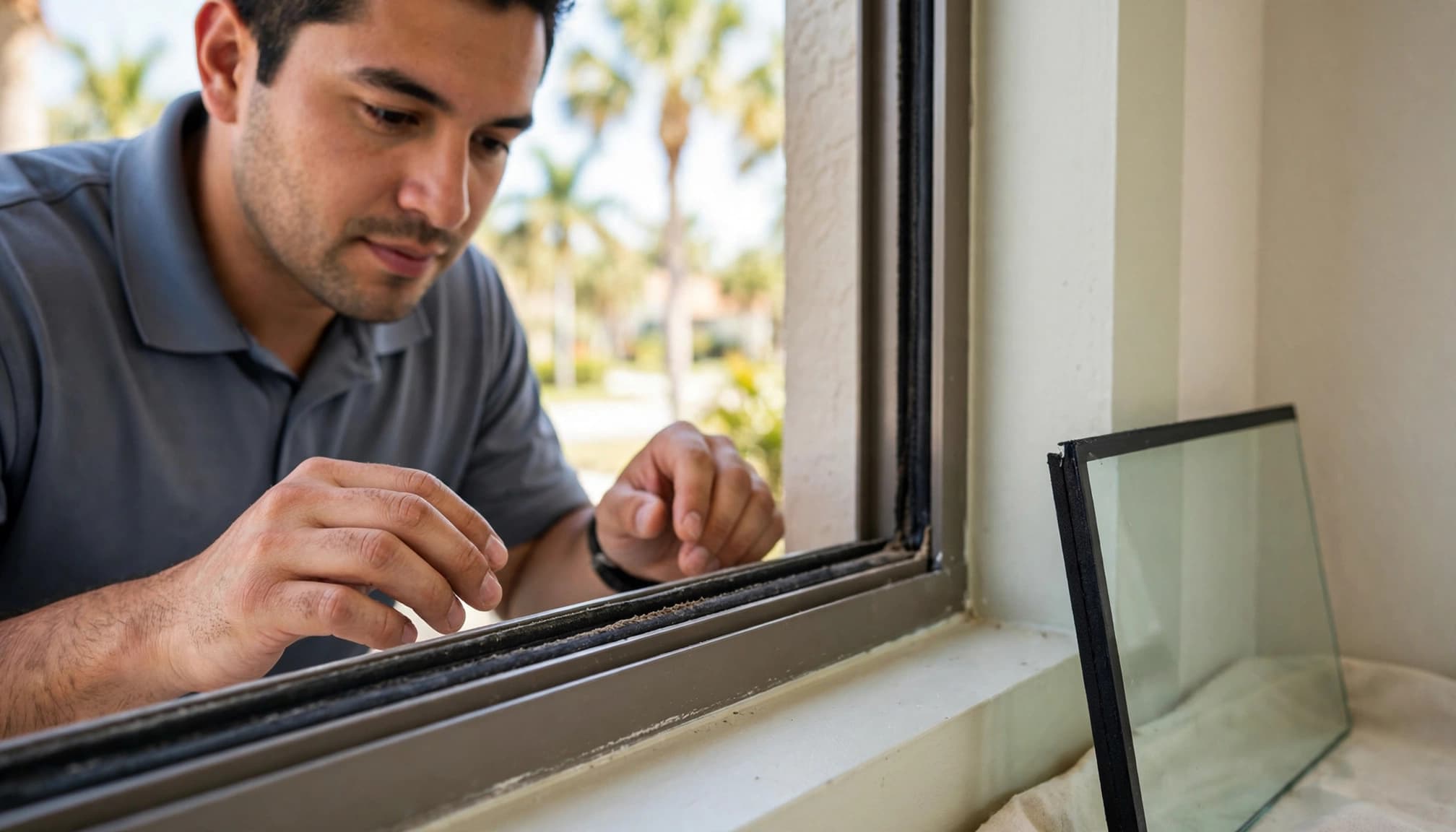
Check the paths around the glass
A tight glazing seal keeps the glass secure within the sash. Weatherstripping and perimeter seals help close the space between the sash, frame, and wall. When those parts are brittle, compressed, or missing, outside noise can bypass an upgraded pane.
A careful assessment should also look for cracked caulk, loose trim, drainage issues, and frame movement. These conditions affect comfort and may allow humid outdoor air into the home.
Installation quality matters
Even high-quality glass performs poorly if the installer measures incorrectly or leaves gaps. Proper fit, compatible glazing materials, and secure setting blocks keep the pane stable and help maintain the seal.
This matters during Southwest Florida's windy summer storms. Rain, gusts, and debris noise may remain audible, but a tight window assembly can make the interior less harsh and rattly.
Match the Glass to the Noise You Hear
The source of the sound should guide the recommendation. A home near a major route in Fort Myers may need a different approach than a quiet street that only gets occasional landscaping noise.
Steady traffic and neighborhood activity
Traffic creates a broad mix of low and mid-range sound. Thicker glass, laminated glass, and insulated units with differing pane thicknesses may help reduce the constant hum. However, large gaps at sliding doors, exterior doors, or nearby vents can still limit the improvement.
For homes in Cape Coral, Bonita Springs, Estero, Naples, Lehigh Acres, and Punta Gorda, local conditions also matter. A busy seasonal road, nearby construction, or a close neighbor's equipment can change which openings deserve attention first.
Construction, mowers, and storm cleanup
Short bursts from saws, leaf blowers, generators, and storm recovery work are harder to block completely. Laminated glass can soften these sharper sounds, while well-sealed frames help prevent noise from slipping around the edges.
Start with the rooms where noise disrupts sleep, work, or conversation. Bedrooms facing a street and home offices near an active yard are often stronger candidates than windows in rarely used areas.
A Quieter Home Starts With the Whole Opening
Replacement glass can reduce outdoor noise, especially when you select laminated or insulated options that suit the window and its surroundings. It cannot make a Fort Myers home silent, and it cannot overcome failing frames or damaged seals.
A close inspection of the glass, sash, frame, and installation details gives you the clearest answer. A tight, well-matched window assembly makes the difference between a modest improvement and a noticeable one.