
How to Clean Replacement Window Glass in Fort Myers Without Scratches
A new pane can lose its clear look after one careless cleaning. If you wipe replacement window glass while sand or grit is still on it, even a soft cloth can drag particles across the surface. Remove loose debris first , then clean with light pressure and materials approved for your window.
That matters in Southwest Florida, where dust, sprinkler spray, and coastal residue can build up between cleanings. Before reaching for a bottle or cloth, check what kind of glass was installed.
Check Your Replacement Window Glass Before Cleaning
Replacement panes don't all have the same surface. A standard clear pane, an insulated glass unit, and a window with an applied film may need different care. If you have installation paperwork, look for the glass manufacturer, coating information, and cleaning instructions.
Identify coatings and films
Low-emissivity, or low-E, coatings in insulated glass units are commonly placed on an interior-facing surface within the sealed unit. You can't reach that protected surface during routine cleaning. However, some windows have exposed specialty coatings, aftermarket film, or decorative treatments with separate care rules.
If you're unsure what's on the glass, ask the installer before using a new cleaner or tool. This is especially important for a recently installed film, which may have its own waiting period and cleaning instructions.
Check whether the window is ready
Look at the pane and frame before cleaning. If installation sealant still appears fresh, follow the installer's instructions rather than wetting the perimeter. Keep water and cleaner from pooling against glazing beads, gaskets, and frame joints.
Also check for loose glass, chips, or cracks. Cleaning pressure can make damaged glass less safe to handle. Leave a damaged pane alone until a glass professional assesses it.
Prepare the Pane Without Dragging Grit Across It
The first wipe creates the greatest scratch risk when debris is sitting on the surface. Sand can collect along the lower edge of a window, while dirt from screens and tracks can move onto the pane as soon as it gets wet.
Clear the frame and loose debris first
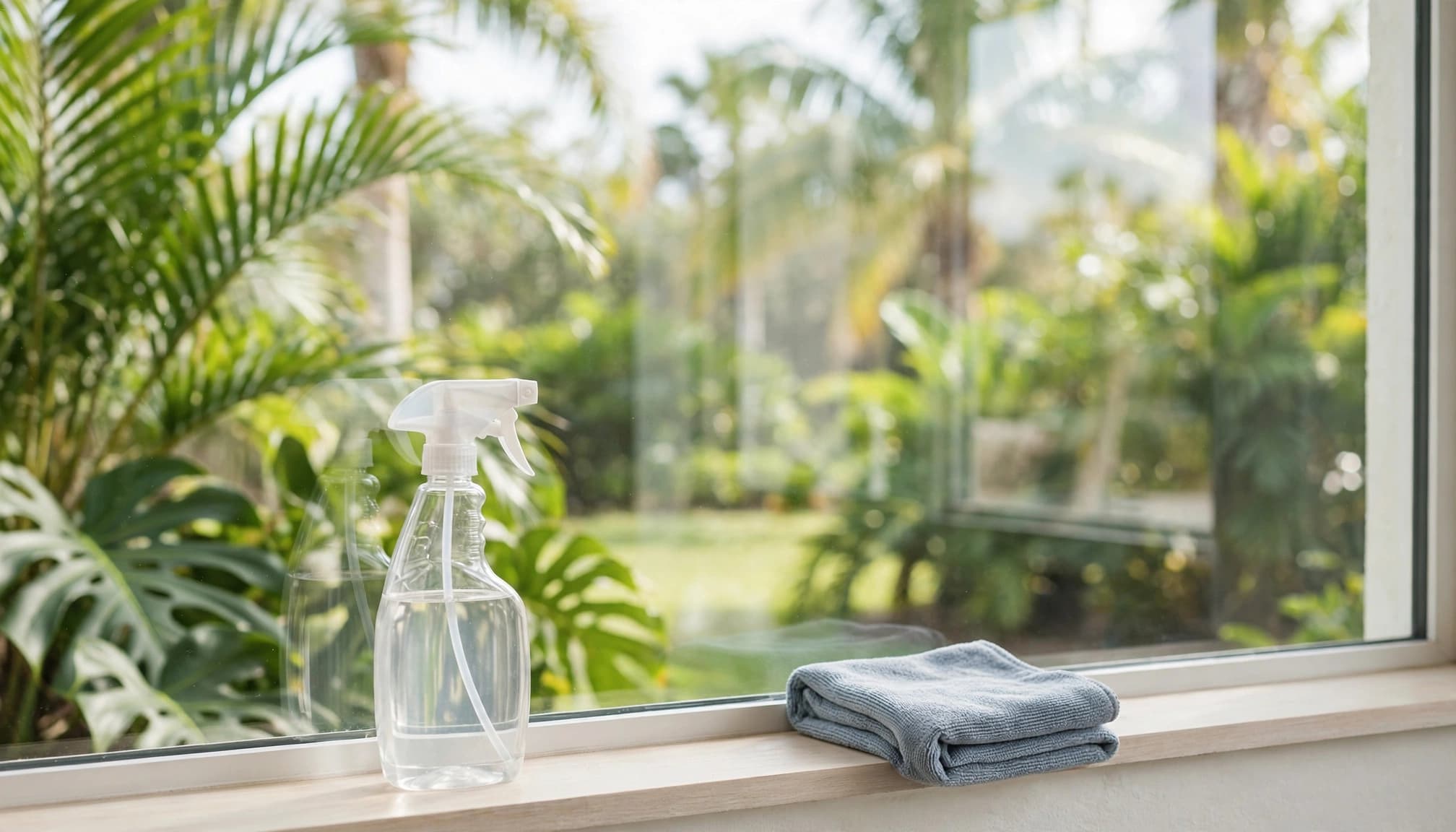
Start with clean, dry hands and a clean work area. Lift loose particles from the sill and accessible track with a vacuum's soft brush attachment. Keep the nozzle from striking the glass. If the frame is dusty, wipe it with a separate damp cloth so dirt doesn't wash onto the pane later.
Next, gently rinse loose residue from the glass with clean water where the window's design and manufacturer guidance allow it. On an indoor surface, use a lightly damp microfiber cloth to lift particles instead of splashing water near the frame. Don't begin with a dry, forceful wipe.
Keep cleaning supplies clean, too
Use a fresh microfiber cloth for the glass, not one that previously cleaned a countertop, car, or bathroom fixture. A cloth can look clean while holding grit. If it touches a sandy sill or falls on the floor, replace it.
Fold a few clean cloths before you start. That gives you a new surface when one side becomes dirty. Keep the cloth for the frame separate from the cloth for the glass.
Choose a Cleaner That Won't Damage the Surface
For routine cleaning, use a mild, nonabrasive glass cleaner that the window manufacturer permits. Water with a small amount of mild dish soap may also suit some glass, but check the care instructions first. More soap isn't better: leftover detergent can leave a film that attracts dirt.
Read the label before spraying
Check both the cleaner label and the window's care guidance, particularly if the pane has film or a specialty finish. Avoid scouring powders, abrasive pads, steel wool, and harsh chemicals. Don't assume a product is safe for a coating because it says "glass" on the bottle.
Use a plain spray bottle only if you know what's in it. Mixing household cleaners or reusing a bottle with unknown residue adds an avoidable risk.
Treat tools as carefully as cleaners
A clean, soft microfiber cloth is a reliable starting point for wiping. If the manufacturer permits a squeegee, inspect its rubber edge and clean it before each pass. A nicked blade or trapped grain of sand can leave a mark.
Skip razor blades and metal scrapers, even for a stubborn speck. They can scratch a pane or damage a coating. If residue won't lift with gentle cleaning, stop and identify it before trying a stronger method.
Clean the Glass With Light, Controlled Passes
Work on a small area at a time. Choose a shaded period if possible, since direct sun can dry cleaner before you wipe it away and leave streaks.
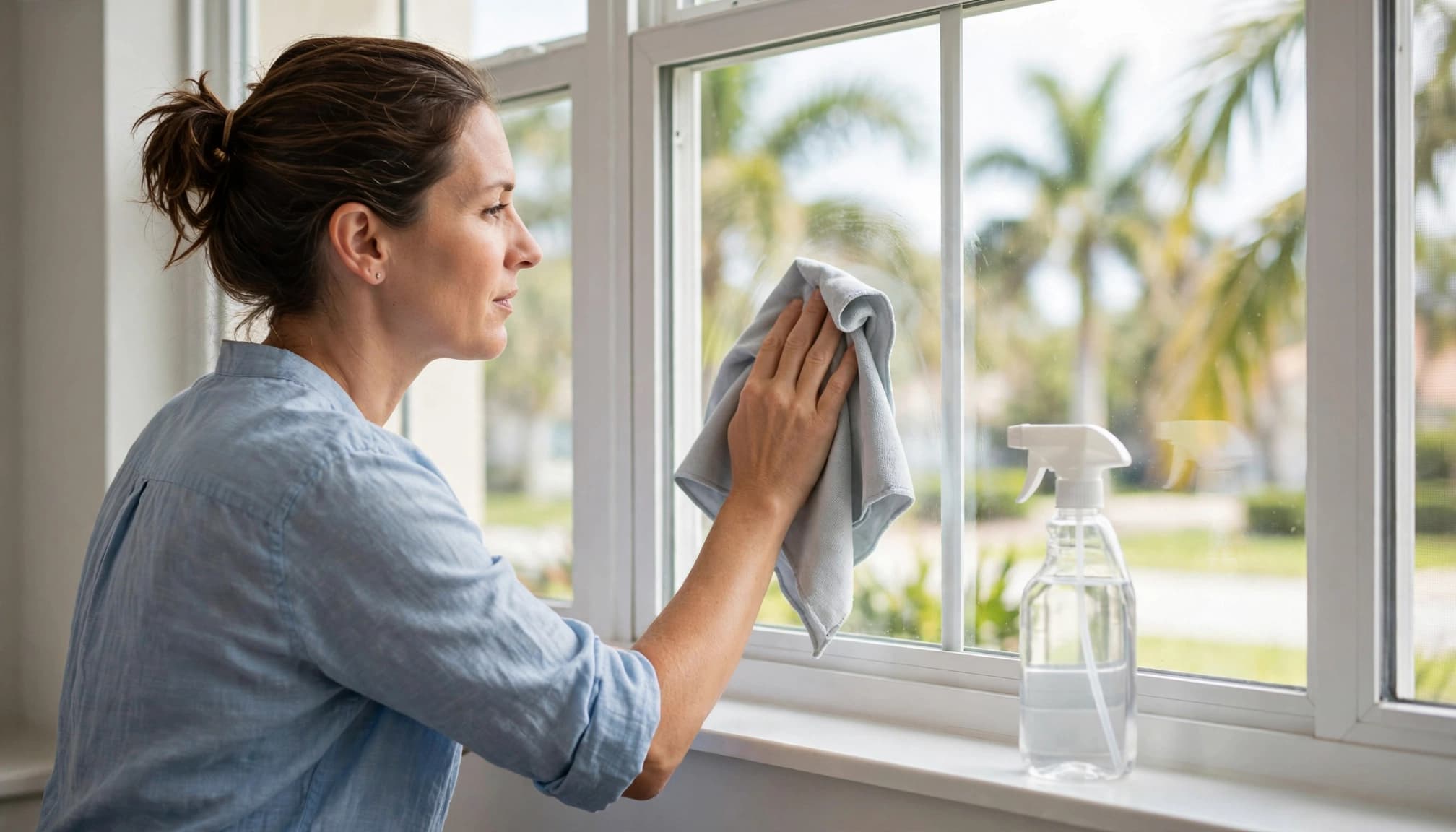
- Remove loose grit. Clear the sill and frame, then lift or rinse particles from the glass using the method suitable for that window.
- Dampen a clean cloth. Apply an approved cleaner to the cloth when you need better control near frame edges. If the manufacturer's instructions call for spraying the pane, use a modest amount.
- Wipe gently from top to bottom. Use smooth passes with light pressure. Turn the cloth to a clean section as it picks up dirt, and replace it when needed.
- Remove cleaner residue. Use another clean, slightly damp cloth if the product instructions call for a rinse. Keep excess liquid away from seals and joints.
- Dry the pane and edges. Finish with a dry microfiber cloth, paying attention to droplets at the lower edge. Wipe the sill so moisture doesn't sit against the frame.
If a mark remains, don't press harder. Rewet the spot with an approved cleaner and let the liquid soften surface residue as directed on the label. Then try another gentle pass with a clean cloth. Persistent marks may be damage or staining rather than dirt.
Avoid the Habits That Cause Fine Scratches
Scratches often appear during ordinary cleaning, not a major repair. A quick wipe with whatever is nearby can be enough to mark a pane when grit is present.
Don't scrub through resistance
If your cloth catches on a rough patch, lift it and inspect both the fabric and the glass. Pushing through resistance can drag a particle across the pane. A heavily soiled window may need another debris-removal pass before you continue.
Paper towels and old rags can shed lint or hold unnoticed debris. Even microfiber isn't protective when it's dirty. For a newly installed window in Cape Coral, set aside dedicated glass cloths rather than borrowing one from another household task.
Keep pressure and liquid under control
Firm scrubbing doesn't make a cleaner work faster. It can grind particles into the surface, especially along the lower edge where grit collects. Let the approved product do the cleaning and use light passes to remove it.
Avoid flooding the window. Water that runs into frame channels can carry dirt toward seals and drainage areas. Don't block drainage openings while cleaning the sill or track.
Handle Salt, Sprinkler Spots, and Stubborn Haze Carefully
Southwest Florida windows can collect different kinds of residue. Homes near coastal air may see salt deposits, while sprinkler spray can leave mineral spots. The safest response depends on where the mark sits and what finish the glass has.
Remove fresh residue before it builds up
Fresh water can help remove loose salt from an accessible exterior pane when the window's care instructions allow rinsing. Afterward, wipe and dry with clean microfiber. In Bonita Springs or Naples, a window exposed to spray may need attention sooner than one protected by a deep overhang.
For sprinkler spots, start with the approved mild cleaner. Don't reach for vinegar, acidic deposit removers, or polishing compounds unless the manufacturer permits them for that exact surface. A product that suits ordinary glass may damage film, coatings, or nearby frame finishes.
Locate haze before trying to remove it
Clean both accessible sides of an insulated window gently. If cloudiness remains between the panes, the sealed glass unit may have failed. No amount of wiping on the room-facing or outdoor surface will reach that moisture.
A dull mark that remains on an accessible surface after appropriate cleaning may also be surface damage rather than removable film. Stop repeated scrubbing and ask a professional to inspect it.
Know When Cleaning Isn't the Fix
A crack, chipped edge, loose pane, or shifting sash calls for an assessment, not another cleaning attempt. Keep people away from broken glass and avoid handling fragments in the frame. An upper-story exterior pane also needs appropriate access equipment and a qualified professional rather than a risky reach from indoors.
Caloosahatchee Glass & Mirror offers window glass repair and replacement for issues that cleaning can't solve, including broken glass and fogged insulated units. When the frame is sound, replacing the glass may be possible without replacing the whole window.
If a replacement needs to match an unusual opening or an existing design, custom glass cutting and fabrication can address the fit. A technician can also check the frame and glazing components before recommending what to replace. For homeowners in Lehigh Acres or Punta Gorda, that distinction matters when a cloudy pane and a damaged frame might otherwise look like the same problem.
Key Takeaways
- Remove grit from the frame and pane before wiping the glass.
- Use clean microfiber, an approved nonabrasive cleaner, and light pressure.
- Follow manufacturer instructions for films, exposed coatings, and specialty glass.
- Stop scrubbing if haze sits between panes or a mark doesn't respond to gentle cleaning.
Frequently Asked Questions
Can I use vinegar on replacement window glass?
Don't use it without checking the glass and window manufacturer's care instructions. Some window films, exposed coatings, and surrounding finishes may have product restrictions. Start with an approved mild cleaner instead.
Is a squeegee safer than a microfiber cloth?
Either tool can cause trouble if it traps grit. A clean microfiber cloth gives you good control near edges. If your window manufacturer permits a squeegee, keep its rubber edge clean and free of nicks.
Why does my window still look cloudy after cleaning?
The location of the haze matters. Residue on an accessible surface may need a suitable cleaner, while moisture trapped between insulated panes points to a sealed-unit problem. If gentle cleaning doesn't change the appearance, avoid aggressive scraping or polishing.
Keep the Clear View Without Risking the Glass
The safest cleaning starts before the cloth touches the pane. Clear away grit, use materials approved for your window, and let gentle passes do the work.
When a mark won't lift, stop rather than scrub harder . Finding out whether it's residue, surface damage, or haze inside an insulated unit protects the glass you already have.