
Mullions vs Muntins for Fort Myers Homes
When you're comparing mullions vs muntins , the difference usually comes down to where the dividing bars sit and what job they perform. Mullions typically separate complete window units, while muntins divide the glass within a sash or window section.
The terms overlap in product catalogs and contractor conversations, especially when homeowners discuss decorative grilles. For a Southwest Florida replacement or custom glass project, the important details are the window's construction, the grille style, the frame, and the tested performance of the complete assembly.
Mullions vs muntins: the basic difference
The traditional definitions are useful, but modern window products have made the terminology less consistent. A quote may use "muntin," "mullion," "grille," or "window grid" for a similar-looking design feature.
What a mullion usually describes
A mullion is a vertical or horizontal member that separates two or more window units. For example, a wide opening may contain two individual windows joined by a central mullion. That member can be part of the frame system and may help transfer loads into the surrounding wall.
Mullions are often more substantial than decorative grille bars. They can affect the size of each glass panel, sightlines, drainage, hardware placement, and the installation details around the opening.
However, a central bar does not automatically prove that a window has a structural mullion. Some products use a decorative overlay that only looks structural. The product drawings and installation specifications provide the reliable answer.
What a muntin usually describes
A muntin traditionally divides one sash or window section into multiple smaller panes. Older wood windows often used individual glass panes held in place by narrow muntins.
Modern homes frequently use simulated divided lites instead. The window may contain one larger insulated glass unit with decorative bars applied to the exterior, placed between the panes, or included on both sides of the glass.

In Naples and other coastal communities, decorative grille details can add traditional character without recreating the cleaning demands of many individual glass panes.
Why window professionals use the terms interchangeably
Homeowners often expect a simple dictionary definition. In practice, manufacturers and contractors may use these terms differently. One company may call an applied grid a muntin, while another may describe the same option as a grille or SDL, meaning simulated divided lite.
The visible pattern may not reveal the construction
A window with six small-looking panes may contain one insulated glass unit and surface-applied bars. Another window may have bars between the glass panes. Both can produce a similar exterior appearance.
The difference matters because each design has different cleaning, repair, replacement, and durability considerations. Surface bars can collect dust and may be vulnerable to impact or harsh cleaning. Between-glass grilles are protected, but they depend on the insulated glass unit remaining sealed.
Ask what the component does
Instead of relying on the label, ask whether the part:
- Separates two complete window units
- Divides a sash into separate glass sections
- Sits between the glass panes
- Attaches to the inside or outside surface
- Forms part of the tested frame or remains decorative
This approach is especially useful when comparing custom windows in Cape Coral, where large openings and sliding glass systems may require more detailed planning.
What to specify when ordering replacement windows
A good window quote should identify more than the glass appearance. It should describe the opening, frame, operating style, grille configuration, glass package, installation method, and any applicable approval documentation.
Start with the opening, not the grille
Inspect the existing frame, sill, stucco, trim, and surrounding wall before selecting a replacement. Water stains, swollen wood, cracked stucco, loose fasteners, movement, or repeated exterior caulking can indicate a deeper problem.
If the existing frame remains square, dry, and structurally sound, glass replacement or a retrofit may be appropriate. If the opening has hidden water-management damage, a full-frame installation may provide a better solution.
For a whole-home project, create an opening schedule that includes windows, doors, sliders, corner units, and screened enclosures. This helps prevent mismatched hardware and overlooked openings.
Put the grille description in writing
Your proposal should state the grille pattern, bar location, color, dimensions, and whether the design is removable or permanently integrated. It should also identify the exact window or glass product being supplied.
A decorative pattern does not establish storm performance. If the project requires impact protection, confirm the approved product, frame, anchors, fasteners, and installation details for the specific opening. A strong pane in an unsuitable frame will not provide the same result as a matched and properly installed system.
Southwest Florida performance considerations
Southwest Florida windows face conditions that affect comfort, durability, and maintenance. Intense sun, high humidity, wind-driven rain, salt air, and hurricane exposure all deserve attention before you choose a grille or replacement glass.
Separate appearance from hurricane protection
Mullions and muntins are design or framing terms. They do not, by themselves, make a window impact-rated.
Impact protection depends on the complete assembly, including the laminated glass, frame, anchors, fasteners, tracks, surrounding structure, and installation method. A standard double-pane window may improve insulation without providing wind-borne debris protection. Some non-impact products may require approved shutters or another protection system, depending on the project and local requirements.
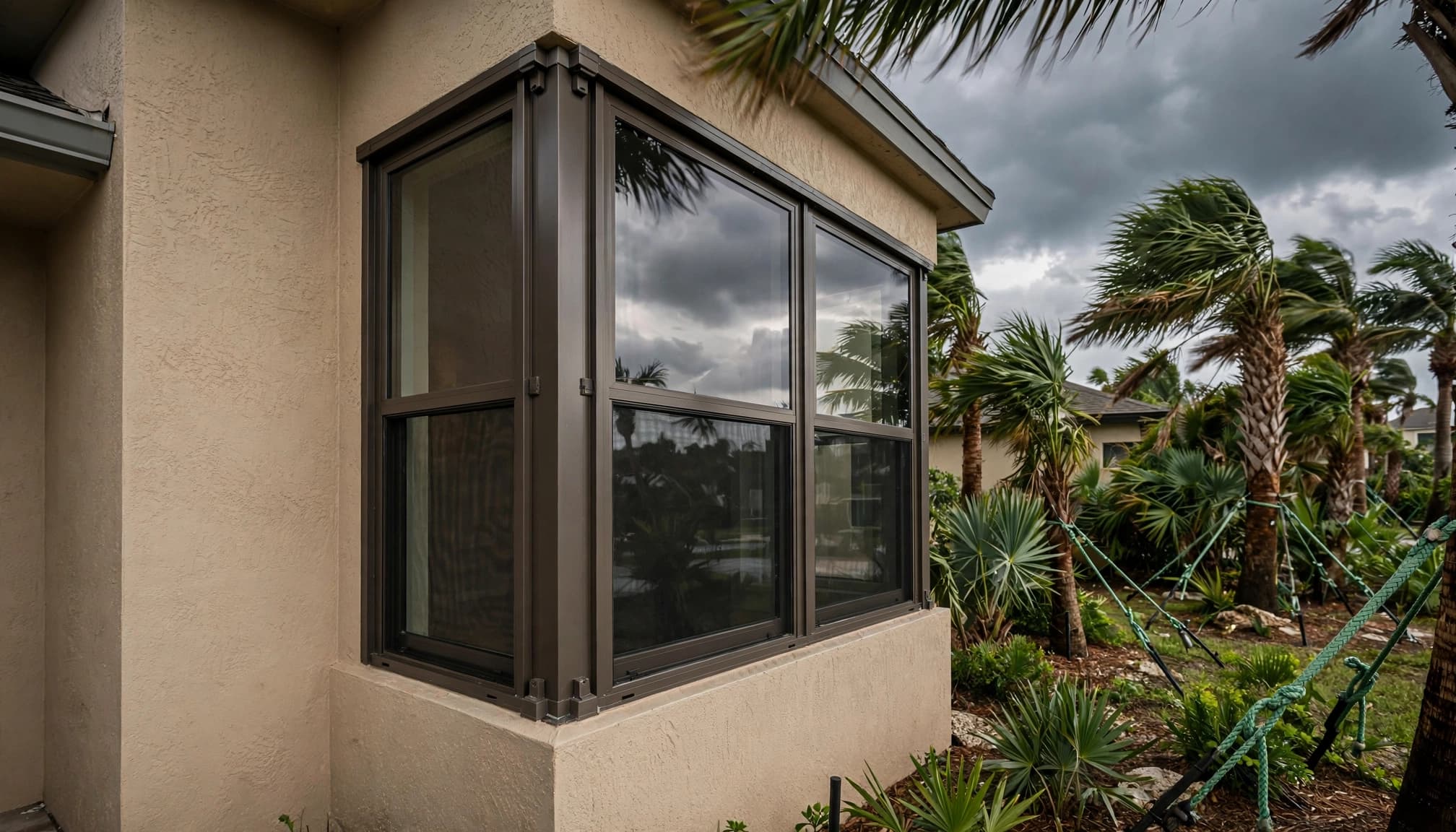
Homeowners in Bonita Springs, Estero, and Punta Gorda should ask whether the proposed product has Florida approval or another approval accepted by the local jurisdiction. Verify permit and installation requirements before ordering materials.
Balance heat, glare, and natural light
Glass selection affects indoor comfort as much as grille design. Low-E coatings can reduce solar heat gain while preserving daylight, but the right choice depends on orientation, shade, room use, and the size of the opening.
A west-facing window in Fort Myers or Naples may receive strong afternoon sun. A shaded north-facing opening may have different priorities. Compare the window's U-factor and Solar Heat Gain Coefficient, or SHGC, rather than relying on general labels such as "energy efficient."
Laminated glass can also help with UV exposure, noise, and post-breakage containment. Those benefits remain separate from impact approval, so confirm the complete product specifications.
Choosing a grille style for a coastal home
The best grille pattern depends on the home's architecture, the view, and how much visual division you want across the glass.
Compare pattern and sightlines
Traditional homes may suit evenly spaced grids, while contemporary homes often look better with fewer bars or a clean, unobstructed pane. Prairie-style patterns can emphasize the corners, while a simple vertical layout can make a window appear taller.
Look at the pattern from inside and outside. A grille that seems subtle in a small sample may feel busy across a large living-room window. This matters in Cape Coral and Estero homes with open floor plans, broad sliders, or views toward a pool or lanai.
If the window frames water, landscaping, or outdoor living space, prioritize the sightline before committing to a dense pattern.
Consider glass access and cleaning
Between-glass grilles are easier to wipe than surface-applied bars because the grid stays protected inside the insulated unit. Exterior bars can collect pollen, salt residue, and dust, especially near Naples, Bonita Springs, and Punta Gorda.
Ask how a damaged grille or failed insulated glass unit would be repaired. Replacing one sealed glass unit may be simpler than repairing a grille that is permanently bonded to the sash.
Maintenance in heat, humidity, and salt air
A decorative grille needs routine cleaning, but the surrounding window system deserves equal attention. Rinse coastal windows with fresh water and use a nonabrasive cleaner. Avoid aggressive tools that can scratch glass, coatings, painted surfaces, or applied bars.
Inspect tracks, weatherstripping, drainage openings, locks, fasteners, and frame joints. Salt residue can accelerate corrosion on exposed metal components, while humidity can contribute to condensation and seal problems.
Seasonal owners in Lehigh Acres may want a documented inspection before leaving the property. Full-time residents in Estero may notice smaller changes sooner because they operate the windows more often.
Call for a closer assessment if you see fogging between panes, persistent drafts, water stains, swollen trim, cracked stucco, rusted hardware, or a sash that no longer closes tightly. A broken pane with a sound frame may need glass replacement. Damage to the frame or opening may call for a larger repair.
Key takeaways for Southwest Florida homeowners
- Mullions usually separate window units, while muntins traditionally divide panes within a sash.
- Contractors and manufacturers often use the terms interchangeably, so ask for a construction description.
- Decorative grilles do not establish impact protection or hurricane performance.
- The glass, frame, anchors, fasteners, and installation must work as one tested system.
- Low-E coatings, SHGC, window orientation, and room use all affect energy performance.
- Salt air, humidity, wind-driven rain, and sun exposure should guide material and maintenance choices.
- A written opening schedule can prevent mismatched patterns, hardware, and glass packages.
FAQ about mullions and muntins
Are mullions and muntins the same thing?
Traditionally, no. A mullion separates complete window units, while a muntin divides individual panes or sections within a sash. Modern product descriptions often blur the distinction, so the terms may refer to similar-looking grilles.
Do muntins make a window impact-rated?
No. Muntins, mullions, and decorative grilles describe appearance or framing. Impact performance depends on the approved glass, frame, anchoring, fasteners, and installation. Ask for documentation covering the complete assembly, not only the glass thickness or grille pattern.
Can I add decorative grilles to an impact-rated window?
Some impact-rated window systems offer grille options, but compatibility must be confirmed before installation. Adding an unapproved component, changing the sash, or using the wrong glass package can affect the system's tested performance.
Does a mullion make a window stronger?
The word itself does not establish strength. A structural mullion may be designed to join window units and transfer loads, while a decorative bar may have no structural function. The product drawings and installation specifications determine what the component actually does.
Should I replace the whole window or only the glass?
If the frame is square, dry, secure, and undamaged, glass replacement may be practical. If the frame leaks, moves, corrodes, or shows rot or water damage, replacing only the pane may leave the underlying problem in place.
What should I ask for in a window estimate?
Request the exact glass type, grille location, frame system, operating style, approval information, installation method, drainage details, and maintenance expectations. Also confirm whether permits, product approvals, or engineering documents apply to your address.
Conclusion
The clearest way to understand mullions vs muntins is to separate the visible design from the window's actual construction. Mullions generally divide window units, while muntins divide panes or imitate that traditional pattern through modern grilles.
For a Southwest Florida home, the larger decision includes sun control, humidity, salt exposure, maintenance, impact protection, and the condition of the opening. A careful assessment helps you choose a window or custom glass solution that fits both the home's appearance and its daily demands.