
Window Condensation Florida Homes: Causes and Fixes
A damp window can look like a leak, a broken seal, or a failing air conditioner. The usual window condensation Florida homes experience often has a simpler cause, but the location of the moisture changes the right response.
In Fort Myers and nearby communities, humidity and air conditioning can create droplets on the room-side glass. However, fog trapped between panes or water staining around the frame calls for a closer inspection.
Window Condensation Florida Homes: First Identify the Surface
Condensation forms when moist air reaches glass that is cooler than the air's dew point. The dew point is the temperature where water vapor turns into visible droplets.
Your air conditioner cools both the room and the inner glass surface. If indoor air holds enough moisture, that cooled glass can collect water, especially after cooking, showering, or a humid day.

Moisture on the room-side glass
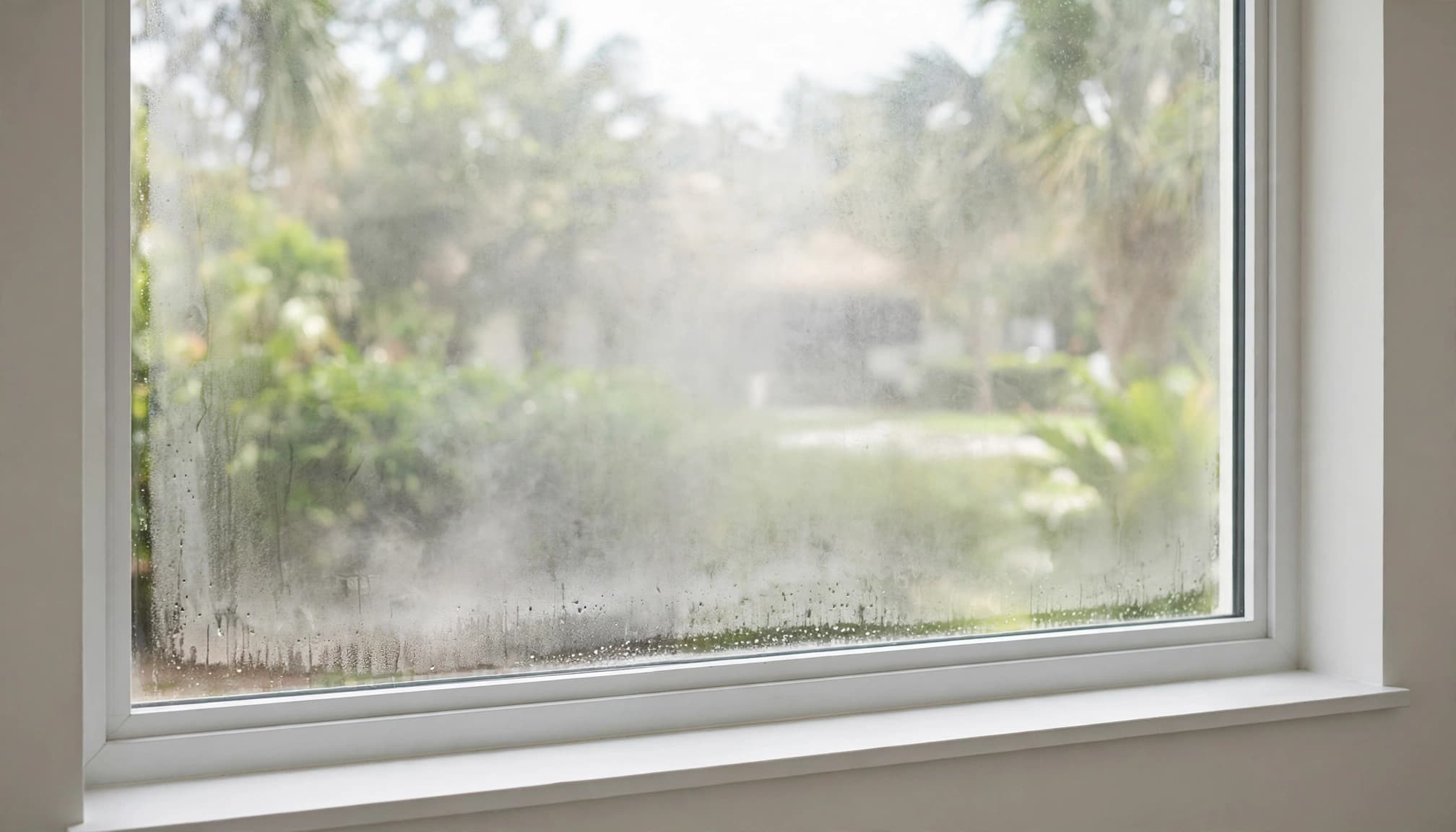
Droplets on the surface you can touch from inside are interior condensation. They often appear on bedroom windows overnight, near bathrooms, or in rooms where airflow is limited.
This condition doesn't automatically mean the window is defective. Still, repeated moisture can wet the sill, damage finishes, and feed mold growth if it isn't addressed.
Moisture between double panes
A double-pane window has a sealed space between two sheets of glass. When the perimeter seal fails, humid air can enter that space and leave fogging, streaks, or a dull haze that normal cleaning won't remove.
The window condensation Florida homes see inside an insulated glass unit differs from room-side moisture. It usually points to a failed insulated glass seal.
Haze that remains after both accessible glass surfaces are cleaned is often trapped inside the insulated glass unit, not on the glass itself.
Why Florida Humidity and Air Conditioning Create Interior Condensation
Southwest Florida homes deal with high outdoor humidity for much of the year. Air conditioning removes some indoor moisture, yet it can't always keep up with moisture added by daily activities or air leaks.
Indoor humidity has several sources
Showers, cooking, laundry, mopping, and even breathing add water vapor indoors. Indoor plants can also contribute, particularly when several large plants sit near a cool window.
A bathroom with a weak exhaust fan may spread humid air into nearby bedrooms and hallways. The fan should vent outdoors, not into an attic, wall cavity, or another interior space.
Cold glass meets humid room air
When an AC system runs for long periods, the inside pane may become cool enough for humidity to condense. Rooms with closed doors, shaded windows, or limited supply-air movement may show the issue first.
In Cape Coral homes, condensation can be more noticeable when a family lowers the thermostat overnight and keeps bedroom doors closed. The glass doesn't create the water. It gives airborne moisture a cool surface where it can collect.
Window coverings can block needed airflow
Heavy drapes, blackout curtains, and tightly closed blinds can trap a pocket of humid air against the glass. That pocket cools quickly and may form droplets even when the rest of the room feels comfortable.
Leave a small gap between coverings and the sill, especially overnight. Open blinds partway during the day so conditioned air can move around the window.
Tell Interior Condensation, Exterior Dew, and Leaks Apart
Moisture in the wrong place can lead to the wrong repair. Before assuming a seal has failed, look at where the water sits and when it appears.
Exterior condensation is usually weather-related
Dew on the outside surface often appears at sunrise after a humid night. It can occur when an insulated window keeps the exterior pane cooler than the warm, moist outdoor air.
Exterior moisture usually clears as the day warms. It doesn't mean water is entering the home, and wiping the interior surface won't change it.
Water intrusion shows up around the opening
Water on the sill, peeling paint, stained drywall, soft trim, or bubbling finishes may point to rain entering around the frame or exterior joints. A failed glass seal can cause fog between panes, but it doesn't explain water bypassing the frame or wall.
Bonita Springs and Estero homes can face wind-driven rain and coastal exposure. Check windows after tropical storms, but don't remove trim or press on loose glass. Water can travel behind walls before it becomes visible inside.
A simple, safe location check
Wipe the room-facing glass with a dry cloth. If droplets return on that accessible surface, indoor humidity or poor airflow may be involved.
Next, clean the exterior surface if you can safely reach it from ground level. If haze remains enclosed between the panes, the insulated glass unit needs professional evaluation.
Practical Ways to Reduce Room-Side Condensation
Small adjustments can reduce moisture on interior glass. They also help protect painted trim, wood sills, and nearby furnishings.
Improve airflow without blocking HVAC equipment
Keep supply vents open and clear of furniture, rugs, or curtains. Return grilles need open space too, because blocked returns can reduce circulation throughout the home.
Don't place boxes, plants, or furniture around the indoor air handler or outdoor condenser. HVAC equipment needs service access and airflow to operate properly.
Run bathroom exhaust fans during and after showers. In kitchens, use a vented range hood when possible. If a room stays damp, ask an HVAC professional to assess humidity control rather than setting the thermostat lower and lower.
Adjust plants, blinds, and daily habits
Move clusters of indoor plants away from cold glass and avoid overwatering. Wipe down wet sills promptly, then leave curtains open enough for the area to dry.
In Lehigh Acres, it also helps to compare a damp window with another window in the same room. If only one opening collects moisture, inspect its coverings, frame condition, and air movement before assuming the entire home has a humidity problem.
When Fogged Glass Needs Repair or Replacement
Cloudiness between panes won't improve with interior cleaning, dehumidifiers, or new curtains. The sealed unit has lost its barrier against humid air.
Glass-only replacement may be enough
If the sash, frame, locks, and surrounding opening are sound, replacing the insulated glass unit can restore clarity without replacing the complete window. The new glass must match the original dimensions, thickness, edge configuration, and glazing method.
Caloosahatchee Glass & Mirror provides window glass repair and replacement, including insulated glass replacement for fogged or cloudy panes.
Frame damage changes the scope of work
New glass won't repair rotting wood, badly corroded metal, bowed vinyl, loose frame corners, or recurring rain leaks. Drafts can also come from worn weatherstripping or gaps around the frame rather than a failed glass seal.
A professional should inspect the glass, sash, frame, trim, and nearby exterior joints before recommending glass-only work. In Naples, south- and west-facing windows may also need a glass selection that suits the home's sun exposure and cooling needs.
When Persistent Moisture Calls for a Punta Gorda Glass Professional
Schedule an inspection when fogging stays between panes, a crack appears, or the sash no longer locks or operates smoothly. Cracked glass deserves faster attention because a small crack can spread with vibration, impact, or temperature changes.
Keep children and pets away from damaged glass. Don't tape over a large break as a long-term fix, drill into the frame, or try to release moisture from an insulated unit.
Persistent dampness, mold, soft trim, and staining need prompt attention as well. In Punta Gorda, post-storm checks should include the sill, frame edges, and nearby wall finish. A replacement pane can't stop water entering through failed exterior sealing, stucco transitions, or wall damage.
For an unusual size or shaped opening, custom-cut replacement window glass can be measured to fit the existing opening when the surrounding window remains in good condition.
Key Takeaways for Southwest Florida Homeowners
- Room-side droplets often relate to indoor humidity, cool glass, and limited airflow near the window.
- Fog, streaks, or haze trapped between double panes usually indicate a failed insulated glass seal.
- Exterior morning dew commonly clears as outdoor conditions change and isn't the same as an interior leak.
- Keep blinds and heavy curtains from sealing off airflow around the glass.
- Never ignore mold, rot, recurring sill moisture, cracked panes, or water marks around the frame.
FAQ About Interior Window Condensation
Should I open windows to lower indoor humidity?
Opening windows may help on a dry, breezy day, but Florida outdoor air is often humid. Bringing in more humid air can worsen room-side condensation. Use properly vented bathroom and kitchen exhaust fans, maintain the air conditioner, and keep interior airflow moving instead.
Does condensation between panes mean I need a whole new window?
Not always. A failed insulated glass seal may allow replacement of the glass unit while keeping a sound frame and sash. Full window replacement may make more sense if the frame has rot, corrosion, distortion, poor operation, or water intrusion around the opening.
Can interior window condensation cause mold?
It can if water repeatedly wets wood, drywall, caulk, or painted trim and doesn't dry. Wipe visible water away, improve airflow, and investigate why it keeps returning. Moldy materials, soft wood, or recurring moisture need more than surface cleaning.
A Clear Window Starts With the Right Diagnosis
Condensation is useful evidence when you identify its location. Room-side droplets call for better humidity control and airflow, while moisture between panes points to a failed insulated unit.
Address recurring water around frames before replacing glass. A clear diagnosis protects both the window and the home around it.