
A Rainy-Season Storefront Glass Checklist for Cape Coral Businesses
In Cape Coral, a storefront can look fine before a storm and show water marks, loose sealant, or a new crack afterward. Regular storefront glass maintenance helps you catch visible problems early, keep the entrance inviting, and spot signs that need a professional assessment.
Use this checklist after heavy rain and as part of routine property care. The same humid, storm-prone conditions affect businesses in Fort Myers, Bonita Springs, Estero, Naples, Lehigh Acres, and Punta Gorda, though each storefront has its own drainage and exposure.
Start with a storefront walkaround
Walk the outside and inside of the storefront in daylight. Look across each pane from more than one angle, since reflections and glare can hide scratches, chips, and cloudy areas. Then compare any questionable spot with nearby glass.

Scan the glass and visible frame
Look for cracks, chipped corners, deep scratches, and changes in the way reflections appear. Also note whether moisture or haze seems to sit between panes. In insulated glass, moisture trapped inside the sealed unit differs from droplets on the exterior surface and may point to a failed seal.
Check the frame for bent sections, loose trim, or gaps where the glass meets the frame. Don't press on a loose pane or try to adjust it. Record the location and take a photo from a safe distance.
Check what you can see from indoors
Look around the floor, sill, and nearby wall for fresh water marks, dampness, or peeling finishes. A wet floor near an entrance may come from customers' shoes, so compare it with the location of water marks at the frame or wall before assuming the glass is leaking.
A short written note helps track changes. Include the date, the pane or door involved, and whether you saw the issue inside, outside, or both.
Clean storefront glass after rain
Rain doesn't always leave glass clean. As water dries, residue can remain on the surface and make reflections look cloudy, especially when droplets collect along the lower edges or around trim.
Use a gentle cleaning routine
Remove loose grit first, then wash accessible glass with clean water and a mild soap solution. Use a soft cloth or nonabrasive applicator, and dry the pane with a clean squeegee or lint-free towel. Work in manageable areas so the cleaning solution doesn't dry before you remove it.
Avoid abrasive pads, razor blades, and harsh chemicals. They can scratch glass or damage nearby finishes, coatings, and seals. Don't lean ladders or equipment against the glazing, either. For large panes or difficult-to-reach sections, use a qualified window cleaner rather than risking a fall or applying pressure to the glass.
Keep the frame and edges in mind
Wipe dirt from the accessible frame surfaces and sill, but don't force tools into narrow joints or openings. Grit that stays along the edges can collect with water and obscure early signs of sealant wear.
If the glass stays cloudy after a careful wash, check whether the residue is on the surface or between panes. A film you can't reach from either side may need an assessment rather than more aggressive scrubbing.
Tell water spots from other glass problems
White dots, rings, or a hazy film often appear where water dries repeatedly. Mineral residue can be stubborn, but cleaning harder isn't always the right response. First wash the pane gently and see whether the marks change.
Notice where the spots appear
Water spots often gather along the bottom of a pane, around edges, or wherever droplets repeatedly dry. Compare the affected area with nearby glass. If the marks lift or fade with routine cleaning, surface residue is more likely than damage to the glass.
In Southwest Florida's humidity, exterior condensation can also leave droplets on a pane, especially after a humid night. Exterior droplets alone don't prove that a storefront is leaking. Look for water inside the building, persistent moisture between panes, or marks around the frame before drawing conclusions.
Don't mistake permanent haze for dirt
If cloudy areas remain after cleaning, or the surface looks etched or damaged, stop using stronger cleaners or abrasive tools. A glass professional can assess whether the issue is residue, a damaged surface, or a problem within an insulated unit.
Inspect seals and frame joints
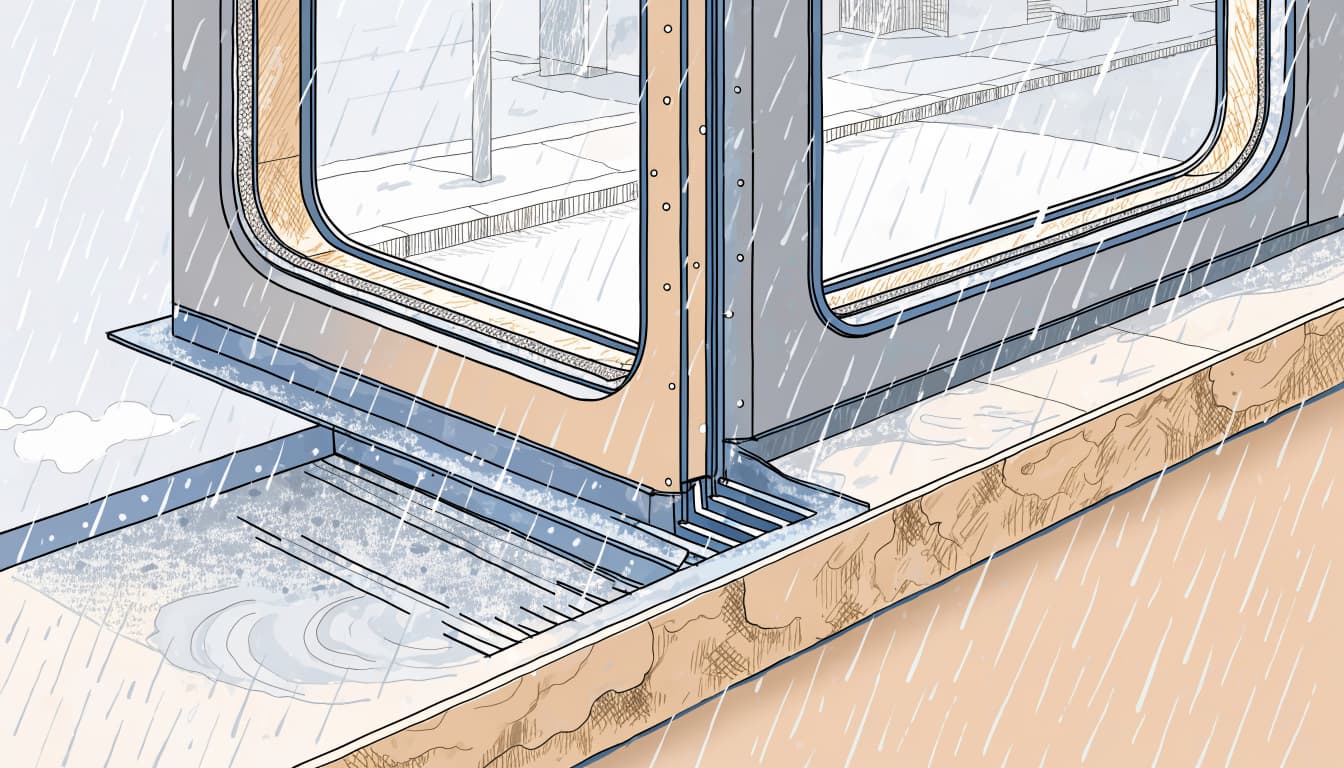
The perimeter around the glass deserves a careful visual check. Sealant, gaskets, and other frame components help manage water and movement, but a visual inspection can only identify warning signs. It can't determine the condition of hidden parts.
Look for gaps, lifting, and separation
From a safe position, look for sealant that has cracked, pulled away, or separated from the glass or frame. Also note missing or visibly displaced gaskets, open-looking joints, and trim that has shifted. Take photos rather than probing a gap with a tool.
A small visible opening can be worth documenting, especially if it lines up with water marks indoors. However, don't cover it with a generic sealant. Materials need to suit the frame and glazing, and a repair must preserve the system's intended drainage.
Treat recurring interior moisture as a warning
If water appears inside near the same frame after separate storms, document when and where it happens. Note whether the water collects at the sill, comes through a joint, or appears higher on the wall. Avoid removing trim or injecting sealant yourself, since that can hide the source or interfere with drainage.
Keep drainage paths clear
Storefront systems are designed to manage water, and some frames include small openings that let it drain outward. Dirt, leaves, and debris can obstruct visible drainage areas, especially near the sill or at the base of the frame.
Check the exterior sill and nearby ground for standing water or debris. Remove loose material from surfaces you can reach safely, but don't push objects into small holes or fill them with caulk. Blocking a drainage path may cause water to collect where it should escape.
Also watch what happens after rain. Water should not remain pooled along the frame or repeatedly flow toward the interior. If you see a recurring puddle, stained sill, or damp area, photograph it and note whether nearby gutters, landscaping, or walkway slopes may be directing water toward the storefront.
Watch for signs of leaks or damage
A single wet spot doesn't identify its cause. Rain can enter through a storefront opening, but water may also come from nearby building components or collect at the entrance from outside. Look for a pattern before deciding that the glass itself is responsible.
Record evidence without taking anything apart
After rain, look for fresh stains, bubbling paint, damp flooring near the frame, or moisture that returns in the same place. Photograph the affected area and include a wider image showing its position relative to the window or door. If water is near electrical equipment or creating a slip hazard, keep customers clear and address the immediate risk.
Check the glass for cracks, chips, and visible movement. Don't touch a damaged pane or attempt to secure it with tape if it appears unstable. A damaged storefront may create a safety and security concern, so prompt professional attention is appropriate.
Ask for an assessment when the pattern repeats
If water appears inside at the same spot after rain, the glass fogs between panes, or the frame or pane appears loose, arrange an assessment. A technician can evaluate measurements, glass thickness, frame condition, and hardware to determine the repair scope.
Caloosahatchee Glass & Mirror provides commercial storefront glass repair and replacement for businesses across Southwest Florida. For Cape Coral properties, our storefront glass repair services include repair and installation for commercial properties.
Include doors and customer access
A storefront checklist should include the glass entry door, not just the fixed panes. Rain can make the threshold wet, while frequent use can expose problems with the door's movement or hardware.
Check how the door moves
Open and close the door as you normally would. Note sticking, scraping, a closer that slams, a loose handle, or a lock that doesn't work smoothly. Look for cracks in the door glass and water collecting around the threshold.
Don't force a door that binds or try to adjust its closer or glass yourself. A door that doesn't close or latch properly can affect access and security. Tell staff to report changes as soon as they notice them.
Plan repairs around business operations
For a repair or replacement, note the busiest periods, deliveries, and customer entry needs. That information helps plan work with less disruption. Our commercial glass services in Cape Coral include storefronts and commercial door glass.
Key takeaways for your rainy-season checklist
Use this short routine after heavy rain and during regular property walkarounds:
- Clean accessible glass with mild soap, clean water, and nonabrasive tools.
- Record spots, cracks, haze, and moisture between panes instead of scrubbing harder.
- Look for visible gaps or separation around the frame, but don't apply generic sealant.
- Keep accessible sill areas clear while leaving drainage openings unobstructed.
- Photograph recurring indoor water and note its location and timing.
- Include door glass, threshold, closer, handle, and lock in the inspection.
A dated photo makes it easier to tell whether a mark is new or growing. It also gives a glass professional useful context if the problem needs repair.
Frequently asked questions
How often should I inspect storefront glass during the rainy season?
There's no single schedule for every business. Check after heavy rain and include a visual scan in routine property maintenance. Storefronts with frequent water pooling, heavy foot traffic, or past leak concerns benefit from closer observation.
Are water droplets on the outside of the glass proof of a leak?
No. Exterior condensation can form after a humid night. Look for moisture between panes, water marks inside, or recurring dampness at the frame before treating exterior droplets as a leak.
Should I seal a small gap around the storefront myself?
Avoid applying a general-purpose sealant without knowing the frame and glazing system. A repair needs compatible materials and must preserve any designed drainage route. If a gap coincides with water intrusion, have the opening assessed.
Can a cloudy insulated storefront pane be cleaned?
If moisture or haze sits between the panes, it isn't on the accessible glass surface. Insulated glazing usually requires replacement of the sealed glass unit, rather than cleaning between the panes.
Keep the storefront ready for the next storm
A clear pane is only part of a rain-ready storefront. Check the glass, frame edges, drainage, and entry door, then record any recurring water or damage. That simple routine helps Cape Coral business owners distinguish ordinary surface residue from problems that deserve professional attention.