
Can Tempered Glass Be Cut After Tempering?
You can't safely cut tempered glass after tempering. Cutting, drilling, grinding, or reshaping it will usually cause the entire panel to shatter.
That means a shower door that's slightly oversized generally needs replacement, even when the adjustment looks minor. The safe approach is to complete all fabrication before tempering and have a qualified glass professional handle sizing problems.
Understanding that sequence helps you avoid a broken panel and an unnecessary safety risk.
Key Takeaways
- Tempered glass usually shatters when someone attempts to cut, drill, or modify it after heat treatment.
- Required cuts, holes, notches, and edge finishing must happen before tempering.
- An incorrectly sized panel generally needs replacement, rather than trimming during installation.
Why You Can't Cut Tempered Glass After Tempering
Heat treatment changes the glass
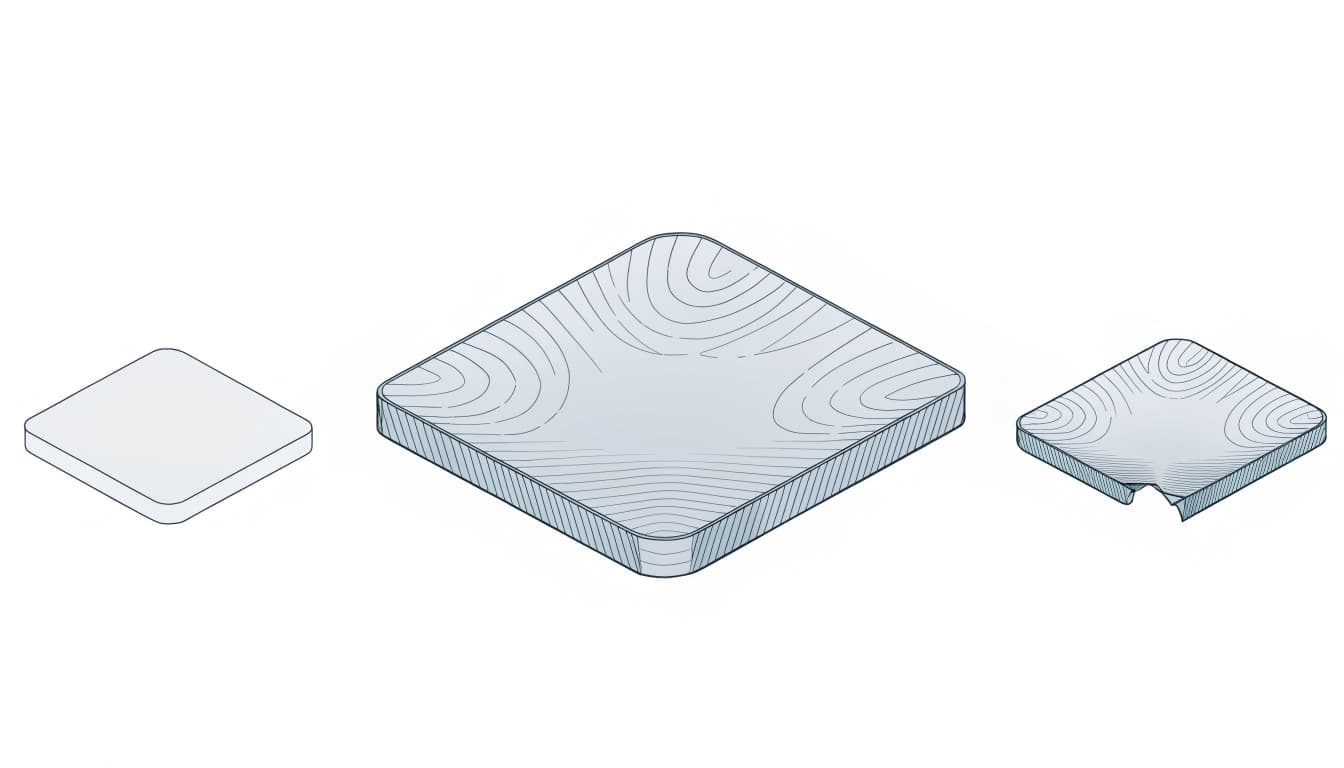
Tempered glass starts as ordinary annealed glass. Controlled heating and rapid cooling create compression at the surfaces and tension inside the panel.
Those internal stresses increase its strength compared with untreated glass. However, they also change how it responds to damage. A cut can disrupt the stress balance and cause breakage throughout the sheet.
Instead of producing the long shards associated with ordinary broken glass, tempered glass usually breaks into small, granular pieces. Those fragments can still cause injuries.
A small modification carries the same problem
Removing a narrow strip isn't a safe exception. Neither is enlarging a handle hole, adding a hinge notch, or grinding down a corner.
A diamond blade or specialized drill bit doesn't remove the stresses inside the glass. Even careful work can trigger complete failure.
Damage doesn't always cause immediate breakage, either. An edge chip can leave the panel vulnerable during later handling or use. If someone has already attempted a modification, stop using the panel and arrange a professional assessment.
Plan Every Cut Before Tempering
Custom tempered glass follows a fabrication sequence. First, the glass receives its dimensions, openings, and finished edges. Tempering comes afterward.
Measure the finished opening
For shower enclosures, width and height tell only part of the story. Installers also account for walls that aren't plumb, the curb's slope, and clearances around nearby fixtures.
Final field measurements should follow the installation of tile and other surfaces that define the opening. Otherwise, the finished space may differ from the dimensions used to order the panel.
The supporting structure matters, too. For example, shower glass on fiberglass bases requires attention to the base's condition and the enclosure's support requirements.
Choose hardware before fabrication
Handles, hinges, and mounting hardware determine where holes and notches belong. Their placement needs to match the specific enclosure design before the glass enters the tempering process.
Changing a handle after fabrication can become a replacement project if the new hardware requires different hole spacing.
The same planning applies beyond bathrooms. Our custom glass tabletop options include details such as shaped corners and finished edges. Any required tabletop opening also belongs in the original fabrication plan.
A correctly sized panel can still be unusable if its hinge holes or notches don't match the selected hardware.
What to Do When Tempered Glass Doesn't Fit
Start with a qualified glass professional rather than attempting a DIY adjustment. The problem may involve the glass dimensions, hardware alignment, or the opening itself.
A door that rubs doesn't automatically need cutting. An installer can assess whether the enclosure allows a hardware adjustment. However, adjustments must stay within the system's design and can't compensate for an incorrectly fabricated panel.
If the glass itself needs different dimensions or openings, the practical solution is a replacement made to the correct specifications.
Don't force the panel into place or remove material to create clearance. Also, don't substitute ordinary annealed glass where safety glazing is required simply because it's easier to cut.
For an Estero bathroom remodel, professional measurement helps prevent these problems before fabrication begins. We provide custom glass cutting and fabrication, including tempered safety glass and replacement panels. Required shaping and openings are completed before tempering, so the finished piece arrives ready for its intended installation.
Frequently Asked Questions
Can a glass shop trim tempered glass?
A glass shop can't safely trim a finished tempered panel using ordinary cutting methods. Professional fabrication happens before heat treatment. If an existing panel is too large, a newly fabricated replacement is generally necessary.
Can you drill another hole in a tempered shower door?
No. Drilling after tempering will usually shatter the panel. Holes for handles, hinges, or other hardware must be included before heat treatment. Adding a towel bar may require a replacement panel if its mounting points weren't part of the original design.
How can you tell whether glass is tempered?
Many tempered panels have a permanent identification mark near a corner. However, a missing or hard-to-see mark doesn't establish that the glass is annealed. Don't test it with a cutter or drill. A qualified glass professional can assess it without an attempted modification.
Get the Fit Right Before Tempering
Tempered glass needs its final shape, finished edges, and hardware openings before heat treatment. Once it's tempered, resizing usually means replacing the panel.
Accurate measurement protects both the installation and your budget. It also avoids the temptation to make a hazardous adjustment when the glass arrives.
If your shower panel, shelf, or tabletop doesn't fit, contact us for a professional assessment and a free estimate. The right solution starts with understanding the opening and fabricating glass to match.