
Check Storefront Door Clear Width in Fort Myers
To check storefront door clear width, measure the usable passage through the open doorway, rather than the door panel or surrounding frame. That measurement helps identify a possible access problem, but it doesn't establish accessible entry by itself.
For Fort Myers business owners, the distinction matters before ordering replacement glass or planning entrance repairs. Start by separating the dimensions of the door assembly from the space customers actually pass through.
Key Takeaways
- Clear opening width describes usable passage space, not the width of the glass, door leaf, or frame.
- Record the door's position, surrounding obstructions, and measurement endpoints so the reading has useful context.
- Paired doors, projecting hardware, and restricted swings need extra attention.
- A width reading supports a site-specific assessment; it doesn't establish compliance with accessibility requirements.
What Storefront Door Clear Width Measures
A storefront entrance has several dimensions that look similar on a sketch but answer different questions. Mixing them up can lead to an unsuitable repair or replacement order.
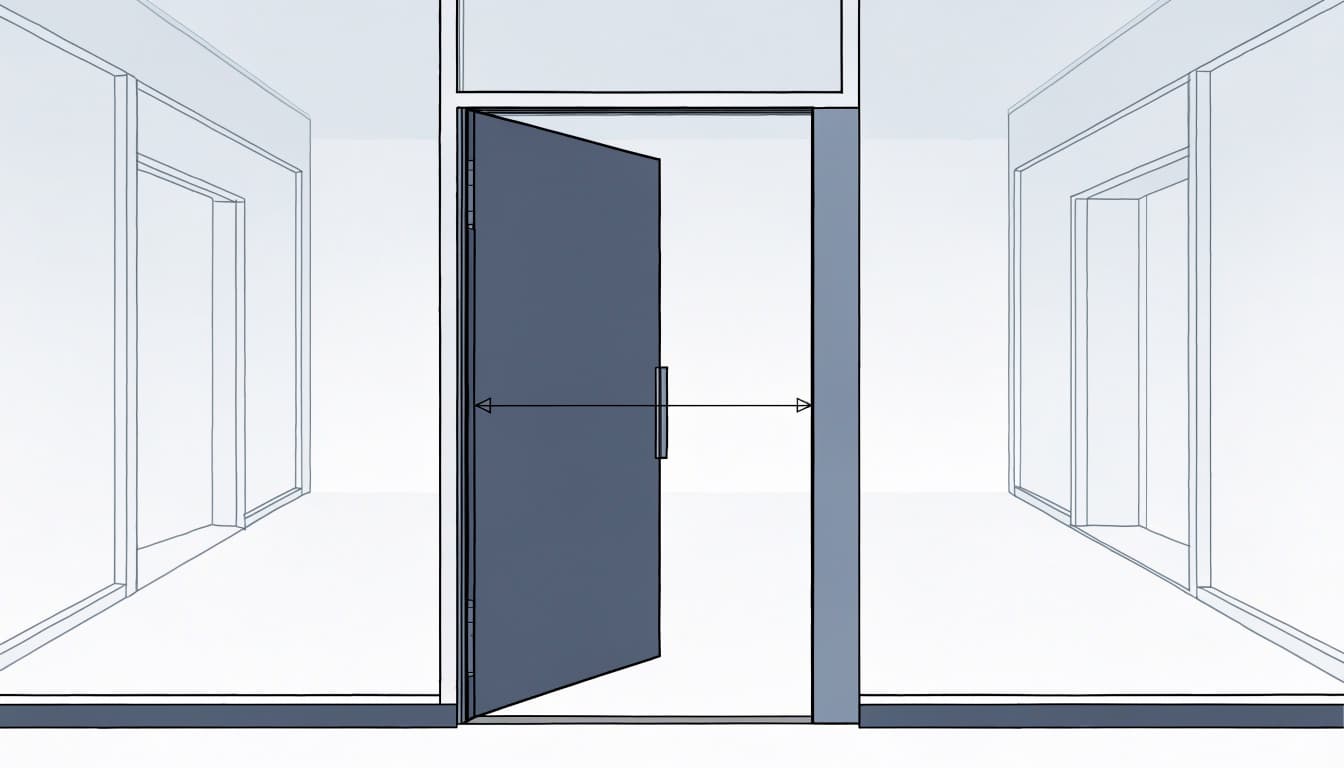
Door and frame dimensions describe the assembly
The door leaf is the moving panel, including its perimeter rails or framing. Its width helps identify the physical door, but part of that assembly still occupies space when the door opens.
Meanwhile, the frame surrounds and supports the door. Outside frame dimensions include material customers can't pass through. The rough opening in the wall is another construction dimension entirely.
Glass measurements are different again. A replacement pane must fit its glazing pocket, so its dimensions shouldn't double as an accessibility measurement.
Clear width describes the passage
Clear width concerns the opening available for passage with the door open. The position of the door and the surfaces bordering that passage affect the reading.
For a Fort Myers shop or Cape Coral office, a wide-looking entrance can still have a restricted passage. A thick door profile, meeting stile, or fixed center member may occupy part of the apparent opening.
Keep these measurements separate in your notes. A label such as "door width" doesn't tell an installer whether you measured the leaf, frame, glass, or usable opening.
How to Record the Usable Opening
Use a tape measure and a phone camera for preliminary documentation. Choose a quiet period so you can work without blocking customers or creating an exit hazard.
These steps produce useful field notes, rather than a formal accessibility determination.
- Identify the door people normally use. Note whether it's a single door, one leaf of a pair, or an entrance with another door immediately inside.
- Observe the opening movement. Record anything that prevents the door from opening freely. Don't force heavy glass, disconnect the closer, or defeat a stop to obtain a larger reading.
- Measure the passage, not the panel. Keep the tape straight across the available opening rather than running it diagonally or across the closed door.
- Describe your endpoints. Write down which surfaces you measured between. Also record the door's position so someone reviewing the note can understand the reading.
- Document anything projecting into the passage. Photograph handles, meeting stiles, fixed members, or other restrictions separately instead of hiding them inside one unexplained number.
- Record the reading without rounding up. Take a context photo and a closer photo showing the tape's endpoints, without including customers.
Don't order a replacement door or glass panel from this preliminary measurement alone. Fabrication dimensions and accessibility measurements serve different purposes.
If the glass is cracked, the door shifts on its pivots, or the frame moves during operation, stop handling it. Those conditions call for professional attention before further measuring.
Obstacles That Can Distort Your Reading
An accurate tape reading can still describe the wrong condition. Look at the entrance as customers encounter it, including objects placed nearby during business hours.
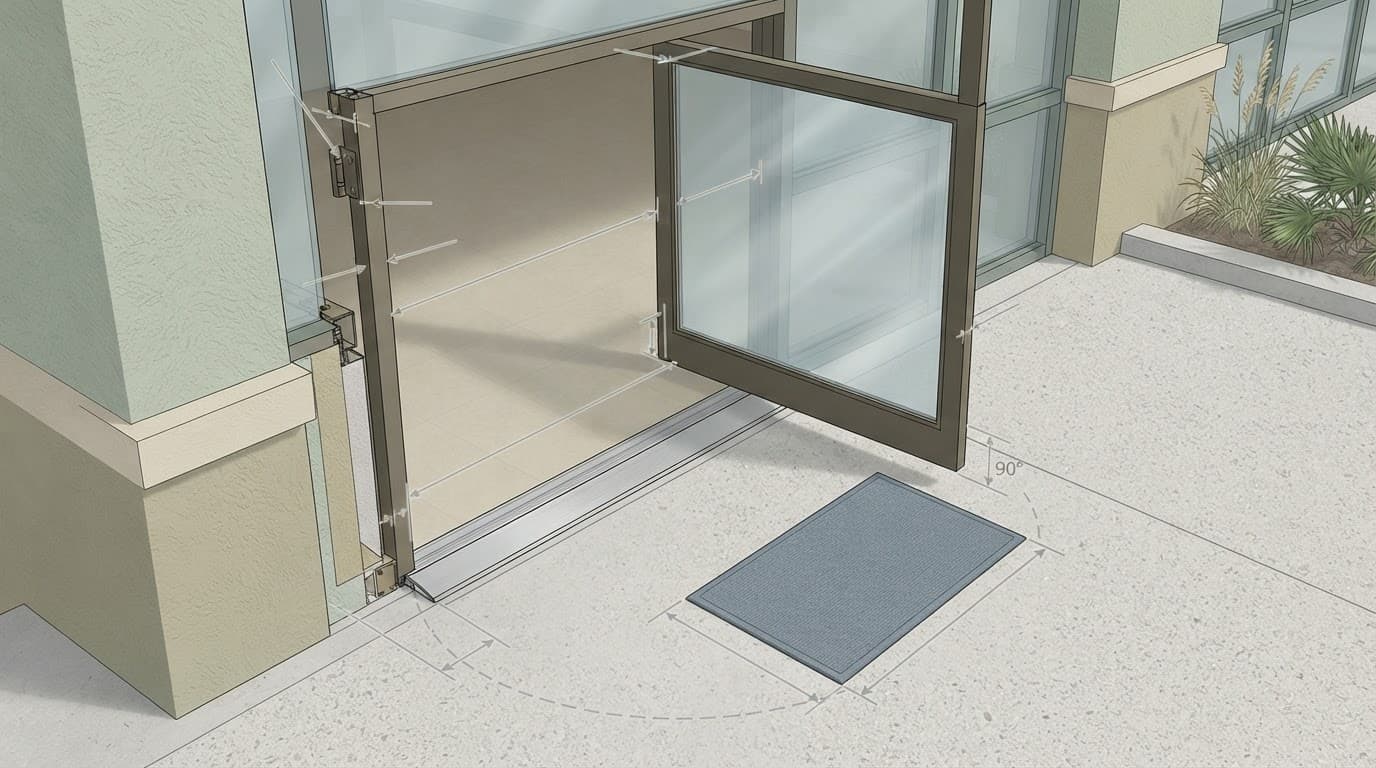
Restricted swings and projecting hardware
A wall, planter, merchandise rack, or misplaced mat can interfere with the door's movement. Document the obstruction before moving anything, then note whether the condition changes afterward.
Handles and other hardware also deserve separate photographs. Don't simply subtract every projection from the opening and call the result a compliance measurement. Different features require their own assessment.
Our guide to storefront door hardware options covers how locks, closers, handles, and related components work together.
Paired doors and removable barriers
A double-door entrance may look generous while customers normally use only one leaf. Record that operating arrangement instead of reporting only the combined opening.
Also note whether the second leaf stays locked or whether a center member remains in place. Opening both leaves for deliveries doesn't describe everyday customer access.
For shopping-center entrances in Estero and Fort Myers, photograph the active leaf and any fixed center components separately.
A combined double-door measurement can hide a restriction at the leaf customers actually use.
What a Width Reading Says About Accessibility
Storefront door clear width is one part of an accessible entrance. A useful assessment also considers how someone reaches, opens, passes through, and leaves the doorway.
Width doesn't establish complete compliance
The ADA Standards address more than the size of an opening. Florida accessibility requirements and the circumstances of the work also matter.
A preliminary reading can flag a concern, support a repair discussion, or document a condition. It doesn't establish that an entrance complies with every applicable requirement.
Likewise, an older storefront's appearance or years of operation don't answer every accessibility question. This guidance isn't a substitute for a site-specific inspection or legal advice.
Approach and operation matter too
Customers need room to approach the entrance and operate its hardware. A display beside the handle or furniture immediately inside can create difficulty even when the doorway itself appears wide.
Accessible operating hardware should permit one-handed use without tight grasping, pinching, or wrist twisting. The surrounding layout must support that use.
Also document uneven surfaces, damaged thresholds, and mats that bunch beneath the door. These are separate observations, not deductions from the width reading. Keeping them separate helps prevent one acceptable dimension from overshadowing another access problem.
Choose Repairs Based on the Actual Restriction
The right response depends on what limits the opening. Replacing glass alone generally doesn't change the geometry of the door leaf, frame, or center member.
If a display blocks the swing, relocating it may address that obstruction. If the door binds or stops unexpectedly, the cause may involve alignment, pivots, or another component. A wider door isn't automatically the appropriate first repair.
For storefront updates in Bonita Springs or Naples, describe the access concern before selecting replacement glass or hardware. Appearance, security, and everyday operation all belong in the same conversation.
Our commercial storefront glass services include installation, replacement, and repair for retail stores, offices, restaurants, and other commercial properties. We can discuss glass work alongside the existing entrance configuration without treating new glass as an accessibility guarantee.
When damage is the immediate concern, our entry door glass repair services address storefront and door glazing. Keep the access measurements with the repair information so the discussion doesn't focus only on the broken pane.
Prepare for a Fort Myers Storefront Visit
A useful appointment starts with clear observations. Bring the preliminary width reading, photographs of both sides, and a short description of what customers experience.
Include whether the door sticks, slams, catches a mat, or behaves differently during wind or rain. Southwest Florida weather belongs in the operating history, but it shouldn't become an assumed diagnosis.
For property managers handling entrances in Lehigh Acres or Punta Gorda, label every photo with the property and doorway. Similar-looking storefronts make unlabeled measurements easy to mix up.
Keep glass dimensions separate from passage-width notes. Also identify which leaf normally opens and whether a second interior door creates another restriction.
We offer free estimates for glass work. A width reading and clear photos give us a useful starting point for discussing the storefront; a broader accessibility determination requires evaluation of the complete entrance and applicable requirements.
Frequently Asked Questions
Can I use the door's labeled size as its clear width?
No. A label or product description usually identifies the door or assembly, not the passage available after installation.
The frame, open leaf, and other components affect usable space. Record the label if one is present, but keep it separate from your field reading. Likewise, don't treat a previous glass invoice as evidence of the entrance's clear opening.
Will replacing the glass make the entrance wider?
Replacing only the pane generally leaves the surrounding door geometry unchanged. It can address damaged glazing, but it doesn't usually enlarge the passage.
If width is the concern, the discussion needs to include the door leaf, frame, hardware, and surrounding layout. This distinction helps separate a glass-repair request from a possible entrance redesign before materials are selected.
Should I measure both sides of a vestibule?
Document each doorway separately. An exterior entrance can lead to a second restriction immediately inside.
Photograph the space between the doors as well, but don't combine the two openings into one width figure. Each reading needs its own door position, endpoints, and notes about nearby obstructions.
Start With the Space Customers Can Use
A useful storefront door clear width reading describes the passage, with enough context to explain how you obtained it. Door labels, glass dimensions, and outside frame measurements answer different questions.
For your Fort Myers entrance, keep usable space at the center of the repair discussion. Accurate notes help separate damaged glass, operating problems, and possible access restrictions without treating one measurement as proof of full accessibility.