
Storefront Glass Door Hardware Options for Fort Myers Businesses
A storefront door gets used hundreds of times before anyone notices it. When the closer slams, the lock sticks, or a handle feels loose, customers notice right away.
The right storefront glass door hardware keeps a Fort Myers business secure, accessible, and easy to enter in humid coastal weather. Your door system needs more than attractive glass. It needs components that match the door weight, traffic level, safety requirements, and building conditions.
The best choice starts with how the entrance works during a normal business day.
Start With the Door System and Daily Traffic
Hardware must fit the glass door and frame, not simply look good beside them. A narrow-stile aluminum storefront door, a full-glass door, and a heavy insulated-glass entrance each need a different approach.
A busy restaurant, medical office, or retail space needs hardware built for repeated use. Meanwhile, a small professional office may prioritize a quiet closer and a more refined pull-handle style.
Match hardware to the door's weight
Glass is heavy, and large commercial doors put steady stress on pivots, hinges, closers, and frames. A closer that is too weak lets the door drift or fail to latch. One with too much force makes the entrance difficult for customers to use.
A door professional should measure the slab, glass thickness, frame condition, swing direction, and existing hardware locations. Those details determine the proper closer size, pivot rating, and lock preparation.
Plan around traffic patterns
Consider when the door sees its heaviest use. A storefront near downtown Fort Myers may have steady foot traffic all day. A Cape Coral salon might have bursts of arrivals at appointment times. In either case, a door that stays propped open or closes too quickly creates problems.
Single doors work well for many suites. Double doors offer more opening width for deliveries, moving equipment, or large customer groups. However, double-door systems need reliable astragals, coordinators, and latching hardware so both leaves close in the right order.
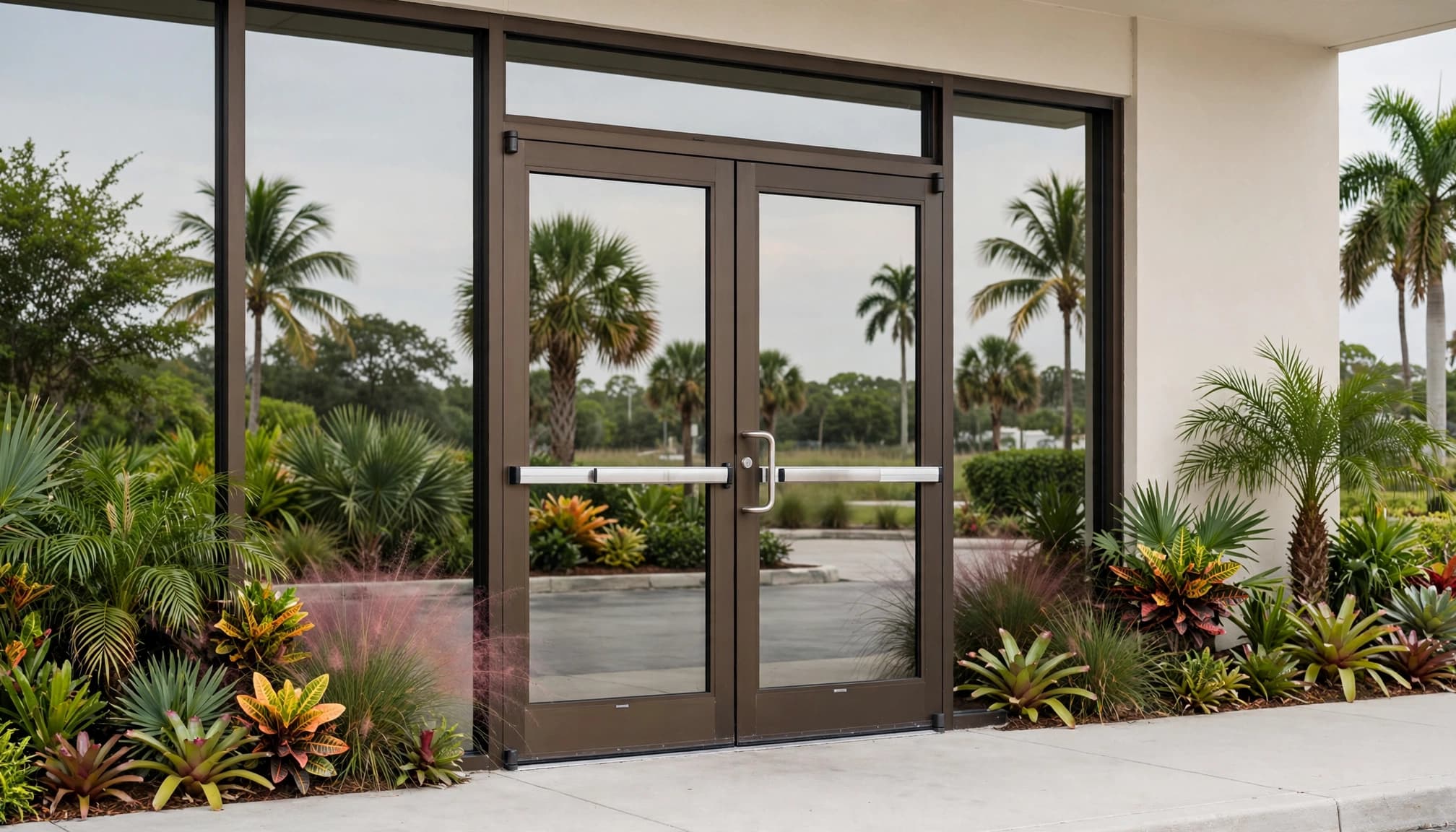
Storefront Glass Door Hardware Options That Fit the Job
Commercial entrances usually combine several pieces of hardware rather than relying on a single product. The right set depends on whether the door needs free entry, keyed access, emergency exit capability, or controlled access after hours.
This quick comparison helps narrow the options.
| Hardware type | Best use | Main consideration |
|---|---|---|
| Surface-mounted closer | High-use aluminum storefront doors | Visible but easy to inspect and adjust |
| Concealed closer | Clean, upscale glass entrances | Requires compatible door and frame preparation |
| Floor closer and pivot | Heavy frameless glass doors | Needs correct floor preparation and service access |
| Rim exit device | Required egress doors with high occupancy | Must work with the full rated door assembly |
| Mortise lock | Offices and retail storefronts | Offers a neat look with keyed security |
| Electric strike or electrified lock | Controlled entry systems | Needs power, wiring, and a safe egress plan |
Closers, pivots, and hinges control the swing
A commercial door closer manages speed, closing force, and the final latch action. Surface closers remain common because technicians can access and adjust them easily. They suit many aluminum-framed doors and handle frequent use well.
Concealed overhead closers hide inside the frame or door rail. They create a cleaner appearance for boutique retail, professional offices, and upscale lobbies in Naples or Bonita Springs. Because access is more limited, precise installation matters.
Floor closers and pivots are common with heavier all-glass doors. They can carry significant weight, but a worn pivot or loose top arm can cause misalignment. Continuous hinges are another strong option for framed doors because they spread the load along the full height of the door.
Pulls, push bars, and locks shape the user experience
A vertical pull handle gives a glass entrance a clean, familiar appearance. Choose a diameter and projection that feels comfortable and leaves room for hands. Back-to-back pulls work well on doors with a mortise lock, while a push plate can simplify exit-only doors.
For a key-operated storefront, a mortise deadlock or hook bolt can provide dependable security. Narrow-stile aluminum doors often use specialized storefront locksets that fit the slimmer frame profile. Avoid mixing components from unrelated systems without confirming compatibility.
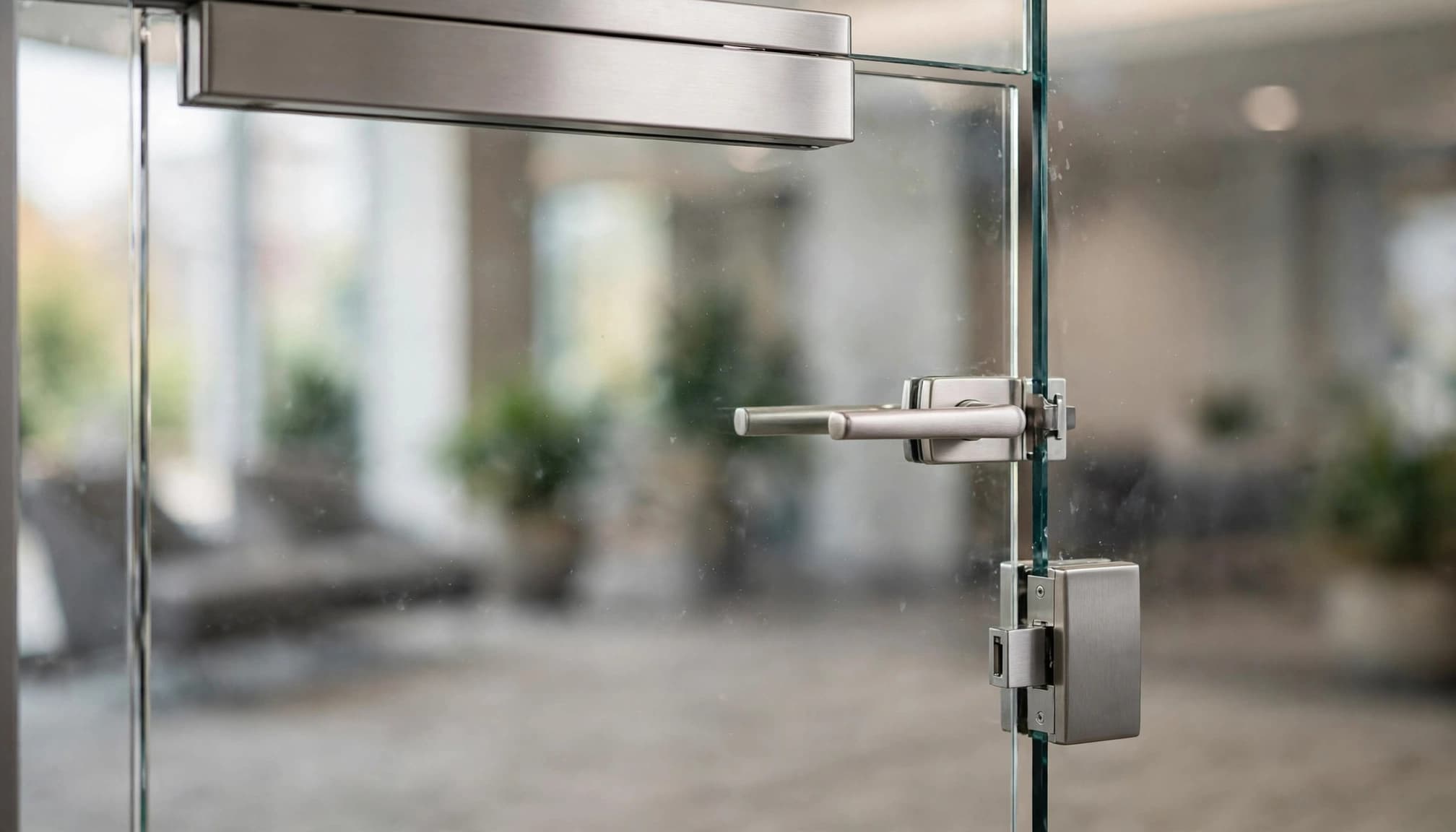
Security and Safe Exit Need Equal Attention
A locked storefront should still allow people to leave quickly. That balance affects hardware selection, especially for restaurants, gyms, clinics, schools, and other spaces with public occupancy.
Security hardware also needs to support daily routines. Staff should be able to unlock, open, and secure the door without fighting a misaligned latch or carrying an oversized key ring.
When panic hardware belongs on the door
Exit devices, often called panic bars, release the latch when someone pushes the bar from inside. Building and fire code requirements depend on occupancy, occupant load, door use, and local enforcement. A qualified installer can help determine whether your entrance requires panic hardware.
Choose commercial-grade exit devices for doors that see frequent traffic. Rim devices mount on the interior face of the door. Vertical-rod systems secure the top and bottom of one leaf on certain double-door arrangements. Every component must work with the door's approved configuration.
An exit device cannot compensate for a dragging door or a misaligned frame. The door must close, latch, and release correctly as a complete system.
Access control adds convenience after hours
Electric strikes, electrified panic devices, keypad readers, fobs, and video intercoms can limit entry without changing safe egress from the inside. This is useful for medical offices in Estero, managed buildings in Fort Myers, and businesses with restricted reception areas.
Before adding electronic access, confirm how the hardware responds during a power outage and how it integrates with the building's fire and life-safety requirements. A good system provides controlled entry while preserving straightforward exit.
ADA Accessibility Begins at the Entrance
An attractive front door doesn't help if customers cannot operate it comfortably. Accessibility should guide decisions about hardware height, grip style, clear opening width, and closing force.
The ADA Standards set baseline requirements, while local building rules and the door's location can add other conditions. A field review is better than assuming an existing storefront meets current requirements.
Choose handles that don't demand a tight grip
Lever handles, push bars, and accessible pulls are easier to operate than small knobs or thumb-turn-only hardware. Hardware should allow use with one hand and without tight grasping, pinching, or twisting of the wrist.
Mounting height matters as well. Installers should verify the final hardware location after accounting for thresholds, door rails, and any nearby access-control equipment. Details that look minor on a plan can affect real-world use.
Keep the opening clear and manageable
A swinging door generally needs at least 32 inches of clear width when open 90 degrees under ADA standards. The clear width comes from the face of the open door to the stop, so a wide-looking door can still fall short if the hardware or frame reduces the passage.
Interior hinged doors generally have a maximum opening force of five pounds under ADA requirements. Exterior doors may be subject to local code or other requirements because wind pressure and weather conditions affect operation. Proper closer adjustment keeps the door from feeling heavy while still allowing it to latch.
Coastal Conditions Change the Hardware Conversation
Salt air, high humidity, wind-driven rain, and daily temperature swings are hard on exposed metal parts. Fort Myers businesses near the river or coast should treat finish and corrosion resistance as practical decisions, not decorative upgrades.
The same applies across Southwest Florida, including Punta Gorda, Lehigh Acres, and coastal areas of Naples. Even inland properties deal with moisture that can affect door alignment and hardware performance.
Favor materials built for moisture
Stainless steel hardware, anodized aluminum, and quality powder-coated finishes usually hold up better than basic plated hardware. Grade selection and finish quality matter, especially near saltwater. Specify materials intended for exterior commercial use.
Door sweeps, perimeter weatherstripping, threshold seals, and drip details also help protect the interior and hardware. Water entering at the bottom rail can affect locks, pivots, and frame components over time.
For hurricane-prone areas, don't replace a latch, closer, or exit device without checking the door's tested or approved assembly. Impact-rated storefront systems depend on compatible glass, framing, anchors, and hardware.
Make maintenance part of the operating plan
Commercial glass door hardware needs routine attention. Wipe salt film and grime from handles, inspect fasteners, and listen for scraping or rattling. Staff should report a door that won't latch, swings unevenly, or needs extra force to open.
Avoid heavy oils on locks and pivots unless the hardware manufacturer calls for them. The wrong lubricant attracts grit and can make the problem worse. A technician can adjust closing speed, alignment, and latch engagement before a small issue damages glass or hardware.
Choose a Finish That Supports Your Brand
Door hardware is one of the few parts of a storefront that nearly every visitor touches. Its finish should fit the building without becoming difficult to maintain.
Satin stainless steel is a dependable choice for modern offices and retail spaces because it hides fingerprints better than polished metal. Dark bronze pairs naturally with bronze aluminum frames. Matte black can look sharp on contemporary storefronts, though scratches may show more easily in high-contact areas.
Keep the hardware visually consistent
Match pulls, locks, closers, hinges, and access-control trim whenever possible. A bright chrome pull beside a dark bronze frame can look accidental, particularly at a polished reception entrance.
Glass selection affects the final look, too. Clear glass feels open and welcoming. Tinted, low-e, frosted, or decorative glass can improve privacy, solar control, or branding while keeping the entrance professional. Custom door work allows the glass and hardware to look planned as one system.
Professional Installation Protects the Glass and the Investment
Commercial glass doors tolerate little error. Incorrect holes, uneven glass edges, loose fasteners, or poorly set pivots can cause binding and create stress points. Hardware also needs accurate alignment with the strike, threshold, frame, and adjacent door leaf.
For new construction, hardware planning should happen before fabrication. For a renovation, installers should inspect the existing door, frame, glass condition, and available replacement parts before ordering.
Replace failing hardware before the door is damaged
A closer that leaks fluid, a bent pull handle, or a lock that sticks isn't only an inconvenience. Continued use can pull the door out of alignment, damage the frame, or strain the glass around mounting points.
Businesses can get commercial storefront glass services for new entrances, repairs, replacement glass, and related commercial door work. A site visit helps identify whether a simple adjustment, replacement component, or full door update makes the most sense.
Bring details to the appointment, including photos, door measurements, traffic concerns, lock needs, and whether the door has trouble during wind or rain. Those details lead to a more accurate recommendation and fewer surprises during installation.
Final Thoughts on Commercial Door Hardware
The best storefront glass door hardware feels almost invisible during the day. It opens comfortably, closes securely, withstands local weather, and supports a professional first impression.
For Fort Myers businesses, the strongest choice is hardware matched to the exact door system, occupancy needs, accessibility requirements, and coastal conditions. Reliable operation starts with compatible components and careful installation.