
Exterior Window Condensation in Fort Myers: What It Means
A window covered in droplets at sunrise can look like a leak, especially after a humid Southwest Florida night. Yet exterior window condensation is often a reassuring sign that insulated glass is doing its job.
For homeowners in Fort Myers, Cape Coral, and Bonita Springs, the key is knowing where the moisture sits and how long it lasts. A quick look in the morning can tell you whether the glass is performing well or needs attention.
Why Exterior Window Condensation Forms in Southwest Florida
Condensation forms when humid air touches a surface that is cooler than the air's dew point. Southwest Florida supplies plenty of moisture for that equation, particularly overnight and before the morning sun has warmed the glass.
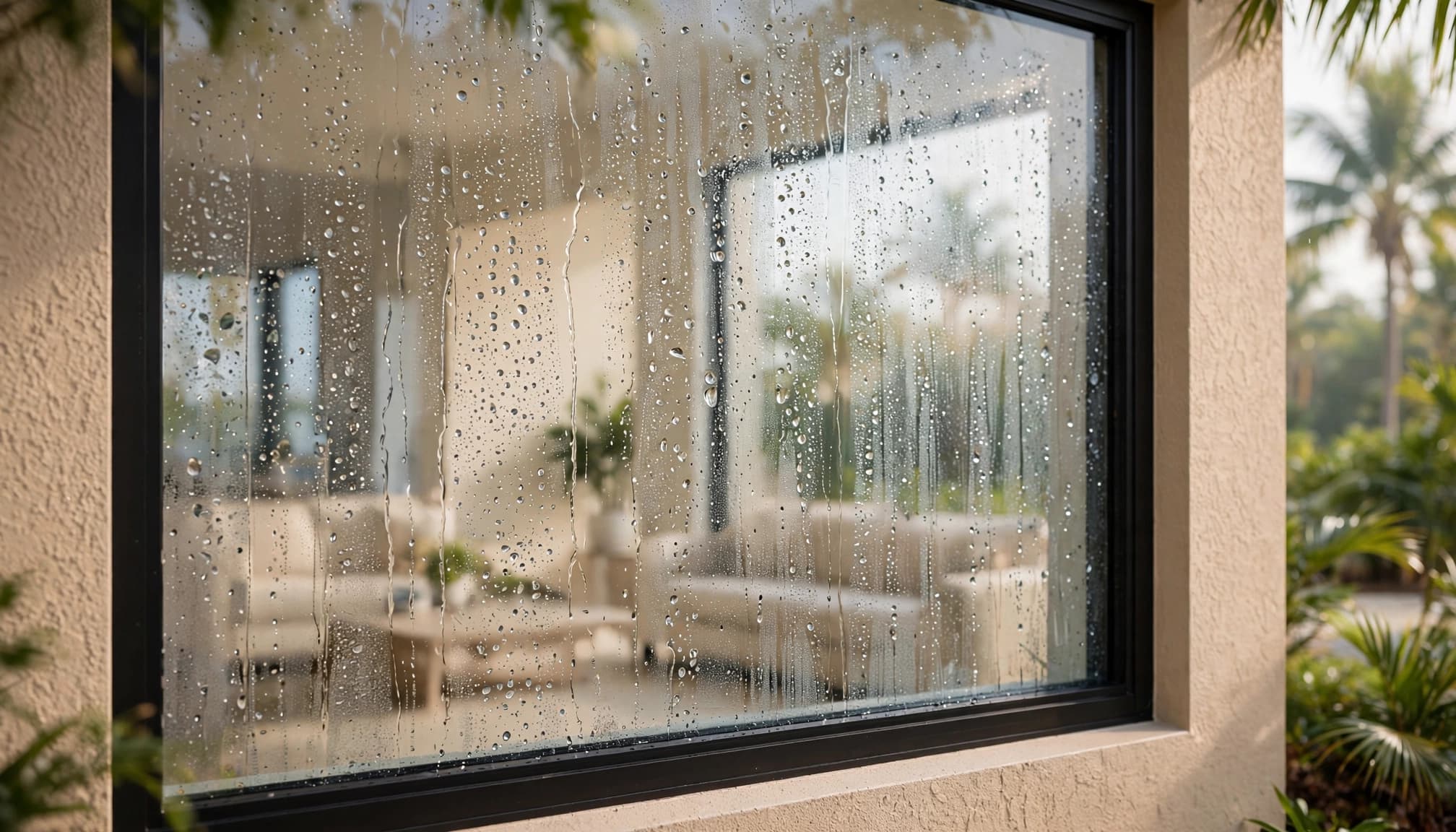
A window's exterior pane can cool below the outdoor dew point through nighttime heat loss to the open sky. This is most noticeable after clear, calm nights with high humidity. By sunrise, tiny droplets can gather on the outside surface.
Insulated glass holds indoor comfort inside
Modern insulated windows use two or more panes separated by a sealed airspace or gas-filled space. Low-E coatings may also help manage solar heat. Because the window limits heat transfer, the outer pane may stay cooler than the humid air around it.
That can create exterior window condensation even while your home feels comfortable and dry. In other words, a clear interior pane and dry sill are good signs.
Morning conditions make droplets more visible
Humidity rises overnight, while outdoor temperatures often dip before dawn. Meanwhile, the first sunlight hasn't yet warmed the exterior glass. These conditions are common near the Caloosahatchee River and throughout waterfront areas of Cape Coral.
The droplets usually disappear as sunlight and warmer air raise the glass temperature. A shaded window may stay damp longer, especially on the north or east side of the home.
Exterior moisture that clears as the day warms is usually weather-related, not a failed window seal.
Exterior Window Condensation Can Signal Efficient Glass
Many homeowners expect efficient windows to remain perfectly dry at all times. However, insulation changes how heat moves through the glass. A window that blocks indoor cooling from escaping may allow its exterior surface to reach the outdoor dew point more easily.
Clear glass on the room side is the important detail
Check the window from inside your home. If the room-facing glass is clear, the frame and sill are dry, and the droplets are only outdoors, the window is likely functioning as intended.
This is especially common in air-conditioned homes in Estero and Naples, where indoor comfort is steady while outdoor humidity remains high. Exterior condensation alone doesn't mean you need replacement windows.
Window performance isn't judged by one wet morning
A shaded wall, nearby irrigation, dense landscaping, and coastal air can all add moisture around a window. For example, sprinklers that hit glass before sunrise can mimic natural condensation, although the moisture may include water spots after it dries.
Watch the pattern for several days. Natural exterior condensation tends to appear early, bead lightly on the outside, and fade with daylight. Persistent water after irrigation often points to overspray instead.
When Condensation May Point to a Window Problem
The location of the moisture matters more than its amount. Water on the room side of the glass, fog trapped between panes, or recurring stains around a frame deserves closer attention.
Indoor condensation needs a different response
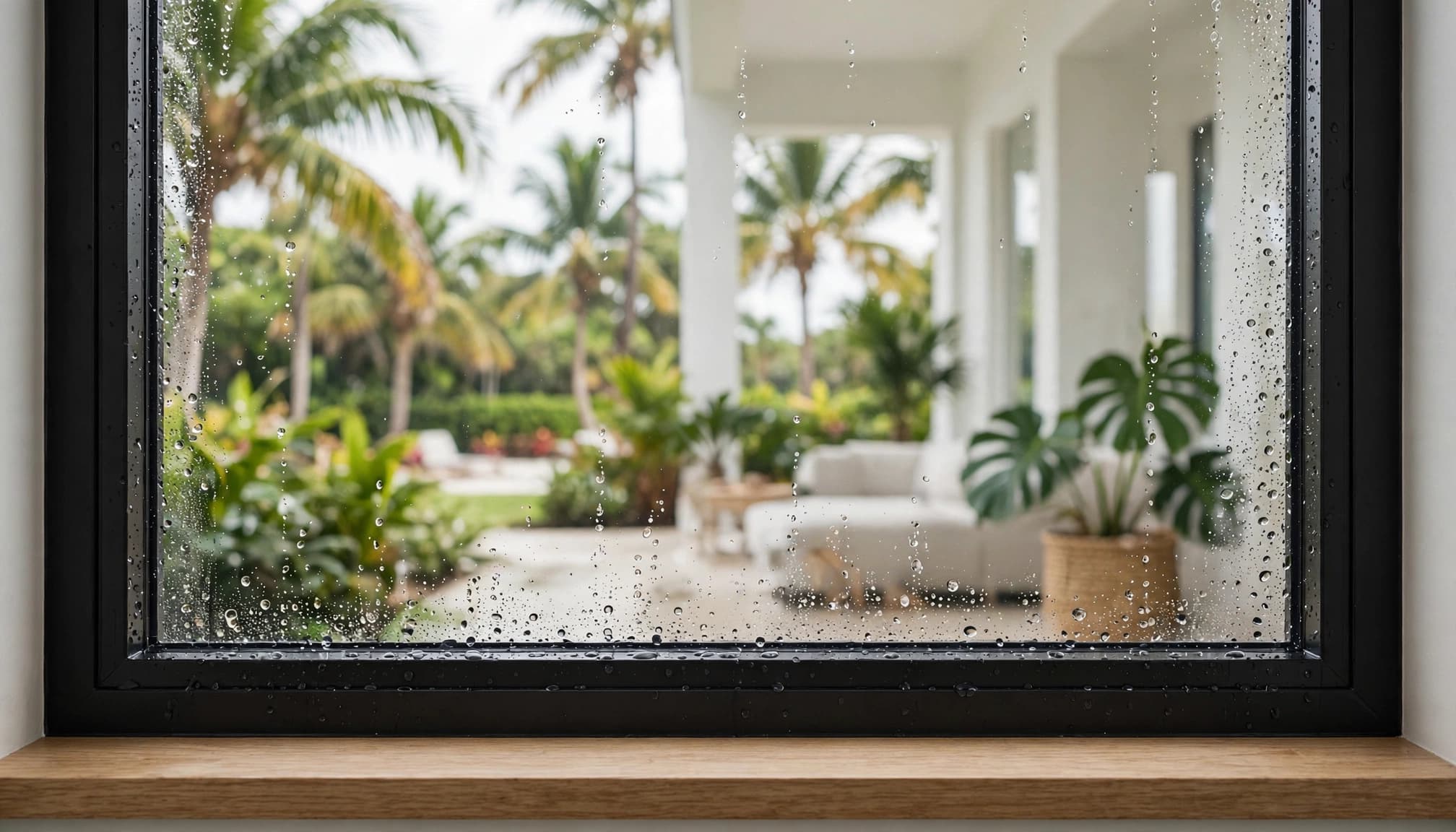
Moisture on the interior glass means warm, humid indoor air has reached a cooler surface. Bathrooms, kitchens, laundry rooms, and poorly ventilated rooms are common trouble spots.
In Lehigh Acres, this may show up after a long shower or when a home's air conditioning isn't removing enough humidity. Run bath fans during and after showers, use kitchen ventilation, and keep interior humidity under control. If water collects on the sill, dry it promptly to protect trim and surrounding finishes.
Fog between panes often means a seal failure
Insulated glass units have a perimeter seal that keeps the space between panes dry. When that seal fails, the glass can look cloudy, hazy, or streaked between the panes. Unlike exterior window condensation, this haze won't wipe away from either side.
A failed seal can reduce clarity and insulation. It can also make a previously crisp view look permanently dull. If you see moisture trapped inside the unit, arrange an inspection before ordering a repair.
For a damaged or failed glass unit, custom-cut window glass can provide a precise fit for the existing opening when the surrounding frame remains in good condition.
A Simple Way to Check Your Windows
Start with a clean, dry cloth and inspect the glass before the sun reaches it. Touching the window isn't always enough, since moisture can be hard to locate through a screen.
Use these quick checks:
- Wipe one small area on the outside. If it clears immediately, the moisture is on the exterior surface.
- Look at the glass from an angle inside the room. Haze that seems trapped within the unit points to a seal issue.
- Check the sill and frame. Indoor water, peeling finish, or soft trim needs prompt attention.
- Notice timing. Moisture that fades after morning sun is typical, while lasting fog between panes isn't.
Homeowners in Punta Gorda often see seasonal changes too. During wetter months, humid mornings can make exterior glass condensation more frequent. That pattern alone doesn't mean the windows have changed.
Keep the View Clear Without Overreacting
Avoid scraping or using abrasive pads on glass with exterior droplets. Let the sun dry routine condensation, or rinse the surface gently if minerals from sprinklers leave residue. Also, direct irrigation away from windows whenever possible.
If droplets appear indoors, adjust ventilation and air conditioning settings before assuming the glass has failed. However, don't ignore moisture that stays between panes or water that repeatedly damages interior finishes. Those symptoms call for a glass professional to assess the unit and frame.
Final Thoughts on Condensation and Window Health
Fort Myers humidity can put a visible layer of water on even high-performing windows. When exterior window condensation forms only outside and disappears with daylight, it often confirms that insulated glass is limiting heat transfer.
Keep an eye on where the moisture appears, how long it remains, and whether the glass stays clear between the panes. Those details separate a normal humid morning from a window issue that needs repair.