
French Door Glass Replacement Options in Fort Myers
A crack across your French door can change how you use the whole room. In Fort Myers, French door glass replacement may mean changing one pane, ordering a new sealed glass unit, or replacing a damaged door assembly. The right choice depends on what broke and whether the frame still works properly.
Start with the door, not the glass catalog. A close look at the damage helps you avoid paying for more work than the opening needs. It also reveals when a glass-only repair won't solve the problem.
Key Takeaways
- Cracked glass, fog between panes, and water around the frame point to different repair needs.
- Insulated, decorative, and impact-rated glass are options to discuss, but your existing door may not accept every type.
- Safety glass requirements and storm-related ratings apply to the opening and installation, not appearance alone.
- Ask for a written estimate that identifies the glass, the work included, and any frame or hardware repairs.
Assess the damage before choosing new glass
A photo is useful when you call for service, but it can't show everything. Look at both sides of the door, the edges of the glass, and the area where the frame meets the wall. Avoid pressing on a cracked pane or taking glazing stops apart yourself.
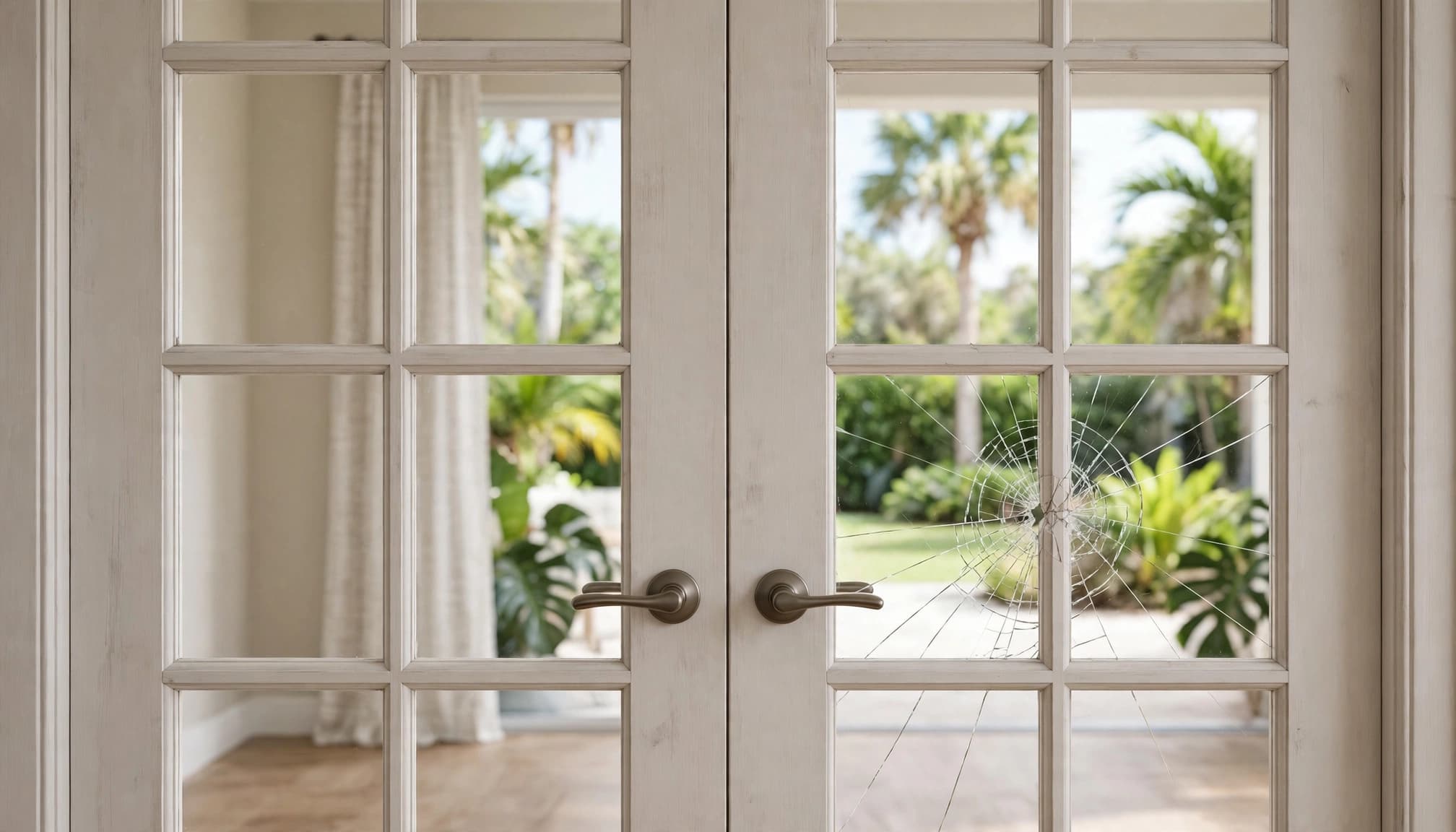
Cracks and loose glass need prompt attention
A chip near the glass edge may grow as the door opens and closes. A through-crack, loose pane, or scattered fragments call for a professional assessment. Keep people and pets away from damaged glass, especially near a frequently used patio entrance.
Check whether the door still closes and latches without dragging. In a Cape Coral home, a cracked pane and a sticking door might be separate problems. They might also share a cause, such as a shifting or damaged sash. Replacing glass alone won't correct a door that no longer fits its opening.
Fog and water stains tell different stories
Moisture between the panes of an insulated glass unit usually means its edge seal has failed. Wiping either exposed surface won't clear it. Replacement of the sealed unit is often the practical glass repair when the surrounding door is sound.
Droplets on the room-facing or outdoor surface are different. Southwest Florida humidity can produce surface condensation even when the seal is intact. Meanwhile, staining at the bottom of the door or wet flooring after rain warrants a closer look at weatherstripping, the threshold, and the surrounding frame. Caloosahatchee Glass & Mirror lists fogged insulated glass among its glass repair and replacement services.
When does glass-only replacement make sense?
French doors have several parts that can fail independently. A technician should check the pane, glazing stops, sash, hinges, latch, and weather seal before recommending a scope of work.
Keep the door when the assembly is sound
If the door swings smoothly, closes squarely, and has no significant frame damage, replacing the affected glass may preserve the assembly. That can be a sensible approach for a broken pane or a fogged insulated unit.
First, the replacement must match the door's construction. Glass thickness, unit depth, edge clearance, and safety specifications matter. A slightly different-looking pane can fit mechanically yet stand out beside its neighbor. Ask the installer to compare the proposed glass with the other leaf of the French door before ordering.
Consider more than glass when the frame has failed
A warped sash, persistent leak, rotted wood, or damaged glazing pocket can make a glass-only job a poor investment. The same applies when an existing door cannot accommodate the glass specification you need. Hardware problems may call for repair rather than a complete new door, so ask which components have failed.
For a Lehigh Acres home with older doors, get a clear comparison between replacing the glass and replacing the affected door assembly. The estimate should explain what each option fixes. It shouldn't assume that a new pane will stop water entering around the threshold or restore a door that no longer locks securely.
French door glass replacement: compare the main choices
The most suitable glass depends on the existing door and what you want to improve. Appearance, privacy, heat control, and storm-related performance are separate questions.
| Glass choice | Good reason to ask about it | What to confirm |
|---|---|---|
| Clear safety glass | Keeping a similar view and appearance | Required safety type and fit |
| Insulated glass unit | Replacing fogged double-pane glass | Unit depth and visual match |
| Decorative or patterned glass | Adding privacy or changing the look | Pattern availability in a suitable safety-glass configuration |
| Impact-rated glass | Addressing storm-related requirements | Approval for the complete door assembly |
The table is a starting point, not a compatibility list. An on-site inspection determines what your door can accept.
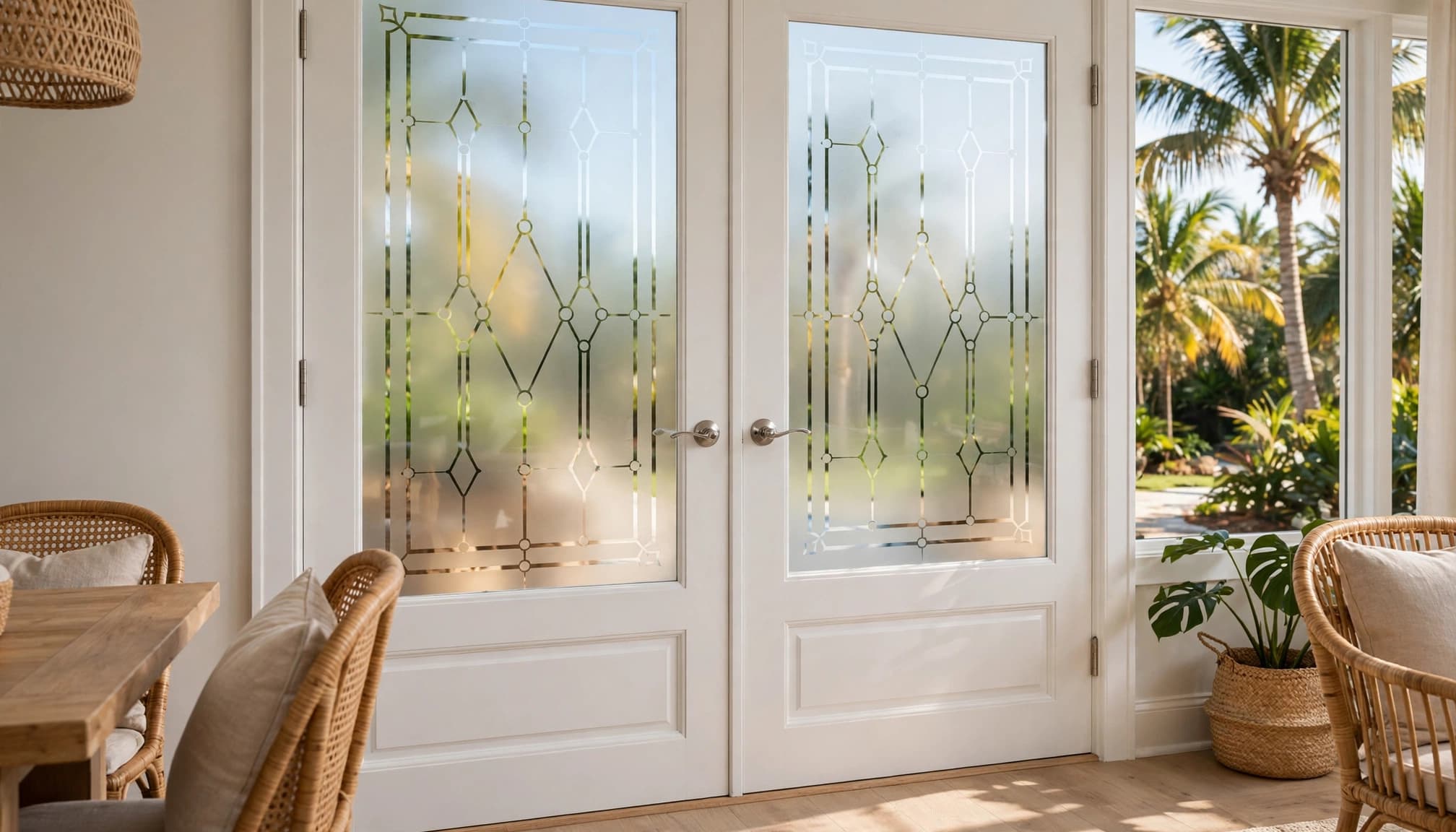
Insulated units and sun control
An insulated glass unit, or IGU, contains panes joined around a sealed spacer. When that seal fails, the assembled unit generally needs replacement rather than a single pane. In a sun-exposed Estero room, you can also ask whether a compatible low-emissivity coating or tint is available.
Low-e glass can help manage heat gain, but the coating and tint may change how the new pane looks next to existing glass. Ask to compare specifications for both door leaves before selecting one replacement. A glass upgrade also won't correct air leaks around worn weatherstripping.
Decorative glass and privacy
Patterned glass can soften the view into a dining room or pool-facing hallway. Frosted or textured choices offer privacy without blocking daylight altogether. In a Bonita Springs home, the most useful question may be how much privacy you need at night when interior lights are on.
Caloosahatchee Glass & Mirror lists patterned, decorative, clear, tinted, and tempered glass among its custom glass options. Ask which options can be made to fit your specific French door. A pattern you like may require a different glass construction or may not be available in an approved replacement for that opening.
Understand safety glass and impact ratings
French doors are used at walking height, so glass selection has a safety component. Tempered safety glass breaks differently from ordinary annealed glass. Laminated glass holds broken pieces against an interlayer. Neither description, on its own, proves that a door meets an impact-resistance requirement.
Confirm the safety-glazing specification
A replacement should meet the applicable safety-glazing requirements for the door. Ask your provider to identify the proposed glass and check the existing door documentation or permanent glass markings when available.
Don't order a pane by measuring the visible opening alone. The portion hidden beneath the glazing stops, the required clearances, and the original glass construction affect the order. An installer can also check whether the retaining parts and seals remain usable.
Treat storm protection as a system question
For a Naples or Punta Gorda property, storm-related requirements deserve a separate conversation. Impact-rated glass by itself doesn't make an ordinary French door an approved impact-resistant door. The rating must apply to the relevant tested assembly, including its frame, hardware, installation, and approved glass configuration.
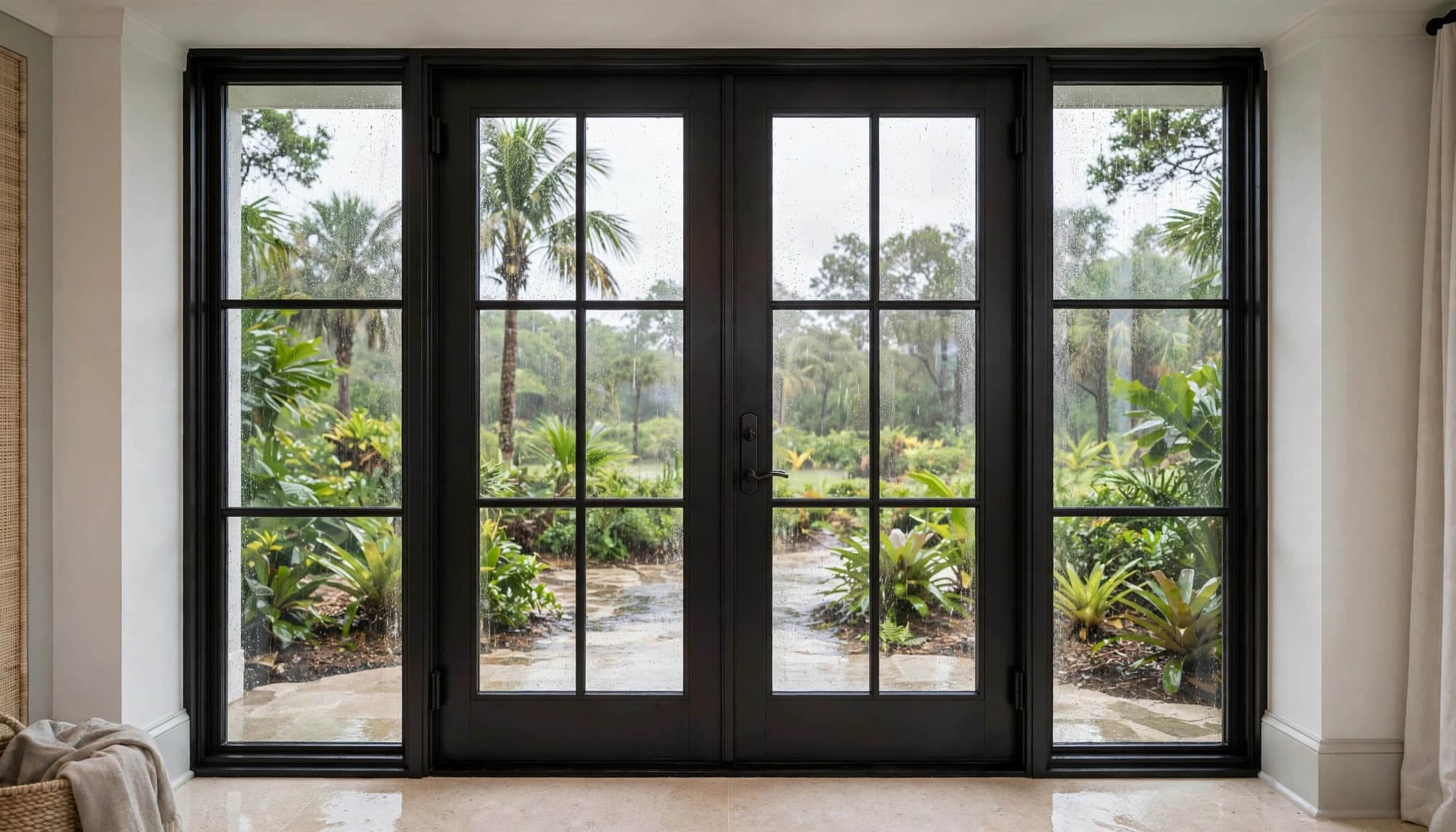
Ask the provider to verify any product approval, local permit needs, and installation requirements for your address. If your existing door cannot accept an approved repair configuration, a complete door replacement may be necessary. Don't assume a glass-only change will improve a door's storm rating.
Match the new pane to the existing door
A replacement can be safe and properly installed yet still look different. This matters most when two French door leaves sit side by side and one keeps its original glass.
Compare color, reflection, and grids
Glass may show a slight green or blue cast. Coatings, tint, thickness, and age can also affect reflection. Look at the doors in daylight and after dark, then tell the estimator which differences would bother you.
Grids need equal attention. Your door may have bars on the glass surface, bars between the panes, or separate small panes. Those designs don't use the same replacement approach. A photo of the entire door, plus a close-up of the glass edge and grid, helps a provider identify what to inspect.
Check the fit beyond the pane
Ask the installer to examine glazing stops and seals before ordering. If a stop is brittle or damaged, reusing it may compromise the finished job. The door should also operate normally after installation, without rubbing, rattling, or a new gap at the edge.
Where a matching pane isn't available, replacing glass in both leaves may produce a more consistent appearance. Compare that added expense with the visual difference you can reasonably expect from replacing just one unit.
Get a useful estimate from a local provider
Price depends on more than pane size. Glass construction, custom fabrication, access, and the condition of the door all affect the scope. Rather than relying on a generic price per square foot, ask what the quoted work actually includes.
Share the details that affect the quote
Have photos of the full door and damage ready. Tell the provider whether there's fog between panes, water after rain, trouble latching, or visible frame damage. Mention existing grids and any paperwork that identifies the door manufacturer.
Then request a written estimate that names the proposed glass type and states whether the work includes measurement, removal, disposal, new seals or glazing materials, and installation. Ask how a discovered frame or hardware problem would change the plan. Scheduling also depends on whether the correct glass is available or needs custom fabrication.
Check qualifications and service scope
A qualified provider should be willing to inspect the opening, explain glass compatibility, and distinguish a pane replacement from door repair. For any proposed impact-rated work, ask for documentation tied to the actual door assembly. Confirm licensing and insurance appropriate to the work, along with who handles any required permits.
Caloosahatchee Glass & Mirror describes itself as a fourth-generation, family-owned, licensed and insured local glass company in Fort Myers. Its listed services include glass repair, replacement, and custom fabrication. Before booking, confirm the scope of your particular French door project rather than assuming every glass type fits every door.
Frequently asked questions
Can one pane of a French door be replaced?
Often, yes, if the door is sound and the installer can obtain glass that meets the required fit and safety specifications. If the door has an insulated glass unit, the repair typically involves replacing the sealed unit rather than one of its individual panes. The adjacent door leaf may still look slightly different afterward.
Does fog between panes mean I need a whole new door?
Usually, fog between panes points to a failed insulated glass seal. If the sash and frame remain in good condition, replacing the IGU may be enough. Water around the frame, difficulty closing, or visible structural damage needs further inspection before you choose a glass-only repair.
Can I put impact-rated glass into my existing French door?
Don't assume so. The door's approved configuration must support the proposed glass and installation. Ask a provider to check the door identification, applicable product approval, and local requirements. A complete approved door assembly may be the appropriate option if the existing one doesn't qualify.
Conclusion
A broken pane doesn't always call for a new French door. The soundness of the whole opening determines whether glass-only replacement will last and whether it meets your needs.
Start with the damage, then compare glass options that fit the door's construction. A careful inspection and a clearly scoped estimate can turn that distracting crack into a repair you understand.