
How Hard Water Damages Shower Glass in Florida Homes
Florida shower glass can go from clear to cloudy faster than most homeowners expect. In Fort Myers, Cape Coral, and Naples, hard water leaves tiny mineral spots that keep building until the door looks dull.
If you've wiped the glass dry and still see a white haze, the problem is usually the water, not your cleaning routine. Once those deposits sit long enough, they can etch the surface and leave a permanent mark.
Knowing the difference between fresh buildup and real damage makes cleanup a lot easier.
Key Takeaways
- Hard water leaves calcium and magnesium behind when shower water dries on the glass.
- Florida heat speeds drying, so mineral spots and cloudy buildup appear fast.
- Fresh deposits can often be removed, but etched glass may need polishing or replacement.
- Drying the glass after use helps more than waiting for a big cleaning day.
- A water softener, glass protectant, or better enclosure design can reduce repeat buildup in Southwest Florida homes.
Why Florida Water Leaves Marks So Quickly
What the white residue really is
In Southwest Florida, much of the shower glass trouble comes from dissolved minerals, especially calcium and magnesium. When the water dries, those minerals stay behind as white spots, streaks, or a cloudy film.
Hard water shower glass problems usually start small. A few dots near the handle or the bottom edge can spread into a dull haze after repeated showers.
Why Southwest Florida shows it fast
Heat speeds the drying process, so water has less time to run off before minerals stick. In Estero and Bonita Springs, bathrooms often stay warm and humid, which leaves the glass wet in uneven patches.
That uneven drying creates rings, streaks, and a powdery look that catches light. Homes with strong spray patterns or frameless doors notice it even faster.
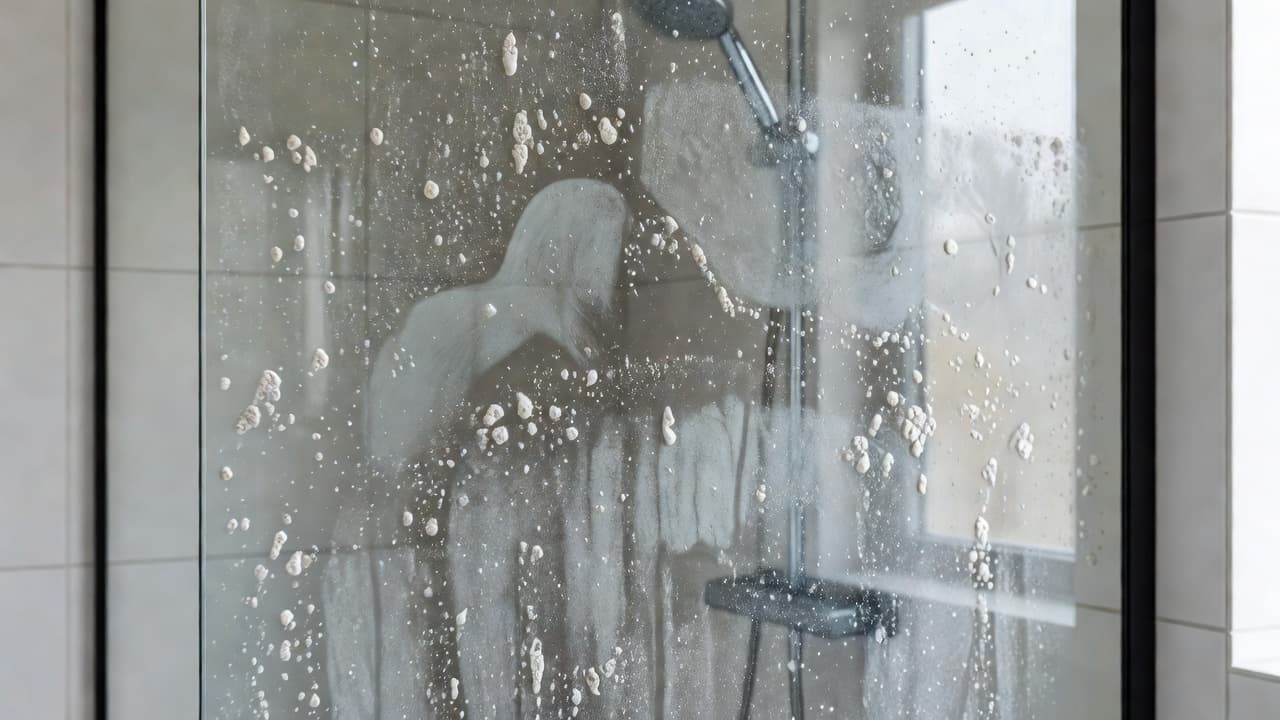
The first signs often show up where water sits the longest, along the lower panel, at the corners, and around hardware.
Cloudy Film, Soap Scum, or Etching?
How to tell the difference
A quick comparison helps you separate a few common glass problems.
| Problem | What it looks like | What usually helps |
|---|---|---|
| Hard water spots | White dots, rings, cloudy haze | Mineral-removing cleaner |
| Soap scum | Filmy, slippery residue | Bathroom cleaner made for soap buildup |
| Etching | Faint gray or frosted areas that stay after cleaning | Polishing or replacement |
If the glass in Lehigh Acres or Punta Gorda feels rough after cleaning, you're probably past surface buildup. Etching means the glass itself has started to lose clarity, and standard cleaners won't fully fix it.
Cloudy film can wipe away with the right product. Etching usually looks dull from every angle, even after a thorough scrub.
Cleaning Shower Glass Without Making It Worse
Daily habits that stop buildup early
The best routine is simple. Rinse the glass after each shower, then use a squeegee or microfiber cloth to pull water off the panel. Drying the glass after use matters more than an occasional deep scrub.
Pay extra attention to the bottom rail, handle area, and edges where water collects. Those spots stay wet longest, so minerals settle there first.
Cleaners that are safe for glass
Use a cleaner made for mineral deposits, or a diluted vinegar solution on fresh spotting if the label allows it. Apply it, let it sit briefly, then rinse and dry the glass.
Skip abrasive pads, powder cleansers, and steel wool. They can leave fine scratches that make the next round of buildup look worse.
When the glass stays wet, the minerals stay behind.
If the door still looks foggy after cleaning, the problem may be etched glass instead of residue. That comes up often in busy family bathrooms in Fort Myers and Cape Coral, where the shower gets used all day.
A little care goes a long way, especially when the marks are fresh. Once the buildup hardens, the same glass takes more effort to bring back.
Prevention That Makes Sense in Southwest Florida
Water treatment and glass protection
If hard water keeps coming back, a water softener is the most direct fix. It reduces the minerals before they hit the shower glass, which helps every bathroom in the home, not just the one you clean most often.
A showerhead filter can change the feel of the water, but it usually doesn't solve hard water on its own. For homes in Naples, Estero, or Bonita Springs, that difference matters when the same haze keeps returning.
Glass protectants also help. They make water bead and run off faster, so minerals have less time to stick.
When replacement makes more sense
When a door stays cloudy after repeated cleaning, the glass may already be etched. At that point, polishing can help in some cases, but badly worn glass often needs replacement.
If you're planning a new bathroom or replacing a stubborn door, custom shower glass enclosures can be built to fit the space and reduce places where water sits. Better glass layout, tighter fit, and easier-to-clean hardware all help in homes across Fort Myers, Cape Coral, Lehigh Acres, and Punta Gorda.
For some bathrooms, the smartest fix is a better routine. For others, it's a better enclosure and a softer water supply. Either way, prevention costs less than fighting the same cloudy film every week.
Conclusion
Florida hard water leaves a clear pattern on shower glass, first as spots, then as cloudy buildup, and finally as etching if it goes unchecked. The fastest wins come from drying the glass after use, choosing the right cleaner, and treating the water before the minerals ever reach the door.
That matters in Southwest Florida, where showers in Fort Myers, Naples, Cape Coral, and the surrounding cities can build deposits faster than you expect. Keep up with the small habits now, and the glass will stay clear much longer.
If the haze keeps coming back, the problem is usually bigger than cleaning. At that point, it helps to look at the glass, the water, and the enclosure together.