
Why Frameless Shower Doors Leak in Southwest Florida Homes
Frameless shower doors look sleek, but they can still leave water on the bathroom floor. In Fort Myers, Cape Coral, and Naples, that small puddle often points to a simple issue, not a bad shower door.
Most frameless shower door leaks come from slope, seals, alignment, or caulk that has failed over time. Once you know what to look for, it gets easier to tell normal splash from a real problem.
Key Takeaways
- Frameless shower doors are water-resistant, not completely watertight.
- The most common leak sources are slope problems, missing seals, worn sweeps, and caulk failure.
- A few drops inside the shower area are usually normal, but standing water outside the door is not.
- Heat, humidity, and heavy use in Southwest Florida can speed up wear.
- Many leaks can be fixed with adjustment or part replacement before a full replacement is needed.
Frameless Shower Doors Are Water-Resistant, Not Watertight
A frameless shower door works well because it uses thick glass, careful measurements, and minimal hardware. That design keeps the bathroom looking open, but it also means the door depends on tight fit and good drainage instead of a full metal frame.
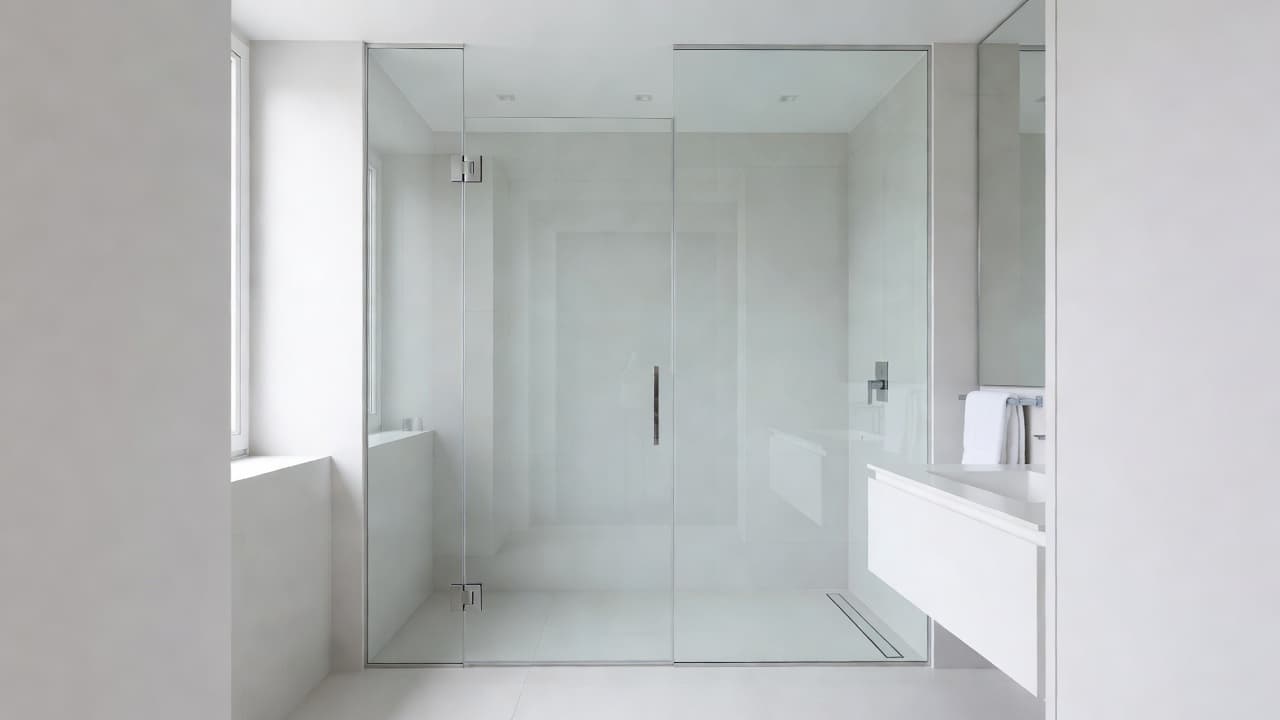
A little water escape can happen, especially with strong showerheads, handheld sprayers, or body sprays. A few drops near the threshold or hinge side may be normal. Water that reaches the main bathroom floor, however, usually points to a leak path that needs attention.
A frameless shower door should control water, not trap every drop like a sealed box.
The difference matters. If the shower leaves only a damp edge that dries quickly, the setup may be working as designed. If you need a towel after every shower, something is off.
Installation Problems That Lead to Leaks
The biggest leak problems often start on day one. A shower door can look straight to the eye and still be slightly out of square, and that tiny error creates a path for water. In Southwest Florida homes, especially after remodels, the tile and curb matter just as much as the glass.
A proper custom shower enclosure services installation starts with the opening, not the door. If the curb slopes the wrong way, water moves toward the bathroom instead of back into the shower. Even a small pitch problem can cause repeat leaks after every rinse.
Panel alignment also matters. If the door sits too far from the fixed panel, or the hinge side is not closing flush, water slips through gaps that should have been closed. That is common when a shower opening was measured too quickly or when the tile surface is uneven.
Homes in Bonita Springs and Estero often show this after a remodel when the tile edge is slightly off or the curb was built too flat. In older bathrooms, the problem may come from settling. In both cases, the door hardware can only do so much if the base is wrong.
Other installation mistakes include using the wrong size seal, leaving the strike edge too open, or failing to apply caulk at the right joints. None of these issues are dramatic on their own. Together, they can turn a clean frameless door into a steady drip.
Worn Seals, Sweeps, and Caulk Fail Over Time
Even a good installation needs maintenance. Rubber seals harden, bottom sweeps wear down, and caulk breaks loose after years of heat, humidity, and cleaning. In Southwest Florida, that wear often shows up faster than homeowners expect.
A missing or worn sweep is one of the most common reasons water escapes under the door. The sweep runs along the bottom edge and helps block spray from getting past the glass. When it cracks, shrinks, or pulls loose, the shower starts leaking at the threshold.
Side seals can fail too. If the strip between the door and fixed panel no longer presses firmly, water can run through the gap. That problem usually shows up as a drip line along the hinge side or latch side after a shower.
Caulk causes trouble when it separates from tile, grout, or the curb. Once that happens, water can slip behind the bead and show up later on the bathroom floor. The leak may look small at first, but it often gets worse after repeated use.
Here's a quick way to tell common symptoms apart:
| What you notice | Likely cause | What it usually means |
|---|---|---|
| Water at the bottom corner of the door | Worn sweep or missing seal | Water is slipping under the glass |
| Drips along the hinge side | Alignment issue or side seal failure | The door is not closing squarely |
| Moisture on the curb or tile joint | Caulk failure | Water is entering at a seam |
| Floor stays damp after every shower | Several small issues at once | The door needs a full check |
In Lehigh Acres and Punta Gorda, older bathrooms often need new sweeps or fresh sealant before anything else. Those repairs are usually quicker and cheaper than replacing the whole enclosure.
How to Tell Normal Splash from a Real Leak
Some water outside the shower is normal, especially if the showerhead is aimed toward the opening. A frameless door cannot stop every drop from a strong spray pattern. The real question is where the water ends up.
A little splash inside the threshold usually stays manageable. A damp mat near the shower entrance may also be fine if it dries quickly. What you do not want is water traveling beyond the curb, puddling near the vanity, or leaving tile wet long after the shower ends.
| Usually normal | Usually a leak |
|---|---|
| A few droplets on the inside glass | Standing water outside the shower |
| Dampness near the threshold | Puddles on the main bathroom floor |
| Light spray from a handheld shower | Water running under the curb |
| Brief moisture that dries fast | Recurring wet spots after every use |
If the bathroom floor dries on its own after a short time, the door may be doing its job. If the same spot gets wet every day, the door is sending water where it should not go.
What Usually Fixes Frameless Shower Door Leaks
The right fix depends on the source. A loose hinge can often be tightened. A door that sits slightly off can sometimes be realigned. Worn sweeps and side seals are simple to replace, and fresh bathroom-grade silicone can close failing joints cleanly.
When the issue comes from the curb or shower base, the repair can be more involved. A slope problem does not go away with caulk. In that case, the door may need adjustment, the threshold may need correction, or the enclosure may need to be reset.
Sometimes the glass itself is not the main problem, but the hardware is. Bent hinges, loose clamps, and worn strike plates can keep the door from closing properly. If the glass is chipped or the door no longer sits square, glass repair and replacement is often the safest next step.
That matters for homeowners in Naples, Cape Coral, and Fort Myers who want the shower to work without constant cleanup. The best repair is the one that solves the source, not the symptom. A fresh bead of caulk may buy time, but it will not fix a bad slope or a misfit panel.
Conclusion
Frameless shower doors leak for a few predictable reasons. Most of the time, the trouble comes from slope, worn seals, caulk failure, or an installation that was never quite right.
A few drops inside the shower can be normal. Water outside the curb, on the floor, or along the vanity is a sign the door needs attention. Once the cause is found, the fix is usually clear and much easier than living with a wet bathroom every day.