
How Salt Air Affects Window Frames in Southwest Florida
A salty breeze feels great on a lanai, but it can be hard on the windows that protect your home. Salt air window damage often begins in small, easy-to-miss spots around frames, fasteners, tracks, and seals.
For homeowners in Southwest Florida, regular cleaning and early inspections can prevent minor corrosion from turning into stuck windows, water intrusion, or expensive repairs. The key is knowing where salt collects and what to watch for.
Why Coastal Air Reaches Far Beyond the Beach
You don't need to live directly on the Gulf to deal with salt exposure. Wind carries tiny salt particles inland, where they settle on exterior glass, window frames, screens, doors, and hardware.
In Fort Myers, afternoon storms can wet those deposits and leave them behind as the water dries. The salt remains on the surface, attracting moisture from humid air. That repeated wet-dry cycle is what creates trouble.
Salt particles cling to surfaces
Salt crystals are too small to see individually, yet they settle into window tracks, corners, weep holes, and screw heads. Rain doesn't always wash them away. Light rain can dissolve the salt, move it into narrow seams, and then leave concentrated residue after evaporation.
Homes near open water often collect more salt. However, homes farther inland still face exposure during windy conditions, tropical systems, and seasons with persistent humidity.
Humidity keeps corrosion active
Metal needs moisture to corrode, and Southwest Florida supplies plenty of it. Salt makes water more conductive, so corrosion can progress faster on unprotected steel and damaged metal finishes.
A frame may look fine from inside while corrosion develops along the exterior edge. For that reason, exterior inspections matter as much as interior cleaning.
Salt Air Window Damage: What Happens to Frames
Salt air window damage doesn't affect every material in the same way. Aluminum, steel, wood, vinyl, and composite frames each have weak points. The condition of the finish, drainage path, seals, and hardware often matters as much as the frame material itself.
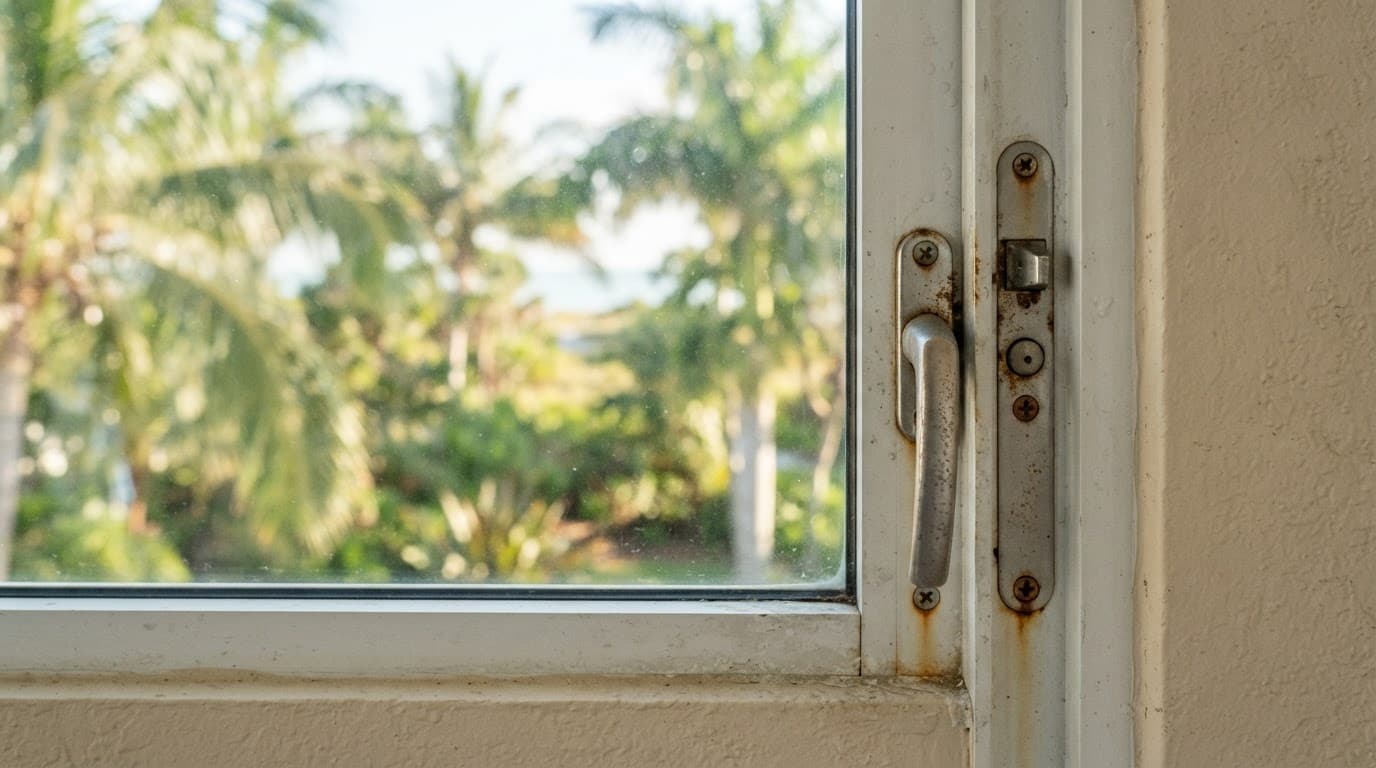
Aluminum frames can pit and discolor
Aluminum doesn't rust like bare steel, but it can corrode. Saltwater exposure may cause pitting, a chalky white film, dull spots, or bubbling beneath a painted or powder-coated finish.
Once the protective coating breaks, moisture can reach more of the metal. Corrosion near a corner joint or drainage opening deserves prompt attention because those areas manage water around the window.
Steel hardware is often the first failure point
Screws, hinges, locks, rollers, and brackets can rust before the frame shows obvious damage. A corroded fastener may stain the surrounding frame, seize in place, or weaken the connection between window components.
This is common on older windows in Cape Coral, especially when exterior hardware hasn't been rinsed regularly. If a sash becomes difficult to open, don't force it. Excess pressure can bend tracks, damage rollers, or crack glass.
Wood and vinyl have different risks
Salt doesn't corrode vinyl, but residue can dull its finish and collect in seams around weatherstripping. Heat and ultraviolet exposure can make older vinyl less flexible, which may affect how tightly the sash closes.
Wood frames need a sound paint or sealant layer. When salt and moisture enter chipped paint, the wood can stay damp long enough for swelling, peeling, or decay to begin.
Corrosion usually starts where water lingers, not on the broad center of a frame. Corners, tracks, fasteners, and damaged finishes deserve the closest look.
Early Signs Your Windows Need Attention
Salt exposure rarely causes a sudden, dramatic failure. More often, the clues appear gradually during normal use. A quick inspection every few months helps you find changes before they spread.
Look closely at the frame and hardware
Check exterior frame edges in daylight. White powder, rust-colored streaks, paint blisters, dark spots around screws, and rough pitting all point to a surface problem that needs attention.
Also examine the window sill and track. Gritty buildup can block weep holes that let rainwater drain out. If water stays in the track after a shower, clean it before the next rain adds more debris.
Notice changes in operation and comfort
A salty, dirty track can make sliding windows scrape or bind. Casement windows may feel stiff, and locks may stop lining up cleanly. Those symptoms can also come from settling or worn parts, so they deserve a careful inspection rather than a quick spray of lubricant.
In Bonita Springs, homeowners may also notice fogging between insulated glass panes or water marks around interior trim. Salt alone doesn't cause a failed insulated-glass seal, but coastal weather can expose weak seals and drainage problems sooner.
Local Conditions Change the Level of Exposure
Every Southwest Florida home has its own exposure pattern. Gulf-front properties face direct salt spray, while inland homes get a lighter but still persistent film. Building height, nearby trees, prevailing winds, and screened outdoor areas all change where residue settles.
Distance from the coast is only one factor
Naples homes near the beach may need exterior rinsing more often, especially after windy days. Yet a home beside a canal can also receive salt-laden air. Even a property several miles inland can collect deposits after strong onshore winds.
A covered porch protects part of a window, but it can also reduce natural rinsing from rain. Check sheltered tracks and frame bottoms because salt and dust can remain there longer.
Storm season adds pressure
Wind-driven rain pushes salt and debris into places that are normally protected. After a tropical storm or hurricane, inspect the frame perimeter, exterior caulk, screen attachments, and window operation once conditions are safe.
In Estero, standing water in a sliding door or window track should never become routine. Clear visible debris gently, then have persistent drainage issues checked. Water needs a clear path out of the frame assembly.
A Practical Maintenance Routine for Coastal Windows
Regular care doesn't need harsh chemicals or a full weekend. A light rinse and a close look can protect finishes and help windows operate as intended.
Rinse salt before it builds up
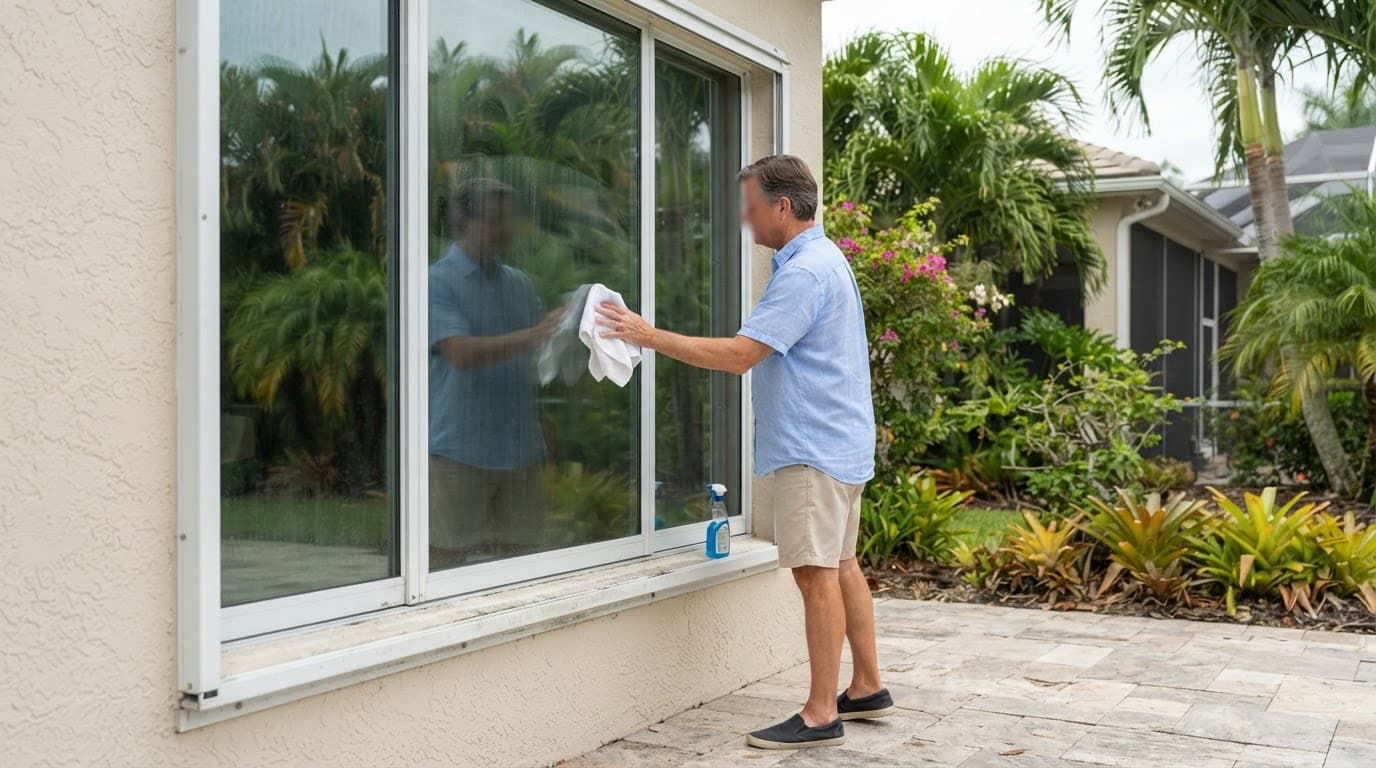
Use a garden hose on a gentle setting to rinse exterior frames, glass, screens, and tracks. Start at the top and work downward so dirty water doesn't run over cleaned surfaces. Homes closest to the coast may need this every few weeks, while others may do well with a monthly rinse.
After storms, rinse when debris has cleared and local conditions allow. Fresh water removes salt residue before it sits in corners and under hardware.
For a deeper clean, use mild dish soap mixed with water and a soft microfiber cloth or nonabrasive sponge. Rinse well afterward. Avoid steel wool, scouring powders, and aggressive acidic cleaners because they can scratch glass or damage frame coatings.
Keep tracks and drainage paths clear
Vacuum loose sand and insect debris from dry tracks with a narrow attachment. Then wipe the area with a damp cloth. Don't pack caulk, foam, or leaves into drainage slots at the bottom of the frame.
This simple routine helps:
- Test locks, latches, and sliding action during each cleaning.
- Look for cracked caulk, loose screws, and worn weatherstripping.
- Dry pooled water from tracks after heavy rain.
- Use only lubricants approved for your window hardware and frame material.
In Lehigh Acres, where direct salt spray may be less common, windblown dust can still mix with moisture in tracks. Cleaning that grit protects rollers and helps water drain.
When Cleaning Is Not Enough
Surface residue responds well to rinsing. Corrosion that has pitted metal, damaged coatings, or affected window movement calls for a closer assessment. Trying to sand, repaint, or lubricate every problem without identifying the cause can hide a drainage or seal failure.
Repair issues before they spread
A qualified glass and window professional can inspect damaged panes, seals, tracks, hardware, and surrounding glass. For cracked glass, failed insulated units, or storm-related breakage, window glass replacement services can restore the opening without guessing at the right glass type.
Frame repair may be practical when corrosion is limited and the window still closes squarely. A technician can also determine whether replacement parts are available for the existing system.
Replacement may make more sense for widespread damage
Replacement becomes more reasonable when corrosion has weakened multiple sections, drainage repeatedly fails, or sashes no longer operate safely. It may also be the better choice if the window has aged seals, damaged glass, and worn hardware at the same time.
Punta Gorda homeowners should inspect windows after severe wind events, even when the glass remains intact. Bent frames, loose anchors, and damaged seals can allow future moisture problems.
Choosing Frames and Details for Coastal Homes
When you replace a window, ask about the full assembly instead of choosing by frame color alone. The right coating, corrosion-resistant hardware, drainage design, weatherstripping, and proper installation all affect long-term performance.
Focus on finishes, fasteners, and fit
Aluminum frames with a durable factory finish can perform well when maintained. Stainless steel or other corrosion-resistant fasteners are often better suited to salty conditions than basic steel hardware. Still, no material is maintenance-free near the coast.
Correct installation also matters. A window should drain properly, fit its opening, and have compatible sealants around the perimeter. Poor water management can create the same issues as salt exposure, even at homes far from the Gulf.
Ask how to care for the exact product installed. Manufacturer instructions may limit which cleaners and lubricants are safe for the finish, rollers, gaskets, and glass coatings.
Protecting Your Windows Starts With Small Habits
Salt air is part of life in Southwest Florida, but salt air window damage doesn't have to become a major repair. Rinsing frames, clearing tracks, and watching for early corrosion keeps small problems visible and manageable.
A window that sticks, leaks, or shows spreading corrosion needs attention before a storm tests it. Consistent care protects the frame, the glass, and the comfort of your home.