
Replacement Windows Florida: Retrofit or New Construction?
A window can look perfect from inside the house while the sill, flashing, or stucco around it is already taking on water. That is why the choice between retrofit and full-frame work matters as much as the glass itself.
For replacement windows Florida homeowners need protection from wind, rain, heat, and humidity. The right installation method depends on the existing opening, not a sales preference.
Start with the condition of the frame and exterior wall, then match the window and installation plan to that evidence.
Retrofit vs. new-construction windows: the practical difference
A retrofit window, also called an insert replacement, fits inside the existing frame or existing rough opening. The installer removes the old operable parts, then anchors and seals the new unit within the frame that remains.
New-construction window installation generally involves removing the existing unit more fully and opening the wall area around it. This can expose or require replacement of the old nailing flange, exterior trim, flashing, stucco, and damaged framing. The new window is installed at the rough opening with a nailing flange and water-management details that tie into the wall.
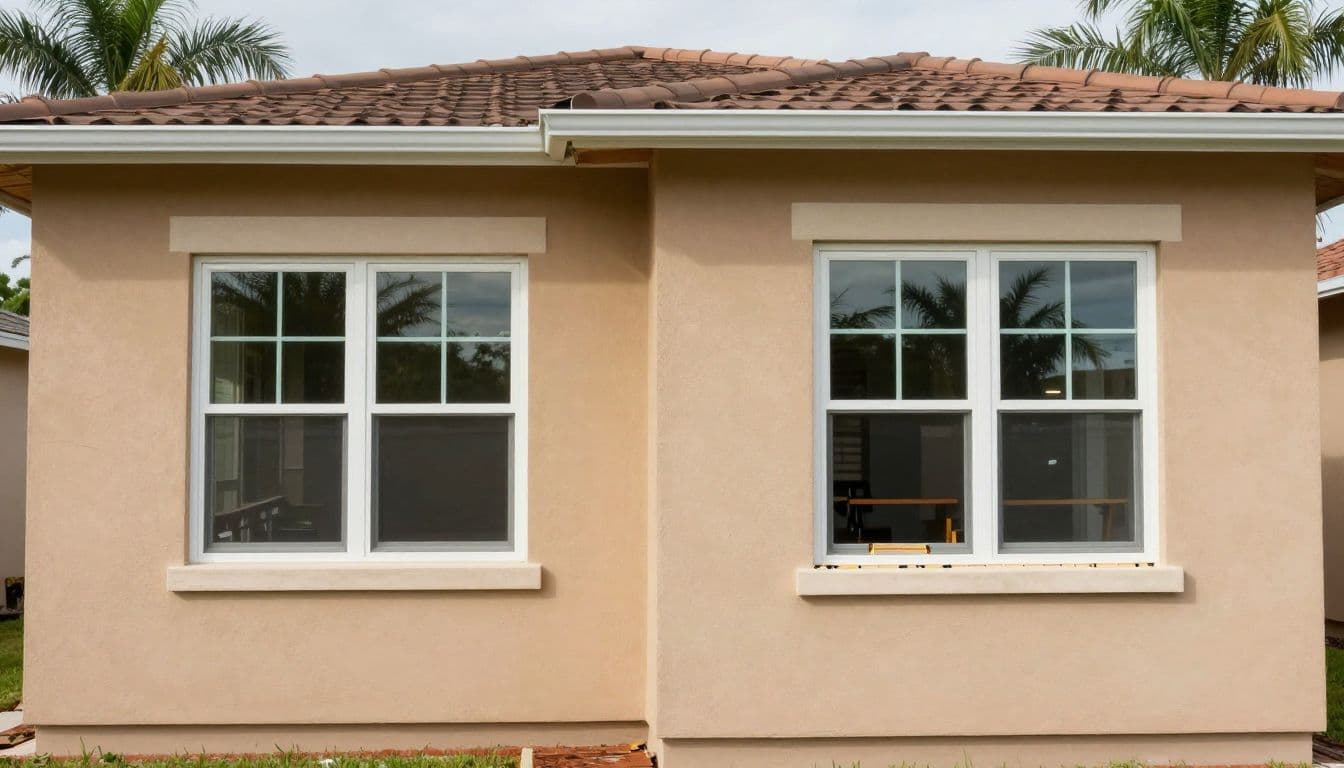
When an insert retrofit makes sense
A retrofit can be a sound choice when the existing frame is square, solid, dry, and firmly attached. It usually causes less disruption to finished stucco and interior trim.
Because the old frame stays in place, the glass area can shrink slightly. That loss is often modest, but it matters in rooms where daylight and views are priorities. A proper measurement also confirms that the replacement unit meets the manufacturer's size and fastening requirements.
In a well-maintained Cape Coral home, an insert project may preserve clean exterior finishes while replacing worn windows with impact-rated units.
When full-frame work is the smarter repair
Full-frame replacement is often the better path when rot, corrosion, leaks, cracked stucco, loose frames, or failed flashing surround the window. Covering those issues with a retrofit unit can leave the real problem inside the wall.
This approach costs more because it involves demolition, repairs, and finish work. However, it gives the contractor access to the rough opening and water-resistive layers. That access matters when a window has leaked during wind-driven rain.
A tight new window cannot correct hidden decay or a failed sill pan behind an old frame.
Inspect the opening before choosing a window
A professional inspection turns the retrofit versus new-construction decision into a building-condition decision. In Fort Myers, homes may have openings affected by storm damage, long-term sun exposure, or water that traveled behind stucco.
The inspection should include the interior frame, sill, exterior sealant, stucco edges, and visible fasteners. It should also check whether the window opens smoothly, sits plumb, and shows signs of glass seal failure.
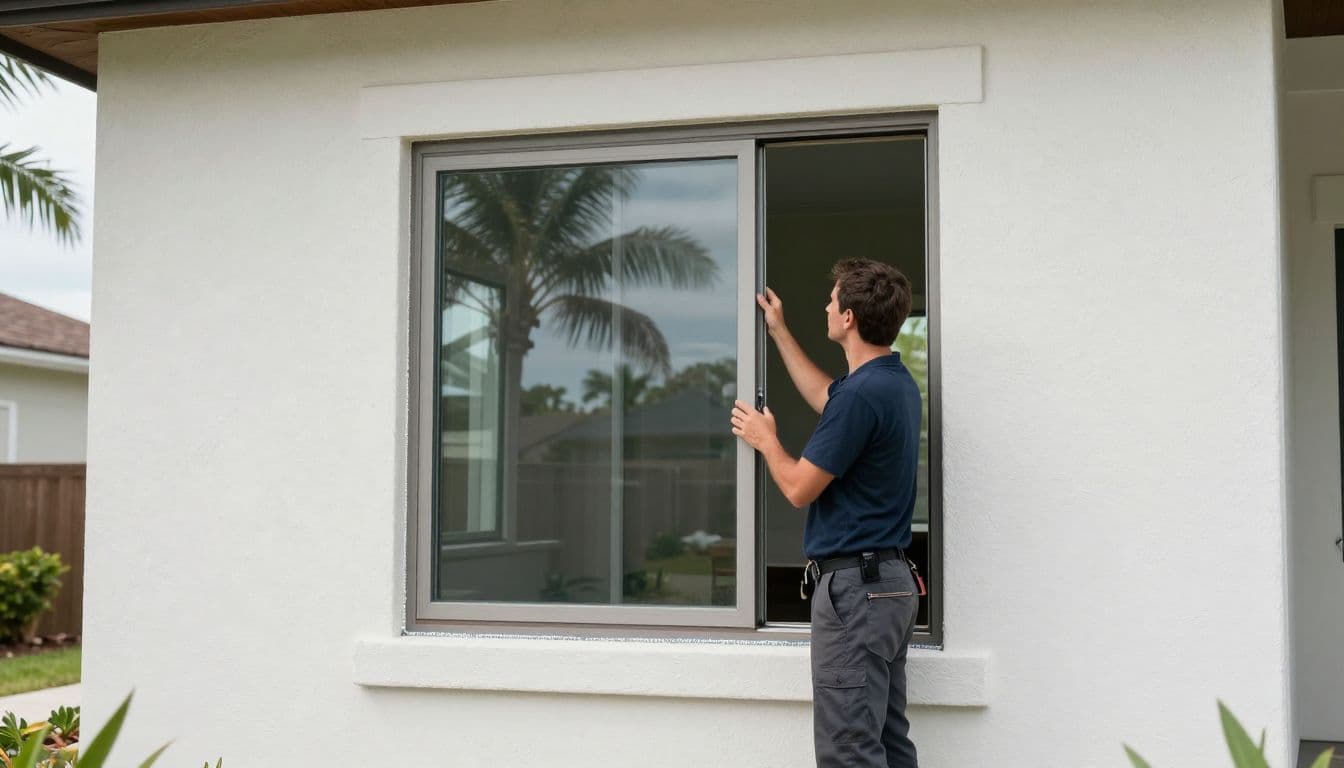
Stucco cracks and flashing need close attention
Hairline stucco cracks don't always mean the opening needs full reconstruction. Still, cracks at window corners, staining below the sill, soft drywall, or peeling paint deserve a closer look.
New-construction work can allow repairs to the flashing sequence and damaged sheathing before the new unit goes in. On the other hand, a stable stucco opening may support a retrofit installation with careful perimeter sealing.
The approved installation drawings and the window manufacturer's instructions should guide that work. Generic caulk repairs are not a substitute for correct flashing.
Signs that call for a deeper evaluation
Ask for a closer inspection if you notice any of the following:
- Water stains, bubbling paint, or swollen trim near the opening.
- Rusted fasteners, crumbling wood, or a frame that moves when operated.
- Persistent drafts or daylight visible between the frame and wall.
- Cracked stucco around several windows after a storm.
- A window that has been repeatedly sealed at the exterior but still leaks.
If only the glass is broken and the surrounding assembly remains sound, Fort Myers glass repair and replacement may be more appropriate than replacing the entire window system.
Hurricane protection is more than impact glass
Southwest Florida windows need to resist design wind pressures, and many homeowners choose impact-rated products for wind-borne debris protection. The glass, frame, locks, anchors, and installation pattern work together. A strong pane in a poorly attached frame does not deliver the intended performance.
For replacement windows Florida projects, verify the exact approved product, size, mullion details, and fastener schedule. A larger opening, corner location, or exposure near the coast can change what the installation requires.
Impact requirements can vary by project scope
Florida code contains an exception for certain one- and two-family homes. Replacement of windows and other glazed openings within a 12-month period may not require opening protection when the total replaced glazed area stays at or below 25% of the home's aggregate glazed opening area.
That exception does not remove the need for windows designed for the required wind pressures. It also doesn't override permit requirements, local amendments, insurance needs, or a homeowner's choice to install impact protection.
In Punta Gorda, Bonita Springs, and other exposed coastal communities, ask the installer to confirm the product approval and attachment details for your exact address. Never assume a neighbor's window approval applies to your home.
Energy efficiency starts with the whole assembly
Florida heat enters through glass, frames, and air gaps. A replacement window should improve comfort, but energy performance depends on the product rating and the quality of the perimeter seal.
Low-E coated insulated glass can reduce solar heat gain while still allowing daylight inside. The best choice depends on orientation. West-facing windows in Naples often receive harsh afternoon sun, while shaded openings may have different priorities.
Compare ratings, not marketing labels
Review the National Fenestration Rating Council label for U-factor and Solar Heat Gain Coefficient, or SHGC. Lower SHGC is often useful in hot, sunny conditions because it limits solar heat gain. However, homeowners should compare approved options rather than chase one number.
Florida's energy code also applies to replacement windows and doors. The Florida Building Code, 8th Edition (2023), includes energy requirements for replacement fenestration.
Frame material matters as well. Vinyl, aluminum, fiberglass, and composite frames differ in strength, maintenance needs, expansion, and sightlines. The right fit depends on the approved product and opening conditions.
Permits, product approvals, and local code checks
Permitting is not paperwork to leave until the last minute. Window permits commonly require Florida Product Approval numbers, installation drawings, and fastening details that match the selected window.
Lee, Collier, and Charlotte counties can apply local review practices. Therefore, a contractor should confirm the permitting path before materials are ordered. This protects you from discovering late changes to the window size, anchor schedule, or inspection plan.
Collier County threshold buildings need added planning
Collier County Building Plan Review's Binding Interpretation #318 took effect on March 12, 2026. It requires a Threshold Inspector for replacement windows, exterior doors, and shutter work on threshold buildings under the stated county requirements.
That work may require an engineer or architect to prepare a threshold inspection plan, followed by structural inspection from a special inspector. This rule affects a narrower category of buildings, yet it shows why a property-specific review matters in Estero, Naples, and nearby Collier County locations.
Ask these questions before signing a contract
Before selecting a window package, get clear answers about:
- Which Florida Product Approval applies to each unit and opening size.
- Whether the price includes permit application, inspections, and required documentation.
- How the installer will handle stucco, flashing, trim, and paint if full-frame work becomes necessary.
- Whether your home falls under wind-borne debris rules or a small-scope replacement exception.
- Who will correct a failed inspection or documented water-intrusion issue.
Cost and timing depend on what the wall reveals
A retrofit project often costs less because it preserves the existing frame and minimizes exterior finish repairs. Full-frame replacement adds labor for removal, flashing, framing repairs, stucco restoration, and interior trim work.
Current Florida market estimates commonly place a standard installed impact window around $700 to $1,600. A typical 12-window home using vinyl-frame impact-laminated units may fall near $12,000 to $16,000, while larger homes with doors and sliders can cost far more.
| Project factor | Retrofit installation | Full-frame or new-construction installation |
|---|---|---|
| Existing frame | Stays in place if sound | Removed or opened for repair |
| Exterior work | Usually limited | May include stucco and flashing repairs |
| Glass area | Can be slightly reduced | Often preserves the original opening size |
| Labor and cost | Usually lower | Usually higher |
| Best fit | Dry, square, stable openings | Leaks, damage, failed frames, or wall repairs |
The practical takeaway is simple: an insert can save money when the opening is healthy. When the wall needs repair, full-frame work may avoid a more expensive water problem later.
The install may take days, but planning takes longer
Once windows arrive and permits are ready, most single-family installations take one to three on-site days. Manufacturing lead times, permit review, and inspections often add weeks before and after the physical work.
A Lehigh Acres homeowner replacing three stable windows may have a short installation day. A larger project with stucco repairs, impact products, and permit review will need a longer calendar.
Quotes for replacement windows Florida homeowners receive should separate window costs from permitting, demolition, finish repairs, and possible structural work. That makes comparisons far more useful.
Choose the method that protects the opening
No method is universally best. Retrofit installation is efficient when an existing frame has remained dry, square, and structurally sound. New-construction installation is often the responsible choice when removal reveals compromised materials or water-management failures.
A good proposal should identify the assumed installation method and explain what happens if the crew finds hidden damage. In Cape Coral or Fort Myers, that conversation is especially important after storm seasons and heavy wind-driven rain.
For custom sizes, impact glass options, and complex openings, request measurements and a written scope before ordering materials. The window should fit the house, the wall condition, and the approved installation details.
A Better Window Starts With an Honest Assessment
The strongest window package cannot compensate for a weak opening or incomplete flashing. Start with the frame, stucco, and sill condition, then select retrofit or full-frame work based on what the home needs.
Replacement windows Florida homeowners can count on require the right product and a code-conscious installation. A careful inspection before ordering is the best way to protect both your investment and your interior from the next hard rain.