
How to Measure a Window Opening for Replacement Glass
A replacement pane can fail before installation if its measurements start at the wrong edge. Knowing how to measure window opening dimensions gives your glass professional useful information, but it doesn't always produce the final cut size.
For glass-only replacement, you need more than width and height. The sash, frame, glazing bead, glass thickness, and window manufacturer can affect the order. Use this guide to create a careful record before requesting a quote in Southwest Florida.
How to measure window opening dimensions
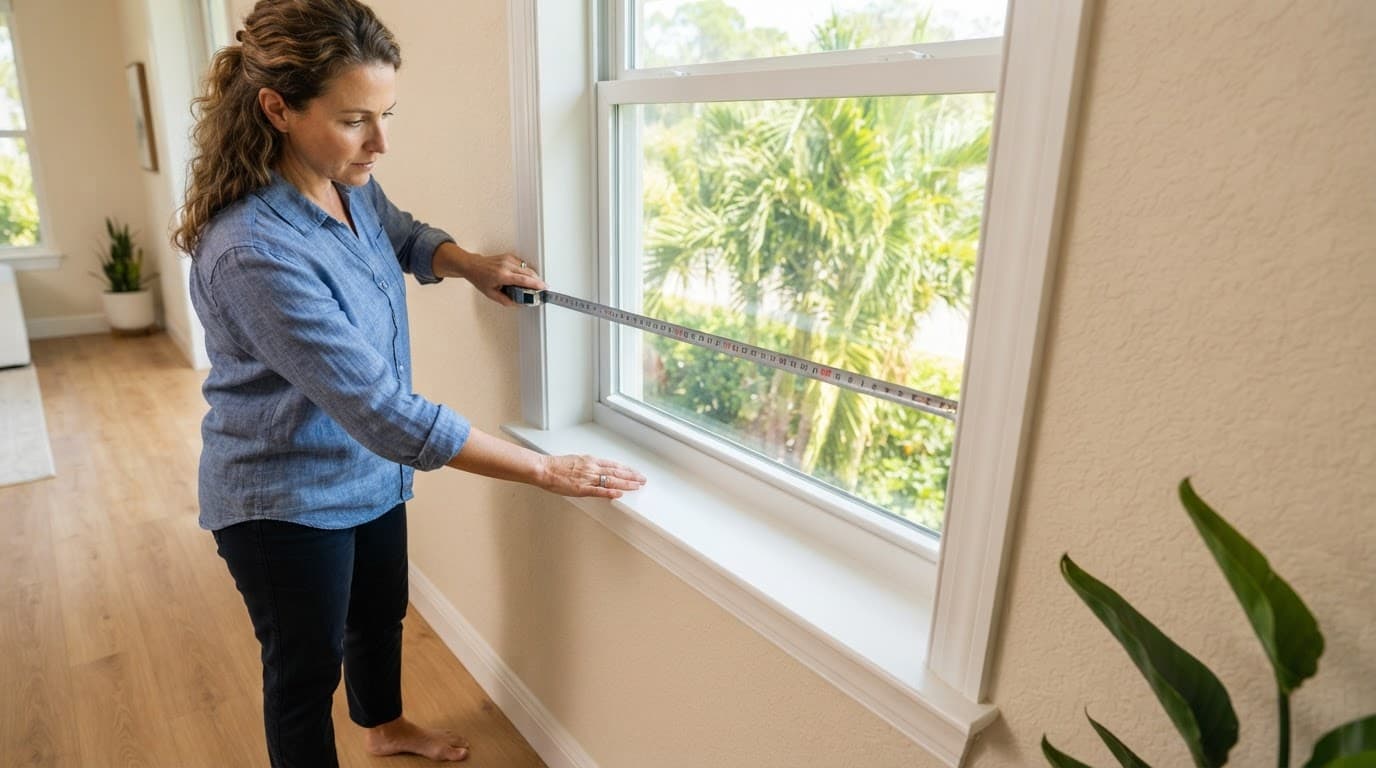
First, identify the area that needs measuring. A rough opening is the structural space in the wall, while a glass replacement usually requires the glass pocket or sash opening. If the sash remains installed, measure between the inside edges of the glazing stops or channels, not the outer trim.
Gather the right tools
Use a rigid steel tape measure, pencil, paper, and your phone camera. A small level or combination square can help you spot a sloped edge. Measure to the nearest 1/16 inch, and label every number as a width or height.
Remove curtains, blinds, or screens if they block the frame. Don't handle loose shards to reach a measurement. If the glass is broken, keep your hands away from the opening and let a qualified professional inspect it.
Measure width and height at three points
For the width, measure between the left and right inside edges at the top, middle, and bottom. For the height, measure between the top and bottom inside edges on the left, center, and right.
Keep the tape straight and read it at eye level. When you measure window opening dimensions this way, you can identify an opening that isn't perfectly square.
Write down all six readings. If the measurements differ, don't average them or select a size from one convenient point. The smallest width and height help show the available clearance, while the complete set helps the glazier determine the proper deduction.
If the opening looks out of square, measure both diagonals. Record the distance from the upper-left corner to the lower-right, then compare it with the opposite diagonal. Take photos of unusual gaps or sloped edges, since those details may affect the final fit.
Record the details that numbers can't show
Measurements are only one part of a useful replacement-glass request. Window construction varies widely, so write down the details while you're standing in front of the unit.
Identify the window unit
Record the room, window location, operating style, and frame material. Note whether the window slides, opens outward, stays fixed, or has multiple sections. Also identify whether it contains one pane or an insulated glass unit with two panes and a spacer.
Look for a manufacturer name, model number, code, or label on the sash, frame, or spacer. Take a photo instead of relying on memory. Include a full-window photo, close views of the corners, and images of the inside and outside edges when you can reach them safely.
These details help distinguish a glass-pocket measurement from a frame or sash measurement. The manufacturer may also require model-specific dimensions that aren't visible from the room.
Confirm the glass specifications
Don't guess the glass type based on its color or appearance. Record any markings on the spacer or label, including thickness, Low-E coating, tint, or model information. Tell the glass professional if the pane is tempered, laminated, impact-rated, or part of an insulated unit.
A standard clear pane may not match the original assembly. For a home in Estero or Bonita Springs, send product photos and any available window information before ordering.
Why glass-only replacement may need a professional check
Glass fits inside a larger window system. A careful homeowner measurement can support a quote, but a professional should confirm the specifications before fabrication.
The sash and glazing bead affect the fit
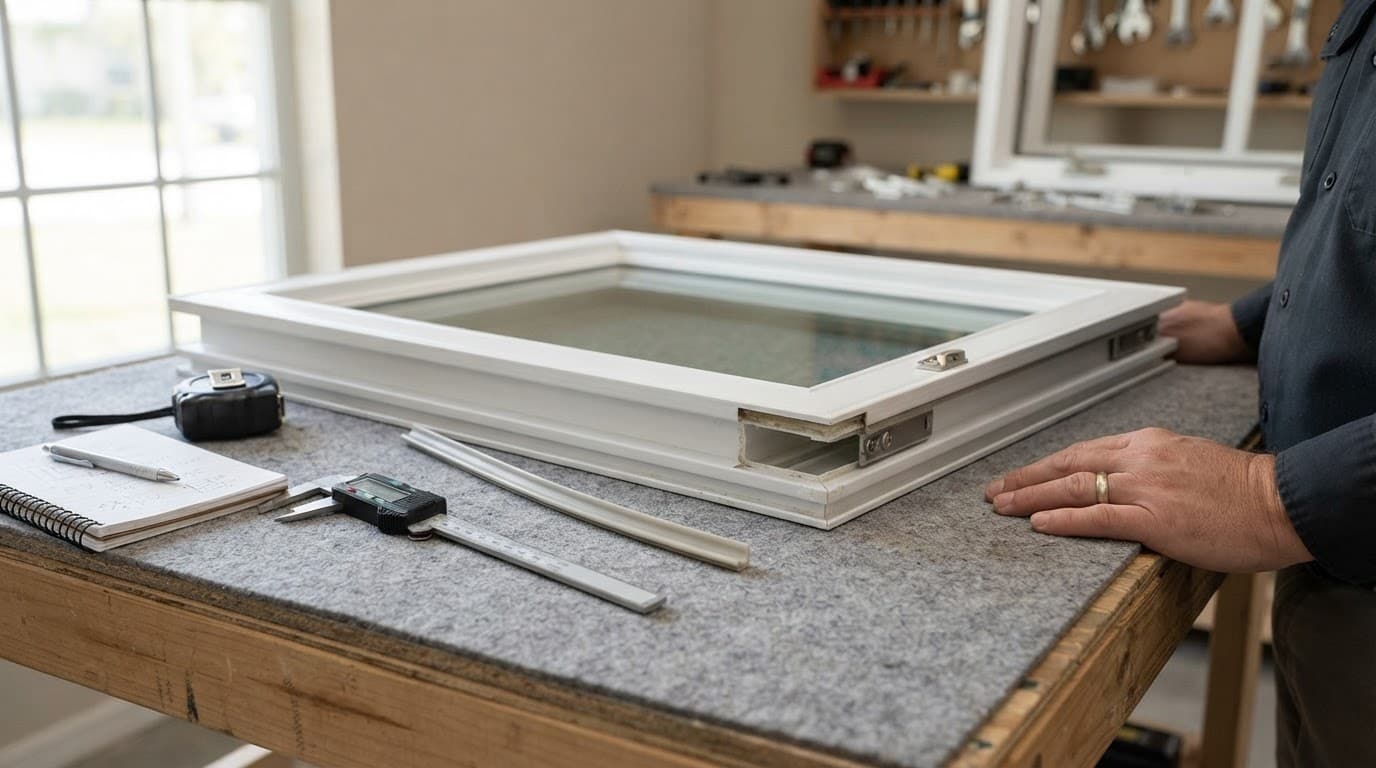
Some windows hold glass with a removable vinyl glazing bead. Others use a channel, gasket, clips, or sealant. Each design hides part of the pane edge, so the visible glass size may differ from the actual pocket size.
A sash can also be bent, swollen, corroded, or damaged around the pane. Brittle glazing bead may need replacement. An insulated unit may have a failed seal or damaged spacer.
If the frame no longer sits square, new glass alone won't correct the problem. A qualified technician can inspect the sash, rabbet, stops, and hardware before recommending glass-only replacement.
Insulated and specialty glass need exact specifications
An insulated glass unit needs more than two outside dimensions. Its overall thickness, pane makeup, spacer, coating, and edge details must fit the sash. Safety glass also needs the right type and size for its location.
This matters in Fort Myers and Naples, where homeowners may replace storm-damaged, fogged, or failed window units. The correct solution could be custom-cut glass, a replacement sash, or a complete window unit. Caloosahatchee Glass & Mirror provides custom glass cutting in Southwest Florida, along with fabrication and installation for residential projects.
Never treat a visible pane measurement as the final order size until the frame, clearance, and glass type have been confirmed.
Give the glass company a complete record
Before requesting a final price, organize your information in one message or written note. Include:
- The three width measurements and three height measurements, with units.
- Both diagonal measurements if you checked whether the opening is square.
- Photos of the full window, frame corners, glazing bead, damage, and manufacturer label.
- The window location, operating style, frame material, and pane type.
- Any known glass markings, tint, coating, safety rating, or impact designation.
Use the smallest width and height as reference points when describing an uneven opening, but don't turn them into an assumed cut size. The professional may need to measure the pocket directly or inspect the sash in person.
Ask what additional information is needed before fabrication, especially if the glass is large, heavy, insulated, or located near a door. Homeowners in Cape Coral, Lehigh Acres, and Punta Gorda can save time by sending complete photos and notes with the first service request.
Conclusion
The safest way to measure window opening dimensions is to take width and height readings at three points, record every result, and photograph the frame and glass details. Uneven openings require all readings, not a quick average.
Glass-only replacement also depends on the sash, glazing bead, frame, and glass specifications. Share your measurements with a qualified glass professional and confirm the final size before ordering. Careful notes can prevent a costly mismatch during a small window repair.