
How to Spot a Failed Double Pane Window Seal in Fort Myers
Foggy glass can be more than a cleaning problem. If you suspect a double pane window seal has failed, moisture may be trapped inside the insulated glass unit, where you can't wipe it away.
Southwest Florida homes face intense sun, high humidity, tropical storms, and salt-laden air. A window in Fort Myers or Cape Coral can show seal trouble before the frame looks damaged. Learn the visible clues, safe checks, and point at which a repair should move from a weekend inspection to a professional visit.
How a double pane window seal protects your home
A double-pane window has two glass sheets with a sealed space between them. The seal runs around the edge of the glass and keeps outside moisture from entering that space.
When the seal works properly, the trapped air or insulating gas helps slow heat transfer. The inside pane stays more comfortable, and your air conditioner doesn't have to work as hard to offset heat coming through the window.
Two panes depend on the edge seal
The glass itself may remain intact after the seal fails. The problem starts around the perimeter, where the seal can develop a gap or lose its ability to keep moisture out.
Once humid air enters the space between the panes, it can condense when temperatures change. That produces a cloudy appearance, water droplets, or a haze that remains even after both outside surfaces are clean.
The condition of the double pane window seal doesn't always tell you whether the entire window must be replaced. A professional needs to inspect the glass unit, frame, sash, locks, and surrounding opening before recommending a repair.
Seal failure affects comfort as well as appearance
A failed seal can reduce the window's insulating performance. You may notice more heat near the glass, glare that seems worse than before, or a room that feels harder to cool.
One damaged unit may not cause a dramatic change in your utility bill. However, several failed windows can add unwanted heat to the home, especially on sunny exposures.
Common signs of a failed double pane window seal
Look for changes that remain after normal cleaning. A single mark on the outer surface may be harmless, while a pattern inside the glass points to a problem with the sealed unit.
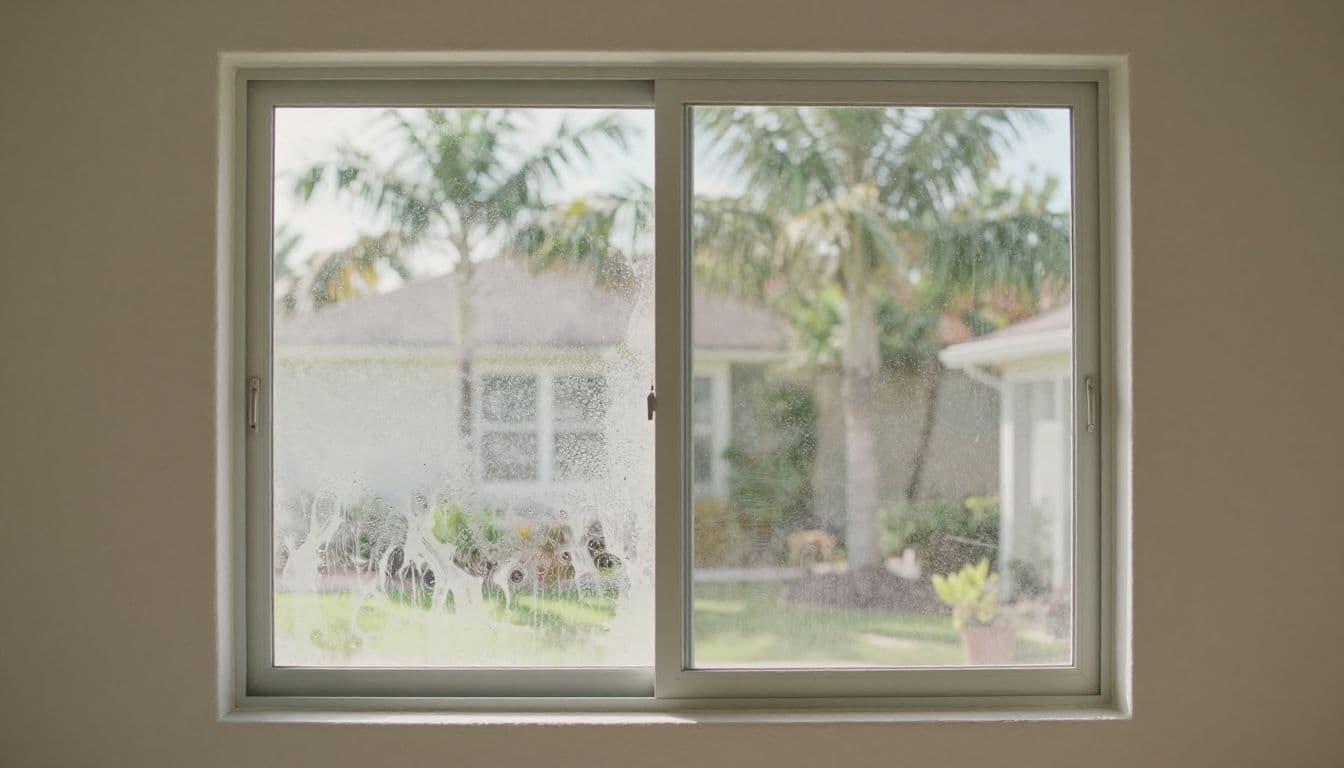
Fogging or moisture between the panes
Fogging is the most recognizable warning sign. It may look like a soft white cloud, a gray film, or condensation that appears and disappears as the weather changes.
To check its location, clean the room-facing side and the outside side of the glass. If the haze remains between the panes, you can't remove it with ordinary glass cleaner.
Small droplets or streaks inside the unit are also strong evidence of seal failure. Moisture may collect at the bottom edge, spread across the center, or form a cloudy band around the perimeter.
Mineral deposits and stubborn haze
Water trapped inside the window can leave mineral deposits as it dries. These deposits may look white, chalky, or crusty. They can also appear as permanent spots or streaks that don't respond to cleaning.
A deposit on the outside surface may come from sprinklers, rain, or hard-water residue. If the mark remains after you clean both accessible surfaces, ask a professional to determine whether it sits inside the sealed unit.
Don't scrape between the panes or try to separate the glass. Those actions can damage the window and create sharp edges.
Drafts, hot spots, and reduced efficiency
A draft near the window may indicate failed weatherstripping, a gap around the frame, or an installation issue. It doesn't prove that the insulated glass seal has failed, but it deserves attention.
Place your hand near the closed sash on a windy day and compare that area with another window. You may also notice that one pane feels warmer than nearby glass, or that your air conditioner runs longer to maintain the same indoor temperature.
A failed seal can contribute to heat gain, but drafts often come from the frame rather than the glass. A professional inspection can separate these problems instead of treating the wrong part.
Why Southwest Florida weather can affect window seals
Windows in Fort Myers, Cape Coral, Bonita Springs, Estero, Naples, Lehigh Acres, and Punta Gorda handle conditions that put regular stress on glass and frames.
Heat and humidity create repeated pressure
Southwest Florida heat causes window materials to expand during the day. As temperatures fall at night, those materials contract. Repeated movement can place stress on the seal around an insulated glass unit.
High humidity also increases the amount of moisture in the air. When a small weakness develops, humid air can enter the space between the panes and create visible condensation.
Sun exposure matters, too. A south- or west-facing window may receive hours of direct heat. Over time, that exposure can affect seal materials, weatherstripping, and frame components.
Storms and coastal air add wear
Tropical storms can push wind and rain against windows with unusual force. Flying debris may crack the glass, bend a frame, or disturb the sash. Even when the window looks fine after a storm, new moisture or movement deserves a closer inspection.
Near the coast, salt air can speed corrosion on exposed metal components and affect hardware that helps the window close tightly. Homes in Naples, Bonita Springs, and Punta Gorda may face more coastal exposure, while properties farther inland can still experience intense heat and storm conditions.
Lehigh Acres and Estero homeowners should also check windows after major weather events. Look for new water marks, loose trim, difficulty locking the sash, or changes in how the window opens.
Safe homeowner checks before calling a professional
You can gather useful information without taking the window apart. Start with a visual inspection during daylight, then compare the suspect window with another unit in the same room or on the same side of the home.

Clean, inspect, and compare
Use a soft cloth and mild soap solution on the accessible glass surfaces. Avoid abrasive pads, razor blades, and harsh chemicals that can scratch coatings or damage nearby finishes.
Then check the window from several angles. Look for:
- Haze, droplets, or streaks that remain inside the glass.
- White mineral residue that doesn't wipe away.
- Cracks, chips, or a damaged edge seal.
- A sash that no longer closes squarely.
- Gaps in weatherstripping or visible frame damage.
- New water marks on the sill, wall, or trim.
Compare the window with a similar one nearby. Differences in clarity, temperature, or operation can help identify a change that you may not notice by looking at the unit alone.
Check for drafts without creating a hazard
Close and lock the window. On a breezy day, hold a thin tissue near the edges of the sash. Movement can suggest air leakage around the frame or weatherstripping.
Never use a candle, lighter, or open flame to test a draft. Also, don't press hard on the glass, remove trim, drill into the frame, or attempt to release moisture from between the panes.
If the window sits above a first floor, has storm damage, or contains cracked glass, skip the hands-on inspection. Take photos from a safe position and arrange a professional visit.
Rule out ordinary indoor condensation
Condensation on the room-facing side of the glass can happen when warm, humid indoor air meets a cooler surface. That condition differs from moisture trapped between panes.
Wipe the inside surface and wait a few minutes. If the moisture returns on that accessible surface, ventilation, indoor humidity, or air movement may be part of the issue. If the moisture stays enclosed between the panes, the double pane window seal is more likely to have failed.
When to call a window glass professional
Schedule an inspection when fogging or moisture remains between the panes, especially if the condition returns after cleaning. You should also call after storm damage, when the sash won't lock, or when the frame shows bending, cracking, or water intrusion.
Professional help is also the right choice for windows that are difficult to reach. A technician can inspect the unit without asking you to climb a ladder or handle damaged glass.
Repair may involve the glass unit or the entire window
A failed seal doesn't automatically require a full-frame replacement. If the frame is in good condition, a glass company may be able to replace the insulated glass unit while keeping the existing frame.
Full window replacement may make more sense when the frame is warped, the sash no longer operates correctly, water has reached surrounding materials, or several parts have failed. The right option depends on the window's construction, measurements, condition, and available replacement glass.
A local technician can also check whether the problem is limited to weatherstripping or frame gaps. This matters because replacing the glass won't correct a separate air leak around the sash.
For help with a damaged or fogged unit, Caloosahatchee Glass & Mirror provides residential window glass repair and replacement in Fort Myers and throughout Southwest Florida. Ask for an inspection and clear estimate before work begins.
What to have ready for the appointment
Photos of the fogging, mineral deposits, frame, and surrounding trim can help the technician understand the issue before arriving. Note when you first noticed the problem and whether it changes after rain, high heat, or a storm.
If you know the window's approximate age, manufacturer, or installation date, share that information. Warranty coverage may depend on the glass unit, frame, installer, or original purchase records.
Conclusion
Fogging, moisture between panes, permanent mineral deposits, drafts, and warmer rooms can all point to a window problem. Moisture trapped inside the glass is the clearest sign that the seal has failed, while drafts may come from the frame or weatherstripping instead.
Southwest Florida's heat, humidity, storms, and coastal air can place extra wear on windows in Fort Myers, Cape Coral, Naples, and nearby communities. Clean the accessible surfaces, compare the window with others, and avoid dismantling the unit.
When the haze remains between the panes or the window has storm or frame damage, schedule a professional inspection. The right repair may restore the glass without replacing a sound frame, and a prompt evaluation can prevent a small window problem from spreading to the surrounding trim.