
Kitchen Cabinet Glass Inserts: Fort Myers Options
Your cabinet doors can put every dish on display or soften the view of everyday storage. Choosing kitchen cabinet glass inserts starts with deciding how much you want to show .
Clear glass highlights the contents, textured glass breaks up the view, and reeded glass adds a repeating linear pattern. The right choice depends on your cabinet layout, kitchen style, and cleaning preferences.
Start with the differences you can see, then check how each option works with your existing doors.
Key Takeaways
- Choose clear glass when you want dishes and glassware to become part of the kitchen's design.
- Consider textured glass when you want visual interest and a less direct view of cabinet contents.
- Look at reeded glass for a lined appearance, but check an actual sample before expecting it to conceal storage.
Whichever style you prefer, confirm the exact pattern, dimensions, fabrication options, and care instructions before ordering. A photo can suggest a look, but it won't tell you everything about the finished panel.
Compare Kitchen Cabinet Glass Inserts at a Glance
Reeded glass is a type of textured glass. However, its repeated ribs give it a distinct appearance worth considering separately.
Here's how the three choices generally differ.
| Glass option | Appearance | View of contents | Natural style fit |
|---|---|---|---|
| Clear | Smooth, transparent surface | Direct view of shelves and stored items | Traditional, contemporary, coastal |
| Textured | Patterned surface with visual variation | Distorts the view according to the pattern | Cottage, traditional, transitional |
| Reeded | Repeating parallel ribs | Breaks up outlines while retaining visible shapes | Transitional, modern, vintage-inspired |
These are design starting points, not strict rules. Clear glass can look traditional inside divided cabinet doors or modern inside a simple frame.
Also, textured doesn't mean opaque . The pattern, lighting, viewing angle, and distance between the glass and stored items affect what you see. Compare samples with your actual dishes rather than judging concealment from an empty panel.
Clear Glass: Let the Contents Become the Display
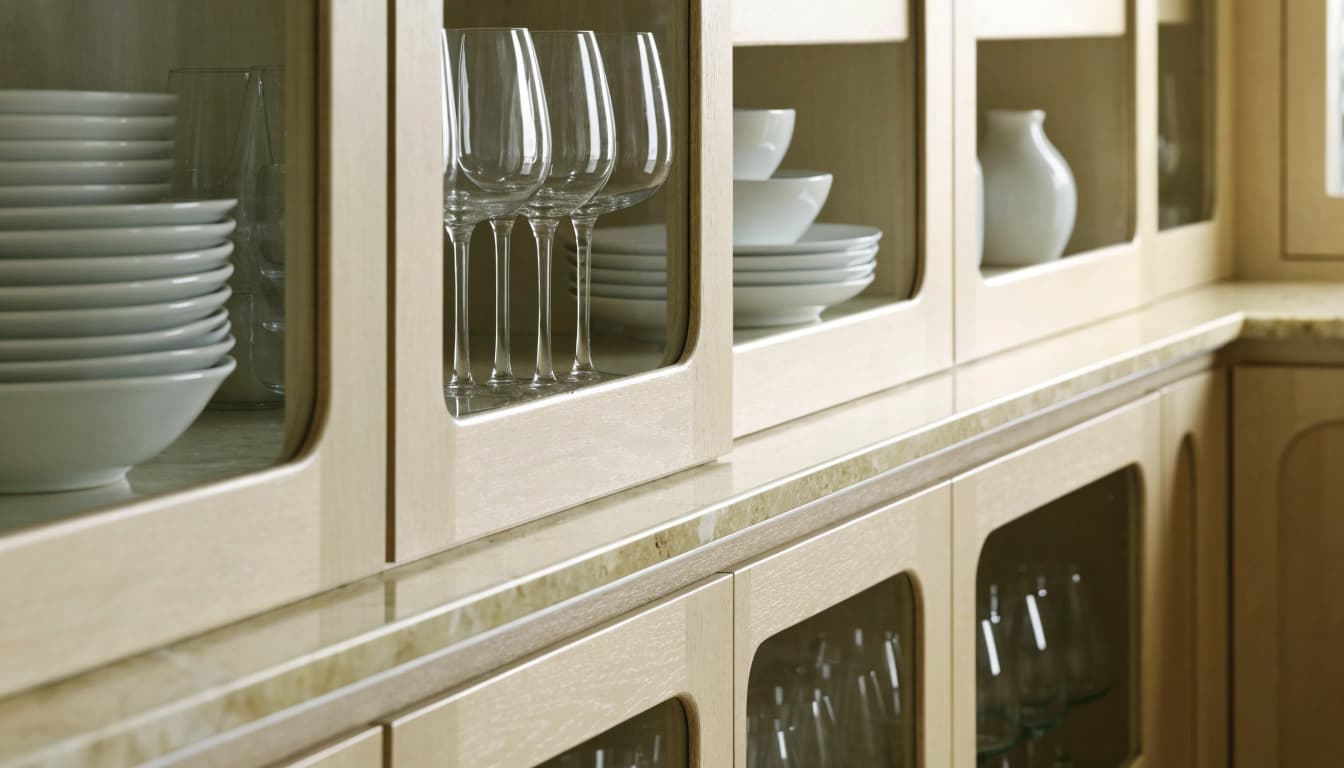
What Clear Glass Reveals
Clear inserts show the whole cabinet interior, including shelf edges, dish stacks, and the back panel. That makes the inside finish part of your design decision.
Before choosing clear glass, open the cabinet and inspect it from across the kitchen. Mismatched shelves or worn interior paint will remain visible after installation.
You don't need matching dishes throughout the room. Instead, select a cabinet containing items you enjoy seeing, such as white serving pieces or glassware. Keep everyday packaging behind solid doors if you prefer a calmer view.
Clear kitchen cabinet glass inserts work especially well when the storage already looks intentional.
Where Clear Glass Fits
Clear glass suits simple Shaker doors, detailed traditional frames, and many coastal kitchens. Because the surface adds little pattern, nearby tile and hardware can take more attention.
For a cabinet update in Cape Coral or Bonita Springs, consider whether the glass should complement existing features or become a focal point. A patterned backsplash may pair comfortably with clear doors.
Interior lighting changes the effect, too. Illuminated shelves can draw attention to their contents, so evaluate the cabinet with lights both on and off.
For maintenance, ask the provider about the proposed glass surface and its care instructions. Also consider how visible fingerprints and reflections appear in your lighting.
Textured Glass: Choose the Pattern Before the Label
Different Textures Create Different Looks
"Textured glass" covers a broad group of patterned surfaces. Some have small, repeated details; others create a more irregular view.
Names such as seeded or rain describe different visual effects, but names alone aren't enough to select a product. Ask to see the actual pattern available for your project.
A small sample helps you compare surfaces. However, you should also consider how the pattern will repeat across a full cabinet door.
Busy textures may compete with decorative tile or strongly veined countertops. In contrast, a quieter pattern can add interest without demanding the same attention. Review the glass beside your cabinet finish, backsplash, and hardware before making the choice.
Concealment and Upkeep Need a Closer Look
Textured glass can make cabinet contents less distinct, but it may still reveal bright packaging or uneven stacks. If hiding clutter is your main goal, test the sample against the items you normally store.
Place those items at their usual distance behind the glass. Then view them at eye level and from the adjacent room.
A pattern that obscures an empty shelf may still reveal colorful packaging when the cabinet light is on.
Maintenance also depends on the specific product. Ask which face carries the texture, how the panel will be oriented, and what care instructions apply.
Don't assume a pattern that makes marks less noticeable needs less cleaning. Appearance and upkeep are separate considerations.
Reeded Glass: Add Lines Without a Fully Clear View
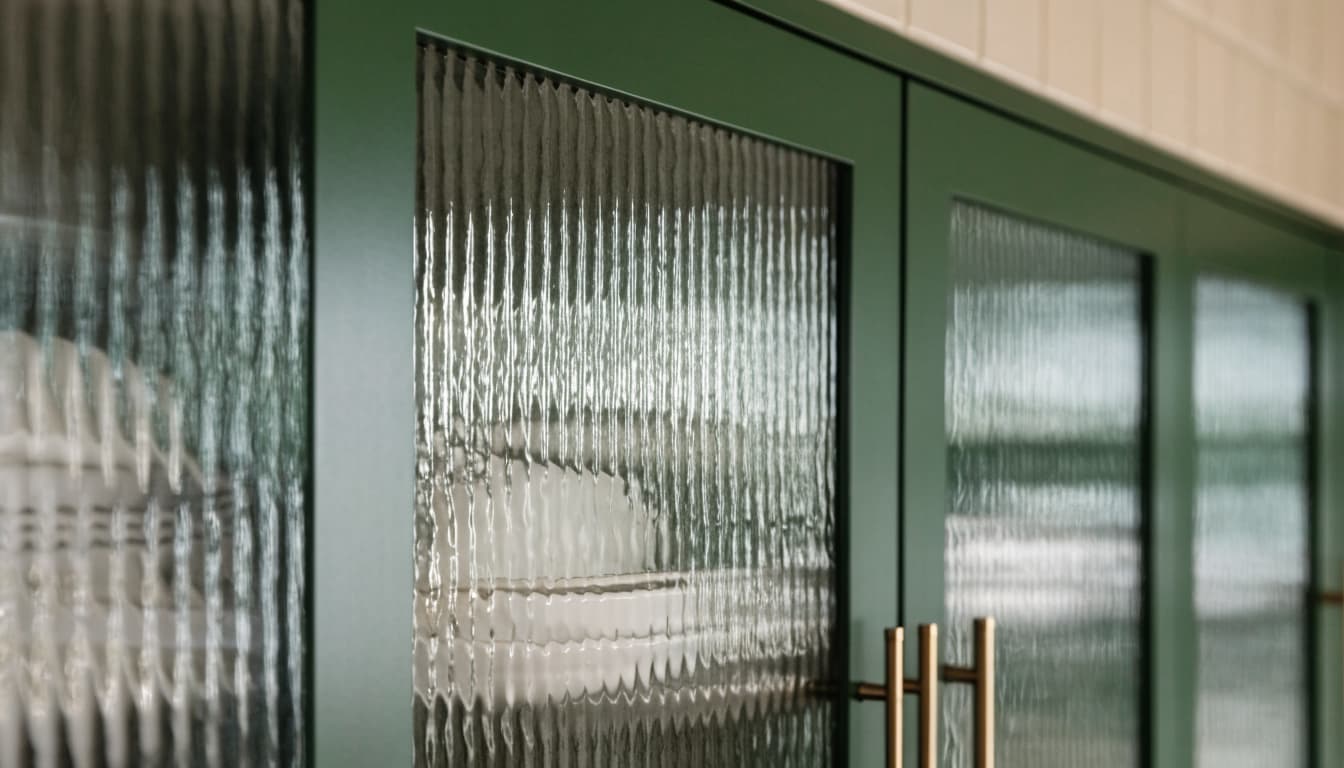
The Direction of the Ribs Matters
Reeded glass uses repeated parallel ribs to create a lined surface. Vertical orientation emphasizes the height of a door, while horizontal orientation changes the visual rhythm.
Specify the intended direction when discussing fabrication. Otherwise, adjacent panels may not produce the consistent appearance you expected.
The pattern pairs naturally with simple cabinet frames because the glass supplies its own detail. It can also complement brass, nickel, or dark hardware without requiring a decorative door profile.
Before committing, compare the ribs with nearby design elements. Narrow lines in the glass may compete with another strongly striped surface, while a plain backsplash gives them more room to stand out.
Check the View and Product Availability
Reeded inserts distort the view rather than removing it. You may still recognize plates, mugs, and larger objects behind the panel.
For that reason, assess both the lined appearance and the cabinet contents. A pattern you love up close may look different across an open-plan room.
Ask the glass provider which reeded patterns are available and suitable for your doors. Caloosahatchee Glass & Mirror lists pattern glass and specialty decorative glass among its services, but specific reeded options need confirmation.
Request the product's cleaning guidance as well. Don't select reeded glass solely because you expect the ribs to hide fingerprints or eliminate upkeep.
Match the Glass to Your Kitchen's Daily Routine
The most useful question is what each cabinet holds. Display storage and everyday storage often need different treatments.
Clear glass makes sense for a cabinet of serving dishes you like seeing. A patterned insert may suit mixed everyday items when you want a softer view. Meanwhile, solid doors remain a practical choice for packaging you don't want visible.
You can combine these approaches. Use glass on selected upper doors while leaving pantry and lower cabinets unchanged. That also lets the glass create a focal point without repeating across every surface.
For renovations in Estero or Naples, bring cabinet photos and finish samples when discussing options. Include a picture of the room, not only a close-up of one door.
Compare samples in daylight and under evening lighting. Check them from your dining area or living room if those spaces share a sightline.
The right kitchen cabinet glass inserts should look comfortable in the room you use, not only in a showroom display.
Plan the Fit Before Requesting a Final Quote
Existing Doors Need an Inspection
Some cabinet doors already have removable inserts. Others need modification before they can accept glass, and their construction may limit what's possible.
Have the door assessed before ordering a panel. The installer needs to check the opening, supporting frame, retaining method, and available clearance.
The visible opening isn't automatically the glass order size. A fitted panel may extend behind the frame, so accurate fabrication depends on details you can't see from the front.
Caloosahatchee Glass & Mirror offers made-to-measure cabinet glass inserts through its custom cutting and fabrication services. Confirm the chosen product and door preparation together before finalizing dimensions.
Compare the Full Scope of Work
Request a written estimate that identifies the glass selection, panel count, fabrication, door preparation, and installation. Ask which items are included rather than comparing totals alone.
If you're replacing one damaged panel, bring information about the existing glass. Matching its pattern and appearance matters when neighboring doors will remain unchanged.
The company's cabinet glass replacement services include replacement work for existing cabinets. A review can help determine whether a close match is available.
As a fourth-generation, family-owned company serving Southwest Florida, Caloosahatchee Glass & Mirror provides residential custom glass fabrication and installation. Homeowners in Lehigh Acres and Punta Gorda can discuss project details at (239) 334-2690.
Frequently Asked Questions About Cabinet Glass
Will Textured or Reeded Glass Hide Everything?
No. Patterned glass can break up the view, but recognizable shapes and colors may remain visible. Cabinet lighting can also change the effect.
Test the proposed glass with your normal stored items. If you need complete visual concealment, discuss a different finish or keep a solid cabinet door. A pattern's appearance alone doesn't establish how much it will hide.
Which Option Is Easiest to Maintain?
Ask for care instructions for the exact product rather than relying on the broad category. Surface texture, finishes, and installation orientation can affect the cleaning approach.
Also separate the visibility of marks from cleaning effort. Glass that makes smudges less obvious still needs appropriate care. Your provider should explain which cleaning products and methods suit the selected panel and surrounding cabinet finish.
Does Decorative Glass Automatically Provide Safety Protection?
No. Clear, textured, and reeded describe appearance, not a safety-glazing specification.
Ask the glass professional to confirm the appropriate glass type for the panel, door construction, and intended use. Caloosahatchee Glass & Mirror lists tempered safety glass among its offerings, but the project's requirements and the chosen pattern need separate confirmation.
Don't assume a decorative finish establishes the glass's safety characteristics.
Choose the View You Want to Live With
Clear glass rewards an attractive cabinet interior. Textured and reeded options add pattern while softening the view, with results that depend on the actual product.
Make your decision around real cabinet contents , room lighting, and confirmed care instructions. Then have the doors measured and assessed before ordering.
A well-chosen insert should fit both the cabinet opening and the way you use your kitchen every day.