
Jalousie Louver Replacement in Cape Coral
One cracked jalousie slat can leave your Cape Coral home exposed to rain and sharp glass. If the frame and operating hardware remain sound, replacing one louver may resolve the damage without replacing the entire window.
Successful jalousie louver replacement starts with identifying the glass, confirming its measurements, and understanding how that window holds each slat. Before ordering anything or touching the damaged pane, check whether this is a focused glass repair or a problem that needs professional attention.
Confirm That Only One Louver Needs Replacement
Jalousie windows have horizontal slats that tilt together when you operate the handle. Each glass slat, or louver, needs secure support at both ends.
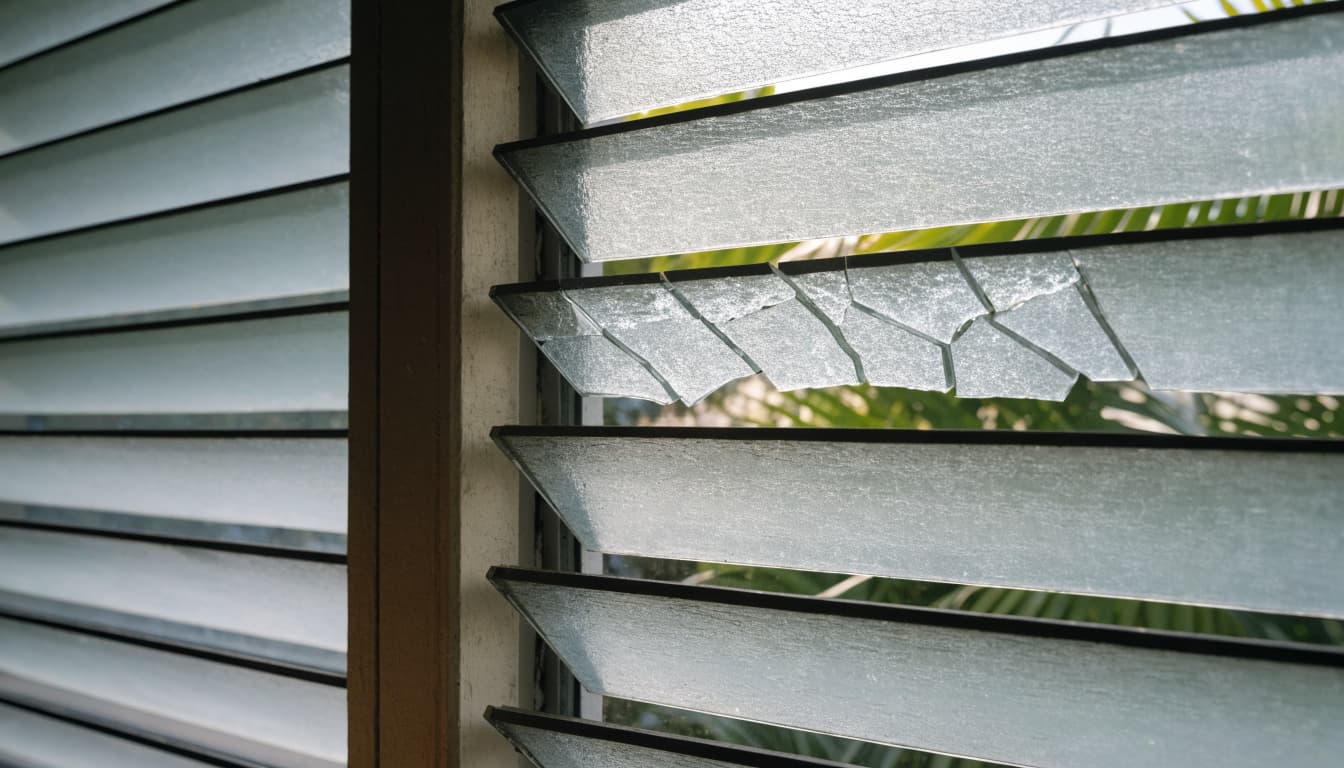
Separate glass damage from hardware damage
Inspect the window without pressing on the cracked glass. Look for a single damaged slat, displaced supports, loose neighboring louvers, or an opening that appears out of alignment.
A glass-only repair depends on more than counting cracks. If a holder has shifted or the frame is damaged, new glass alone won't address the cause. Photograph the affected slat and both ends so a glass professional can evaluate the visible damage.
Look for the reason the slat broke
Consider whether the damage followed an impact, appeared during operation, or developed near a support. That history helps the installer decide what else needs inspection.
Don't repeatedly crank the window to investigate a crack. Movement can dislodge damaged glass. Also mention recurring leaks or difficult operation when requesting service in Cape Coral, even if those problems existed before the break.
Make the Work Area Safe Before Measuring
Keep children and pets away from both sides of the window. Glass can fall indoors or outdoors, so check the exterior area before approaching the opening.
Wear eye protection, cut-resistant gloves, closed-toe shoes, and clothing that covers exposed skin when handling glass. Gloves reduce risk, but they don't make a cracked louver safe to squeeze or carry casually.
Avoid working during rain, strong wind, or poor lighting. In Cape Coral, an afternoon storm can turn an exposed opening into a more urgent problem. Plan the repair when conditions allow safe access and cleanup.
Don't lean through the opening or reach across broken edges. If the slat sits above comfortable standing reach, arrange professional service instead of balancing on furniture.
If fragments remain loose in the holders, stop before measuring or operating the window. A glazier can remove unstable pieces and assess the supports. Ask about temporary protection if the replacement cannot happen immediately; don't improvise a cover that presses against the damaged glass.
Measure the Replacement Louver, Not Just the Opening
A supplier needs the dimensions of the replacement glass, not an estimate based on the visible gap. Treat homeowner measurements as preliminary information until a glazier or manufacturer confirms them.
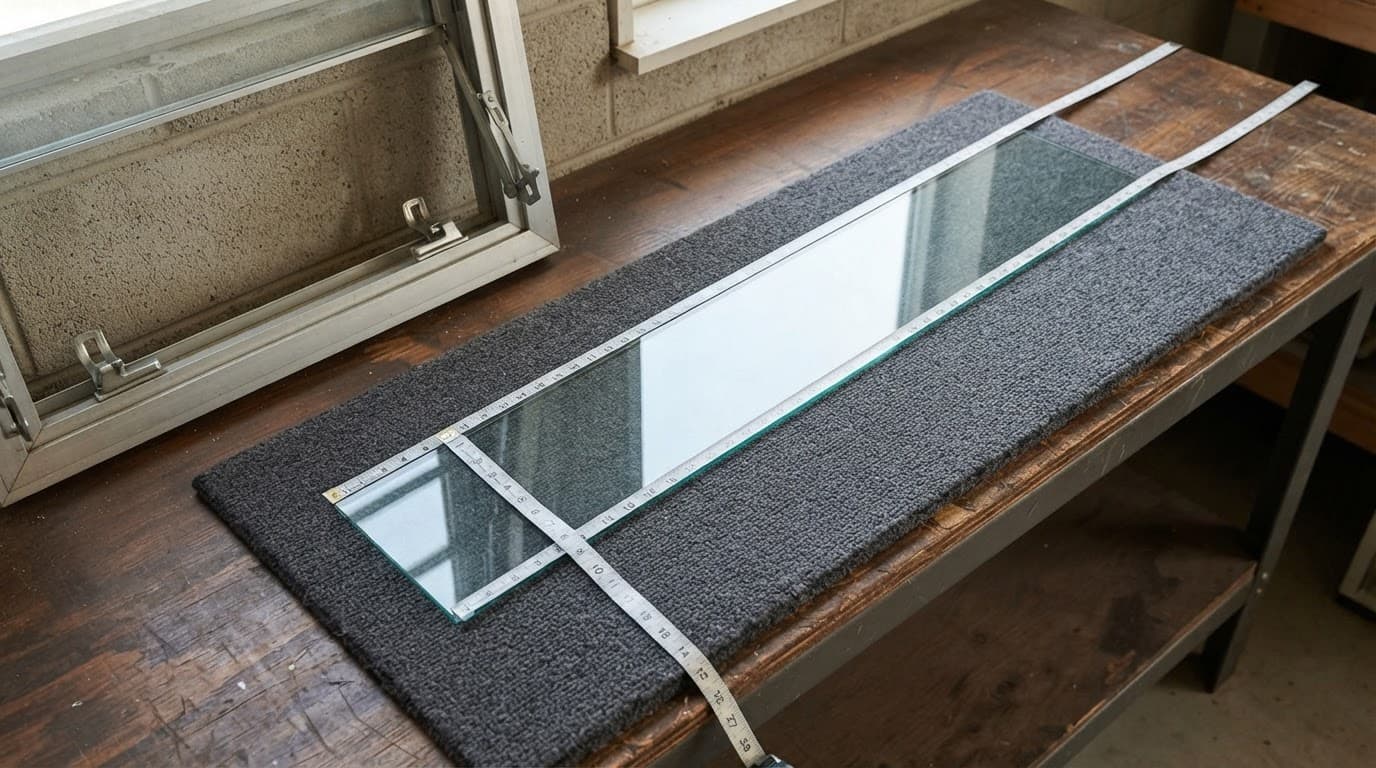
Record length, width, and thickness separately
For a safely accessible, unbroken reference slat, record the glass length end to end and its width across the narrow dimension. Label each measurement clearly so the supplier doesn't confuse orientation.
Thickness also needs confirmation. Don't estimate it from the front view or assume every older jalousie uses the same glass. Have a professional verify it when the edge isn't safely accessible.
If the supports conceal the ends, don't substitute the exposed span for the total glass length. Avoid removing an intact neighboring louver solely to obtain measurements unless the manufacturer or glazier confirms the method.
The visible gap doesn't reveal how much glass sits inside the supports. Confirm the full glass dimensions before ordering.
Identify the glass appearance and window model
Photograph the entire window, its operating handle, both louver supports, and any readable manufacturer identification. Include a close view of an intact slat.
Describe whether the glass appears clear, tinted, frosted, or textured. However, appearance alone doesn't establish its glass type or suitability.
In Cape Coral sunlight, a replacement with a different color or texture can stand out. Ask the supplier to confirm the available match, required material, and edge treatment against the existing window.
Order One Confirmed Replacement Slat
Provide the supplier with your photos, preliminary dimensions, and window identification. Explain that you need one replacement louver, not a new jalousie assembly.
Before authorizing fabrication, ask who will verify the final dimensions and material specification. A close-looking stock slat isn't enough when its fit hasn't been confirmed.
Also clarify whether the quote covers glass only or includes removal, installation, hardware inspection, and disposal. Those are different scopes of work, so compare estimates on the same basis.
Don't plan to trim delivered glass yourself. The glass type determines whether cutting is possible, and the replacement should arrive ready for its confirmed application.
For jalousie louver replacement, the most useful ordering question is whether the supplied piece matches this particular window. Ask about availability and scheduling before leaving the opening exposed. No single price or turnaround applies to every custom slat and hardware condition.
Follow the Confirmed Removal and Installation Method
The retaining hardware determines how a louver comes out and how its replacement seats. Obtain the manufacturer's instructions or have a qualified glazier identify the system before attempting removal.
Use this sequence only after the window-specific procedure is confirmed:
- Establish safe access on both sides and protect the area below the damaged slat. Keep the replacement nearby in a secure, protected location.
- Support the damaged louver as the confirmed procedure requires before releasing its retainers. Don't pull against hardware that still holds the glass.
- Remove the damaged glass using the approved method. If fragments shift, the hardware resists, or adjacent slats move, stop and call a professional.
- Have the empty supports checked for damage and remaining fragments. Resolve any holder problem before installing the new glass.
- Seat and secure the replacement according to the window's instructions. Confirm that both ends have the intended support before testing movement.
Don't bend clips, loosen unfamiliar fasteners, or add adhesive simply to make the slat stay in place. Those decisions require confirmation for the actual window system.
If you cannot identify how the glass is retained, leave installation to a professional. Protecting the neighboring louvers matters as much as replacing the broken one.
Check Operation and Weather Exposure After the Repair
A replacement that looks aligned still needs a final inspection. Check the repaired position and surrounding louvers before returning the window to normal use.
Confirm smooth movement without forcing the handle
After the installer confirms that the glass is secure, operate the window gently through its intended range. Watch for rubbing, uneven movement, or a slat that behaves differently from its neighbors.
Stop if the handle requires unusual force. Don't compensate by tightening unfamiliar hardware or pressing on the glass.
Ask the installer to check visible gaps, seating, and the operating mechanism before leaving. Finally, inspect the indoor and outdoor work areas for fragments, including nearby screen tracks and walking surfaces.
Distinguish a repaired slat from a weatherproofing upgrade
One new louver repairs one damaged piece of glass. It doesn't correct water entry around the frame or change the performance of the entire window assembly.
After subsequent rain, check for moisture near the repaired location and surrounding trim. Report continuing leaks instead of assuming another slat needs replacement.
Similarly, replacing glass doesn't establish an impact rating for an older jalousie window. In Cape Coral, questions about storm protection need an assessment of the complete system, not just the new pane.
When to Call a Cape Coral Glass Professional
Professional help makes sense when the glass is unstable, access is difficult, or the retaining hardware cannot be identified. Bent supports, corroded hardware, and damaged neighboring slats also warrant an inspection.
Call before ordering if you cannot obtain complete measurements safely. That prevents a nearly correct replacement from becoming an unusable piece of glass.
Frame damage and water entry around the opening may require a broader repair. An on-site assessment can distinguish a single-louver job from problems involving the window assembly or surrounding construction.
Caloosahatchee Glass & Mirror offers glass repair and replacement services, including window glass and custom glass replacement. Ask the company to confirm whether it can source and install the louver for your particular jalousie model.
The fourth-generation, family-owned company provides glass services in Cape Coral and operates from 2588 Southern Garden Street in Fort Myers. Call (239) 334-2690 with photos and a description of the damage.
When requesting an estimate, identify your location and whether the opening is currently exposed. Homeowners in nearby Bonita Springs should also confirm service arrangements for their property.
Key Takeaways for a Single-Louver Repair
- Confirm that the damage affects one glass slat and that its supports and frame remain sound.
- Record preliminary dimensions and identification details, then obtain professional confirmation before ordering the replacement.
- Use the window-specific retention procedure, and stop if glass, hardware, or neighboring louvers become unstable.
The goal is a securely fitted replacement that operates correctly without overlooking damage elsewhere in the window.
Frequently Asked Questions
Can I replace one louver without replacing the whole window?
A single-louver repair may be appropriate when the frame, supports, and operating mechanism remain serviceable. The inspection determines whether the broken glass is an isolated problem.
If the frame is damaged or water enters around the opening, replacing one slat may leave the larger problem unresolved. Have those conditions evaluated before deciding on the repair scope.
Can I use a neighboring slat as a sizing reference?
An intact neighboring louver can help document appearance and preliminary dimensions, but it doesn't replace final verification. Its ends may be concealed, and removing it can introduce another handling risk.
Ask a glazier to confirm the reference slat's suitability and the required replacement specifications. Don't order solely from the visible portion of the glass.
Restore the Broken Slat Without Overlooking the Window
A focused jalousie louver replacement can preserve a serviceable Cape Coral window when only one slat has failed. Accurate identification, confirmed measurements, and secure installation keep that repair focused on the actual damage.
Prioritize safe handling over a quick attempt. If the glass is unstable or the hardware is unfamiliar, arrange an inspection before ordering or removing anything.