
Glass Backsplash vs Tile: Cape Coral Kitchen Choices
A backsplash looks different once cooking splashes and afternoon sunlight reach it. For Cape Coral homeowners, the glass backsplash vs tile decision should account for daily upkeep , repair options, and installation details.
Glass panels offer broad, uninterrupted surfaces, while tile gives you individual pieces, patterns, and visible joints. Neither choice wins every kitchen, so start with how each material fits your cooking habits and renovation plans.
Key Takeaways
- Glass panels reduce the number of joints, but they still need cleaning and properly detailed edges.
- Tile offers varied textures and layouts, with maintenance requirements that depend on the tile and grout.
- Heat exposure, wall condition, and outlet locations affect both installations.
- Compare complete installed estimates rather than material prices alone.
Glass Backsplash vs Tile: Compare the Whole Assembly
A glass panel backsplash typically uses custom-sized sheets, sometimes with color applied to the back. Tile uses separate ceramic, porcelain, glass, or stone pieces installed with joints between them.
Glass tile and glass panels are different products. Glass mosaics still have grout lines, so they shouldn't be treated as a continuous-panel backsplash.
Here are the main differences to discuss before selecting either system.
| Consideration | Glass panels | Tile |
|---|---|---|
| Surface layout | Large sections with planned seams | Individual pieces with grout joints |
| Appearance | Broad color fields and reflections | Patterns, textures, and varied shapes |
| Fabrication | Measurements and cutouts planned before production | Pieces cut and arranged during installation |
| Damage repair | A damaged panel may need replacement | Individual pieces may be replaceable |
| Maintenance details | Glass face, seams, and perimeter seals | Tile face, grout, and perimeter seals |
The finished result depends on the entire assembly. Backing, adhesives, joint details, and workmanship deserve as much attention as the visible surface.
Cleaning: Look Beyond the Surface
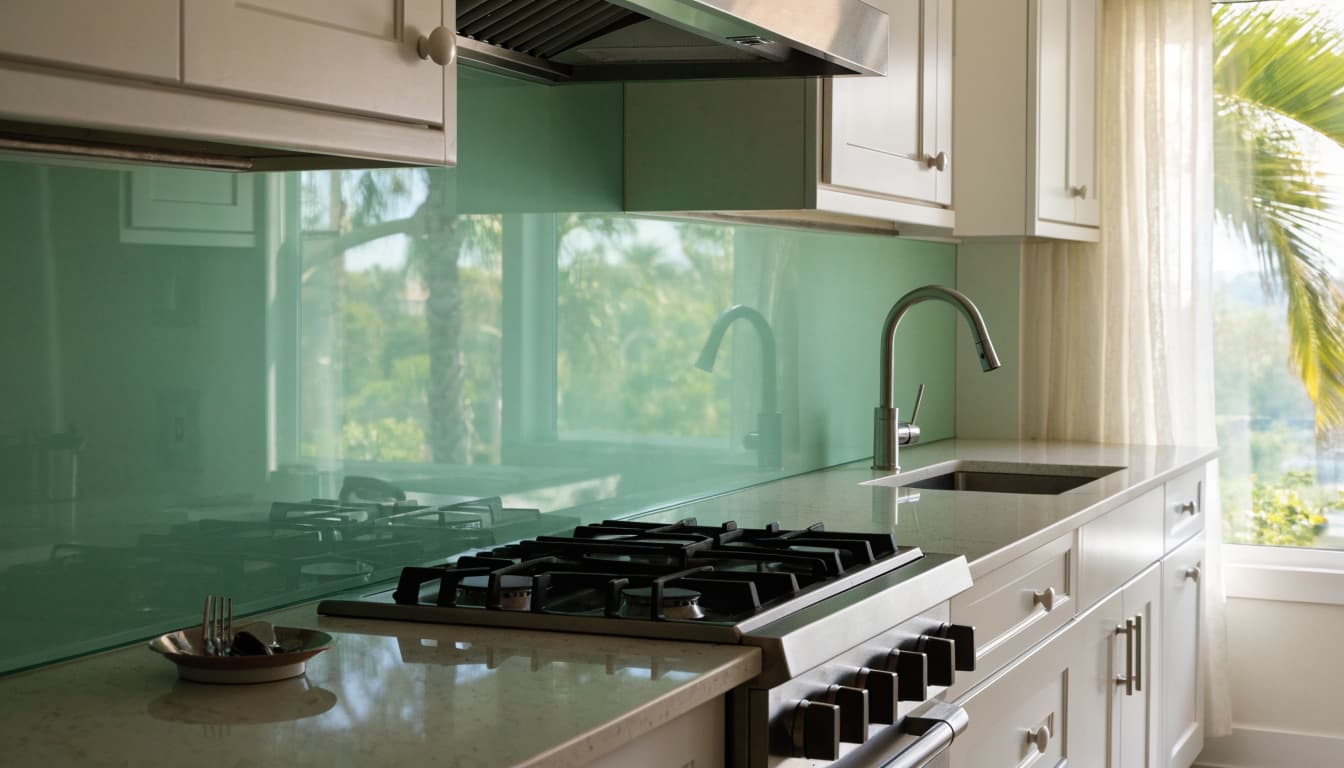
Caring for glass panels
A continuous panel has fewer joints across its face than a small-format tile layout. However, grease, fingerprints, and dried sink splashes can remain visible, especially on glossy finishes.
Use a soft cloth and a cleaner approved for the glass and its finish. Avoid abrasive pads, and don't assume every cleaner is suitable around painted backing or exposed edges.
Also inspect the joint where the backsplash meets the countertop. A smooth face doesn't eliminate the need to maintain perimeter sealant and panel seams.
Caring for tile and grout
Tile maintenance depends on the material. Glazed ceramic, porcelain, and natural stone don't share identical cleaning requirements, so request instructions for the exact product.
Grout matters too. Cement-based grout may require sealing under its manufacturer's instructions, while epoxy grout has different care requirements. Sealing doesn't make grout immune to staining.
Near a range, textured tile can retain residue in its recesses. Meanwhile, contrasting grout can make discoloration more noticeable. Ask for care guidance covering both the tile and grout before purchasing.
Durability and Repair: Plan for Accidents
Glass needs protected edges and appropriate specifications
Glass can scratch, chip, or break. Edge damage, impact, and unsuitable heat exposure deserve attention even when the panel uses tempered safety glass.
Ask which glass type, thickness, backing finish, and attachment method suit the location. Behind a cooktop, the fabricator should review the appliance's clearance requirements and the proposed panel's heat suitability.
If a panel suffers damage, replacement may involve recreating its dimensions, cutouts, and color. Keep the original specifications so a future replacement starts with documented details.
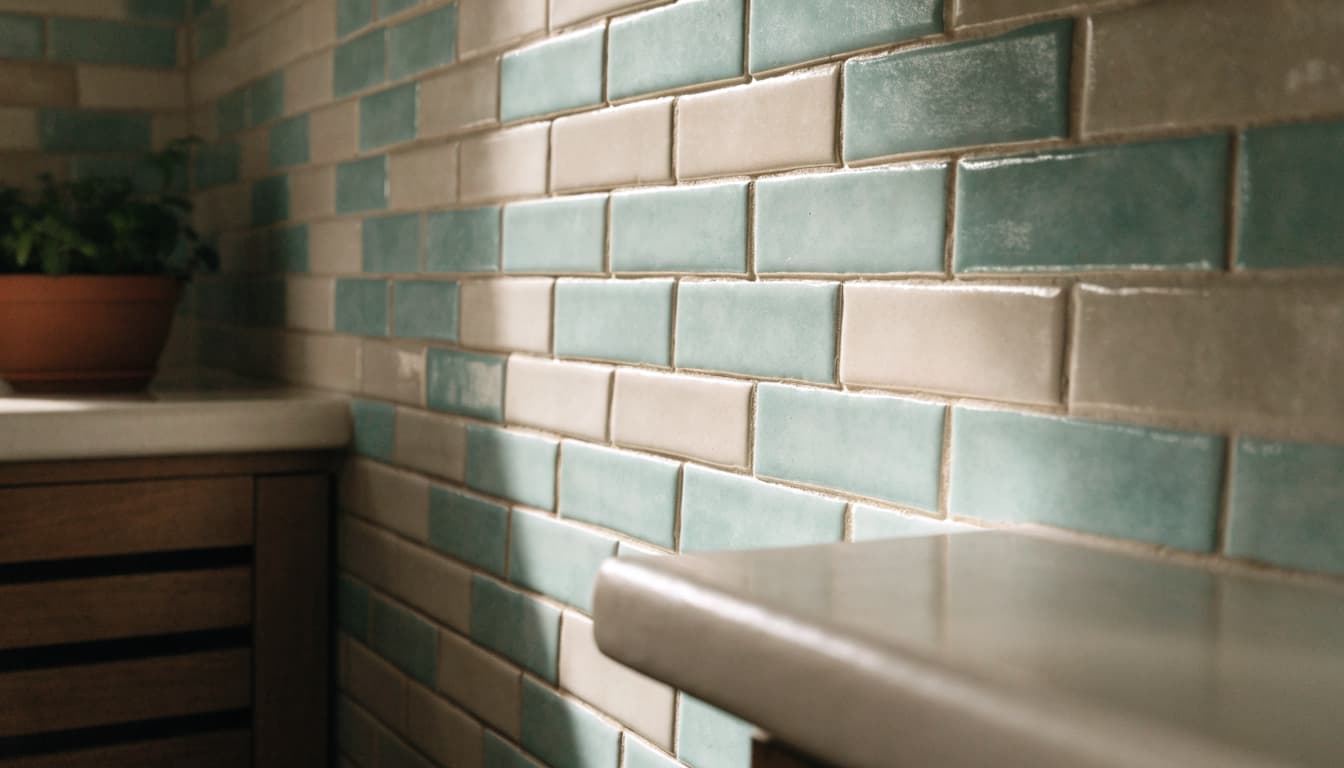
Tile repairs depend on matching materials
Tile can also chip or crack. Loose pieces or recurring cracks may indicate movement or problems with the backing, rather than damage limited to the tile itself.
Individual tile replacement may be possible, but matching discontinued colors, finishes, and grout can be difficult. Save spare tiles from the original production batch when practical.
Neither material should conceal unresolved wall damage. If cracking or moisture keeps returning, investigate the cause before replacing the visible finish. A surface repair won't correct a moving or damp substrate.
Installation: Measurements Come Before Fabrication
Glass and tile follow different installation workflows. For either choice, settle the countertop, cabinetry, and electrical layout before committing to the backsplash.
Custom glass requires a finished layout
Glass panel measurements must account for corners, cabinet edges, outlets, switches, and planned seams. Wall flatness also matters because a large sheet won't bend to follow an uneven surface.
A small measurement error can affect an entire panel. Therefore, have the installer confirm when final measuring should occur and which surfaces must be complete first.
Tempered glass can't be cut or drilled after tempering. Outlet cutouts and panel dimensions must be settled before that manufacturing step.
Caloosahatchee Glass & Mirror offers custom glass cutting and fabrication. Ask whether its capabilities fit your proposed backsplash design and installation requirements before ordering.
Tile needs preparation and layout planning
Tile allows individual cuts during installation, but it still needs a suitable, properly prepared backing. Poor layout can leave narrow strips at corners or awkward cuts around receptacles.
Discuss where the pattern starts, how it ends, and how exposed edges will be finished. Also confirm the appropriate flexible joints where materials meet or change direction.
Electrical devices may need adjustment to remain correctly positioned after either backsplash adds wall thickness. Have a qualified electrician handle those changes. The backsplash installer shouldn't improvise around an unsafe electrical arrangement.
Design Options: Test Color in Your Kitchen
A showroom sample can't reproduce your kitchen's daylight or under-cabinet lighting. This matters in bright Naples homes, where reflective surfaces can look different throughout the day.
Glass offers continuous color and reflection
Back-painted glass creates a broad color field without a tile pattern. Clear glass leaves the surface behind it visible, so patchwork or adhesive placement may affect the finished appearance.
Standard clear glass has a green cast that can influence pale backing colors. Low-iron glass reduces that cast, but compare actual samples before choosing.
View your sample beside the countertop under daylight and evening lighting. Also check reflections from windows and light fixtures. Glossy glass may emphasize glare that wasn't apparent in the showroom.
Tile offers texture and pattern
Tile provides choices such as subway layouts, mosaics, large-format porcelain, and natural stone. Each changes the visual scale of the backsplash.
Small pieces create more joints, while larger pieces reduce the number of joints across a given area. Grout color can either emphasize the layout or soften it.
For an Estero kitchen with patterned counters, a restrained backsplash may keep the room from looking crowded. Coordinate samples rather than choosing the backsplash in isolation, and include the planned grout color in that comparison.
Southwest Florida Conditions: Address Moisture Honestly
Humidity matters in Southwest Florida, but an indoor backsplash doesn't face the same exposure as a patio tabletop or exterior window. Focus on kitchen ventilation, sink splashes, and the condition of the wall.
In Bonita Springs or Punta Gorda, check for plumbing leaks, damp drywall, and deteriorated countertop joints before covering the area. Neither glass nor tile fixes an existing moisture problem.
Also remember that a finished backsplash isn't automatically a waterproof wall assembly. Its joints, penetrations, and backing need appropriate detailing for the location.
Run the range hood while cooking and wipe standing water near the sink. If the kitchen sits beside frequently opened lanai doors, consider how humid outdoor air affects the room. Persistent condensation calls for a moisture assessment, not simply a different backsplash finish.
Compare Complete Estimates, Not Square-Foot Prices
There isn't a dependable price ranking for every glass-panel and tile project. Custom fabrication, material selection, demolition, and wall preparation can change the comparison.
For glass, request details about panel count, glass specifications, backing color, edge finishing, outlet cutouts, delivery, and installation. For tile, review the tile itself alongside setting materials, grout, trim, layout labor, and preparation.
A Lehigh Acres remodel with damaged drywall needs a different scope from a kitchen with sound, ready-to-cover walls. Compare estimates using the same dimensions and preparation assumptions.
Also ask about fabrication lead time, adhesive or grout curing requirements, and when normal kitchen use can resume. Separate those stages rather than relying on a single completion date.
Caloosahatchee Glass & Mirror is a fourth-generation, family-owned company based in Fort Myers. For a project-specific discussion, call (239) 334-2690 and ask what information is needed to evaluate your proposed glass work.
Frequently Asked Questions
Can glass panels go behind a range?
They can be suitable when the glass, backing finish, attachment system, and appliance clearances support that use. Confirm the complete specification with the fabricator and follow the range manufacturer's requirements. Appearance alone doesn't establish heat suitability.
Can a glass backsplash cover existing tile?
Possibly, but the installer must evaluate flatness, attachment, added thickness, and outlet positioning. Existing tile isn't automatically an acceptable substrate. Covering it also won't resolve loose pieces, hidden moisture, or deteriorated backing.
Which option works better for a busy kitchen?
Choose according to your priorities: cleaning instructions, visible joints, design, repair planning, and installed cost. When weighing glass backsplash vs tile, compare actual samples and written project scopes. A broad material label doesn't tell you how the finished installation will perform.
Choose the Backsplash You Can Live With
The right Cape Coral backsplash fits your cooking routine and your willingness to maintain its surfaces and joints. Installation details matter as much as the material you see.
Compare samples in your own lighting, resolve wall problems first, and request complete estimates. Those steps give you a sound basis for choosing glass panels or tile without relying on appearance alone.