
Shower Door Magnets vs Latches in Fort Myers Homes
An enclosure can look perfect and still leave a thin stream of water on the floor when its door fails to close. For homeowners comparing shower door magnets with latches, the right choice depends less on style than on alignment, seal condition, door design, and local moisture.
In Fort Myers and nearby communities, salt air, humidity, mineral buildup, and daily use can expose weak hardware quickly. A magnetic strip may provide a clean, quiet closure, while a mechanical latch may give a firmer tactile hold. The dependable option is the one that matches the glass door and opening, then gets installed and maintained correctly.
How Shower Door Closures Work
Both systems keep the moving glass panel against a fixed panel or jamb, but they operate differently. Knowing that difference makes it easier to judge performance when a door starts to drift or stick.
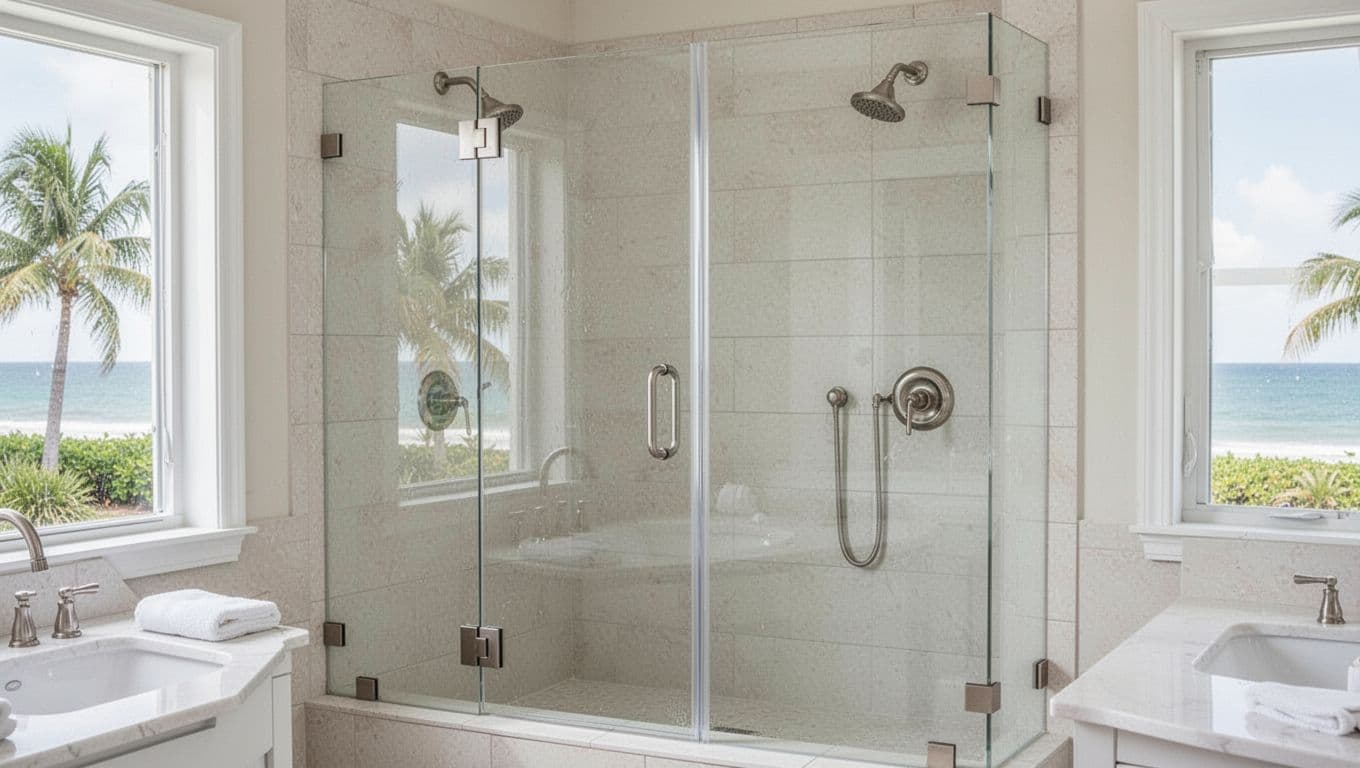
Magnetic closure strips and magnets
A magnetic closure usually uses paired inserts inside clear vinyl channels or strips at the door's meeting edge. As the door nears the closed position, the magnetic faces pull together. Depending on the design, the strip also cushions contact and helps cover the small gap between glass edges.
Magnets don't lock the door with a mechanical catch. They hold best when the strips meet along their intended length. If a hinge sags, a seal swells, or the door sits out of line, contact becomes uneven. A clean appearance can hide that dependence.
Mechanical latches
A mechanical latch uses a physical part, such as a lever, hook, roller, or catch, that engages a matching keeper. One piece attaches to the moving door, while the other connects to a fixed panel, wall, or jamb.
The closing action gives you a clear signal. You can usually feel or hear the latch engage, which some homeowners prefer for a frequently used bathroom. Still, a latch doesn't correct a sagging hinge or crooked opening. The hardware must line up before the catch can work properly.
Shower door magnets vs latches: what affects reliability?
The two closure styles can both work well. The comparison below shows their common characteristics, but the materials, door design, and installation quality matter more than the label alone.
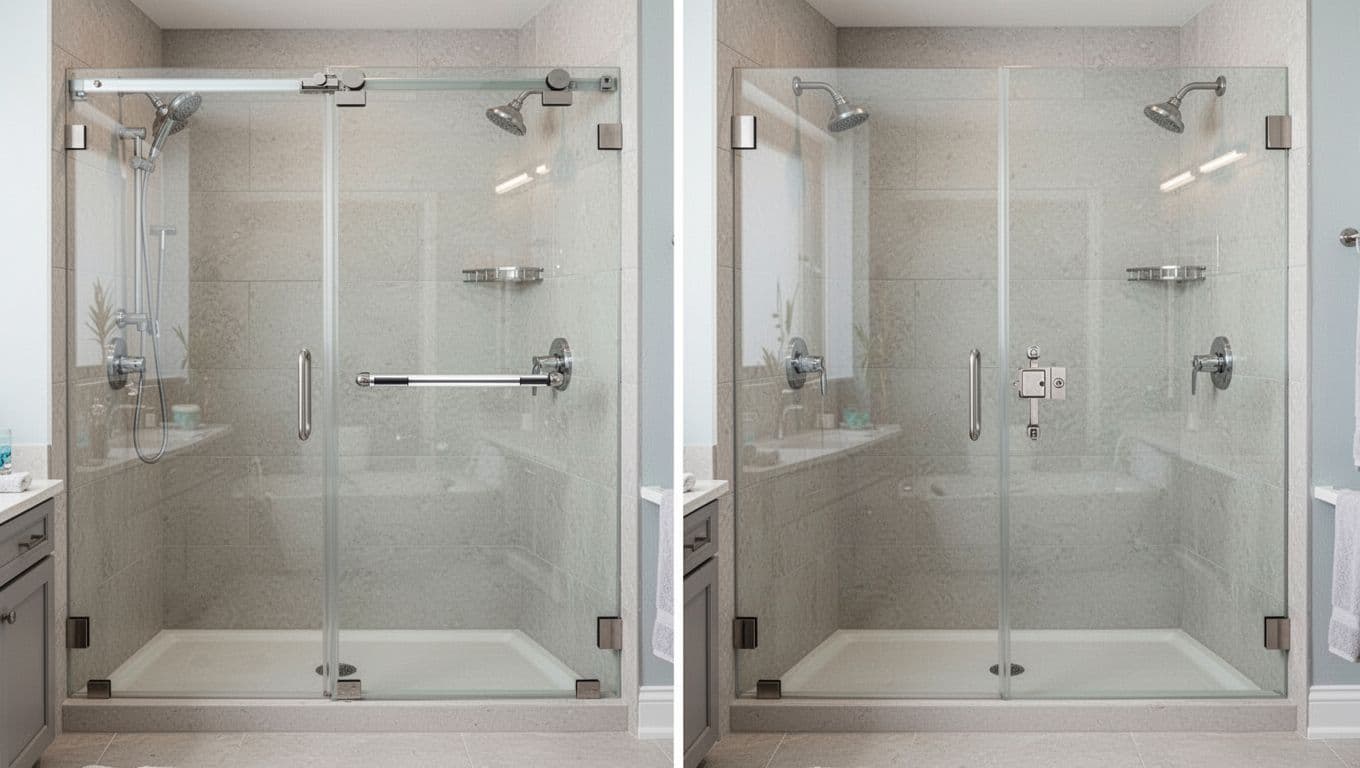
| Factor | Magnetic closure strips | Mechanical latches |
|---|---|---|
| Appearance | Low-profile and easy to blend with clear glass | More visible hardware with many finish options |
| Closing feel | Quiet pull as the edges meet | Tactile engagement from a catch or lever |
| Alignment needs | Requires close contact along the meeting edge | Requires accurate alignment between latch and keeper |
| Moving parts | Few or no moving parts | Internal or external parts can wear |
| Cleaning | Buildup can prevent full contact | Buildup can affect the catch or moving piece |
| Corrosion concerns | Depends on the insert, strip, and nearby hardware | Depends on the latch material and finish |
Shower door magnets often suit homeowners who want minimal hardware and a soft closing action. Latches can suit people who want a visible, positive connection. Neither option is universally better, and neither can overcome poor measurements or a damaged door seal.
Alignment often matters more than closure type
A closure only works with the position created by the hinges, glass, wall, and threshold. When the door is closed, check the gap at the top, center, and bottom. A changing gap may point to hinge movement, an uneven opening, or a seal that has shifted.
Check the meeting edges
Magnetic strips need enough contact to pull the door shut across the intended length. A small gap at one corner can weaken the closure and create a path for water. Latches have their own alignment requirement. If the keeper sits too high, low, or far forward, the latch may miss, bind, or require extra force.
Look for obstructions before adjusting hardware. A folded seal, a loose screw cap, or mineral buildup on the edge can change the door's position by a small amount. That small change can affect closure.
A closure can only hold the position created by the hinges and glass. It can't straighten a door or repair an uneven opening.
Account for door weight and movement
The hinges carry the glass door's weight, but a wide or heavy panel places more demand on the complete enclosure. Glass thickness, panel width, hinge placement, and swing direction all affect how the door moves.
A closure that worked during the first months may struggle after repeated use if the hinges loosen or the panel shifts. For that reason, don't choose a stronger latch or thicker magnet as a substitute for correcting the underlying movement.
When magnetic closures fit a frameless bathroom
When a frameless door meets cleanly, shower door magnets can provide a quiet closure with little visual interruption. They pair well with a simple pull and the open appearance many homeowners want from a glass enclosure.
This arrangement can work especially well for a properly aligned hinged door that meets another glass panel or a straight wall-mounted channel. The clear strip keeps attention on the tile and glass rather than on a large latch body.
Magnetic closures also make daily use simple. You push the door near the closed position, and the matching strips pull the edge into place. That convenience depends on keeping the strips clean and replacing them when they become brittle, warped, or permanently compressed.
Homeowners planning a new bathroom can review options for custom glass shower enclosures before choosing the door layout and hardware. The closure should be selected with the full enclosure, not as an isolated accessory.
When a mechanical latch makes sense
A mechanical latch can be a practical choice when you want confirmation that the door has engaged. The click or firm lever action makes the closed position easy to recognize, even in a busy household or a bathroom used by guests.
Latches also offer a broad range of finishes and shapes. A homeowner in Estero might choose a small polished fitting for a bright contemporary bathroom, while a Naples renovation may call for a darker finish that matches the shower trim.
The latch must match the glass thickness, swing direction, mounting arrangement, and available clearance. A latch that binds can stress the hardware and make people pull harder on the door. Keep in mind that the latch doesn't support the panel's weight. Proper hinges, stable mounting points, and a sound seal still control the door's movement.
Southwest Florida conditions affect closure reliability
Bathrooms in Southwest Florida deal with moisture every day. Homes in Cape Coral and Punta Gorda near waterways may also expose metal finishes to salt-laden air. Bonita Springs and Naples bathrooms face the same general humidity concerns, even when the enclosure sits away from direct outdoor exposure. Lehigh Acres is farther inland, but moisture and mineral residue can still affect glass hardware.
Watch for corrosion on metal hardware
Corrosion may appear as discoloration, pitting, rough edges, or a finish that starts to peel. Lower-grade finishes can show damage sooner when residue remains on the surface. A mechanical latch has more moving and joining parts to inspect, while a magnetic setup still includes hardware, channels, and hinge components that need care.
After cleaning, rinse residue from the fittings and dry them with a soft cloth. Don't leave salty water or strong cleaning products sitting on metal. If a latch becomes rough or a screw head shows corrosion, stop forcing the mechanism and have the hardware checked.
Replace worn seals before they affect closure
Clear vinyl strips and bottom sweeps can harden, yellow, curl, or split over time. A damaged seal may drag against the threshold or push the door out of position. It can also leave a gap that makes a properly working closure seem unreliable.
Mineral deposits create a similar problem. A white crust along the meeting edge can keep magnetic inserts apart, while buildup around a latch can prevent the catch from seating fully. Cleaning may solve a light deposit, but a worn seal needs replacement rather than extra pressure.
Cleaning and maintenance for coastal humidity
Regular care keeps both closure styles working with less effort. You don't need aggressive chemicals or complicated tools.
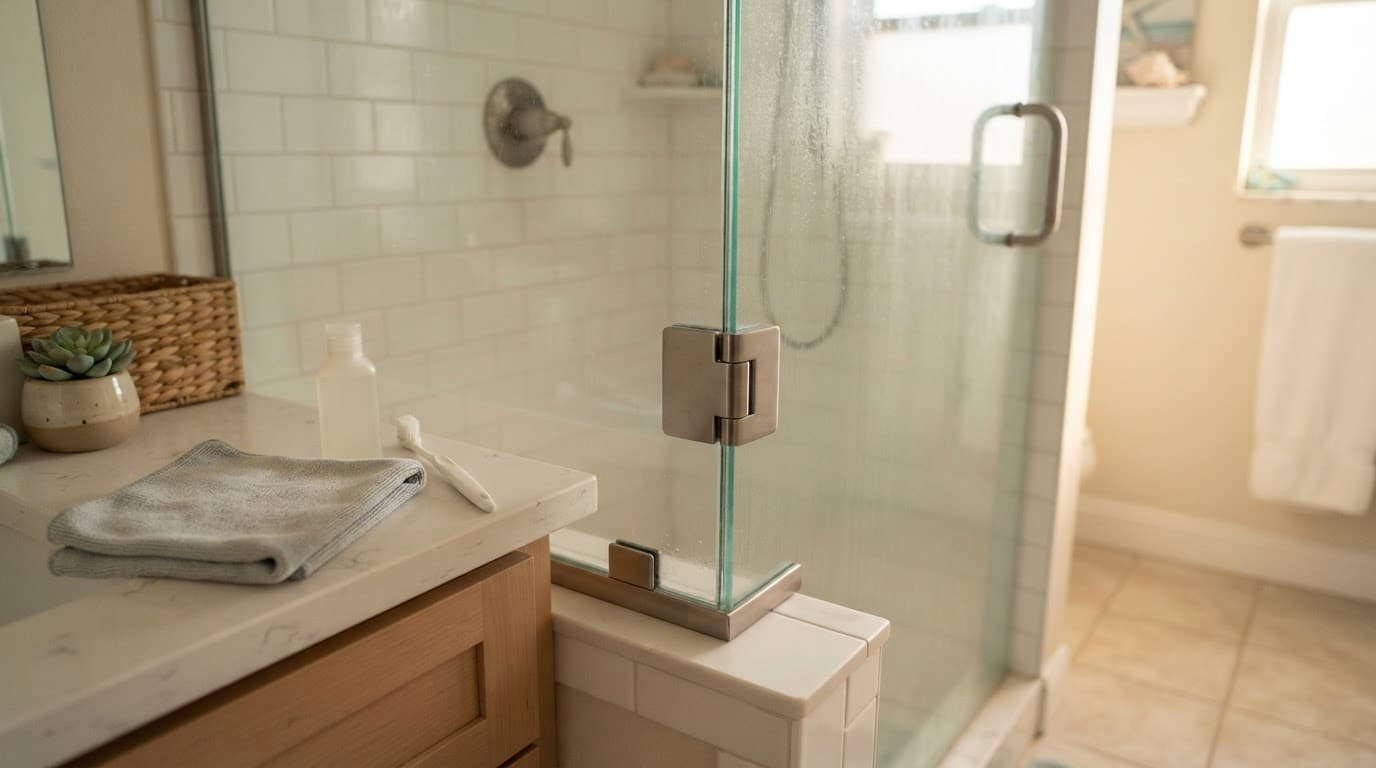
- After bathing, remove standing water from the glass and door edge with a squeegee or soft microfiber cloth.
- Use mild soap and water on the strips, seals, and nearby hardware. Avoid abrasive pads and harsh cleaners unless the hardware manufacturer approves them.
- Wipe the meeting edges and latch area so residue doesn't dry inside the closure.
- Inspect the bottom sweep and vertical seals for gaps, cracks, curling, or stiffness.
- Keep the door fully supported while cleaning. Don't pull on the seal or use it to swing the door.
For shower door magnets, clean both contact surfaces and let them dry. Avoid applying oil or grease to the magnetic strip. If the closure contains a mechanical piece, use only a care product approved for that specific hardware.
White vinegar can help with mineral deposits on compatible glass and fittings, but don't use acidic cleaners on marble, limestone, travertine, or other acid-sensitive stone. When in doubt, follow the care instructions for the bathroom's tile and hardware.
Installation details determine the result
A reliable closure starts before the magnet or latch reaches the bathroom. The installer needs to examine the opening, glass layout, hinge position, threshold, seals, and wall conditions together.
Ask about the complete enclosure
During a quote, ask how the closure fits the door's width, glass thickness, swing, and adjoining panel. The installer should also check whether the walls are plumb and whether the curb or threshold changes the door's path.
A proper installation includes a test of the full swing. The door should move without dragging, meet the seal evenly, and close without a shove. Magnets should contact across the intended area, and a latch should engage without forcing the handle.
Hardware finish matters, but fit matters more. A beautiful latch will still frustrate you if the keeper is out of line. A clear magnetic strip will still leak if the panel or seal has shifted.
Know when adjustment is not enough
Call for service when the door drags, the gap changes, the magnets stop meeting, or the latch no longer catches. Also get help if hardware is loose, seals are torn, or the glass has a chip or crack.
A professional can separate a closure problem from a hinge, seal, glass, or opening problem. Replacing a strip won't solve a door that has moved, and tightening a latch won't repair damaged glass. For broken panels or damaged enclosure components, shower glass repair and replacement may be the safer solution.
Choose the closure that fits the door
Shower door magnets and mechanical latches can both provide dependable daily closure when the door is properly aligned and the hardware matches the enclosure. Magnets offer a low-profile, quiet feel, while latches provide a physical point of engagement that some homeowners prefer.
Southwest Florida humidity makes cleaning, seal checks, and corrosion control part of the decision. If the door drags, leaks after cleaning, shows corrosion, or no longer aligns, consult a local shower-door professional for an inspection, adjustment, seal replacement, or correctly matched closure.