
Safety Glass Requirements for Fort Myers Homes
A cracked patio door or low picture window raises more than a replacement question. It may fall under Florida's safety glass requirements , which protect people from serious cuts when glazing breaks.
For homeowners in Fort Myers and nearby communities, the rules often apply to doors, sidelites, low windows, showers, pool enclosures, and glass near stairs. The current code provides useful measurement guidelines, but local requirements and project conditions should be confirmed with the building department or a qualified professional.
What Florida's safety glass requirements cover
As of August 2026, Florida's statewide baseline is the Florida Building Code, Building, 8th Edition (2023). It took effect on December 31, 2023. Chapter 24, Glass and Glazing, identifies locations where ordinary glass creates a higher risk of human impact.
Those locations include:
- Swinging, sliding, and bifold doors
- Fixed panels beside doors
- Large panes installed close to the floor
- Glazing near tubs, showers, spas, and pools
- Glass beside stairs, landings, and ramps
The code treats these locations as hazardous because people may walk into the glass, fall against it, or break it during normal use.
Safety glazing is a performance requirement
"Safety glazing" describes glass that meets an applicable safety standard and is identified accordingly. It doesn't refer to one specific appearance, thickness, or brand.
Tempered and laminated glass are the two common choices for residential work. However, the product must be appropriate for the opening and meet the applicable requirements. A thick piece of ordinary annealed glass may still fail to provide the breakage protection required in a hazardous location.
The code identifies the hazardous location first. The glass professional then selects a compliant safety-glazing assembly for that opening.
Why the location matters
A window may be safe in one position but require safety glazing after a remodel changes its height, size, or relationship to a door. Replacing a wall with a glass door can also change which nearby panels fall within the hazardous area.
That is why a glass contractor should review the full opening, not only the broken pane. Local amendments, existing construction, permits, and the specific product assembly can affect the final decision.
Doors and sidelites need close attention
Glass doors are among the clearest examples of a hazardous location. This includes exterior patio doors, interior French doors, shower doors, commercial entrances, and sliding doors opening to a lanai.
Every panel in a glass door
Florida's Chapter 24 language states that "glazing in all fixed and operable panels of swinging, sliding and bifold doors" is considered a hazardous location. In practical terms, a full-lite door, a sliding glass door, and a door with multiple fixed sections usually require compliant safety glazing.
This rule matters throughout Southwest Florida. A Cape Coral patio slider may open toward a pool deck, while a Fort Myers entry door may have a large glass panel facing a busy hallway. The location and daily traffic make proper glazing important even when the glass appears undamaged.
Limited code exceptions exist for certain small openings, decorative glazing, and other listed conditions. A decorative pattern, narrow frame, or older installation doesn't automatically qualify for an exception.
Sidelites within the door arc
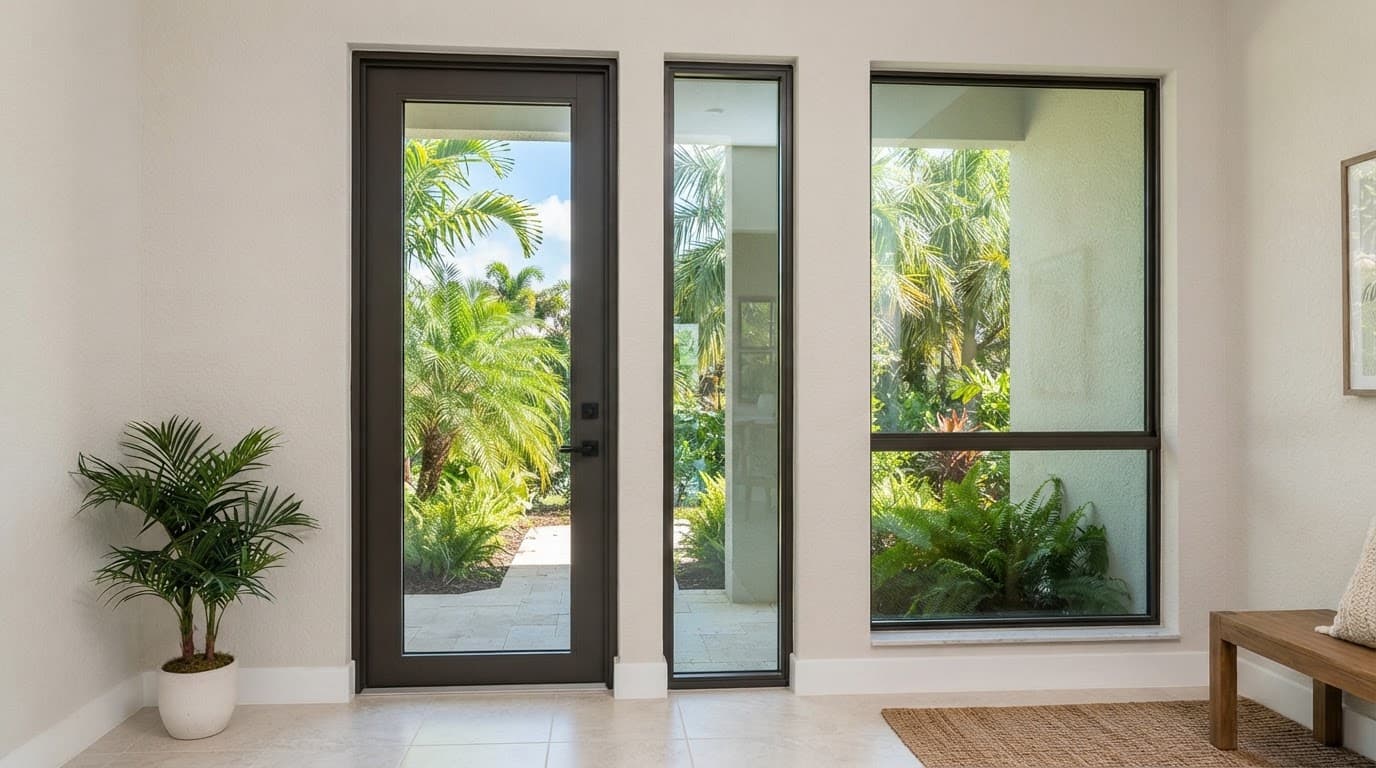
A fixed panel beside a door can also qualify as hazardous glazing. The common trigger has two parts:
- The nearest vertical edge of the panel is within a 24-inch arc of either vertical edge of the door when the door is closed.
- The bottom exposed edge of the glass is less than 60 inches above the walking surface.
This rule often affects narrow sidelites and decorative panels beside entry doors. A panel doesn't need to touch the door to fall within the measured arc.
Intervening barriers may affect some door-adjacent situations, but the details depend on the layout and applicable exception. A site measurement is more reliable than estimating from a photograph.
When a low window needs safety glazing
Large windows installed close to the floor can create a fall or impact hazard. In a Bonita Springs living room, for example, a low picture window may extend across a wall near a seating area or walkway.
The four-part low-window test
The low-glazing rule applies when an individual fixed or operable panel meets all of these conditions:
- The exposed area is greater than 9 square feet .
- The bottom exposed edge is less than 18 inches above the floor.
- The top exposed edge is more than 36 inches above the floor.
- The glazing is within 36 inches of a walking surface.
Each condition matters. A pane that is 10 square feet may not meet this particular hazardous-location rule if its bottom edge sits high enough. Another pane may be hazardous because it is beside a door, even if it doesn't meet the large-pane test.
Measure the exposed panel
Measure the visible glass, rather than relying on the rough opening or the overall window frame. The relevant reference points are the exposed bottom and top edges, the pane area, and the nearest walking surface.
Furniture doesn't change the code measurement. A sofa placed in front of a window may reduce daily contact, but it doesn't necessarily remove the hazard.
Low glass beside a staircase, a sliding door, or a pool access route deserves a broader review. The low-window formula is only one part of the safety glass requirements.
Showers, pools, stairs, and ramps
Bathrooms and pool areas have several glass features that deserve careful attention. Water, bare feet, and limited visibility can increase the chance of a fall against a panel.
Wet-area glazing
Florida's hazardous-location rule covers glazing in walls, enclosures, or fences containing or facing hot tubs, spas, whirlpools, saunas, steam rooms, bathtubs, showers, and indoor or outdoor swimming pools. The common height trigger is a bottom exposed edge less than 60 inches above a standing or walking surface.
That includes many shower enclosure panels and doors. If you're planning a bathroom remodel in Estero, a custom shower glass enclosure should be measured as a complete system, including the fixed panels and door.
Poolside windows and glass fences require a closer review because the relevant walking or standing surface may be on either side. The code wording focuses on glazing in the wall, enclosure, or fence containing or facing the wet area. Nearby windows outside that defined area may be treated differently.
Stairs and landings
Glazing beside a stairway, landing between flights, or ramp is considered hazardous when its bottom exposed edge is less than 60 inches above the adjacent walking surface.
A Naples home with a glass stair guard, tall sidelite, or window near a landing may involve additional details. The code includes exceptions for certain protected arrangements, including some cases involving a compliant guard or glass positioned more than 18 inches from the railing. Glazing located at least 36 inches horizontally from the walking surface may also fall outside this particular trigger.
Because stairs have changing elevations, measure from the correct adjacent surface at each section. A qualified professional can review the guard, railing, glass plane, and walking path together.
Tempered vs. laminated safety glass
Both tempered and laminated glass can provide safety glazing when the selected product meets the required standard. They handle breakage differently, so the better choice depends on the opening and the owner's priorities.
| Glass type | What happens when it breaks | Common residential uses |
|---|---|---|
| Tempered | Breaks into many smaller pieces | Doors, showers, sidelites, and low panes |
| Laminated | Cracks while the interlayer helps hold pieces together | Areas needing post-breakage retention, sound control, or added security |
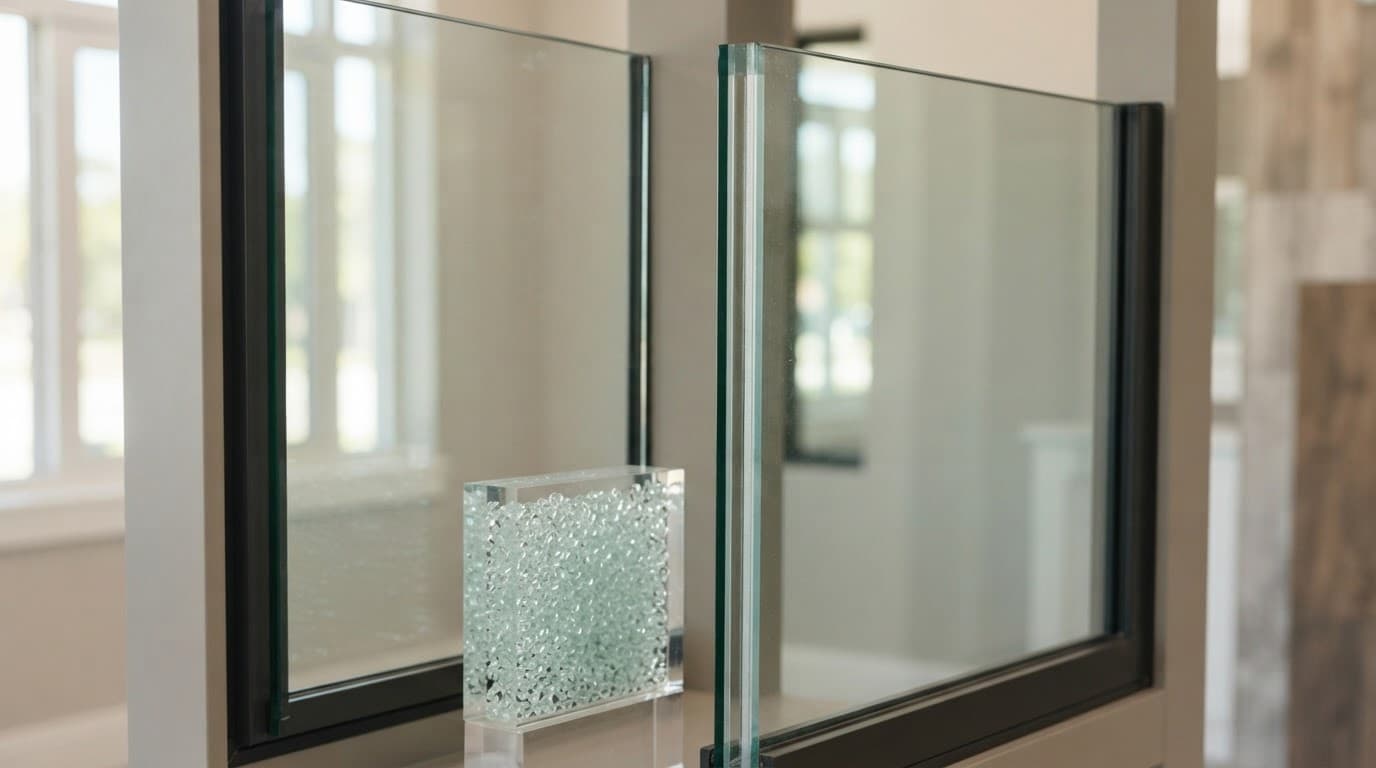
Tempered glass breaks into smaller pieces
Tempered glass receives a heat-treatment process that changes how it breaks. When a compliant tempered panel fails, it usually breaks into small, relatively blunt pieces instead of long, sharp shards.
That makes it a common choice for doors, shower panels, and low windows. Tempered glass is strong for ordinary use, but it doesn't remain in the frame after a major break. The opening may become exposed until the panel is replaced.
Tempered glass also can't be cut or drilled after production. Hardware holes, notches, and edge work must be completed before tempering. Accurate measurements therefore matter during custom fabrication.
Laminated glass helps retain the broken panel
Laminated glass contains multiple glass layers separated by an interlayer. After breakage, the interlayer helps hold the cracked glass together.
That retention can be useful near exterior openings, pool areas, or locations where owners want added security or reduced sound transmission. Some impact-rated window and door assemblies also use laminated glass.
Laminated glass isn't automatically the right answer for every hazardous location. The complete assembly must meet the applicable safety and performance requirements. Ask for the product identification and documentation rather than choosing based only on the word "laminated."
Planning replacement glass in Southwest Florida
Replacing broken glass is not always a simple matter of matching the old pane. A Lehigh Acres rental property, a remodeled home in Punta Gorda, and a coastal property may have different project conditions.
Safety glazing and impact protection are separate
Safety glazing addresses human impact and dangerous breakage. Impact-rated construction addresses resistance to wind-borne debris and other exterior-opening demands. One opening may need to meet both requirements.
For example, a replacement sliding door near the coast may need safety glazing because it is a door. The same door assembly may also need an approved impact rating based on the property's location, exposure, and permit requirements.
A product can satisfy one purpose without satisfying the other. Ask whether the proposal covers safety glazing, wind-borne debris protection, product approval, and installation requirements as separate items.
Check the existing opening before ordering
Before ordering replacement glass, record the opening's:
- Glass type and visible safety markings
- Panel width and height
- Frame style and thickness
- Door or window location
- Distance from floors, stairs, water, and walking surfaces
- Hardware holes, notches, or cutouts
Safety glazing may carry identification connected to standards such as CPSC 16 CFR Part 1201 or ANSI Z97.1. An absent mark doesn't prove that the panel is unsafe, especially in older construction, but it does justify a professional review.
Use the exact opening measurements and the finished conditions. Tile, flooring, thresholds, trim, and new hardware can change the final fit.
Ask for a code-ready proposal
A clear proposal should identify the glass type, thickness, edge finish, hardware, frame or channel, and installation method. For exterior doors and windows, it should also address any required impact-rated assembly.
Property managers should keep the proposal, product information, and installation records with the building file. That documentation helps when a tenant reports a broken panel or when another repair affects the same opening.
Local building departments in Fort Myers, Cape Coral, Bonita Springs, Estero, Naples, Lehigh Acres, and Punta Gorda may review projects under the same Florida baseline while applying different local procedures. Confirm the current interpretation before ordering custom glass or beginning permitted work.
Conclusion
The main safety glass requirements for doors and low windows depend on location, exposed height, pane size, and nearby hazards. Door panels generally require safety glazing, while low panes, sidelites, wet-area glass, and stair-adjacent panels depend on the measurements and applicable exceptions.
Tempered glass usually breaks into smaller pieces, while laminated glass helps retain cracked fragments. For Southwest Florida projects, also check whether the opening needs separate impact protection. A site review by the local building department or a qualified glass professional can prevent an unsafe replacement and an expensive second installation.