
Storefront Door Sagging in Fort Myers: Hinge-Side Signs
Storefront door sagging can show up as uneven gaps, rubbing, or a door that no longer closes smoothly. The visible problem may be near the hinge side, but the location of the symptom doesn't identify the part that needs attention .
For a Fort Myers business, a dragging entrance can affect customers, employees, and security. Paying attention to where the door rubs and how it closes gives a technician useful information without forcing the door or guessing at a repair.
Signs of Storefront Door Sagging
The clearest signs often appear around the edges of the door. Take a moment to look at the opening when the door is closed and when it moves normally.
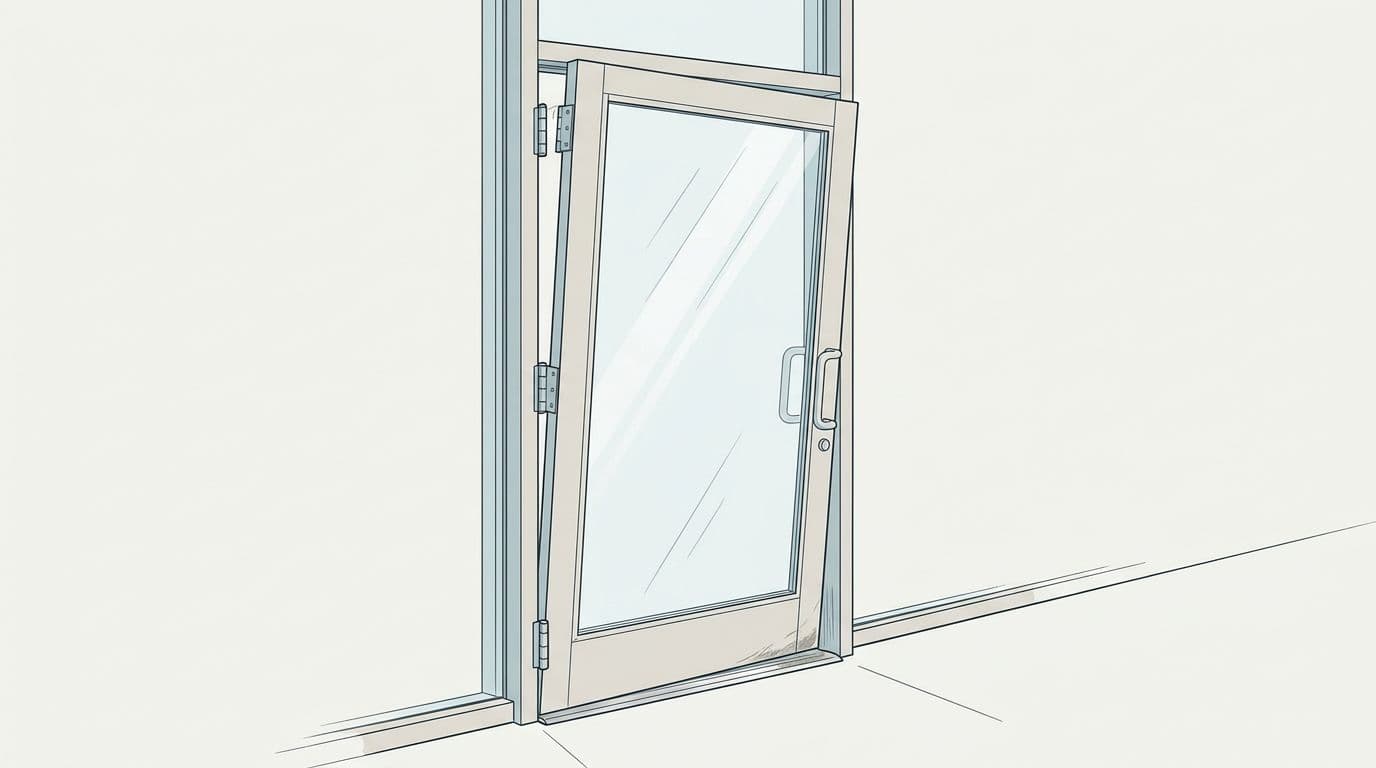
Uneven Gaps or New Rubbing
Look at the space between the door and its frame. If the gap looks wider in one area and narrower in another, note where the difference is most noticeable. A door that rubs may also leave marks on the frame or threshold.
The hinge side is the edge where the door connects to its support hardware. The opposite edge is the latch side. A symptom near either edge can help narrow the inspection, but the gap alone won't establish what's wrong.
Changes in Closing and Latching
A door that drags, catches, or needs an extra push to latch deserves attention. You might also notice a change in the sound it makes as it closes, or a latch that doesn't meet the strike as smoothly as it once did.
A slamming closer or loose handle can affect the way an entrance feels too. Our guide to storefront glass door hardware options covers components that work alongside the door itself.
What to Look for Along the Hinge Side
A hinge-side inspection starts with the visible hardware and the surrounding frame. You can note signs of movement or damage without taking anything apart.
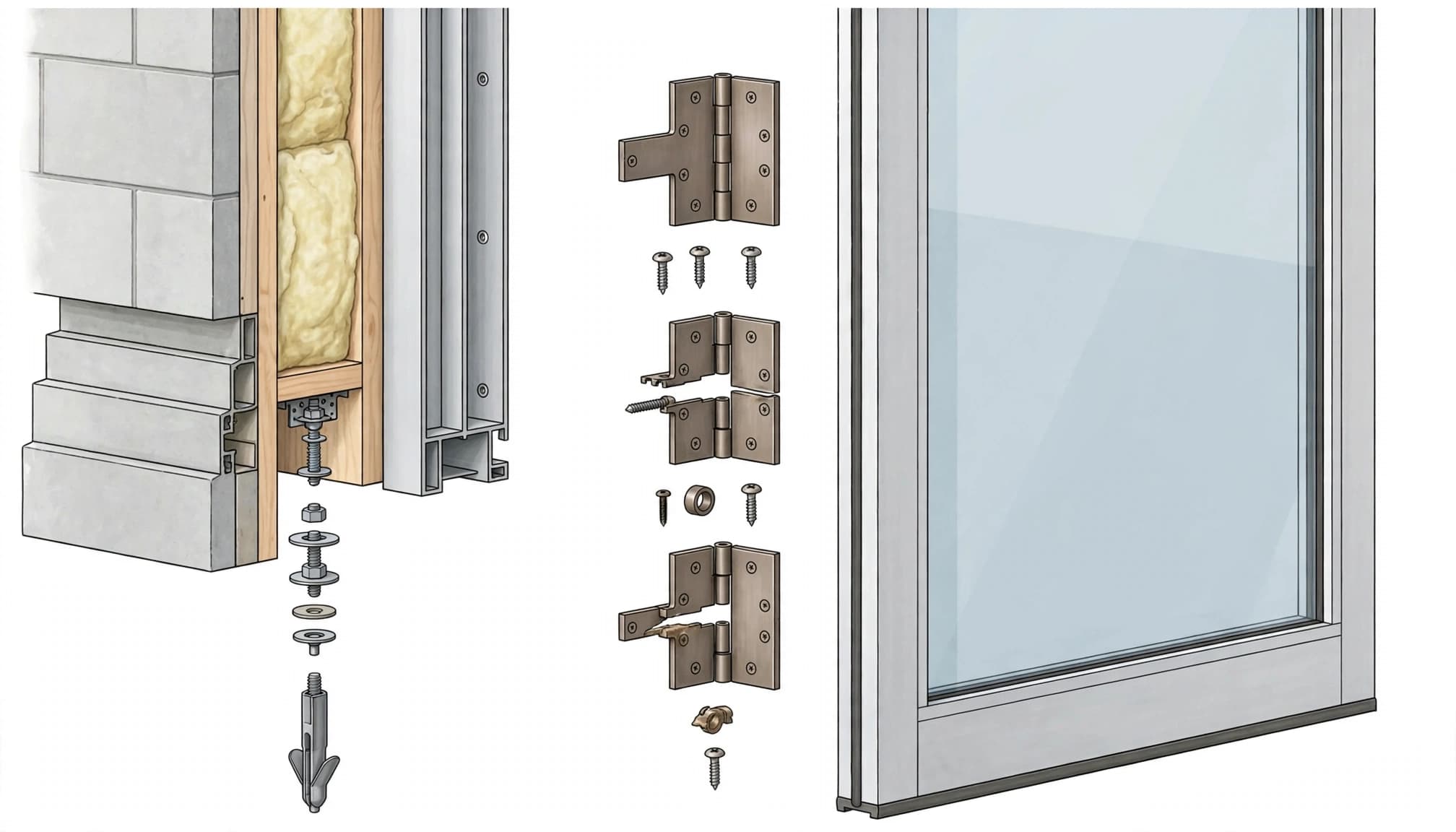
Hinges and Fasteners
Look for a hinge that appears out of position, a fastener that sits away from the surface, or marks around a hardware attachment. Wear or looseness may be visible, although some problems aren't obvious from a quick glance.
Avoid tightening or removing hardware on a glass storefront door yourself. A technician can assess the connection while keeping the door supported and determine whether an adjustment or replacement belongs in the repair plan.
The Frame Around the Opening
Look at the frame as well as the moving door. Separation at a joint, a visible change around the opening, or a section that appears out of alignment is worth mentioning during a service call.
Keep in mind that an uneven-looking gap isn't proof that the frame has moved. The technician needs to assess the door and frame together before identifying the work needed.
Why Door Weight and Use Matter During an Inspection
A commercial entrance sees different use than a door inside a home. Employees may open it throughout the day, customers may enter in groups, and deliveries may require the door to stay open for longer periods.
The technician needs to consider the weight of the door and the demands placed on its hardware. A repair that fits the door and its opening is more useful than a quick adjustment chosen solely because the door looks low.
Tell the technician how the entrance is used. A Cape Coral retail shop with steady foot traffic may have different scheduling needs than an office with a quieter entrance. In either case, the goal is a door that operates reliably under normal use.
Also mention changes in how the door behaves. If it catches only near the end of its swing, for example, that detail is more useful than saying it "sticks sometimes."
Southwest Florida Conditions to Keep in Mind
Storefronts in Fort Myers and nearby communities face strong sun, humidity, heavy rain, and, in coastal areas, salt-laden air. Those conditions make regular attention to exposed entrances worthwhile, even though weather alone doesn't establish why a particular door is sagging.
After a storm, look for visible changes around the entrance before returning it to normal use. Broken glass, a damaged frame, or a door that no longer closes normally calls for an assessment.
A shop in Bonita Springs or Estero may also have an entrance that gets wet during wind-driven rain. Note where water appears and whether the door's fit has changed. Water at an opening can have several explanations, so it helps to describe what you see rather than assume the glass or the door is responsible.
How a Technician Diagnoses a Sagging Storefront Door
A useful diagnosis considers the whole opening. The technician looks at how the door sits, where it contacts the frame, and how its hardware operates.
Observing the Door in Use
The inspection starts with the symptoms you noticed. The technician can observe the door's movement, look at the gaps around it, and identify where rubbing or catching occurs.
If the door won't latch, that detail matters too. A latch problem may be visible at one edge of the opening, while the inspection needs to cover the complete assembly. The technician can also examine the closer and handle when their operation is part of the concern.
Let the technician know if the issue appeared after an impact or if it has become more noticeable over time. Those details help establish what to look at during the visit.
Examining the Hardware and Frame
The technician then assesses the condition and fit of the hinges, fasteners, door, and frame. They may look for wear, looseness, movement, or visible damage, as well as signs that previous work has affected the opening.
The glass also matters. Cracks or other glass damage should be assessed separately instead of assuming that an alignment adjustment will address them.
A door that rubs at the threshold needs an assessment of the opening, not an automatic glass replacement.
Adjustment or Replacement: Which Repair Fits?
The appropriate repair depends on what the inspection finds. Some openings may need an adjustment, while others need damaged or worn components replaced. A glass problem and a hardware problem can require different work.
When an Adjustment May Be Enough
An adjustment may be an option when the existing door, frame, and hardware are in suitable condition. The technician's goal is to restore proper operation and check how the door closes and latches afterward.
An adjustment should address the observed problem. If the door still catches, rubs, or fails to latch, the opening needs further attention rather than repeated force from staff or customers.
When a Component May Need Replacement
Replacement may be appropriate when a component is damaged or worn beyond a useful adjustment. Depending on the findings, the work may involve hardware, glass, or a larger portion of the storefront.
A cracked door pane doesn't automatically mean the entire entrance needs replacement. Equally, new glass alone won't address a separate mechanical problem. Our commercial glass services include storefront glass repair and replacement, as well as work on larger storefront systems.
For a business in Naples or Lehigh Acres, the practical choice depends on the condition of the opening and the components involved. The inspection separates a focused repair from work that requires more of the assembly.
What to Do While Waiting for Service
If the door is difficult to operate, don't force it, lift it by the handle, or ask employees to repeatedly push it into place. Keep people away from broken glass and arrange professional help for a door that appears unsafe.
A door that cannot close or latch can also leave an entrance unsecured. Treat that as a business security concern, especially outside operating hours. If access needs to change while you wait for service, make sure customers and staff can use a safe route that meets the building's exit requirements.
Before the visit, note where the rubbing occurs and whether the problem affects opening, closing, or latching. Photos of visible gaps or damage can help you describe the issue when arranging service, though they don't replace an inspection.
Avoid removing hinges, loosening fasteners, or making your own adjustments to a heavy glass door. Those tasks belong with someone equipped to assess and support the assembly.
Planning Storefront Glass Service
Tell the service team whether the concern involves the door's movement, broken glass, or both. Include the business location and any access restrictions that could affect the visit.
At Caloosahatchee Glass & Mirror, we provide glass repair and replacement for Southwest Florida properties. Our commercial glass work covers storefronts and door glass, whether the need is a single panel or a larger storefront project.
We serve businesses in Fort Myers and surrounding communities, including Punta Gorda. When you contact us, describe the symptoms you've observed so we can discuss the next step for your storefront.
A Better-Fitting Door Starts With an Assessment
A storefront door that appears to sag at the hinge side needs more than a guess about which part has failed. Uneven gaps, rubbing, and latching trouble are useful clues for an inspection.
The right response depends on the condition of the complete opening . An assessment helps distinguish an adjustment from component replacement and keeps a separate glass issue from being overlooked.
Contact Caloosahatchee Glass & Mirror to discuss your storefront glass concerns and request a free estimate.