
Tempered vs Laminated Shower Glass for Safer Bathrooms
A broken shower door can turn a routine bathroom accident into a serious cleanup and repair problem. Glass choice matters, especially when children, older adults, or frequent guests use the bathroom.
Homeowners comparing tempered vs laminated shower glass often assume one option is automatically safer. In practice, both have different breakage patterns, design requirements, and installation needs. The right choice depends on the enclosure, hardware, wall conditions, and current local building requirements.
Tempered vs Laminated Shower Glass: How They Break Differently
Tempered glass starts as regular glass that receives controlled heat treatment and rapid cooling. This process increases its strength compared with annealed glass, which is untreated. Tempered glass is common in shower doors because it handles everyday impact, temperature changes, and the weight of frameless hardware well.
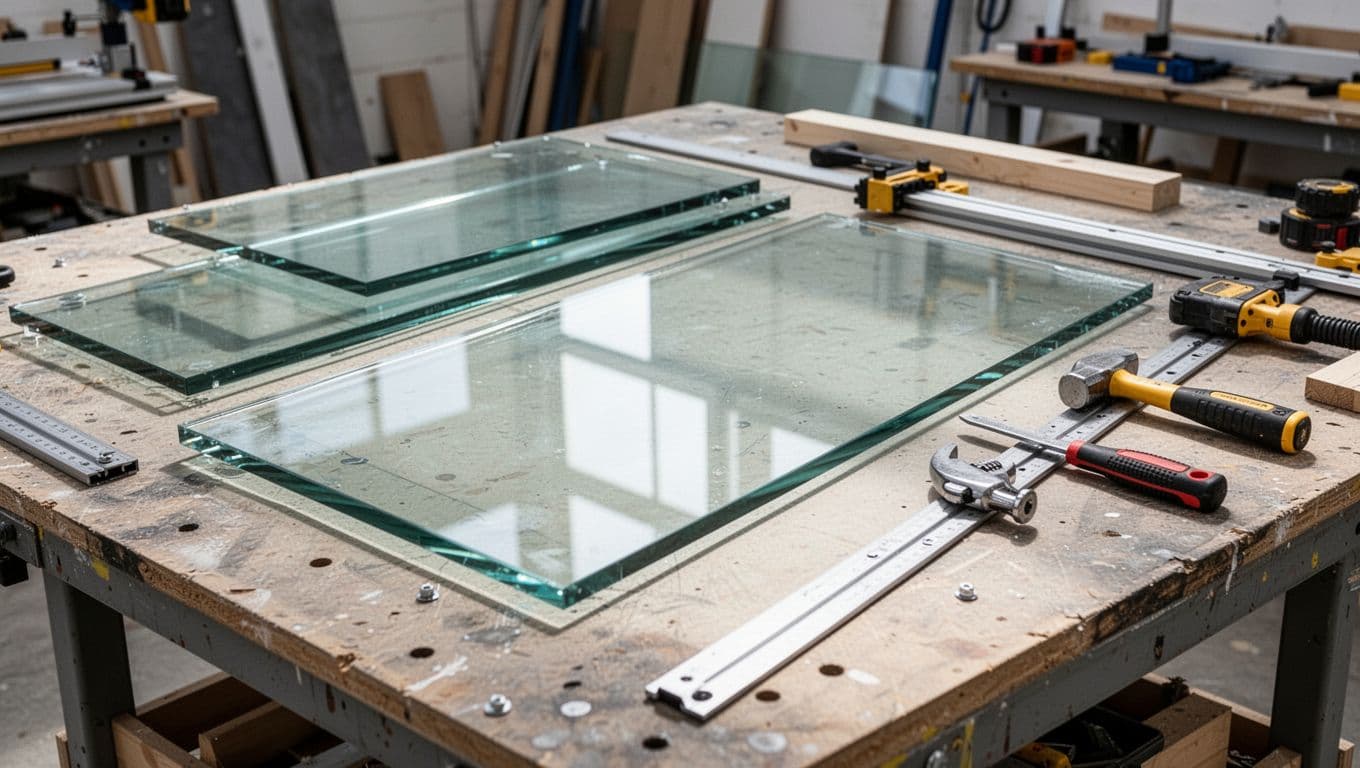
When tempered glass breaks, it usually breaks into many small, granular pieces instead of large knife-like shards. However, it isn't shatterproof. A sharp impact on an edge, improper installation, or damage that occurred before installation can cause failure. Tempered glass also can't be cut, drilled, or modified after heat treatment, so every hinge hole, notch, and panel measurement must be correct before fabrication.
Laminated glass uses two glass layers joined by a clear interlayer. When the glass cracks, the interlayer tends to hold many fragments in place. That can reduce the spread of loose glass across the bathroom, but the damaged panel still needs prompt evaluation and likely replacement.
Laminated glass can keep fragments attached after breakage, but a cracked panel isn't structurally normal or safe to keep using without professional inspection.
The main difference is the behavior after impact. Tempered glass usually breaks into smaller pieces and clears the opening. Laminated glass tends to remain in a cracked sheet. Neither option eliminates the need for proper glass thickness, compatible hardware, accurate measurements, and professional installation.
Why Tempered Glass Is Common in Shower Enclosures
Tempered glass is the standard choice for many custom shower doors and enclosures. It combines strength, clean appearance, and compatibility with common hinges, clamps, channels, and support hardware. Frameless enclosures in Fort Myers and Cape Coral often use tempered panels because the glass carries much of the visual structure.
Many frameless designs use 3/8-inch or 1/2-inch glass, but the correct thickness depends on panel size, door width, hardware placement, support conditions, and the enclosure layout. A glass professional should calculate those details rather than choosing thickness based on appearance alone.
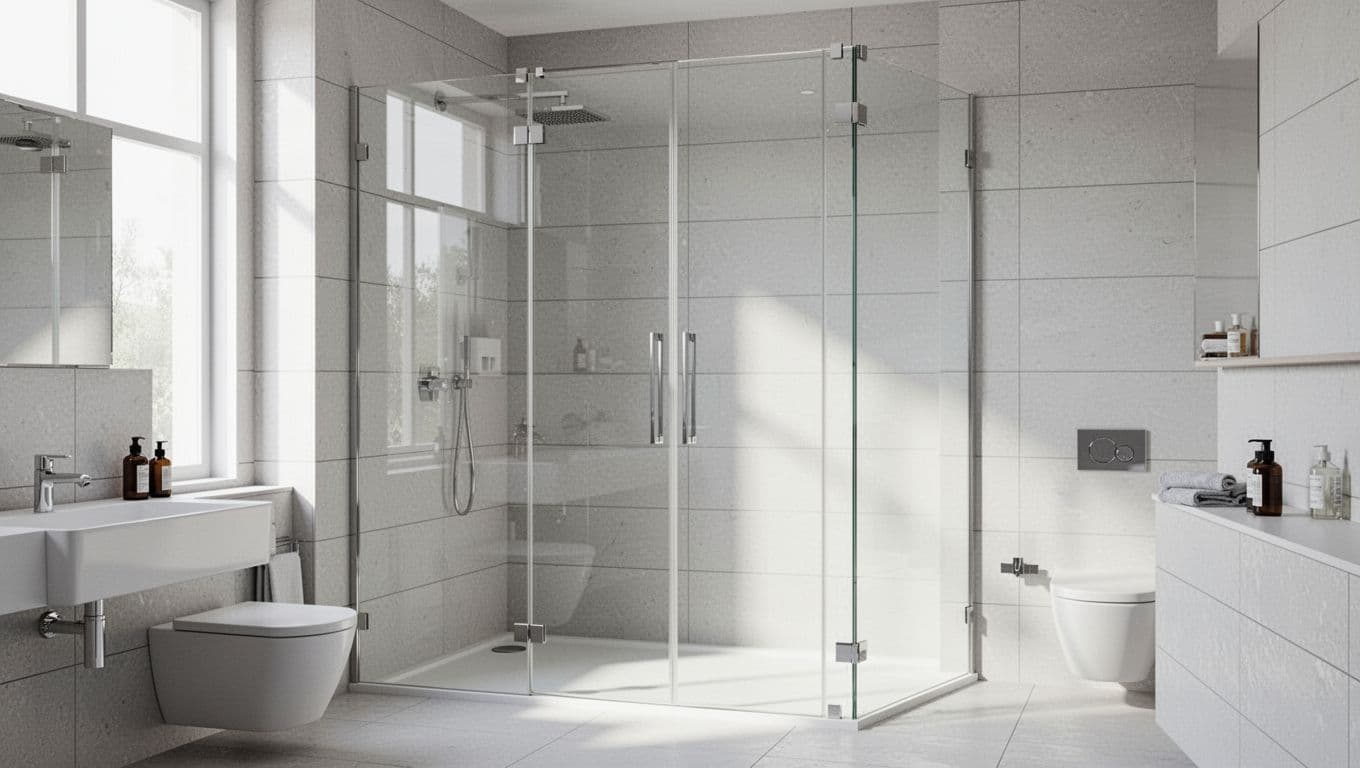
Tempered glass also offers design flexibility. Homeowners can choose clear glass for an open look, low-iron glass for greater clarity, or textured and patterned options for privacy. The surface can receive protective treatments that make mineral deposits easier to remove, although no coating replaces regular cleaning.
There is one important planning detail. Because tempered glass can't be altered after processing, the contractor must finalize the opening, wall alignment, hardware, and handle position before the glass goes into production. Accurate field measurements are essential, particularly in older homes where walls may not be perfectly plumb.
When Laminated Shower Glass May Be the Better Fit
Laminated glass deserves consideration when fragment retention is a major concern. If the glass cracks, the interlayer can hold the broken pieces together. This feature may appeal to homeowners who want an additional barrier against loose fragments or who have a bathroom layout where a large panel sits near a high-traffic area.
However, laminated glass isn't automatically the better shower option. It is often heavier and thicker than a single tempered panel. That difference can affect hinges, hinges spacing, clamps, door weight, and the structure supporting the enclosure. Standard shower hardware may not work with every laminated glass makeup.
Moisture management also matters. The glass edge and interlayer need protection suited to a wet bathroom environment. Ask the installer which laminated construction is approved for the intended shower application, how the edges will be finished, and which hardware supports the panel safely.
Laminated glass can also cost more because it requires different fabrication, handling, and hardware planning. The added expense may make sense for a specific enclosure, but it shouldn't be treated as a universal upgrade. A consultation should account for the opening, panel dimensions, door movement, ventilation, and the way the glass connects to tile or framing.
Homeowners can compare styles, layouts, and custom options through custom glass shower and bath enclosures before choosing a material.
Tempered and Laminated Glass Compared
The following table shows how the two options differ in a typical shower project.
| Feature | Tempered glass | Laminated glass |
|---|---|---|
| Construction | One heat-treated glass pane | Two glass layers with an interlayer |
| Breakage pattern | Small granular fragments | Cracked pieces tend to remain attached |
| Common shower use | Widely used for doors and enclosures | More specialized choice |
| Hardware needs | Works with many standard shower systems | May need compatible heavy-duty hardware |
| Post-fabrication changes | Can't be cut or drilled afterward | Requires specialized fabrication |
| Weight and thickness | Often lighter and simpler to handle | Often heavier or thicker |
| Typical project cost | Often more economical | Often higher |
| Main design concern | Edge damage and accurate pre-cutting | Weight, edge protection, and hardware compatibility |
For most homes, tempered glass offers a practical balance for a properly designed enclosure. Laminated glass may suit a project with particular safety, privacy, or fragment-retention goals. The safest selection is the one that matches the complete assembly, not the glass label alone.
A useful comparison should include more than the material price. Ask about fabrication, hardware, delivery, installation, cleanup, warranty coverage, and future replacement. A low initial quote can change when the design requires different brackets or structural support.
Local Installation and Code Checks Matter
Glass safety depends on the panel and the way the enclosure is installed. A professional installer checks the opening, identifies wall studs or blocking, confirms the curb and threshold, and selects hardware that matches the glass. They also account for door swing, water splash, tile joints, and nearby fixtures.
In Southwest Florida, installation conditions vary between properties. A remodeled bathroom in Bonita Springs may have older framing behind new tile. An Estero home may have a newer shower with planned blocking. A Naples vacation property may need hardware that can handle periods of limited use followed by heavy occupancy.
Current Florida Building Code requirements and local permit rules should be verified for each project. Safety-glazing requirements can depend on the glass location, door configuration, nearby surfaces, and whether the panel is in a hazardous area. A qualified contractor should confirm the applicable requirements, including recognized safety-glazing standards such as ANSI Z97.1 or CPSC 16 CFR 1201 when they apply.
Look for a permanent safety mark on the glass and ask how the finished enclosure meets the applicable requirements. Code verification is a project-specific task, so general online guidance shouldn't replace a local review.
Installation quality also affects long-term performance. Over-tightened clamps can stress glass. Misaligned hinges can cause a door to drag or slam. Missing support or poor sealant work can allow movement and water intrusion. Licensed and insured installation gives homeowners a clear point of responsibility when measurements, fabrication, and fitting need to work together.
How Southwest Florida Homeowners Can Choose
Start with the bathroom itself. Measure the available opening, note the door location, and identify nearby toilets, vanities, windows, and towel bars. A swinging door needs enough clearance to open safely without hitting another fixture or a person standing outside the shower.
Next, consider who uses the space. A primary bathroom in Lehigh Acres may call for a wide, easy-to-operate door. A family bathroom in Punta Gorda may need stronger privacy and a layout that keeps water away from the floor. A rental property may benefit from simple hardware and a design that's easy to clean between guests.
Salt air and mineral-heavy water deserve attention, too. The glass material doesn't prevent hardware corrosion or water spotting. Ask about corrosion-resistant finishes, compatible sealants, and cleaning recommendations for the local environment. Squeegeeing after use and wiping the hardware with a soft cloth can help reduce buildup.
Bring these questions to the estimate:
- Which glass type and thickness fit this opening?
- Does the proposed glass carry the required safety marking?
- Is laminated glass rated and detailed for shower use?
- What hardware supports the selected panel and door?
- Where will the hinges, clamps, and handles be located?
- What local code or permit checks apply?
- What happens if the walls or tile are out of alignment?
A detailed answer should connect the material choice to the actual enclosure. If someone recommends one glass type for every bathroom, ask for a more complete explanation.
Maintenance, Damage, and Replacement
Both tempered and laminated glass need routine care. After showering, use a squeegee to remove water from the panels. Clean with a nonabrasive bathroom cleaner and a soft cloth. Avoid razor blades, harsh scouring pads, and products that can damage protective coatings or metal finishes.
Inspect the door occasionally. Watch for loose handles, shifting hinges, cracked seals, chipped edges, or a door that no longer closes smoothly. Small edge damage can become more serious when the glass moves under stress.
If tempered glass breaks, keep people away from the area and don't try to remove large pieces without proper protection. If laminated glass cracks, avoid using the enclosure until a professional checks the panel, hardware, and surrounding structure. The interlayer may hold fragments together, but it doesn't restore the glass's original strength.
Replacement requires more than ordering a panel with the same dimensions. The installer needs to check the opening again, confirm hardware locations, and determine whether the frame, hinges, clamps, or seals also suffered damage. This is particularly important in older bathrooms and properties that have settled over time.
Choose the Glass That Fits the Complete Enclosure
The best choice in the tempered vs laminated shower glass decision depends on the application, the enclosure design, and the installation requirements. Tempered glass is a common, practical option for many shower doors. Laminated glass can offer fragment retention for projects where that feature has a clear purpose.
Your Fort Myers glass contractor should review the opening, hardware, moisture conditions, and current code requirements before fabrication begins. With accurate measurements and professional installation, the finished enclosure can provide a clean look without treating safety as an afterthought.