
Why a Window Won't Stay Open in Fort Myers Homes
A window that slides down after you raise it can be more than an annoyance. In Fort Myers, a window won't stay open for several possible reasons, including a worn sash balance, damaged hardware, or a track that needs attention.
The symptom doesn't identify the failed part by itself. A few safe observations can help narrow down the cause, but some repairs involve heavy glass or tensioned mechanisms that shouldn't be handled without the right experience.
Why a window won't stay open
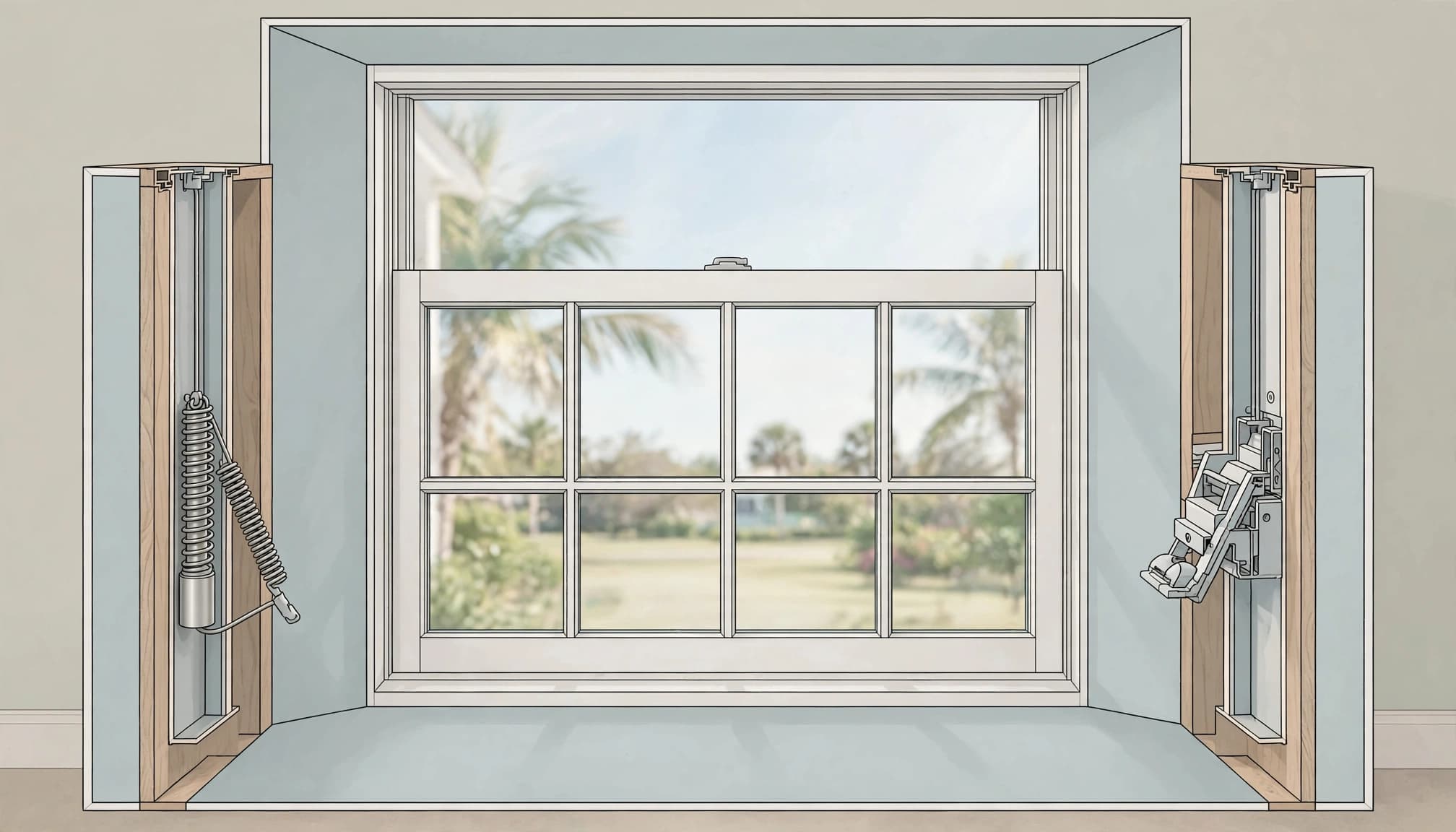
Many double-hung windows use a balance system to offset the sash's weight. When that system fails, the sash may drop, feel uneven, or become hard to raise.
The sash balance may be worn or disconnected
A spring balance, balance shoe, or another counterbalance component helps hold a sash at the height you set. If a spring breaks, a shoe shifts out of place, or a balance loses tension, the window may no longer stay up.
The exact parts vary by window design. A double-hung window may have a different balance arrangement than another style, so the problem can't always be corrected with a generic adjustment.
Hardware or alignment may be affecting the sash
A damaged pivot, shoe, latch, or other fitting can interfere with sash movement. A sash that sits crooked in its frame may also bind or fail to engage its supporting parts correctly.
A broken latch alone usually doesn't support the sash, but it can prevent the window from closing or locking as designed. Look for loose, bent, or visibly damaged hardware without taking the sash apart.
What the way it moves can tell you
Pay attention to how the window behaves before deciding whether the issue is support, movement, or damage. These clues can help describe the problem to a professional.
Notice whether the sash drops evenly
If both sides descend together soon after you release the sash, a balance problem may be more likely. If one side falls first, tilts, or catches, a balance shoe or alignment issue could be involved.
A window that stays open briefly and then slips down still needs attention. Don't rely on it to remain safely raised, especially around children, pets, or anyone working beneath it.
Separate a track problem from a support problem
A dirty or obstructed track can make a window drag, stick, or move unevenly. Dust, grit, leaves, and other debris may collect along the sill or in the window channels. Cleaning can improve movement, but it won't restore a worn balance.
Look for a separate glass problem, too. Cracks, loose glazing, or moisture trapped between panes point to glass or seal concerns, not necessarily the sash support. A cloudy insulated glass unit can need attention even when the window still moves normally.
Safe checks you can try at home
Keep your checks limited to visible, accessible areas. If the sash feels heavy, unstable, or unsafe, leave it closed and call a window professional.
Clean the accessible track
With the window closed, remove loose dust and debris from the sill and reachable track using a vacuum with a soft brush attachment. Wipe accessible surfaces with a damp cloth, then dry them. Avoid forcing debris into narrow channels.
If the window's manufacturer gives care instructions, follow them. Don't apply oil, grease, or a spray lubricant without knowing whether it's suitable for the window's materials and components. A product that attracts dirt or harms seals can make operation worse.
Inspect visible hardware without disassembly
Check for obvious damage, loose fasteners, corrosion, or parts that look out of position. Open and close the sash slowly only if it moves safely, and note whether it binds at the same point each time.
Don't remove interior stops, pry the sash out, or try to reset a spring balance. These parts may be under tension, and the sash can be heavy. If the window drops suddenly or won't remain safely supported, stop using it.
How Southwest Florida conditions can contribute
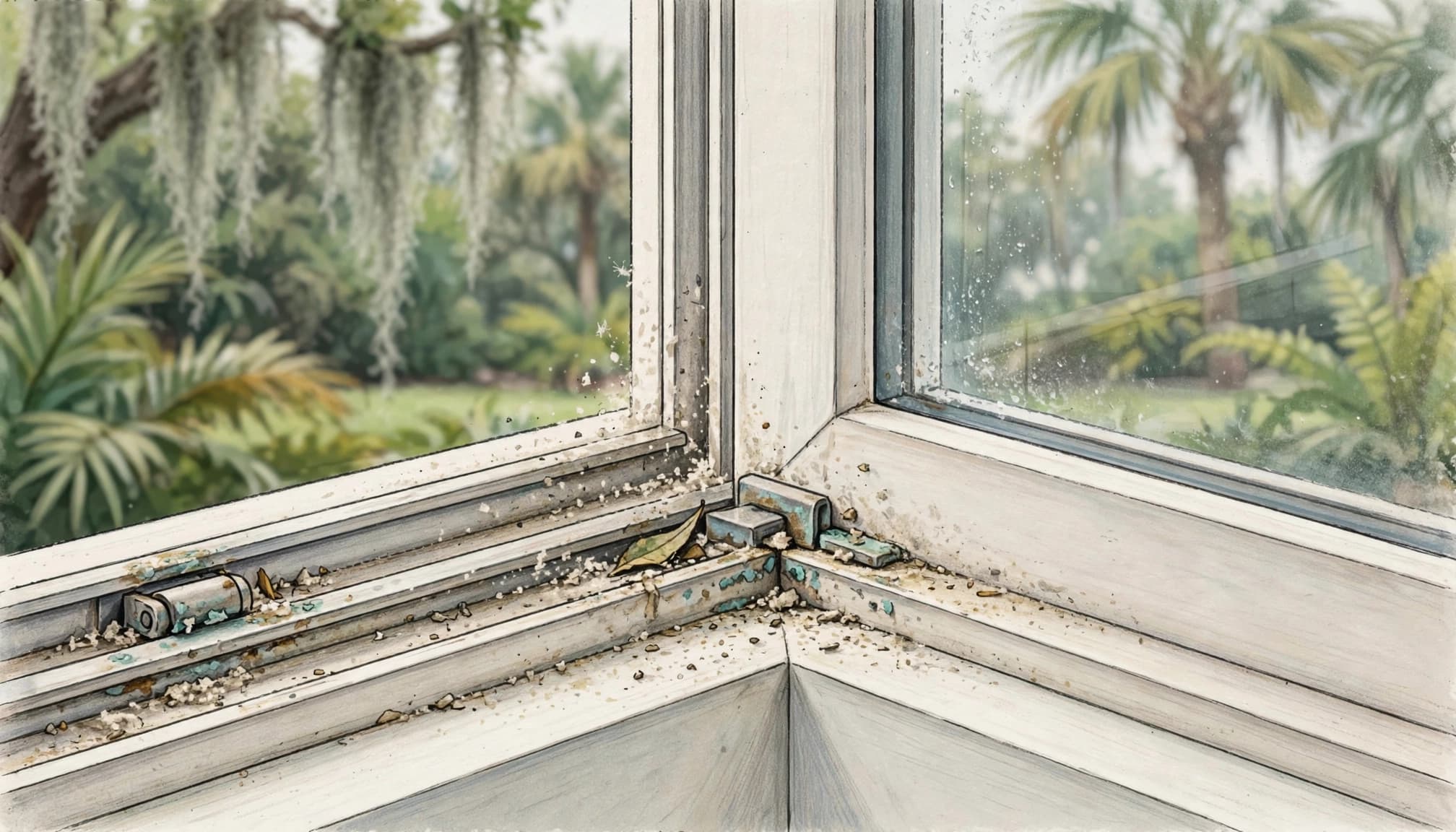
Fort Myers homes face humidity and frequent moisture exposure. Depending on the home's location and window materials, salt-laden air can also affect exposed metal finishes and fasteners. These conditions don't prove the cause of a falling sash, but they can contribute to corrosion or wear that affects window operation.
Watch for corrosion and residue
Corrosion may appear as discoloration, pitting, rough areas, or a finish that is peeling. Check accessible metal parts and track areas for buildup, but don't scrape or sand components that could be structural or part of the balance system.
Homes in Cape Coral or Punta Gorda near waterways may have more exposure to salt in the air. Bonita Springs, Estero, Naples, and Lehigh Acres also experience humidity and moisture, though exposure varies by property. Regularly removing residue from accessible surfaces can help keep developing damage visible.
Consider moisture along with fit and drainage
If a window sticks during humid weather, moisture may be affecting materials or exposing an existing fit problem. However, a window that won't stay raised often points to support or hardware, not humidity alone.
Water staining, swelling, corrosion, or damage around the frame deserves attention. Poor drainage or water entry can affect more than the sash, so a simple track cleaning may not address the underlying issue.
When repair or replacement makes sense
The right solution depends on which part has failed and what condition the rest of the window is in. A balance issue doesn't automatically mean the glass or entire window needs replacement.
A focused repair may be enough
When the defect is limited and the sash and frame still fit, move, and seal properly, a targeted repair may be appropriate. A damaged balance or fitting can require the correct compatible part and careful installation.
For a clearer comparison of possible repair scopes, see when to repair or replace a window sash. The important distinction is whether the problem is limited to one component or affects the sash and frame more broadly.
Glass damage calls for a separate assessment
A cracked pane doesn't automatically require a new sash. In some cases, replacement glass can fit the existing sash if the rest of the assembly is suitable. Fogging between panes may indicate an insulated glass unit problem, even if the window stays open.
Caloosahatchee Glass & Mirror provides Fort Myers window glass repair and replacement for residential glass issues. A sash that drops may need an assessment focused on its balance or hardware rather than glass alone.
Key takeaways for Fort Myers homeowners
- A sash that slides down may have a worn, broken, or disconnected balance.
- Damaged hardware and misalignment can also affect how the window moves.
- Dirt or debris can make a window drag, but cleaning won't fix a failed counterbalance.
- Humidity and salt exposure can contribute to corrosion, though they don't confirm the cause.
- Don't remove or adjust tensioned parts, or use a window that won't stay safely supported.
Frequently asked questions
Can I keep using a window that falls shut?
Avoid leaving it open or relying on it to stay raised. A falling sash can injure someone or damage the glass. Keep the area clear, close the window if you can do so safely, and arrange an inspection if the sash remains unstable.
Will cleaning the track fix the problem?
Cleaning can help when debris is making the sash stick or drag. If the sash moves freely but drops when released, the supporting balance or related hardware may need attention. Track cleaning won't restore a broken spring or reset a displaced balance shoe.
Does a window that won't stay open need new glass?
Usually, the symptom alone can't answer that. The glass may be intact while the sash balance has failed. Glass replacement may be needed if a pane is cracked or an insulated unit has failed, but that's a separate issue from sash support.
When should I call a window professional?
Call when the sash is heavy or unstable, hardware is visibly damaged, the frame appears distorted, or the window keeps falling after accessible debris is removed. Stop immediately if glass is cracked or loose, or if the sash shifts unexpectedly.
Get the cause assessed before choosing a fix
A window that won't stay open may need a balance repair, attention to damaged hardware, or a different repair if the glass or frame is affected. Safe cleaning and visual checks can clarify the symptoms, but they can't identify every hidden failure.
In Fort Myers and nearby Southwest Florida communities, the best next step depends on the specific window and the condition of its parts. Don't force a sash that won't hold safely, and don't assume a glass replacement will solve a mechanical problem.