
Why Low-Iron Shower Glass Suits White Tile
White bathroom tile can make a shower feel larger, brighter, and cleaner. However, standard clear glass may add a faint green cast that becomes easy to see against a white background.
Low-iron shower glass reduces that tint, so the tile, grout, and fixtures look closer to their intended colors. The difference can be subtle in a showroom, but it becomes more noticeable across a large shower panel or next to bright white tile. Here is what homeowners should know before choosing glass for a bathroom remodel.
White Tile Makes Glass Color Easier to See
Standard clear shower glass is transparent, but it isn't perfectly colorless. Most clear glass contains a small amount of iron, which creates a soft green tint. You may notice it along the edge of a panel first, especially where the glass is thicker. The tint can also show across the surface when the glass sits directly in front of white tile.
White tile acts like a clean backdrop. Since it reflects plenty of light, it makes even a mild color shift easier to notice. A wall that looked bright white before installation may appear slightly cooler or greener through standard glass.
The effect becomes more visible in several common bathroom designs:
- Large-format white porcelain tile behind a frameless enclosure
- Bright white subway tile with pale grout
- White marble-look tile with gray veining
- Showers with strong overhead or natural lighting
- Thick glass panels, where the edge color is more apparent
Low-iron glass contains less iron than standard clear glass. As a result, it allows more neutral light to pass through and gives the shower a cleaner, more open appearance.
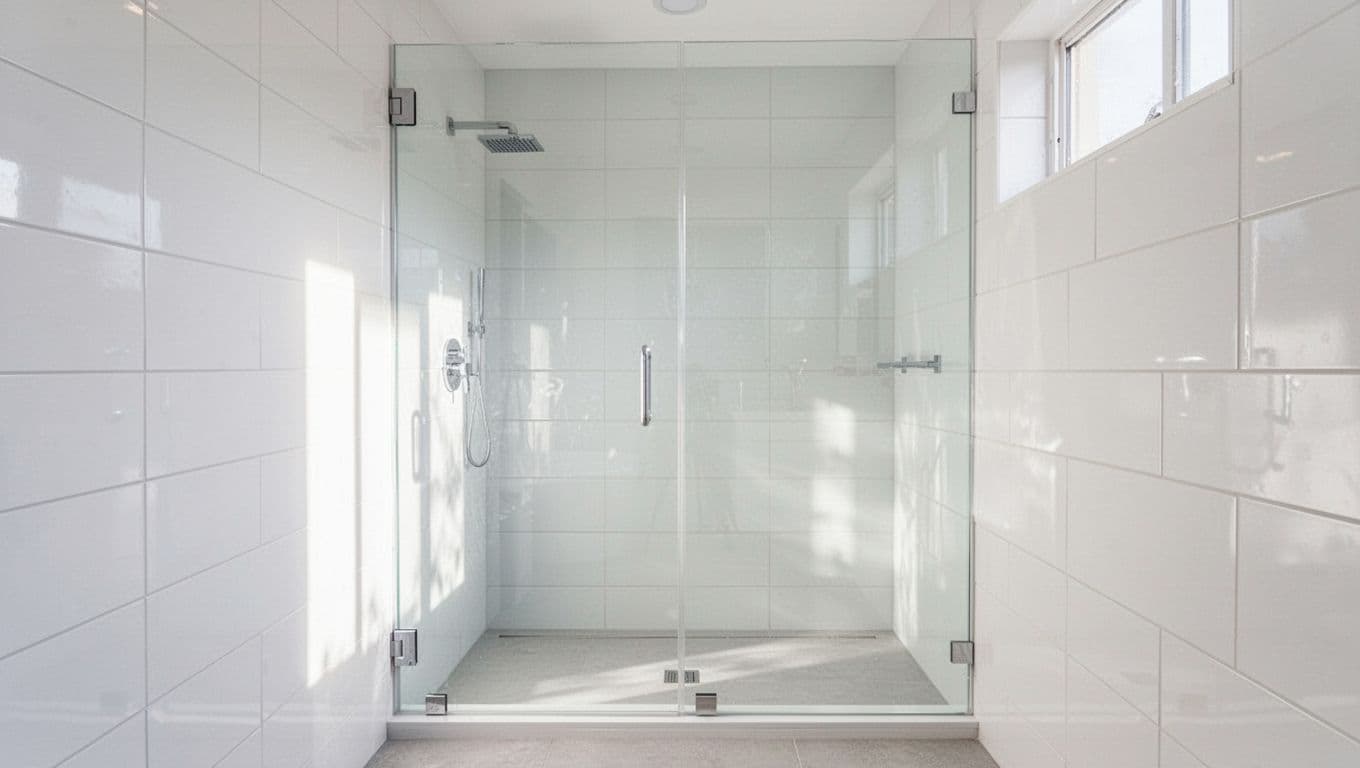
The difference doesn't mean standard clear glass is poor quality. It remains a practical and attractive choice for many bathrooms. Low-iron glass simply offers better color clarity when the surrounding design depends on a crisp white finish.
White tile reveals the color of the glass behind it, so the glass choice becomes part of the tile design.
How Low-Iron Glass Changes the Look of a Shower
The main visual benefit is color accuracy. White tile stays closer to white, while gray grout, brushed metal, and decorative patterns remain easier to read through the enclosure.
This clarity also affects how the shower fits into the entire room. A frameless enclosure already removes visual barriers. When the glass has less green tint, the effect is stronger because the eye can move across the shower without stopping at a colored edge or hazy surface.
The shower may also appear more open. Low-iron glass doesn't make the bathroom larger, but it reduces the visual separation between the shower and the rest of the room. That quality works well in smaller bathrooms, narrow layouts, and rooms with limited daylight.
The difference is easiest to compare in person. Hold a sample against a white tile or painted wall, then look at the edge from the side. Standard clear glass often shows a green line. Low-iron glass usually looks more neutral.
Lighting can change the result, too. Warm bulbs may soften the green appearance, while daylight and cool LED bulbs can make it easier to see. If your bathroom includes a large window or bright white ceiling lights, ask to compare samples under similar lighting.
For homeowners planning a custom enclosure, the glass should support the tile rather than compete with it. That matters when the design includes clean grout lines, a white marble pattern, or carefully matched fixtures.
Low-Iron Shower Glass Is More Than a Color Choice
Glass clarity is the most visible reason to choose low iron, but the decision also affects how the enclosure handles the rest of the design.
A clear shower enclosure allows tile patterns to remain visible. If your shower wall includes niche shelves, accent strips, or decorative stone, low-iron glass keeps those details easier to see. Standard clear glass may add a slight filter, particularly when the wall is bright and the panel is large.
The choice also pairs well with minimal hardware. Chrome, brushed nickel, matte black, and polished brass can all look clean against white tile. Low-iron glass keeps the metal finish visible without adding a green tone around the edges.
Still, low-iron glass doesn't remove every visual issue. Water spots, soap film, and mineral deposits can make any shower glass look cloudy. A clear protective coating may help with routine cleaning, but it doesn't replace regular care. The coating and the glass are separate choices, so discuss both when reviewing the estimate.
The same principle applies to texture. Patterned or frosted glass can provide privacy, but it also changes how much of the white tile remains visible. If an open, airy look is your priority, low-iron glass with a simple clear surface usually fits better.
Keep these factors in mind when comparing options:
- Tile color: Bright white tile shows glass tint more than beige or darker tile.
- Panel size: Larger and thicker panels can make edge color easier to notice.
- Hardware finish: Neutral glass keeps metal finishes more accurate.
- Privacy needs: Clear low-iron glass offers visibility, while textured styles soften it.
- Cleaning habits: Any glass needs regular wiping to limit spots and buildup.
The best choice depends on the full bathroom, not the glass alone. Tile, lighting, hardware, privacy, and maintenance all influence the final appearance.
Standard Clear Glass Versus Low-Iron Glass
Both options can work in a custom shower enclosure. The better fit depends on how much color clarity matters in your design and budget.
| Feature | Standard clear glass | Low-iron shower glass |
|---|---|---|
| Overall appearance | Clear with a possible green tint | More neutral and colorless |
| White tile behind glass | May look slightly cooler or greener | Stays closer to its original color |
| Edge appearance | Green tint is more visible | Edge looks less green |
| Design details | Tile patterns remain visible | Tile and grout look sharper |
| Cost | Usually the more economical choice | Usually carries a premium |
| Best fit | Flexible budgets and less color-sensitive designs | Bright white tile and high-clarity layouts |
The price difference varies by glass thickness, enclosure size, hardware, fabrication, installation, and added protective treatments. A local glass company can explain the difference in your specific quote instead of treating low iron as a standard upgrade with one fixed price.
Standard glass may be the sensible option when the tile is warm-toned, the enclosure has a strong frame, or the green edge won't sit in a prominent sightline. It can also make sense when the project has several other priorities competing for the budget.
Low-iron glass deserves closer consideration when the shower has a frameless design, bright white walls, large glass panels, or a carefully coordinated palette. In those settings, the glass is highly visible even though it is transparent.
For custom shower planning in Southwest Florida, homeowners can review enclosure styles and glass options through custom shower enclosures before selecting the final configuration. A professional measurement also helps confirm how panel size and thickness may affect the visible edge.
How to Choose Glass for a White Tile Bathroom
Start with the tile, not the enclosure. Bring a tile sample, grout sample, or a clear photo of the finished wall when discussing glass. A sample makes the color difference easier to judge than a verbal description.
Next, check the tile under the bathroom's actual lighting. A warm white tile may look cream-colored in one room and bright white in another. Cool LEDs can sharpen the contrast between standard clear glass and low iron.
Look at the shower from the main viewing position. Stand outside the enclosure and inspect the panel beside the tile. Then view the glass edge from an angle. This shows where standard glass may have the strongest green color.
Consider the structure around the glass as well. A framed enclosure hides more of the edge than a frameless design. Header bars, channels, clips, and hinges can also affect the overall look. Low iron won't make hardware disappear, but it can keep the glass from adding another visible color.
Ask the installer these practical questions before approving the order:
- What glass thickness fits the enclosure design?
- Will the finished edges face the room?
- Does the quote include tempered safety glass?
- Is a protective coating available, and how does it affect care?
- Can I compare standard clear and low-iron samples against my tile?
- Which hardware finishes will be visible through the glass?
Tempered glass is a safety requirement for many shower applications, but low iron describes its color clarity, not its safety treatment. Your glass professional can specify the correct combination for the enclosure.
A precise measurement matters just as much as the glass selection. Walls, tile surfaces, curb slope, and ceiling height all affect the fit. Good planning prevents a beautiful tile installation from being overshadowed by uneven gaps or poorly placed hardware.
Is Low-Iron Glass Worth It With White Tile?
For many white tile bathrooms, low-iron glass is worth considering because it preserves the clean color scheme you worked to create. Its strongest advantage appears when the enclosure is large, frameless, and positioned directly against bright white walls.
The upgrade may matter less when the room uses cream tile, dark walls, heavy framing, or limited glass exposure. In those cases, standard clear glass can deliver a polished result without making color accuracy the main focus.
Maintenance remains the same in either case. Use a soft squeegee after showers, clean with a product approved for the glass and hardware, and avoid abrasive pads that can scratch surfaces or damage finishes. Low iron reduces green tint, but it doesn't prevent mineral spots.
A sample comparison is the simplest way to make the decision. Place both glass types against your tile and view them from the doorway, beside the shower, and along the panel edge. The right choice will become much easier to see.
Conclusion
White tile leaves little room for unwanted color, which is why low-iron shower glass can make such a clear difference. It reduces the green cast found in standard clear glass and keeps tile, grout, and fixtures closer to their intended appearance.
The choice comes down to your layout, lighting, enclosure style, and budget. When a bright white, frameless shower is the centerpiece of the bathroom, low-iron glass gives the design a cleaner view without changing the tile itself.