
Why Storefront Glass Leaks Around the Frame in Estero
Storefront glass leaks around the frame need a whole-opening inspection because the first visible drip doesn't identify the entry point. For an Estero business, replacing intact glass before locating that entry point can leave the underlying problem unresolved.
The areas worth examining include perimeter sealant, glazing gaskets, drainage openings, installation details, and nearby wall surfaces. Tracing the water's path helps separate a glass problem from a frame or building-envelope problem, starting with what you can safely observe.
Key Takeaways
- Water on the interior sill doesn't prove that the glass itself needs replacement. Moisture can travel before it becomes visible.
- Separated sealant, displaced gaskets, debris near drainage openings, and uneven frame joints deserve inspection, but no single clue establishes the source.
- Keep customers away from wet floors and damaged glass. Recurring moisture, loose components, cracks, or deteriorating interior finishes call for professional attention.
What Storefront Glass Leaks Can Tell You
Follow the first visible moisture
During rain, note where water first appears from a safe indoor position. A drip near the top, dampness at a vertical joint, and pooling along the sill provide different starting points.
Photograph the full opening, then take closer pictures of the first wet area. Include adjoining wall finishes and the entrance door when they're nearby.
However, avoid assuming that the wettest spot is the entry point. Water may travel along concealed surfaces before reaching an exposed edge. Old stains can also remain after surfaces dry, so distinguish fresh moisture from previous damage.
Separate rainwater from condensation
Moisture on glass isn't always a perimeter leak. Room-side condensation relates to surface temperature and indoor humidity, while persistent moisture between insulated panes points to a failed insulated-glass seal.
That internal seal differs from the seal around the storefront frame.
Record whether moisture appears during rainfall, overnight, or while the air conditioning runs. These observations help define the problem without dismantling the glazing.
Examine Sealant and Gaskets Separately
Look at the frame-to-wall joint
The perimeter joint sits where the storefront frame meets the surrounding construction. From ground level, look for visible separation, missing sections, cracking, or sealant pulling away from either surface.
Southwest Florida's heat and sunlight expose exterior materials to repeated temperature changes. Joint movement and material compatibility therefore matter when evaluating a resealing proposal.
A neat-looking bead doesn't reveal the condition underneath it. Likewise, covering old material with fresh sealant doesn't address surface preparation or joint dimensions.
Leave removal and replacement to a professional, especially near glass edges or concealed framing components.
Inspect the glass-to-frame edges
Gaskets and glazing seals sit closer to the glass itself. They deserve a separate inspection rather than being treated as part of the exterior wall joint.
Look for visibly displaced rubber, open corners, uneven contact, or a section that no longer sits consistently against the pane. Don't pull on these components to test them.
A technician should evaluate the glazing system before selecting replacement materials. Compatible seals must suit the frame and glass configuration. If a pane rattles or appears loose, keep people away rather than pressing it back into position.
Keep Storefront Drainage Paths Open
Some storefront assemblies include internal channels and weep openings that direct collected water outward. Their arrangement depends on the particular framing system.
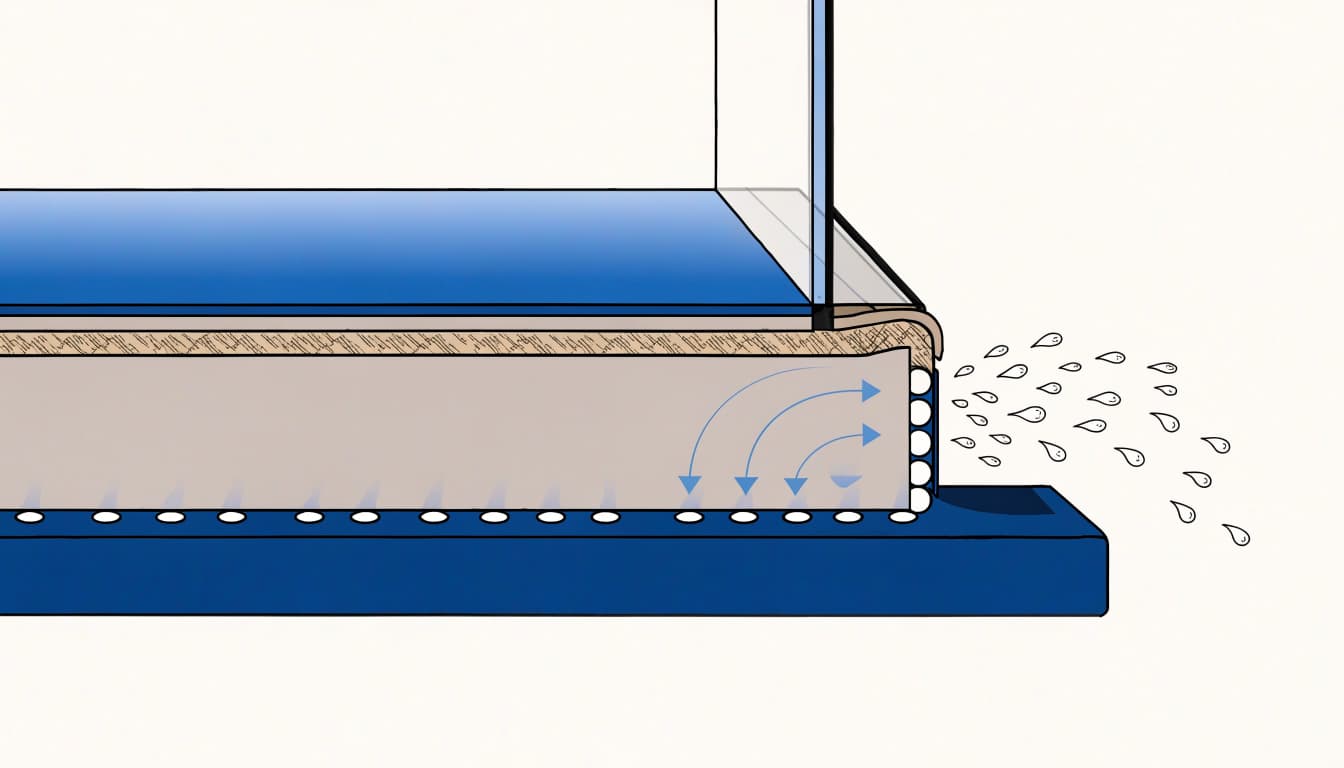
At accessible exterior locations, notice whether dirt, landscaping debris, paint, or old repair material covers apparent drainage openings. Also document standing water along the base after rainfall.
Don't seal every opening you see. Some gaps are intentional parts of the assembly's water-management design.
An opening near the bottom of a storefront frame may be a drainage outlet. Its purpose should be identified before anyone fills it with caulk.
Avoid drilling new holes, inserting wire into concealed channels, or using high-pressure water to force debris through the frame. Those actions can damage components or alter intended drainage paths.
Keep routine care limited to accessible surface cleaning. Internal drainage work belongs with someone familiar with the assembly.
Use Rain Patterns to Guide the Inspection
Record the conditions without recreating them
For your Estero storefront, record whether moisture appears during brief showers, prolonged rainfall, or rain arriving at an angle. Also note which elevation gets wet.
Wind-driven rain is a useful exposure condition to document, but it doesn't establish which component needs repair.
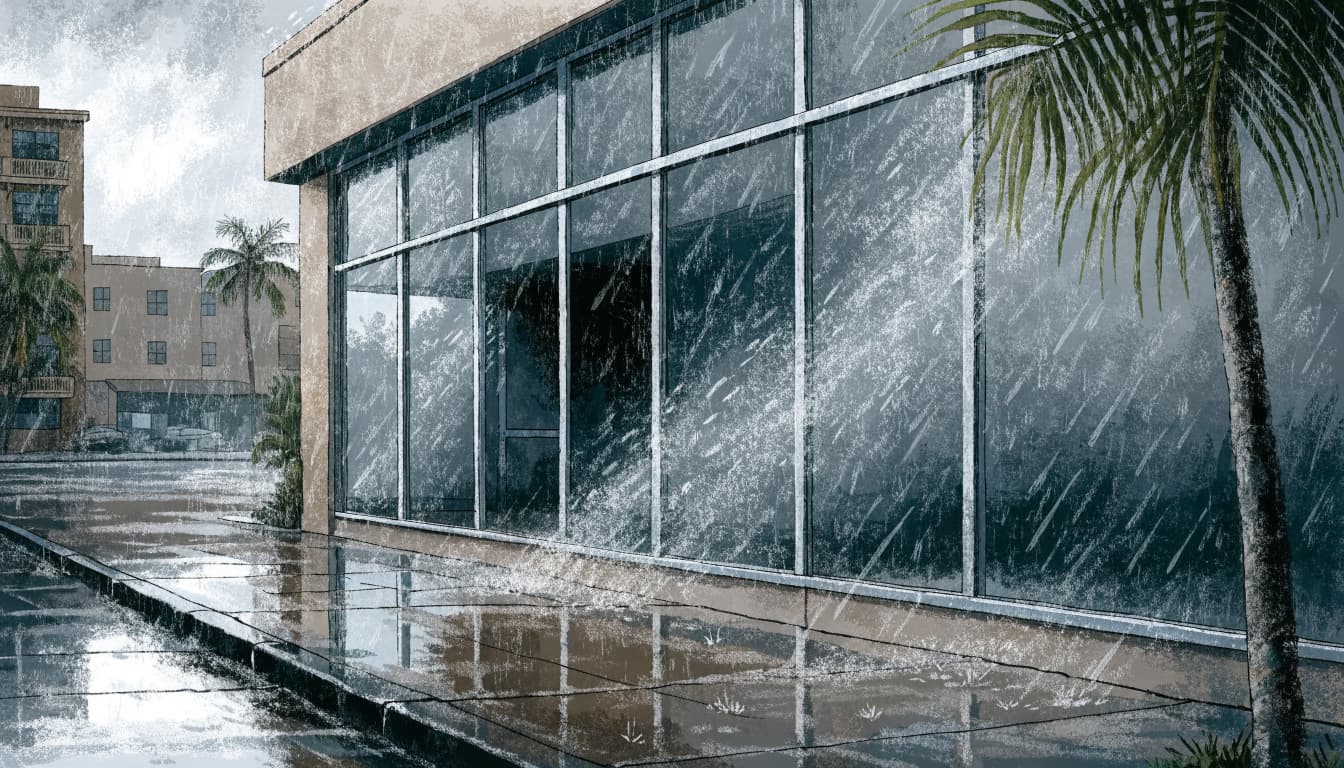
Don't reproduce storm conditions with a pressure washer or a concentrated hose stream. That can produce misleading results and put water where normal rainfall wouldn't.
If testing is necessary, a professional can use a controlled approach to evaluate separate areas.
Include the construction above and beside the glass
Photograph visible cracks, staining, or deteriorated finishes around the opening. Pay attention to the wall above the storefront, not just the bottom rail.
Flashing, exterior transitions, nearby penetrations, and overhang connections belong in a broader inspection when the moisture pattern warrants it.
This matters when repeated surface resealing hasn't resolved the complaint. Another bead around the frame shouldn't substitute for identifying the water's actual route. A glass contractor may need coordination with a qualified building-envelope or exterior-wall contractor.
Review Installation and Frame Condition
A storefront is an assembly with connected parts. Glass support, frame alignment, joints, anchors, and surrounding construction all deserve attention when deciding what work is appropriate.
Visible clues include uneven gaps, distorted frame sections, separated corners, or an entrance door that suddenly rubs. These conditions warrant evaluation, although appearance alone doesn't establish an installation defect.
Salt residue and corrosion also deserve attention on exposed metal components. Coastal properties in Bonita Springs and Naples may have different exposure conditions than more sheltered inland buildings.
A professional inspection should distinguish surface deterioration from damage that affects the frame's ability to support the glass. New glass cannot straighten a distorted frame or restore a deteriorated surrounding opening.
If replacement becomes necessary, measurements must account for the existing system. Glass thickness, support, glazing materials, and any applicable impact-rated assembly requirements belong in that decision.
Our storefront glass installation and replacement services include single-panel replacement and complete storefront systems. The scope should match the condition of the opening, rather than assuming every leak requires new glass.
Take Safe Steps Before the Appointment
Protect the interior without altering the storefront. Move merchandise, paper records, and portable equipment away from damp areas when you can do so safely.
Keep customers and employees away from slippery flooring. If water reaches outlets, wiring, or electrical equipment, isolate the area and arrange qualified help. Don't touch wet electrical components.
For recurring storefront glass leaks, keep a short record of dates, rainfall conditions, and photographs. Include any previous repair descriptions you already have. This gives the inspection a clearer starting point.
Avoid removing trim, loosening fasteners, cutting sealant, or applying adhesive film over drainage openings. Temporary coverings should never obstruct an exit or interfere with door operation.
Also avoid standing outside beside damaged glazing during a storm. Interior photographs taken from a safe distance are more useful than a close inspection that puts you at risk.
After the weather clears, accessible ground-level observations are enough. Leave elevated areas and concealed parts to professionals.
When to Call a Glass Professional
Treat movement and breakage as urgent
Cracked glass, loose glazing components, visible frame movement, or a pane that rattles requires prompt attention. Keep people away from the affected opening and don't push on the glass.
A small crack can spread after temperature changes, vibration, or another impact. Tape isn't a structural repair and shouldn't become a long-term solution.
Call promptly when storefront glass leaks accompany swollen trim, bubbling paint, soft drywall, or repeated interior dampness. Those signs justify examining the surrounding materials as well as the glazing.
Match the repair to the damaged component
The right repair depends on what the inspection finds. A sound frame with damaged glass presents a different job than deteriorated framing or water intrusion involving adjacent construction.
For insulated storefront glass, moisture trapped between panes also requires a different response than water running around the frame. Exterior caulk won't restore a failed insulated-glass unit.
Our glass repair and replacement services address damaged glass, while the surrounding opening determines whether broader work is needed.
An estimate should describe which components the work addresses. That distinction helps you understand whether the proposal concerns glass, glazing seals, perimeter joints, or a larger assembly.
Frequently Asked Questions
Does water at the bottom mean the sill is the source?
No. The bottom of the frame may be where water collects after traveling elsewhere within or around the opening. Record where moisture first appears during rainfall, not only where the final puddle forms.
A lower stain alone isn't enough to select a repair.
Should I apply silicone around the entire storefront?
Avoid blanket caulking. Drainage openings, glazing joints, and frame-to-wall joints have different purposes.
A repair material also needs to suit the surfaces and existing assembly. Adding sealant without understanding the joint can conceal useful evidence and complicate later work.
Will replacing the glass stop a frame leak?
Glass replacement addresses a damaged pane or failed insulated-glass unit. It doesn't correct every condition involving the frame or surrounding wall.
If the pane remains sound, the inspection should establish why replacement belongs in the proposed repair. Recurring perimeter moisture deserves an evaluation beyond the glass itself.
Find the Water's Path Before Choosing a Repair
For an Estero storefront, the most useful starting point is a clear diagnosis of the whole opening. Visible moisture, separated seals, drainage conditions, and frame movement provide clues without identifying the source by themselves.
Protect the interior, document what happens, and leave dismantling or testing to a professional. The repair should address the affected components, preserving sound glass and framing whenever practical.