
Why Laminated Glass Looks Cloudy in Coastal Florida
Cloudy laminated glass can reflect several different problems: surface deposits, temporary condensation, or a condition inside the glazing. The right response depends on where the haze sits , not how white or cloudy it looks.
In Fort Myers, salt residue, sprinkler deposits, and strong sunlight can make glass imperfections easier to notice. However, a milky window doesn't automatically mean the laminated layer has failed.
Start by separating cleanable surface haze from moisture or cloudiness you can't reach.
Key Takeaways
- Surface residue, condensation, and internal haze can look similar but require different responses.
- Laminated glass and insulated glass aren't the same construction, although one window can contain both.
- Persistent internal cloudiness, visible separation, cracks, or water around the frame call for professional assessment.
- Replacement may involve the glass alone, a sealed insulated unit, or the complete window, depending on its condition.
Understand Where Cloudy Laminated Glass Can Develop
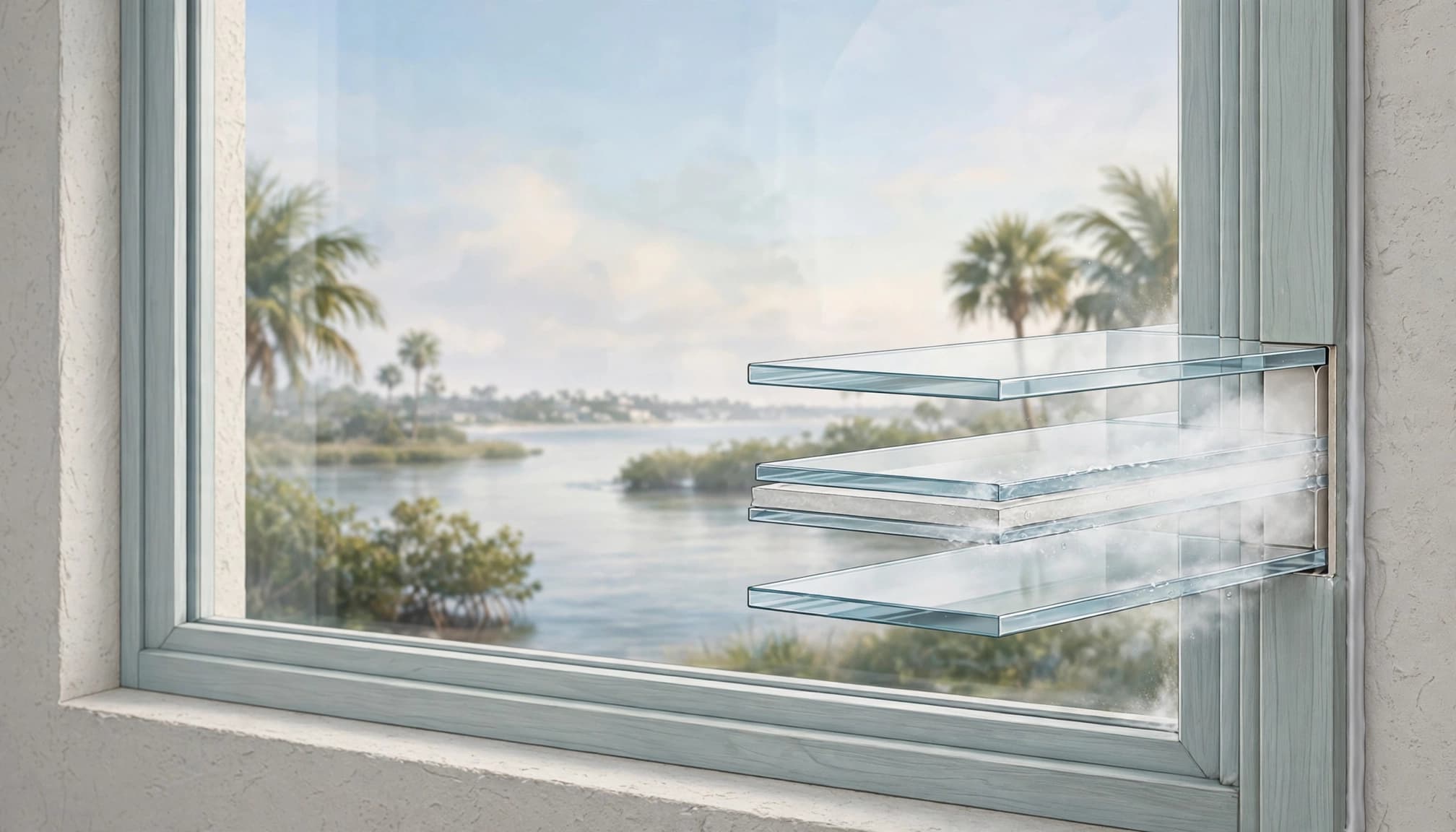
Laminated glass has a bonded interlayer
Laminated glass contains multiple glass layers joined by an interlayer. That material helps retain broken pieces after the glass cracks. Some impact-rated windows and doors use laminated glass, but the complete assembly determines their storm performance.
Our comparison of laminated and tempered window glass explains their different breakage patterns and uses.
Cloudiness on an exposed surface is separate from cloudiness within the laminate. Cleaning can address some surface conditions, but it can't reach the bonded material between the glass layers.
Internal haze needs a closer assessment
When haze appears within the laminate, a glazier may evaluate moisture exposure, interlayer deterioration, and separation between bonded layers. Appearance alone doesn't establish which condition, if any, affects a particular panel.
An insulated glass unit, or IGU, has a different construction: panes separated by a sealed space. One of those panes may itself be laminated.
A window can contain both a bonded interlayer and a sealed airspace. Cloudiness "between the glass" doesn't identify which part needs attention.
Why Coastal Haze Stands Out in Cape Coral
Salt residue and sprinkler deposits affect surfaces
Salt-bearing spray and airborne residue can leave an exterior film. Meanwhile, irrigation overspray can leave mineral spots as droplets dry. These deposits may appear white, streaky, or cloudy, especially across large patio doors.
In Bonita Springs and Estero, the first distinction is whether the marks sit on an accessible surface. A careful cleaning test may improve residue without changing any internal haze.
Shower enclosures need the same distinction. Soap film, hard-water deposits, and surface etching can resemble cloudy glass, even when no laminated interlayer is involved. Etching may remain after cleaning because the surface itself has changed.
Bright sunlight changes what you notice
Strong sunlight can reveal fine deposits, scratches, tint differences, and reflections that disappear under softer light. A pane may look hazy against bright sky but clearer against landscaping.
Layered glass and coatings can also change its appearance at an angle. Our explanation of why replacement glass looks different covers several of these contrasts.
Sunlight revealing a cloudy patch doesn't prove that heat damaged the interlayer. Likewise, coastal exposure alone doesn't establish why a particular pane looks milky. The location and behavior of the haze provide more useful clues.
Separate Condensation From Fog Inside the Unit
Surface condensation changes with conditions
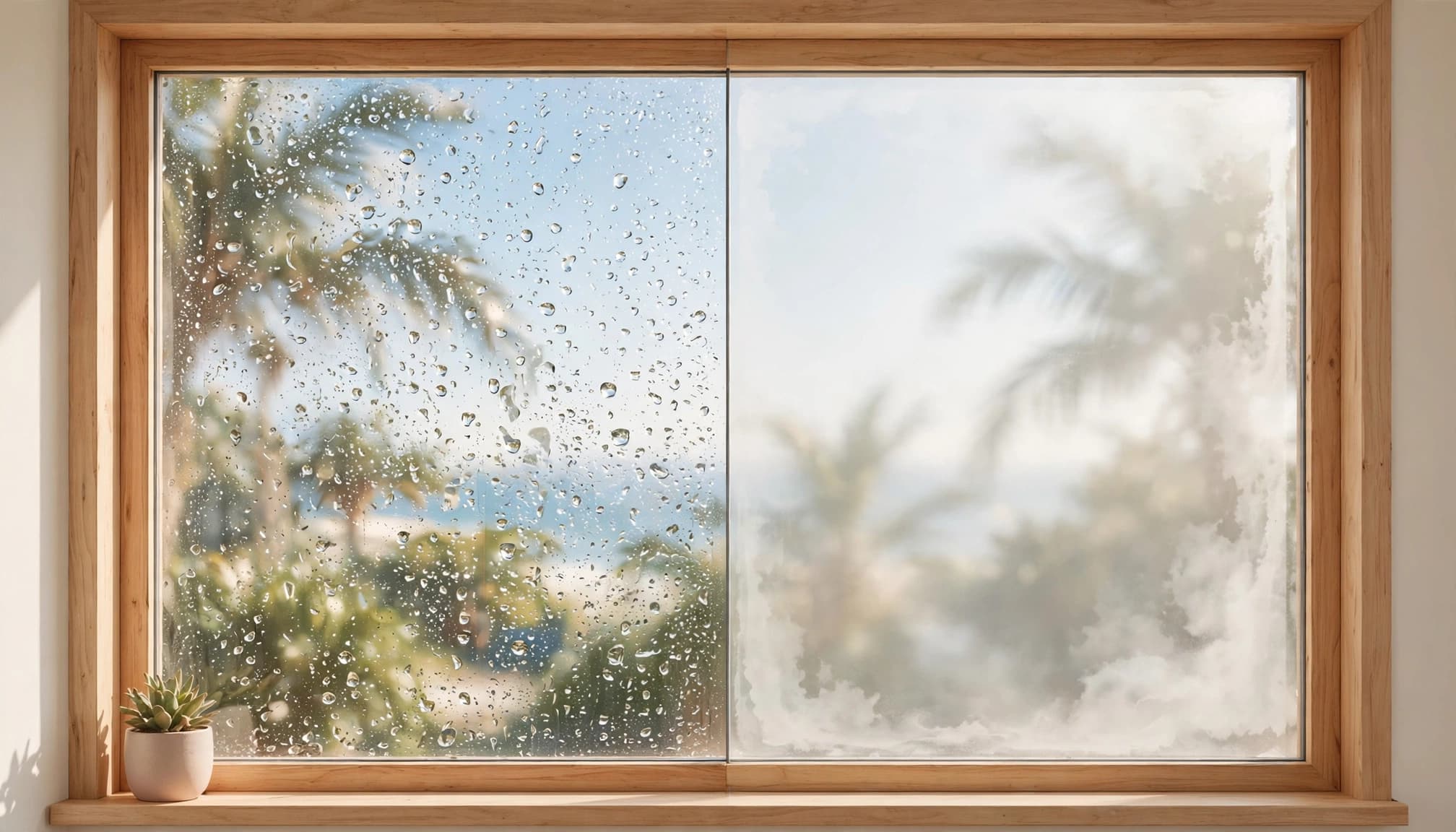
Condensation forms when a glass surface is cold enough for moisture in the surrounding air to collect. It can appear indoors or outdoors, depending on temperature and humidity.
If the moisture sits on an accessible surface, gentle wiping removes the droplets temporarily. It may return while the same conditions continue. As temperatures change, it can disappear without leaving a permanent cloudy patch.
Exterior condensation alone doesn't establish a failed seal or damaged laminate. Indoor condensation also needs to be distinguished from water entering around the window.
Trapped moisture points to a different problem
Droplets, streaks, or fog inside an IGU's sealed space are signs of a perimeter-seal problem. Neither exterior nor interior cleaning reaches that space.
Fogging may change with the weather, while internal deposits can remain after visible moisture disappears. Therefore, a window looking clearer later doesn't necessarily mean the underlying condition has resolved.
This is different from haze within a laminated pane. A professional assessment identifies the affected part before recommending replacement.
Inspect Cloudy Glass Safely in Naples
You can gather useful information without removing glass, taking apart the frame, or reaching an elevated exterior surface.
- Start with a safe cleaning test. On cool glass, use a soft cloth and a cleaner suitable for the surface. Clean both accessible sides without scraping or abrasive pads. Follow the care instructions for coated or treated glass.
- Locate what remains. Look straight through the pane, then view it at an angle. Note whether the mark appears on the surface, in a sealed airspace, or near the laminated edge. Don't pry at the edge to investigate.
- Document changes. Photograph the same area under different lighting conditions. Record whether the haze follows rain, appears with morning condensation, or remains in the same shape after cleaning. Include a wider photo showing the frame.
- Observe the surrounding opening. From a safe position, look for water staining, loose glazing components, corrosion, cracks, or moisture along the sill. Don't press on loose glass or remove parts holding it in place.
Also distinguish cloudiness from distortion. If straight lines bend through the window rather than appearing behind a milky film, why window glass looks wavy addresses a different set of appearance issues.
These observations help describe the problem. They don't replace an inspection when the haze remains inside the glazing.
When a Qualified Glass Professional Should Step In
Arrange an assessment when cloudiness remains after safe surface cleaning, especially if it grows or accompanies bubbles, visible separation, or trapped droplets. Persistent haze deserves attention even when the window still opens normally.
Cracked glass, a loose panel, or water entering the room adds urgency. Keep people away from unstable or broken glazing, and avoid operating a damaged door or window.
Inland properties in Lehigh Acres can also develop surface deposits and fogged insulated units. Distance from the shoreline doesn't identify the cause or determine the repair.
A qualified glazier evaluates the glass construction, frame, sash, glazing components, and drainage before recommending work. Accessible product labels and etched markings can help identify the existing glass package.
For impact-rated openings, appearance is only part of the decision. Replacement glass must suit the approved window or door system. Substituting ordinary glass simply because it fits can affect the assembly's intended protection.
Cleaning or Replacement Depends on the Diagnosis
Surface haze may respond to appropriate care
If the problem is residue, suitable cleaning may improve clarity. Start gently because coatings and treated surfaces can require different care. Abrasive pads, aggressive scraping, and unsuitable chemicals can create additional damage.
Stubborn marks aren't automatic proof of an internal defect. Mineral deposits or surface etching may remain after ordinary cleaning.
However, household cleaner can't repair an interlayer condition or a failed IGU seal. Drilling holes, separating panes, or applying heat isn't an appropriate DIY response. Adding sealant over frame openings can also interfere with drainage.
Replacement must match the existing system
Glass-only replacement may work when the frame, sash, and drainage remain sound. With an insulated window, the replacement generally involves the sealed unit rather than changing one layer in place.
The replacement must account for dimensions, overall thickness, glass makeup, coatings, tint, spacer details, and required safety performance. For a Punta Gorda impact-rated patio door, those requirements extend beyond matching the visible color.
Damaged frames, water entry around the opening, or poor operation may require broader work. Our residential glass repair and replacement services include fogged and cloudy window glass, with the scope based on the condition of the opening.
Frequently Asked Questions About Cloudy Laminated Glass
Does cloudy glass mean my impact window is unsafe?
Cloudiness alone doesn't establish the window's structural condition or remaining storm performance. Its appearance also doesn't prove the assembly is sound. Cracks, looseness, visible separation, or damaged framing warrant professional assessment. A laminated pane is only one component of an impact-rated system.
Can a dehumidifier clear haze inside the glass?
A dehumidifier can help reduce indoor humidity and may reduce room-side condensation when humidity contributes to it. It can't remove deposits inside a sealed airspace or restore clarity within a bonded laminate. First distinguish indoor surface moisture from cloudiness you can't reach.
Does every cloudy window need complete replacement?
No. Surface deposits may need cleaning rather than replacement. A failed insulated unit or damaged laminated pane may be replaceable within a sound frame. However, significant frame deterioration, water entry, or system-compatibility problems can make a larger replacement necessary. The visible haze alone doesn't determine that scope.
A Clearer View Starts With the Right Diagnosis
Cloudy laminated glass needs a location-based diagnosis : surface film, accessible condensation, trapped fog, and internal laminate haze require different responses. Coastal conditions can complicate appearances, but they don't identify the cause by themselves.
If safe cleaning leaves the haze unchanged, contact us for a glass assessment. The goal is to address the affected component while preserving the opening's required fit and performance.