
Why Window Glass Cracks Without an Impact
When window glass cracks without a visible hit, the damage can feel random. Usually, the pane already contains stress, a tiny edge weakness, or pressure from the frame, and the final break appears later. Southwest Florida adds intense sun, heat, air-conditioning changes, storms, humidity, and coastal exposure, but climate alone doesn't explain every crack.
Knowing whether the pane is cracked, shattered, or showing a failed insulated seal helps you respond safely. It also helps a glass professional decide whether to replace one pane, the insulated glass unit, or the complete window.
Why window glass cracks without an impact
Glass can fail long after the condition that weakened it. The visible line is often the last step in a process that started at an edge, in a frame, or inside the pane.
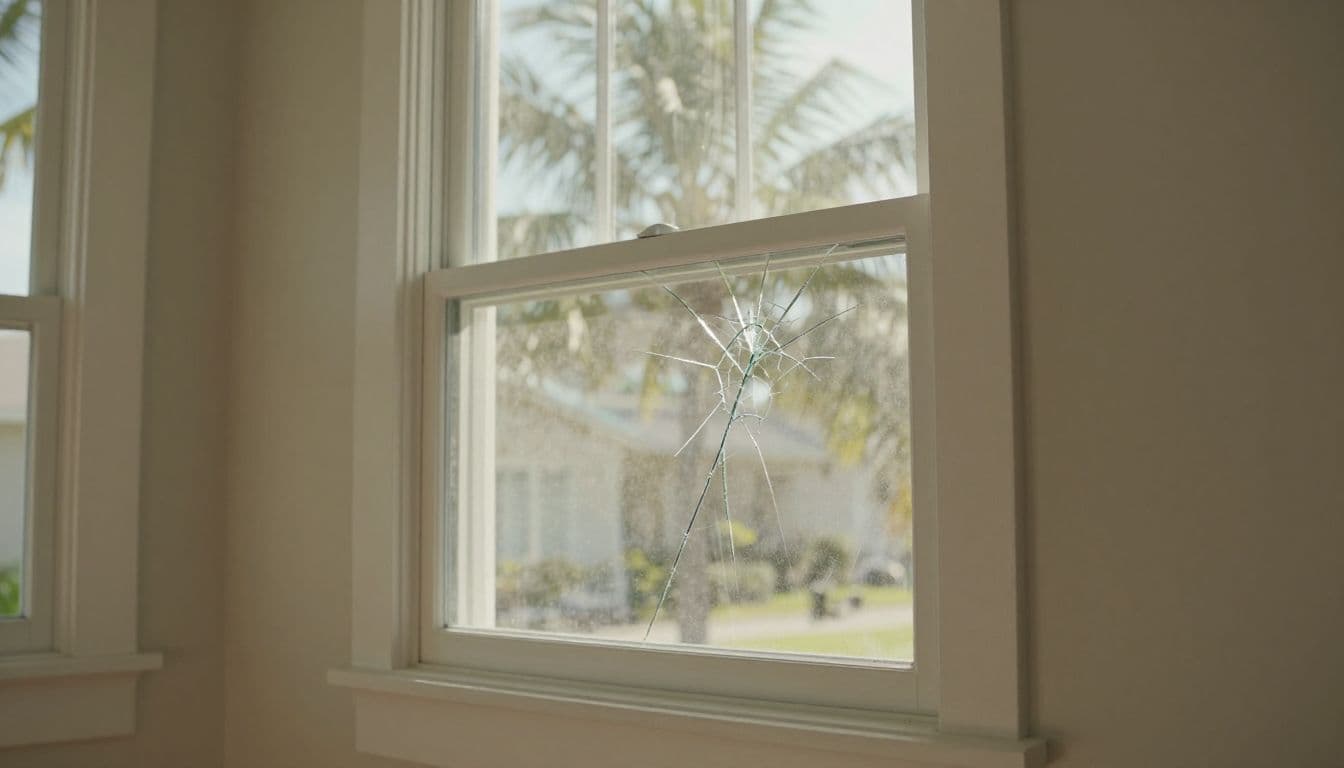
Hidden weakness at the edge
Glass handles compression well, but tension at a nick or rough edge can spread a crack. Small damage from fabrication, shipping, installation, or cleaning may be too small to notice. If the edge sits tightly against a frame or glazing material, pressure can stay concentrated in one spot.
Tempered glass has been heat-treated for added strength, yet it can break later when an edge flaw or rare internal inclusion becomes unstable. When that happens, the pane may break into many small pieces without a clear impact mark. Laminated glass can crack while its inner layer holds fragments together.
That hidden condition explains why window glass cracks can look sudden. The break may be new, but the weakness often existed earlier.
A crack without a visible impact usually points to stress or weakness that started before the break appeared.
Frame pressure and installation problems
The frame matters as much as the pane. A window needs support without squeezing the glass at its edges. Uneven shims, overtight fasteners, a twisted sash, or building movement can create point pressure.
Temperature changes also make frames and glass expand at different rates. Repeated operation, slamming, or settling can shift that pressure. A crack may start at a corner and travel inward, so you may not see its cause.
A replacement pane can crack again if the frame remains distorted or the original stress isn't corrected. An inspection should examine both the glass and the opening.
Southwest Florida conditions that can add stress
Southwest Florida weather can add load to a vulnerable pane. It doesn't make every sound window fail, so the crack pattern and condition of the glass still matter.
Heat and uneven sunlight
Direct sun can heat one section of a pane faster than another. A closed blind, dark curtain, tree shadow, or nearby object can create uneven temperatures across the surface. Indoor air-conditioning can keep the inside surface cooler while the outside absorbs heat.
Glass expands when heated. If one area expands more than another, stress builds. Existing edge damage or frame pressure may then open a crack.
This can happen after a hot afternoon in Fort Myers or Cape Coral, yet heat is often an added force rather than the sole cause. A properly installed, undamaged pane normally tolerates ordinary daily temperature changes.
Storms, humidity, and coastal exposure
High winds can flex a sash or frame, especially when a window already has a loose component or weak edge. Wind-blown debris is an impact, even if you don't find the object afterward. Pressure changes during a storm can also reveal damage that started earlier.
Humidity and salt air usually affect seals, hardware, and metal frame parts over time. They don't normally crack a sound pane by themselves. However, corrosion or seal deterioration can change how the unit sits or allow moisture between insulated panes.
Properties near Bonita Springs, Estero, and Naples should receive a post-storm inspection when a crack, fogging, or loose frame appears.
Cracked, shattered, or failed insulated glass?
The damage pattern gives useful clues, but an onsite inspection confirms what failed. These conditions require different handling and replacement decisions.
| Condition | What you may see | What it means |
|---|---|---|
| Cracked glass | One or more visible lines, with the pane still mostly in place | The pane has lost strength and may continue to crack |
| Shattered glass | Many fragments, with tempered pieces often forming small granules | The glass is severely damaged and the area may contain loose pieces |
| Failed insulated glass | Fogging, cloudiness, or moisture between panes | The perimeter seal has failed, even if no crack is visible |
A single window can show more than one condition. For example, a cracked insulated unit may also have lost its perimeter seal. Fogging without a visible line points to seal failure, while loose fragments require immediate area control.
Tempered glass often breaks into small, pebble-like pieces. Laminated glass may remain attached to its inner layer after cracking. Neither condition makes the window safe to handle or suitable for a do-it-yourself repair.
What to do when window glass cracks
A crack changes the safety of the opening, even when the pane still looks stable. Keep the response simple and avoid adding pressure to the damaged glass.
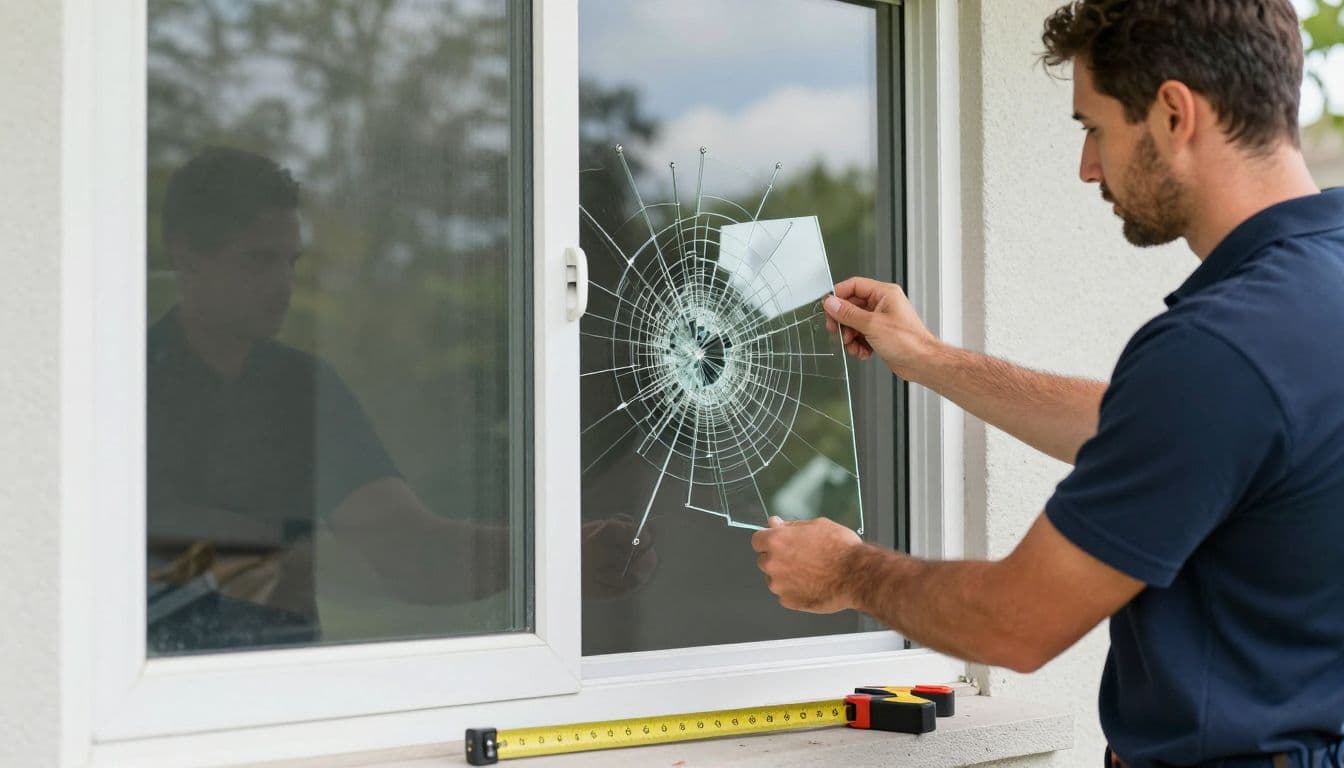
Make the area safe
Keep children, pets, and other people away from the window. Move furniture only if you can do so without touching the glass. Don't press on the pane, test whether it moves, or open and close the sash. Movement can add stress.
If the glass has shattered, avoid bare hands and keep others out of the area. Don't try to sweep fragments out of a tight frame or remove the pane yourself. A cracked pane isn't a good place for glue, drilled holes, tape, or a homemade brace.
When the pane bows, rattles, or has loose pieces, arrange prompt service. Until help arrives, keep the room clear and avoid handling curtains or blinds that touch the glass.
Arrange a professional inspection
A glass professional checks the crack's origin, edge condition, glazing, frame, sash, and operating hardware. For an insulated window, the technician measures the opening and unit dimensions. They also identify whether the replacement needs safety glass, a low-E coating, tint, or another required specification.
Photos can help arrange an appointment, but they can't show pressure inside the frame or confirm a failed seal. A professional can tell whether glass-only replacement is suitable or full window work makes more sense.
For a storefront or office, commercial glass repair in Southwest Florida can address damaged commercial windows and doors. Businesses in Fort Myers and Cape Coral should keep employees and customers clear until the damaged area receives attention.
Repair or replacement? It depends on the window
The right answer depends on the glass type, the frame condition, and the source of the stress.
When glass-only replacement makes sense
Glass-only replacement often works when the frame, sash, and drainage remain sound. With a single-pane window, a professional removes the damaged pane and fits a correctly sized replacement.
With a double-pane or triple-pane window, the usual service is replacement of the sealed insulated glass unit. A technician doesn't replace one layer in place with household tools. The new unit must match the opening, thickness, safety properties, and any existing low-E coating or tint.
Tempered glass must be cut and shaped before heat treatment. Cutting or drilling tempered glass at home can cause it to break unexpectedly. Proper measurements also matter because a tight-fitting replacement can recreate the same edge pressure.
When complete window replacement may be better
A full window replacement may make sense when the frame is warped, corroded, cracked, or leaking. It may also be the better choice when hardware no longer holds the sash square.
Replacing only the glass in a damaged opening can leave pressure and water problems in place. For homeowners in Lehigh Acres and Punta Gorda, a professional can compare glass-only work with complete unit replacement.
The decision should account for fit, safety, appearance, energy performance, and the condition of surrounding materials. A custom glass company can also match nearby windows, mirrors, or shower enclosures when a property renovation includes several glass surfaces.
How to reduce the chance of another crack
A few habits can reduce avoidable stress after the repair. They won't prevent every break, especially when a hidden flaw or severe storm is involved.
Keep common stress sources in check
Keep blinds, shades, and heavy objects from pressing against the pane. Avoid spraying cold water onto sun-heated glass. Don't slam windows or force a sash that sticks.
Before applying tint or window film, confirm that the product suits the existing glass and frame. Some combinations can increase heat stress. Keep drainage paths clear and inspect frames after severe weather.
Small edge chips, loose glazing, and difficult operation deserve attention before the pane develops a longer crack.
Watch for early warning signs
If you notice fog between panes, a draft, water around the frame, rattling, or a crack that grows, schedule an inspection. These signs can point to seal failure, movement, or a problem around the opening.
The same safety rule applies to custom shower glass and mirrors. Don't drill, glue, or try to reshape damaged glass. A professional can identify the glass type and recommend a safe replacement that fits the existing design.
A crack without impact still has a cause
An unexplained break doesn't mean the glass failed without a cause. The pane may have carried edge damage, internal stress, frame pressure, or a seal problem before the line appeared. Southwest Florida conditions can add load, but they rarely provide the whole diagnosis on their own.
When window glass cracks, keep everyone away, avoid touching or moving it, and arrange a professional inspection. Identifying whether the glass is cracked, shattered, or part of a failed insulated unit leads to safer handling and a better replacement decision.