
Window Weep Holes Explained for Southwest Florida Homes
Those small openings along a window sill can look like defects, but they usually have an important job. Window weep holes are intentional drainage paths that help water leave the window assembly instead of staying trapped in the sill or track.
For homeowners in Fort Myers and throughout Southwest Florida, keeping these openings clear matters because heavy rain, humidity, salt air, and wind-driven water all test window drainage. A quick visual check can reveal debris or damage before a small concern becomes a larger glass, frame, or wall problem.
What Window Weep Holes Do in Cape Coral Homes
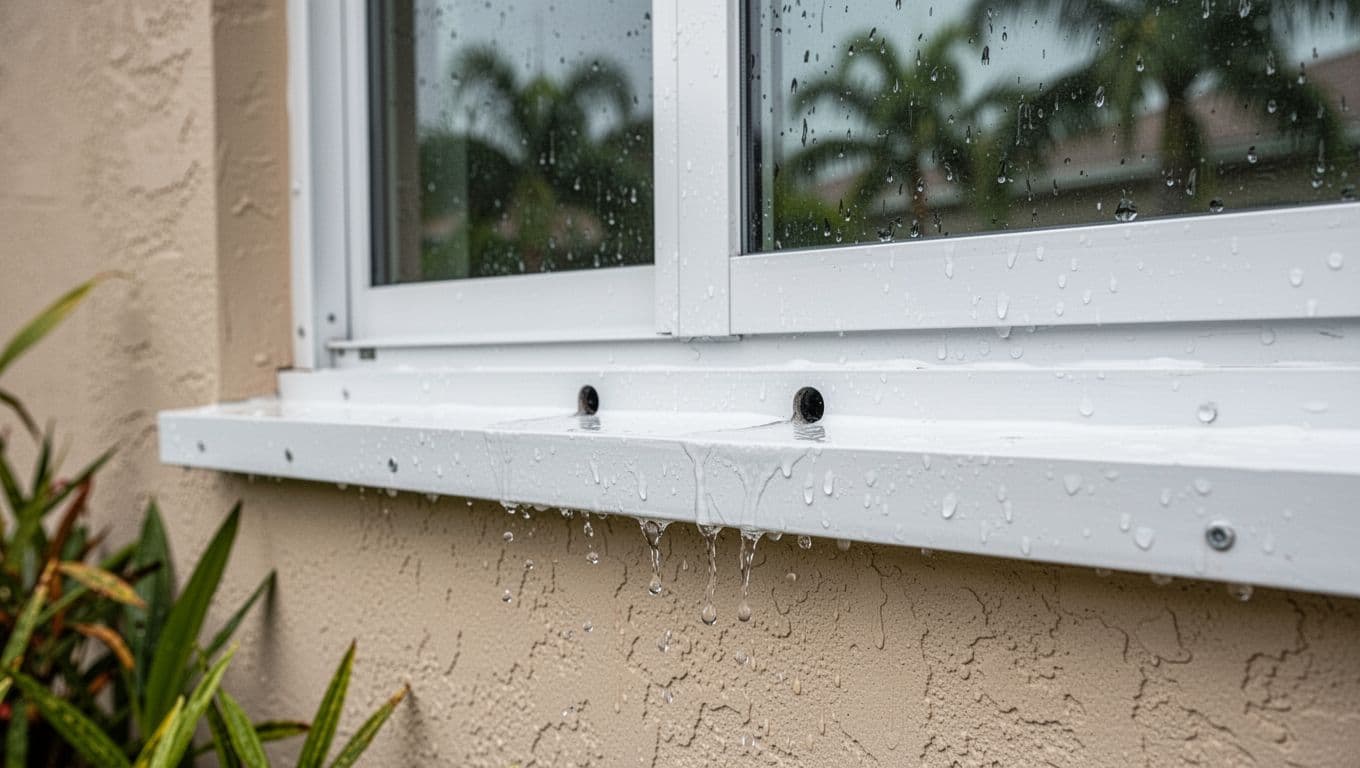
Window weep holes are openings built into the lower portion of many window frames. They allow water that reaches the interior track or sill to drain toward the exterior.
The small openings visible on the sill
Rain can enter the outer part of a window assembly during normal weather. That doesn't automatically mean the window is leaking. A properly designed frame directs collected water toward the sill, where weep holes provide an exit.
The openings may look like narrow slots, round holes, or recessed channels. Their shape and location vary by window design. Never assume every window has the same number or style of openings.
Why blocking them creates trouble
Caulk, paint, dirt, insect debris, and landscaping material can interfere with the drainage path. Covering the holes may leave water sitting in the track or force it toward areas that were never meant to handle it.
Never caulk or paint over window weep holes. Don't plug them with sealant, tape, foam, or decorative material. If water continues to appear indoors after the openings are clear, the cause may involve the glass, frame, perimeter seal, flashing, stucco, or nearby wall.
Key Takeaways for Southwest Florida Homeowners
- Weep holes are intentional drainage openings, not missing pieces of the window frame.
- Keep them free of debris, paint, caulk, and other blockage.
- Use a soft brush, cloth, or vacuum to remove loose material without forcing anything into the opening.
- Moisture between insulated glass panes usually points to a failed sealed glass unit, not a clogged weep hole.
- Water stains, bubbling paint, swollen trim, or repeated dampness call for a broader inspection.
- Never use an open flame to test for drafts.
- Avoid taking apart the frame, drilling into it, or pressing on cracked glass.
- New glass won't correct water entering around the frame or through the wall.
Safe Inspection for Bonita Springs and Estero Windows
Routine inspection doesn't require removing trim or taking apart the window. Look at the sill, track, frame edges, and surrounding wall during daylight, especially after heavy rain.
What to check without modifying the frame
Start by looking for leaves, dead insects, dust, and visible salt residue. Check whether the weep openings remain visibly open. Also look for water sitting in the track after weather has cleared.
A soft, dry brush can loosen surface debris. A small handheld vacuum can collect loose material nearby. Use gentle movements and avoid pushing anything into the holes.
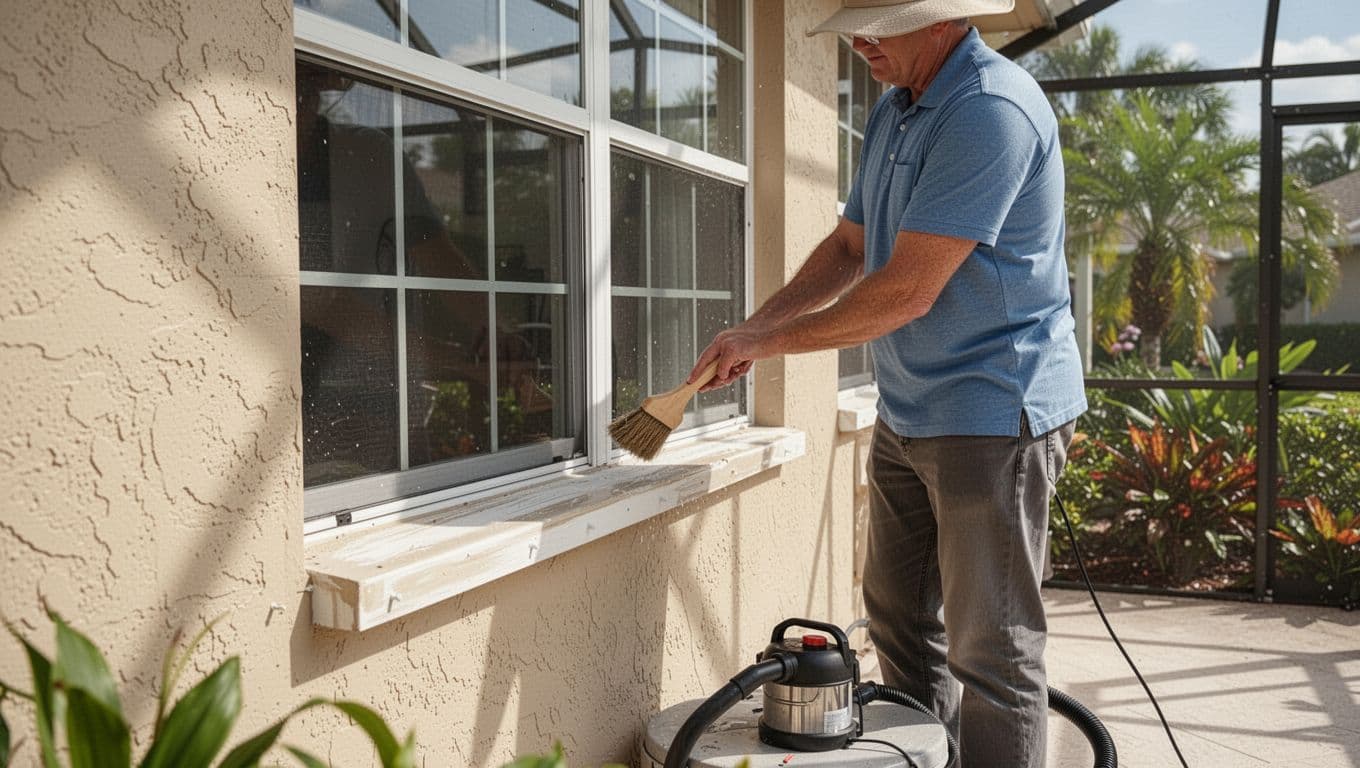
A light rinse may help remove loose residue from an accessible exterior sill, but don't use a pressure washer. Follow the window manufacturer's care instructions when they are available. Avoid abrasive pads, blades, wire, and sharp tools that can damage finishes, gaskets, or drainage channels.
Keep blinds and heavy drapes from sealing tightly against the glass for long periods. Air movement near the window can help reduce ordinary room-side condensation.
When to stop the inspection
Don't climb onto an unsafe surface or reach outside a second-story window. If the window has storm damage, cracked glass, loose components, or visible movement, take photos from a safe position instead.
Never use a candle, lighter, or other flame to locate a draft. A thin tissue held near a closed and locked sash can show movement on a breezy day, but any result is only a clue. It doesn't identify the source of the air leak.
Water and Glass Warning Signs in Naples Homes
A clear understanding of moisture location helps separate ordinary condensation from a window or wall issue. However, one symptom rarely identifies the full cause by itself.
Moisture on the room side versus between panes
Condensation on the room-facing side of the glass can occur when warm, humid indoor air meets a cooler surface. Air-conditioning differences and restricted airflow near the window can make it more noticeable.
Moisture trapped between two panes is different. A hazy patch, persistent dullness, streaking, or a mineral-like appearance that remains after normal cleaning may indicate that the insulated glass seal has failed. That condition concerns the sealed glass unit, not necessarily the entire frame.
Compare the affected window with another nearby window. Differences in clarity, temperature, or operation can help you notice a change that is easy to miss when viewing one unit alone.
Signs that water may be reaching the surrounding wall
Look beyond the glass and inspect the sill, trim, and nearby wall. Warning signs include:
| What you notice | What it may indicate |
|---|---|
| Water marks or dampness near the sill | Moisture may be reaching the interior finish |
| Bubbling paint or swollen trim | Repeated moisture exposure near the opening |
| Persistent water in the track | A drainage or larger window issue needs review |
| Cracked stucco or gaps near the frame | Water may be entering around the opening |
| New drafts, rattling, or difficult operation | Possible sash, frame, seal, or hardware damage |
These signs don't prove that a weep hole is blocked. Water can travel through a frame, perimeter joint, flashing area, or wall before becoming visible inside. A professional should identify the source before anyone seals over the symptom.
When Lehigh Acres Homeowners Need Glass Service
A clogged drainage opening is a maintenance concern. Cracked, fogged, loose, or damaged glass calls for a different response.
Glass problems and frame problems are not the same
A cracked pane can spread after temperature changes, vibration, or another impact. Avoid pressing on it or treating tape as a long-term repair. Fogging between panes can point to a failed insulated glass unit, while drafts may come from weatherstripping, the sash, or the frame.
If the surrounding assembly remains sound, replacing the affected glass may be appropriate. Caloosahatchee Glass & Mirror provides window glass repair and replacement for issues that include broken panes, fogged insulated glass, sliding glass doors, and other residential glass concerns.
A frame that is warped, heavily corroded, cracked, or repeatedly leaking may need a broader evaluation. New glass cannot stop water that enters around the frame or through the wall.
What a professional should evaluate
A useful assessment looks at more than the visible pane. The inspection may include the glass unit, sash, frame, locks, weatherstripping, sill track, exterior joints, and nearby trim.
Ask for professional help when you notice:
- Cracked or loose glass
- Moisture trapped between panes
- Water stains, soft drywall, or bubbling paint
- A window that no longer closes or locks correctly
- Repeated leaks after exterior sealing
- Rust, pitting, loose fasteners, or deteriorated frame areas
- Damage after a tropical storm or hurricane
Homeowners who need a Fort Myers glass repair company can arrange an evaluation rather than guessing whether the issue involves only the glass.
Window Maintenance After Storms in Punta Gorda
Southwest Florida weather changes how often windows deserve attention. Homes in Punta Gorda, Fort Myers, Cape Coral, and inland communities such as Lehigh Acres can all experience intense rain and wind. Coastal areas such as Naples, Bonita Springs, and Estero also face salt exposure.
After conditions are safe, inspect windows from the ground and from inside the home. Look for new water marks, loose trim, damaged screens, changed sash operation, and debris in the sill track. Don't try to correct storm damage by drilling into the frame or covering weep holes with caulk.
Salt and dust often collect in corners, tracks, fasteners, and frame bottoms. Covered porches can reduce natural rinsing, which allows residue to remain longer. Clear loose debris gently and arrange an evaluation if drainage problems continue.
For a home or business with damaged storefront or door glass, commercial glass repair services may be more appropriate than a residential window service. The right repair depends on the type of glass and the condition of the surrounding assembly.
FAQ About Window Weep Holes
Are window weep holes supposed to be open?
Yes. They are intended drainage openings, so visible blockage should be removed carefully. Don't fill, paint, caulk, or enlarge them. Their design varies by window, and a professional should assess any opening that appears damaged or unusual.
Can a clogged weep hole cause water inside my home?
It can interfere with the window's intended drainage, but interior water doesn't prove that blockage is the cause. Water may also enter through the frame, exterior joint, flashing area, stucco, or nearby wall. Clear loose debris and seek an evaluation if moisture persists.
Should I use a wire or screwdriver to clean the holes?
No. Sharp tools can damage the opening, finish, gasket, or internal drainage path. Use a soft brush, cloth, or vacuum for loose surface debris. Stop if material does not come away easily.
Does condensation mean my window is leaking?
Not always. Room-side condensation can result from indoor humidity, cool air-conditioning, or limited airflow near the glass. Moisture between panes is more consistent with a failed insulated seal. Water stains around the sill or wall require a separate inspection.
Can new glass fix water around the window?
New glass may correct a damaged or failed glass unit, but it won't fix water entering around the frame or through the wall. The opening and surrounding materials should be evaluated before replacement work begins.
What if I want a different type of replacement glass?
The replacement must match the window assembly and the home's needs. A qualified glass company can review measurements, frame condition, operation, and surrounding water-management details. Caloosahatchee Glass & Mirror also provides custom-cut window glass for tailored residential and specialty applications.
Conclusion
Window weep holes help a window drain water as designed. Keeping them open is simple, but it doesn't replace an inspection when you see fogged glass, cracks, drafts, stains, swollen trim, or repeated moisture.
For Southwest Florida homeowners, the safest approach is to remove only loose surface debris, avoid modifying the frame, and treat persistent water as a broader window or wall concern. Clear drainage supports a healthy window assembly, while professional evaluation identifies the repair that the glass, frame, or opening actually needs.