
How to Fix a Shower Door That Rubs or Won't Close
When your shower door won't close , the problem usually starts with alignment, hardware, debris, or a worn seal. A door that rubs against tile or the shower base should not be forced, because pressure can stress the glass and loosen the mounting points.
Homeowners in Fort Myers, Cape Coral, and nearby Southwest Florida communities can often identify the likely cause with a careful inspection. Start with simple checks, then stop when the repair involves tempered glass, unstable hardware, or structural movement.
Key Takeaways
- Clean the track before adjusting a sliding shower door.
- Look for loose hinges, shifted rollers, worn seals, and frame movement.
- Check whether the shower base, curb, or wall has shifted.
- Never cut, drill, reshape, or force tempered safety glass.
- A cracked panel, chipped edge, unstable fixed panel, or damaged support needs professional attention.
- Repair may involve one panel, a hinge, roller, sweep, seal, or other hardware instead of a complete enclosure replacement.
Why a Shower Door Won't Close or Rubs
A shower door needs consistent clearance around the opening. Even a small change can make the panel scrape the tile, drag on the curb, or leave a gap near the latch.
The cause depends on the door style and the point where contact occurs.
Identify the door type and rubbing point
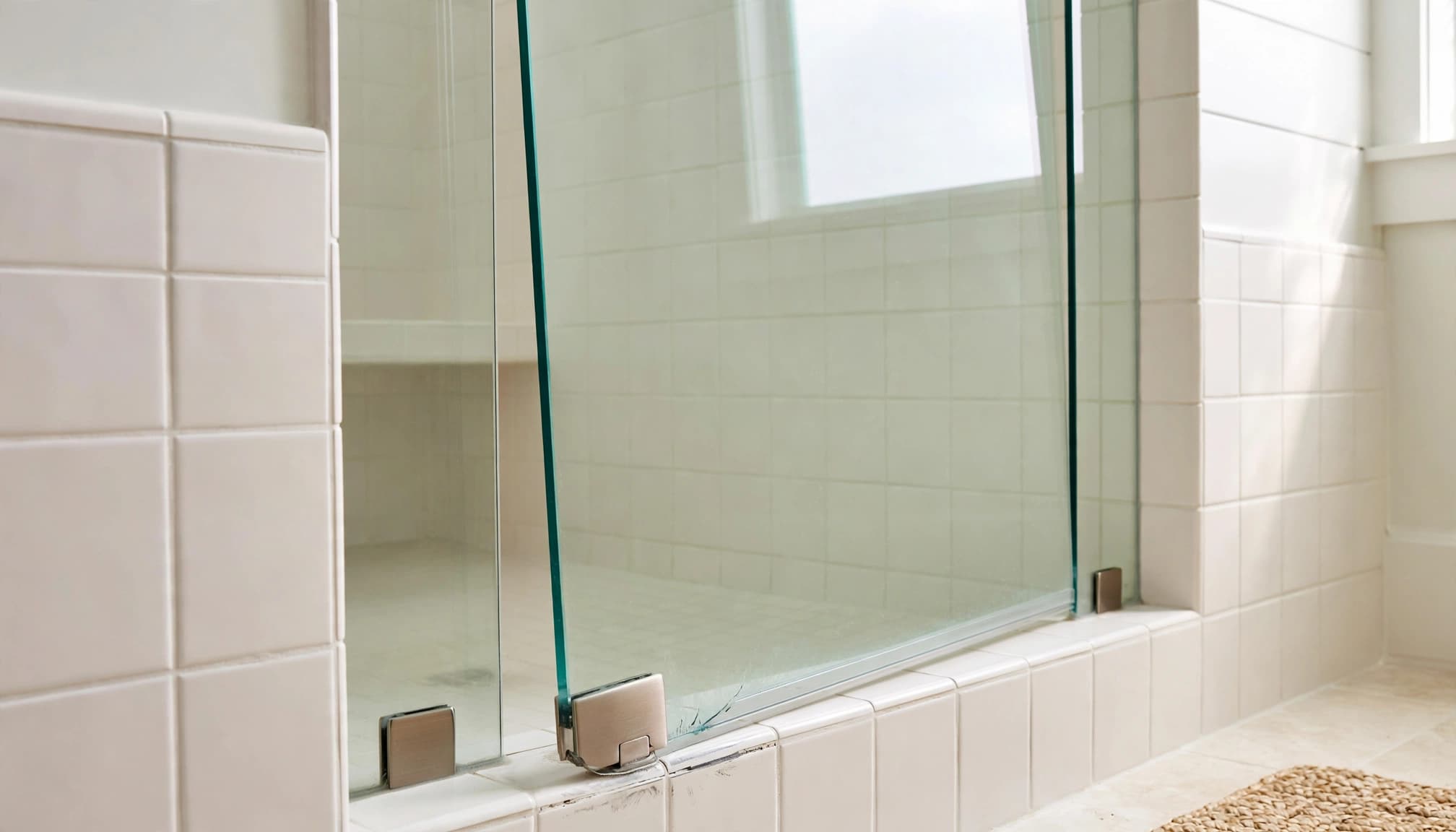
A hinged frameless door may rub because a hinge has loosened or the wall has shifted out of alignment. A framed or sliding door may bind because debris has collected in the bottom track or a roller no longer sits correctly.
Open the door slowly and watch where it first touches. Check the top corner, bottom edge, hinge side, latch side, and sweep. This simple observation can separate a hardware issue from a problem with the shower base or frame.
Match the symptom to the likely cause
A door that drops toward the handle side may have loose hinges or mounting hardware. A sliding panel that feels rough often points to dirty or shifted rollers.
If the entire enclosure appears out of square, the issue may involve an uneven base, an out-of-plumb wall, or movement behind the tile. Glass hardware cannot correct a weak shower base or major structural movement.
Start With a Safe Inspection
Before touching the hardware, remove toiletries, bath mats, and anything that could obstruct the door. Keep children and pets away from the area while you inspect the glass.
Wear shoes with good footing. Do not lean against the panel or lift it by the handle. Shower glass is heavy, and an awkward movement can damage an edge or put stress on the hinges.
Use this basic inspection sequence:
- Open and close the door gently without forcing it.
- Note the first point of contact.
- Look for cracks, chips, cloudy stress marks, or damaged corners.
- Check whether the handle, hinges, clips, or frame move independently of the glass.
- Look for gaps, mold, or separation in the sealant around the enclosure.
- Photograph the hardware and problem area before making changes.
Tempered safety glass is designed for shower enclosures, but it still requires careful handling. Once tempered glass is manufactured, it cannot be cut or drilled to solve a new alignment problem. A replacement panel must match the opening and hardware locations.
Clear the Track and Inspect the Rollers
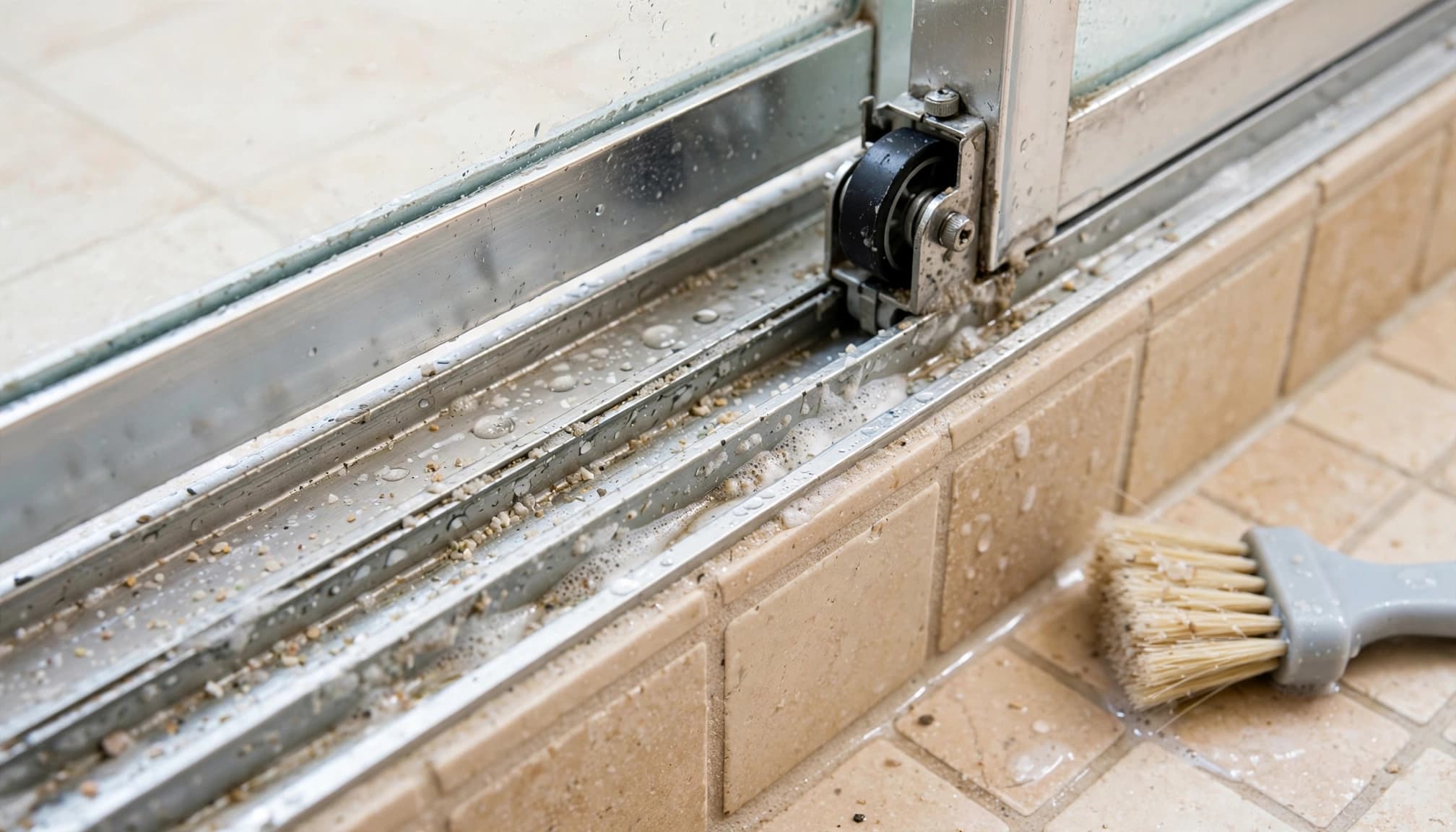
Sliding shower doors depend on a clean track and properly seated rollers. Sand, soap residue, hair, and mineral buildup can collect in the lower channel, especially in busy bathrooms.
Clean the channel without forcing the door
Vacuum loose debris from the track, then wipe the channel with a soft cloth and a mild bathroom cleaner. Use a soft brush for residue in corners. Avoid abrasive pads that can scratch metal finishes or glass surfaces.
Dry the track completely and test the door again. If it moves more smoothly but still rubs, the rollers may be worn, shifted, or corroded.
Do not pry the panel out of the track unless you know how the enclosure supports the glass. A sliding panel can be heavy, and an incorrect removal can damage the glass edge or frame.
Check for shifted or worn rollers
Look for a roller that sits unevenly, wobbles, or fails to maintain contact with the track. A door that lifts, drops, or rattles during operation may have hardware that needs adjustment or replacement.
Southwest Florida's moisture and salty air can contribute to corrosion on exposed metal parts, particularly in bathrooms near the coast. If the rollers or fasteners show corrosion, replacing the affected hardware may be safer than repeatedly adjusting it.
Check Hinges, Frames, and the Shower Base
A hinged door that rubs usually needs a closer look at the hinges and the surfaces supporting them. A framed door may also have a shifted channel or loose connection.
Look for loose hinge movement
With the door closed, observe the hinge side. The hinge should remain stable while the door moves. If the glass shifts when you gently push the handle, stop applying pressure and arrange an inspection.
Some hinges have adjustment features, but the correct process depends on the hardware design and glass layout. If the hardware is accessible and appears intended for adjustment, follow the manufacturer's instructions and make only small changes. Test the door after each change.
Never loosen multiple fittings at once. A fixed panel or hinged door can become unstable if the wrong connection is released.
Check the frame, curb, and base
A door can remain out of alignment when the surrounding structure has changed. Look for cracked grout, loose tile, a soft shower base, movement underfoot, or a curb that slopes unevenly.
The shower base must provide a stable surface for the enclosure. If it flexes, the door may shift each time someone steps into the shower. In that situation, adjusting the hinge or roller only treats the symptom.
Homes in Lehigh Acres, Estero, and Naples can have bathrooms with different tile systems, remodeled openings, and older shower bases. A professional measurement can show whether the enclosure can be adjusted or whether the supporting surface needs repair first.
Inspect the Seals and Closing Gap
A worn sweep or side seal can make a door feel difficult to close. It can also allow water to escape even when the door appears aligned.
Look for a seal that is curled, hardened, split, or pressed tightly against the curb. Check whether the bottom sweep drags on the threshold. Mineral deposits can also stiffen the seal and change the way it contacts the glass.
Clean the seal with a soft cloth and mild cleaner. If it remains misshapen or damaged, replacement may restore the correct clearance. Avoid trimming a seal unless its design and required length are clear.
The closing gap should remain consistent along the door. A widening gap usually points to alignment or hardware movement, not a seal alone. Repeated leaks can also indicate a problem with the shower slope, curb, frame, or wall connection.
Know When to Stop Troubleshooting
Some problems respond to cleaning and basic inspection. Others create a safety risk when handled without the right equipment.
Professional inspection is needed when
Contact a glass professional if you find:
- A crack, chip, deep scratch, or damaged glass corner.
- A panel that rattles, shifts, or appears unsupported.
- A hinge, clip, bracket, or roller that is corroded or pulling away.
- A fixed panel that moves when touched.
- A door that strikes another glass panel or the wall.
- A shower base, curb, or wall with visible movement.
- Alignment that changes after the door is adjusted.
Keep everyone away from damaged glass until it has been inspected. Do not try to remove a large panel by yourself. Safe removal requires control of the glass, protection for finished surfaces, and a clear understanding of how the enclosure is supported.
Decide between repair and replacement
A complete replacement is not always necessary. A technician may be able to replace an individual panel, hinge, roller, sweep, seal, or other worn hardware.
Replacement becomes more likely when the glass has damage, the opening has changed, the hardware holes no longer match, or the enclosure has recurring alignment problems. Tempered glass cannot be reshaped in the field, so a new panel may need to be custom fabricated.
Caloosahatchee Glass & Mirror provides shower glass repair and replacement for damaged shower glass, frameless doors, framed enclosures, and related hardware.
Shower Door Repair Options in Southwest Florida
A repair should match the enclosure style and the condition of the bathroom. A framed sliding door, a frameless hinged door, and a bypass enclosure do not use the same hardware or adjustment process.
Frameless, framed, bypass, and hydroslide enclosures
Frameless doors rely on hinges, clamps, wall support, and accurate alignment. Because they use less metal, movement at one connection can affect the door's swing and closing gap.
Framed doors contain the glass within metal channels, while bypass and hydroslide systems use sliding panels and rollers. Each design needs the correct replacement parts and measurements.
If the shower has worn components but the glass remains sound, targeted repair can extend the enclosure's useful life. If the layout, tile, or base has changed, custom replacement may produce a safer and cleaner result. Review the available custom shower enclosures before selecting a new door style.
Local service for Fort Myers and Cape Coral homes
A local glass company can inspect the existing opening, identify hardware problems, and determine whether the enclosure needs repair or replacement. Caloosahatchee Glass & Mirror is a fourth-generation, family-owned company serving Fort Myers and Southwest Florida.
Homeowners in Cape Coral can also review Cape Coral glass enclosure repair when a door has damaged glass, worn hardware, or a closing problem. Service also extends across Lee, Collier, and Charlotte counties, including Bonita Springs and Punta Gorda.
FAQ About a Shower Door That Rubs
Can cleaning fix a shower door that won't close?
Cleaning can solve a problem caused by debris in a sliding track. It will not correct a loose hinge, shifted frame, worn roller, uneven shower base, or damaged glass. Clean the track first, then check whether the door still sits out of alignment.
Should I tighten the shower door hinges myself?
Only make an adjustment if the hardware is designed for it and you understand how the glass is supported. Avoid loosening several fittings or removing clips without help. A professional should handle hinges that move, corroded fasteners, unstable panels, or doors made from damaged glass.
Can a tempered glass shower door be cut to fit?
No. Tempered glass cannot be cut, drilled, or reshaped after manufacturing. If the opening has changed or the hardware locations no longer match, the proper solution may require a new panel made to the measured opening.
How do I know if I need a new shower enclosure?
Replacement may be appropriate when the glass is cracked, the base has movement, the frame is damaged, or repeated repairs have not restored alignment. If the glass and opening remain sound, replacing a seal, roller, hinge, or individual panel may be enough.
Conclusion
A shower door that rubs or won't close usually needs a careful inspection rather than more force. Clean the track, check the rollers and seals, observe the hinges, and look for movement in the frame, curb, or shower base.
When tempered glass, unstable hardware, damaged edges, or structural problems are involved, professional service protects both the enclosure and the people using it. The right repair starts by identifying the actual cause, then matching the solution to the glass, hardware, and bathroom opening.