
Window Frame Materials for Southwest Florida Homes
The right window frame materials affect more than curb appeal. They influence comfort, maintenance, storm performance, glass options, and how well a replacement fits an existing opening.
Southwest Florida homes face strong sun, high humidity, heavy rain, salt air, and changing wind conditions. A frame that works well in a shaded Lehigh Acres neighborhood may not suit a large, exposed opening near the coast. Start by comparing the material, then review the complete window system and installation details.
How window frame materials handle Southwest Florida conditions
A window frame supports the glass, holds hardware, seals the opening, and transfers wind pressure into the wall. The frame and glass must work together. Choosing one based on appearance alone can lead to poor operation, air leakage, or an installation that doesn't meet the project's requirements.
Heat, humidity, and sunlight
Southwest Florida's heat affects the whole window assembly. Direct afternoon sun can heat the frame and glass, while daily temperature changes cause materials to expand and contract. High humidity also puts pressure on insulated glass seals and weatherstripping.
West-facing windows in Naples or Estero may need more attention to solar heat gain than shaded openings under a covered lanai. Low-E glass, insulated glazing, and the frame's thermal properties should be reviewed together. The National Fenestration Rating Council label lists U-factor and Solar Heat Gain Coefficient, or SHGC, which help compare whole-window performance.
Coastal air and storm exposure
Salt air can speed corrosion on exposed metal components, fasteners, tracks, and hardware. Homes in Bonita Springs, Naples, and Punta Gorda may need more frequent cleaning and inspection when openings receive direct coastal exposure.
Storm protection depends on the tested assembly, not the frame material alone. An impact-rated system includes the glazing, interlayer, frame, seals, anchors, and installation method. Standard laminated glass is not automatically hurricane-rated, so ask for approval documents for the exact product and configuration.
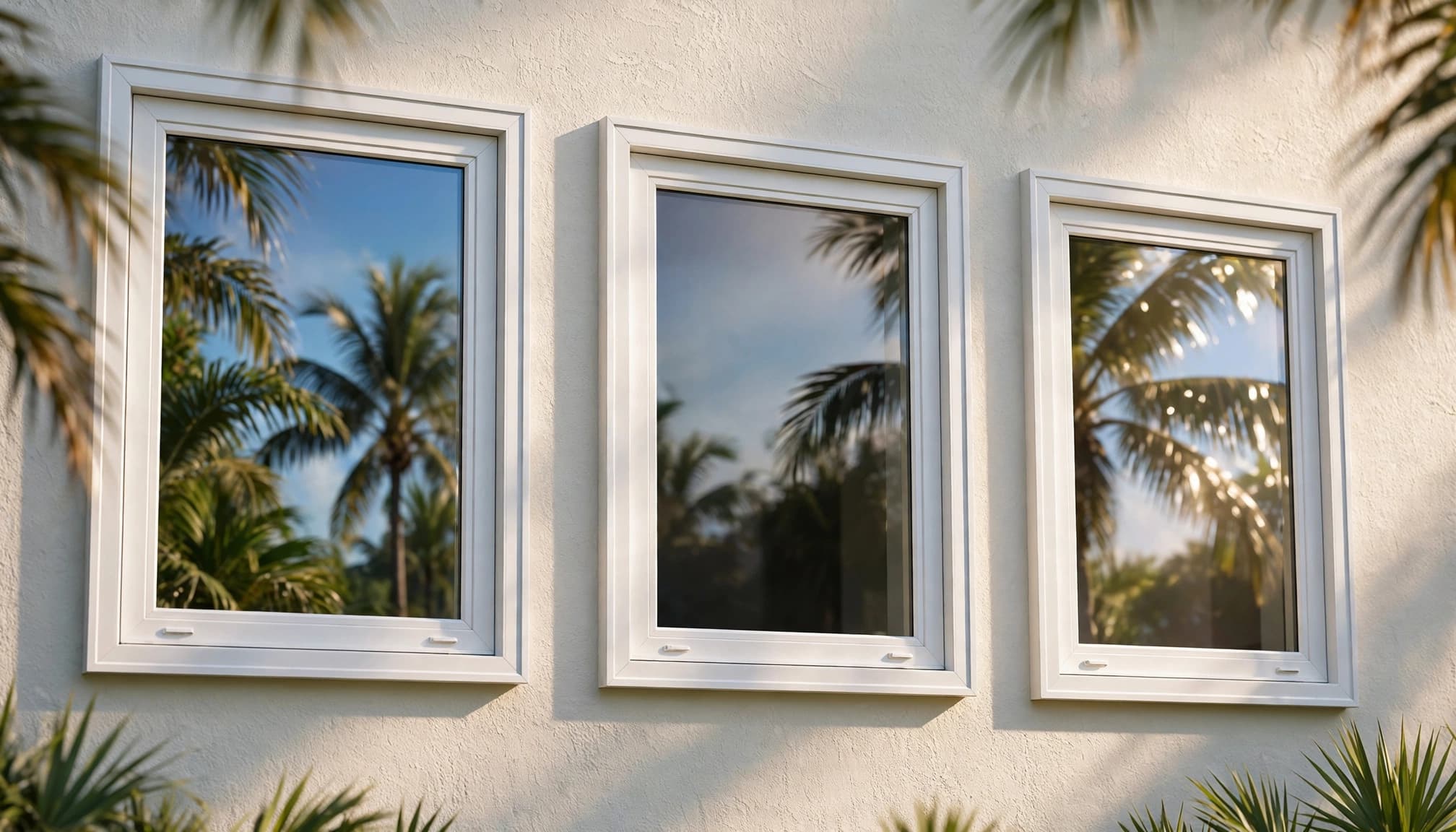
Vinyl frames: practical and low-maintenance
Vinyl is a common choice for residential replacement windows because it doesn't require painting and typically offers clean sightlines. Its performance depends on the specific profile, reinforcement, glass package, and approval for the opening.
Where vinyl fits best
Vinyl can suit homeowners who want simple maintenance and a frame that won't rust. It works well for many standard-size openings, including bedrooms, living areas, and smaller windows in Fort Myers or Cape Coral.
White and light-colored vinyl frames are common, but available colors and finishes vary by product. Ask how the selected frame handles direct sun, whether it includes reinforcement, and which whole-window ratings apply. A lighter frame may look different from existing windows, especially when nearby glass has aged or developed a different tint.
What to inspect before choosing vinyl
Large windows and sliding doors can place greater demands on the frame than small bathroom windows. Review the frame depth, sash weight, mullions, locking points, and attachment method before ordering.
Vinyl doesn't rot, but seals, hardware, and moving parts can still wear. A professional should also inspect the existing sill and wall opening. Water damage, uneven masonry, or prior repairs may affect whether a retrofit or full-frame replacement is appropriate.
Aluminum frames: strength with a coastal maintenance question
Aluminum frames offer a slim profile and strong structural characteristics. They can suit large openings, broad views, and designs where a narrow sightline matters. However, the finish, alloy, hardware, and exposure all deserve close review.
Benefits for large openings
A home in Cape Coral with wide living-room windows or multiple sliders may benefit from a frame designed for larger spans. Aluminum's strength can support configurations that require a rigid frame, though the approved product still determines its actual pressure rating.
Aluminum also allows a narrow appearance that preserves more glass area. This can appeal to homeowners who want open views toward a pool, canal, or garden. Ask whether the selected product includes thermal improvements and compare its NFRC ratings with other options.
Salt air and finish care
Aluminum doesn't absorb water or rot, but exposed metal components can corrode when salt deposits remain on the surface. A durable finish helps, yet it doesn't eliminate the need for cleaning and inspections.
Look closely at corners, tracks, fasteners, weep areas, and locks. If the home sits near the coast or receives strong wind-driven rain, ask how the frame and installation resist water entry. The product's approval and attachment details matter more than a general statement that the frame is aluminum.
Fiberglass and composite frames: stable options for selected projects
Fiberglass and composite frames are less common in some replacement markets, but they deserve consideration when homeowners prioritize dimensional stability, insulation, or a particular finish. Product availability and local installer experience vary.
When these materials may make sense
Fiberglass frames generally resist swelling and shrinking better than wood, while composite products can combine different materials to meet design or performance goals. They may suit a homeowner seeking a more substantial frame or a finish that differs from standard vinyl.
For a replacement in Naples or Bonita Springs, compare the frame's U-factor, glass options, sightlines, and storm approvals. A material's name doesn't confirm how it performs in a particular product line. The complete tested window remains the relevant unit.
Check fit, weight, and service support
Some fiberglass or composite systems have deeper frames or different operating weights. Those details can affect an older opening, a casement hinge, or a sliding panel.
Ask who will service the hardware and whether replacement parts are available. A durable frame still needs correct measurements, square installation, effective perimeter sealing, and proper drainage. Product support can matter as much as the material choice over the window's service life.
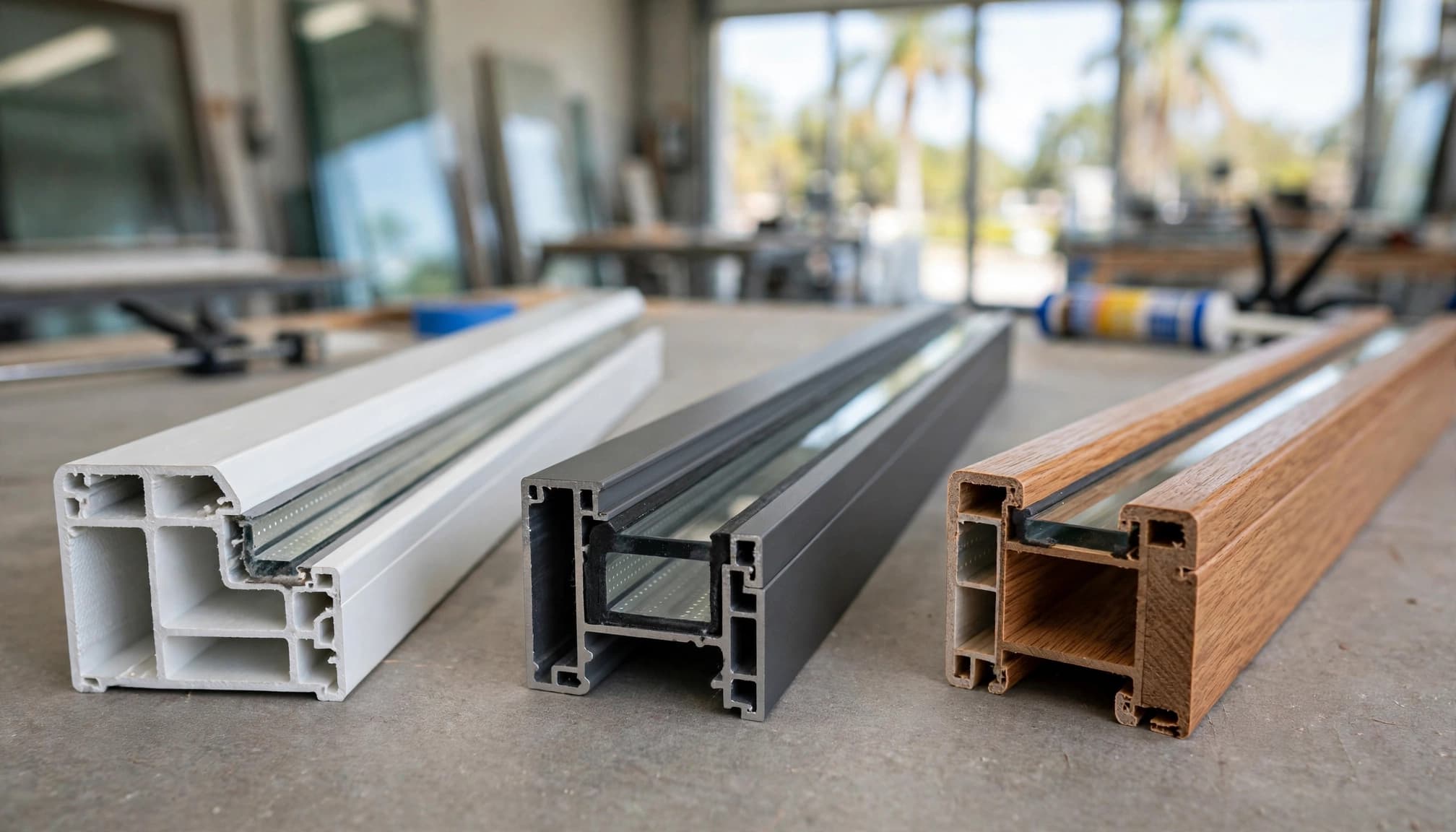
Wood and wood-clad frames: appearance with more upkeep
Wood offers a traditional appearance and can complement older homes or detailed architectural designs. Wood-clad products place a weather-resistant exterior over an interior wood frame, depending on the system.
Where wood can work well
Wood may suit homeowners in Fort Myers or Punta Gorda who want warm interior finishes or a closer match to existing trim. It can also work when historic character or custom proportions matter more than a minimal-maintenance exterior.
Before choosing wood, inspect the sill, jambs, corners, and nearby trim. Look for soft areas, peeling coatings, water stains, loose joints, and movement in the sash. A small repair may be possible when the frame remains square and dry.
Maintenance affects lifespan
Wood needs consistent protection from moisture and sun. Paint or finish failure can expose the material to water, while poor drainage can lead to deterioration in the sill or lower corners.
Wood-clad frames reduce some exterior maintenance, but the cladding, joints, seals, and interior wood still need inspection. Ask about the manufacturer's care instructions, finish warranty, replacement parts, and expected maintenance schedule for Southwest Florida exposure.
Match the frame to glass, storm requirements, and installation
A frame comparison is only useful when the glass and installation method are reviewed at the same time. This matters most for large openings, older homes, and projects involving impact-rated windows.
Glass and frame form one tested system
Double-pane Low-E glass can provide a useful balance of insulation, visible light, frame size, and operating weight in many Fort Myers and Cape Coral homes. Triple-pane glass may offer additional insulation, but it also adds weight, depth, and product-specific structural requirements.
Impact-rated windows often use laminated glass with an interlayer that helps hold the glass together after impact. The frame must be part of the approved assembly. Replacing only the glass with a non-approved product can affect storm protection, insurance records, and local compliance.
Installation determines real-world performance
A strong window can underperform when the opening is out of square, the perimeter seal is incomplete, or fasteners don't follow the approved schedule. Large openings, corner windows, masonry walls, and older stucco can all change the installation requirements.
Florida's 8th Edition Building Code, adopted in 2023, includes energy requirements for replacement fenestration. Permits may require a Florida Product Approval number, installation drawings, and fastening details that match the selected window. Confirm the process before materials are ordered.
For some one- and two-family homes, Florida includes an exception when replacement windows and other glazed openings completed within 12 months remain at or below 25% of the home's total glazed opening area. That exception doesn't remove wind-pressure requirements or override local permits, amendments, or insurance conditions.
Plan by city, exposure, and opening size
Your city doesn't determine the frame by itself. A shaded window in Lehigh Acres may face different demands than a west-facing opening in Naples. Likewise, a small bathroom window and a wide lanai-facing slider require different evaluations.
Homeowners in Estero and Bonita Springs should consider salt exposure, wind-driven rain, and the amount of direct sun. In Punta Gorda, a large opening with water exposure may need a closer review of corrosion protection, impact approval, and anchoring. Fort Myers and Cape Coral homes with broad glass areas should be evaluated opening by opening.
Caloosahatchee Glass & Mirror is a fourth-generation, family-owned glass company based in Fort Myers. Its listed service area includes glass and window services in Southwest Florida, including Lee, Collier, and Charlotte County communities.
Before selecting a material, request a written proposal that identifies the frame, glass, operation type, ratings, approval information, installation method, and any work needed around the existing opening.
Key takeaways for choosing a window frame
- Vinyl may suit homeowners who want a low-maintenance frame for standard residential openings.
- Aluminum can work well for slim sightlines and larger spans, but coastal finishes and metal hardware need regular inspection.
- Fiberglass and composite frames may fit projects that prioritize dimensional stability or a different finish, subject to product availability.
- Wood and wood-clad frames offer a traditional appearance but require more attention to moisture, coatings, and seals.
- Impact performance comes from the complete approved assembly, including glass, frame, fasteners, and installation.
- NFRC ratings, Florida Product Approval information, and opening-specific measurements are more useful than a material label alone.
FAQ about window frame materials in Southwest Florida
Which frame material is best near the coast?
There isn't one best material for every coastal home. Compare the product's finish, hardware, corrosion protection, impact approval, drainage, and installation details. Regular cleaning also matters because salt deposits can affect exposed components.
Are aluminum windows a poor choice in Southwest Florida?
Not automatically. Aluminum can suit large openings and narrow sightlines. The main questions involve the specific finish, thermal performance, corrosion exposure, frame design, and tested ratings for the opening.
Do impact windows need a special frame?
Yes, the frame is part of the impact-rated system. The glass, interlayer, seals, anchors, and attachment method must match the approved product and installation configuration.
Should I replace the frame or only the glass?
If the existing frame is square, dry, and structurally sound, glass or sash replacement may be possible. A full-frame replacement deserves consideration when the frame has rot, corrosion, water damage, failed seals, poor operation, or outdated attachment details.
Choose the frame as part of the whole opening
The best window frame materials balance the home's exposure, the opening's size, the desired glass, and the required storm and energy performance. Vinyl, aluminum, fiberglass, composite, and wood can each fit the right project when the product is properly selected.
For a replacement in Southwest Florida, focus on the complete approved system and the quality of the installation. A careful opening inspection, clear product documentation, and city-specific planning will help your new windows perform as intended in Fort Myers, Cape Coral, Bonita Springs, Estero, Naples, Lehigh Acres, or Punta Gorda.