
Window Spacer Materials for Southwest Florida Homes
A window can have modern glass and still perform poorly if the sealed unit, frame, or perimeter spacer does not fit the opening. Understanding window spacer materials helps homeowners and property professionals ask better questions before ordering replacement glass.
In Southwest Florida, heat, humidity, strong sun, salt air, and storm exposure all affect long-term window performance. The spacer is only one part of the system, but its design influences the edge of the glass, the sealed cavity, and the way the insulated glass unit works with the frame.
What a Spacer Does Inside Insulated Glass
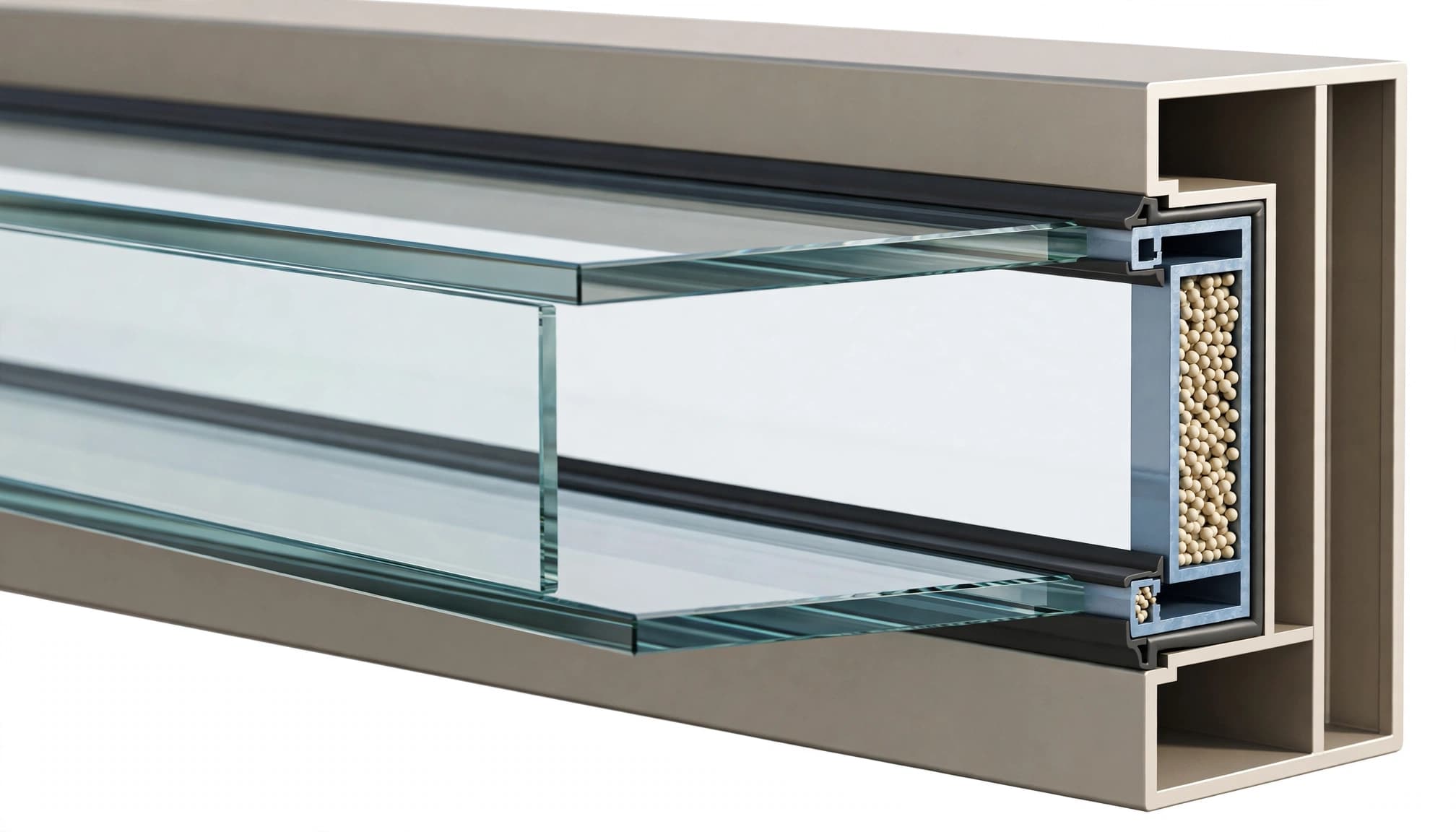
An insulated glass unit, often called an IGU, contains two or more panes separated by a sealed space. The spacer runs around the edge of the unit, keeps the panes apart, and helps support the seal that protects the space between them.
That cavity may contain air or an insulating gas, such as argon. Some IGUs also use a low-emissivity coating to manage radiant heat. The spacer, seal, glass, coatings, and frame must work together as one assembly.
The spacer sits at the perimeter
The spacer creates the correct distance between the panes. That distance affects the sealed cavity and the overall thickness of the unit. A replacement pane must match the opening, sash, glazing stops, and frame system.
Many spacers also work with desiccant material. Desiccant helps absorb small amounts of moisture inside the sealed unit during manufacturing. If the perimeter seal fails later, humid air can enter the cavity and create fogging between the panes.
The glass edge affects comfort
The center of a window often gets most of the attention, but the edge can behave differently. The spacer sits where the interior glass meets the frame, so its thermal behavior can affect the temperature near the perimeter.
A lower-conductivity spacer is commonly described as a warm-edge design. That term describes a category, not a guarantee of a particular result. The complete IGU still depends on the glass, cavity, coatings, seals, frame, installation, and indoor humidity.
How Window Spacer Materials Affect Performance
Window spacer materials generally fall into broad categories, including metal, composite, foam-based, and hybrid designs. Each category can affect heat flow, flexibility, seal compatibility, appearance, and durability.
The correct choice depends on the window manufacturer and the application. A spacer that works well in one tested window system may not be appropriate for another replacement project.
Conductivity matters at the edge
Some materials transfer heat more readily than others. A spacer with higher thermal conductivity can create a cooler area near the glass edge under certain conditions. Lower-conductivity designs may help maintain a more even interior glass temperature.
That difference does not produce the same result in every home. Room temperature, indoor humidity, exterior weather, glass coatings, frame material, and installation quality all matter. A homeowner in a sunny Fort Myers family room should compare documented whole-window performance instead of choosing a spacer based on a label alone.
Ask whether the published rating applies to the complete window. The U-factor should cover the window assembly, including the frame, sash, glass, and spacer.
Material compatibility affects durability
A spacer must work with the primary and secondary seals used in the IGU. It also needs to tolerate movement caused by temperature changes. Southwest Florida windows experience intense sunlight, air-conditioning cycles, heavy rain, and occasional storm stress.
The spacer itself is not the only durability concern. The perimeter seal, setting blocks, glazing materials, weatherstripping, frame, and drainage paths also deserve inspection. A high-quality spacer cannot correct a shifted frame or a failed seal.
A spacer upgrade only makes sense when it fits the complete window system and has documented performance for that assembly.
Condensation, Humidity, and Florida Windows
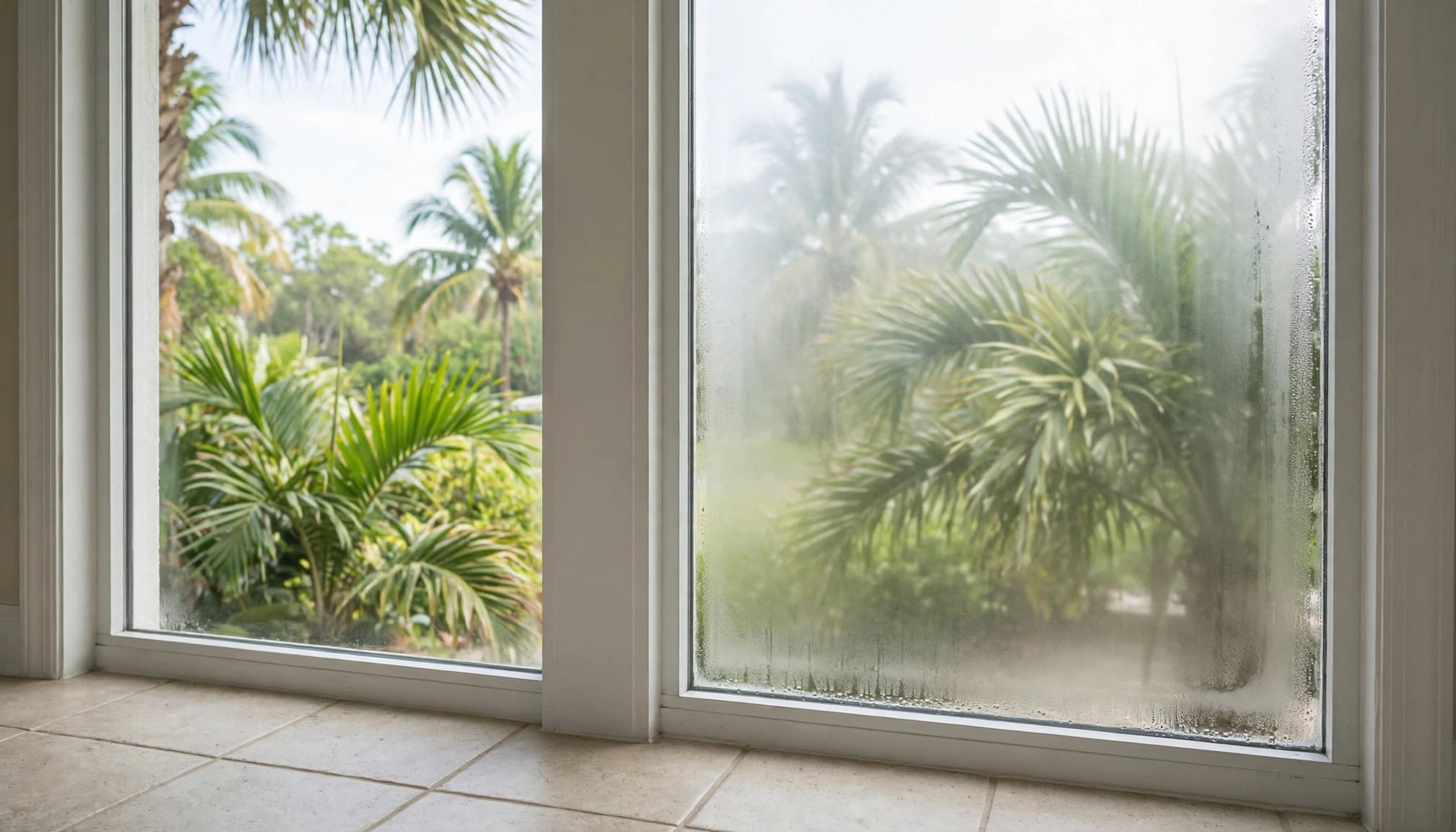
Humidity is a major reason window problems can seem more complicated in Southwest Florida. Condensation may occur on the room side, outside surface, or between the panes, and each location points to a different concern.
Homes in Bonita Springs and Estero may also face coastal exposure, salt residue, and strong afternoon sun. Those conditions can affect metal components, seals, weatherstripping, and operating hardware over time.
Fogging between panes is a seal concern
Moisture trapped between panes usually indicates that the sealed unit has lost its airtight condition. The desiccant may no longer control moisture effectively, and the cavity can develop a cloudy or fogged appearance.
Cleaning the inside and outside surfaces will not remove moisture inside the IGU. In many cases, the practical solution is replacement of the insulated glass unit, provided the existing frame and sash remain sound.
Caloosahatchee Glass & Mirror lists insulated glass replacement services for fogged or cloudy window glass and other damaged glass applications.
Room-side condensation has different causes
Condensation on the indoor surface can relate to indoor humidity, a cold glass surface, air leakage, or limited airflow near the window. A spacer can influence the edge temperature, but it does not control the home's humidity by itself.
Bathroom ventilation, air-conditioning performance, window coverings, furniture placement, and weather conditions can all affect condensation. Inspect the frame, caulk, drainage, and weather seals before assuming that changing the glass alone will solve the problem.
Match the Spacer to the Whole Window
The best insulated glass choice is not always the thickest or most expensive option. A replacement must fit the opening and meet the home's actual priorities, including heat control, visible light, storm requirements, sound, privacy, and appearance.
Compare U-factor and SHGC
U-factor describes how readily heat moves through the complete window assembly. A lower U-factor generally indicates stronger resistance to heat transfer. Solar heat gain coefficient, or SHGC, describes how much solar radiation enters through the window.
In Naples, a large west-facing window may need stronger solar control than a shaded north-facing opening. A darker tint may reduce glare, but it can also change interior colors and make the replacement look different from nearby panes. Low-E coatings can provide solar control with a less obvious appearance, although samples should still be viewed in natural light.
Do not compare glass by pane count alone. Double-pane and triple-pane designs differ in weight, depth, operating requirements, and cost. A triple-pane unit may provide added insulation, but the existing frame and hardware must support it.
Consider impact and structural requirements
Standard insulated glass is not automatically impact-rated. Impact products are tested as complete assemblies, including the glass, frame, sash, hardware, and fastening details.
This matters in Punta Gorda, coastal Naples, and other areas where storm protection may be part of the project. A decorative grid or a particular spacer does not establish an impact approval. Ask for the product approval information that applies to the exact window and opening.
A glass professional should also check the sill condition, drainage paths, fasteners, weather seals, and frame movement. If the frame is weak or out of square, new glass alone may not correct the underlying issue.
When Insulated Glass Replacement Makes Sense
Replacing only the IGU can preserve an existing frame, trim, or architectural appearance. It may be suitable when the sash remains stable and the opening can accept the new unit's thickness and weight.
This option deserves careful measurement. The replacement must match the width, height, overall thickness, glazing method, spacer design, and visible appearance of the existing window.
Fogged or damaged glass needs an assessment
Fogging, a cracked pane, seal failure, or visible damage can justify an inspection. A technician should determine whether the issue is limited to the glass or also involves the sash, frame, drainage, or installation.
A replacement unit may improve clarity and comfort, but it will not repair a deteriorated frame. In Lehigh Acres, for example, a homeowner may have a straightforward failed IGU, while an older property elsewhere may require a sash or full-window solution.
Custom sizing affects the result
Nonstandard openings, bay windows, bow windows, arches, and specialty shapes require accurate measurements. Existing panes may also show years of mineral deposits, surface wear, tint changes, or reflection differences.
A new pane may be technically correct while still looking slightly different from older glass beside it. View samples in direct sun, open shade, and normal interior light before ordering when visual matching matters. For unusual openings, custom-cut window panels can support a more precise fit.
Questions to Ask Before Choosing a Spacer
A clear conversation with the glass professional can prevent a material choice from being separated from the rest of the project. Ask these questions before approving the order:
- What spacer material and seal design does the proposed IGU use?
- Does the spacer match the original window system or the replacement manufacturer's tested design?
- What are the whole-window U-factor and SHGC ratings?
- Will the new unit fit the existing sash, stops, hardware, and frame depth?
- Is the window impact-rated, and does the approval apply to this exact assembly?
- What warranty covers the glass, spacer, seal, frame, and installation?
- Could indoor humidity, air leakage, drainage, or damaged weatherstripping contribute to condensation?
- Will the new glass differ in tint, reflectivity, coating appearance, or edge color from nearby panes?
- Should the entire sash or frame be replaced instead of only the IGU?
For homeowners in Cape Coral, local Cape Coral replacement windows can involve anything from a failed insulated unit to a larger window replacement decision. The correct recommendation starts with an inspection rather than a material label.
Key Takeaways
- The spacer keeps insulated glass panes separated and supports the sealed cavity.
- Spacer materials can affect edge temperature, seal compatibility, and long-term IGU performance.
- A warm-edge label does not replace whole-window ratings or installation details.
- Moisture between panes usually points to a failed sealed unit, while room-side condensation can involve indoor humidity or air leakage.
- Low-E coatings, tint, pane count, frame design, and SHGC also affect comfort and solar heat gain.
- Standard insulated glass is not automatically approved for hurricane protection.
- Replacement glass must match the opening, frame, sash, thickness, seals, and visual requirements.
- Coastal exposure makes corrosion resistance, drainage, weather seals, and maintenance important.
FAQ About Window Spacer Materials
Which spacer material is best for a Florida home?
There is no single best material for every Florida home. The right choice depends on the complete window design, glass coatings, frame, seal system, climate exposure, and documented test ratings.
Ask for the proposed spacer specification and whole-window performance rather than relying on a general term such as warm edge.
Can a spacer stop window condensation?
A spacer may affect the temperature near the glass edge, but it cannot eliminate all condensation. Indoor humidity, ventilation, air leakage, exterior temperature, glass coatings, and frame condition also influence moisture.
Moisture between panes usually requires inspection of the sealed unit. Condensation on the room side may require attention to the home and window assembly together.
Can I replace the glass without replacing the frame?
Sometimes. If the frame, sash, hardware, drainage, and glazing system remain sound, a professional may be able to replace the IGU alone. The new unit must fit the existing dimensions and support requirements.
If the frame has shifted, weakened, corroded, or leaked around the opening, a larger replacement may provide a better long-term result.
Conclusion
Window spacer materials matter because they sit at the edge of the insulated glass unit, where the panes, seals, frame, and indoor environment meet. Their role is important, but spacer selection should never be separated from U-factor, SHGC, glass coatings, frame condition, storm requirements, and installation quality.
For a fogged unit, custom opening, or replacement project in Fort Myers and surrounding communities, a careful assessment can show whether the right solution is an IGU replacement, custom glass fabrication, or a complete window system. Local custom glass solutions in Southwest Florida should begin with measurements and product details that fit the home, not with a promise that one material solves every performance concern.