
Window Frame Rot in Southwest Florida: Causes and Repairs
A window can look fine from inside while water is already affecting the sill, frame joints, or surrounding wall. Window frame rot often starts in places homeowners rarely inspect, especially where moisture remains trapped.
In Southwest Florida, heat, humidity, wind-driven rain, and coastal exposure make small defects harder to ignore. Homeowners in Fort Myers, Cape Coral, Bonita Springs, Estero, Naples, Lehigh Acres, and Punta Gorda should first determine whether the problem affects the glass, the frame, or the opening around the window. That distinction guides the right repair.
Why Window Frames Warp or Rot in Southwest Florida
Window frames are part of a complete assembly. The frame, glass, locks, anchors, drainage paths, and installation details must work together. A strong pane cannot correct a frame that has shifted, weakened, or allowed water into the wall.
Moisture causes wood to swell and move
Wood absorbs moisture through exposed edges, failed coatings, open joints, and damaged sealant. As the material takes on water, it can swell and push against the sash or glass. Repeated wetting and drying may leave the frame bowed, cracked, or difficult to operate.
Rot usually becomes more serious after water remains in the same area. Lower corners, sills, joints, and trim deserve close attention because they can hold moisture longer than the broad face of the frame. Bubbling paint, darkened wood, soft spots, and swollen trim can indicate more than a cosmetic defect.
Metal frames can corrode and lose strength
Aluminum and other metal frames may develop corrosion around fasteners, corners, tracks, glazing stops, and drainage openings. White powder, rust-colored marks, pitting, and rough surfaces are signs that deserve inspection.
A frame may also shift when anchors loosen or the surrounding wall changes. Larger openings, corner windows, and exposed elevations can place different demands on the installation. For that reason, replacement work should account for the whole opening, not only the visible glass.
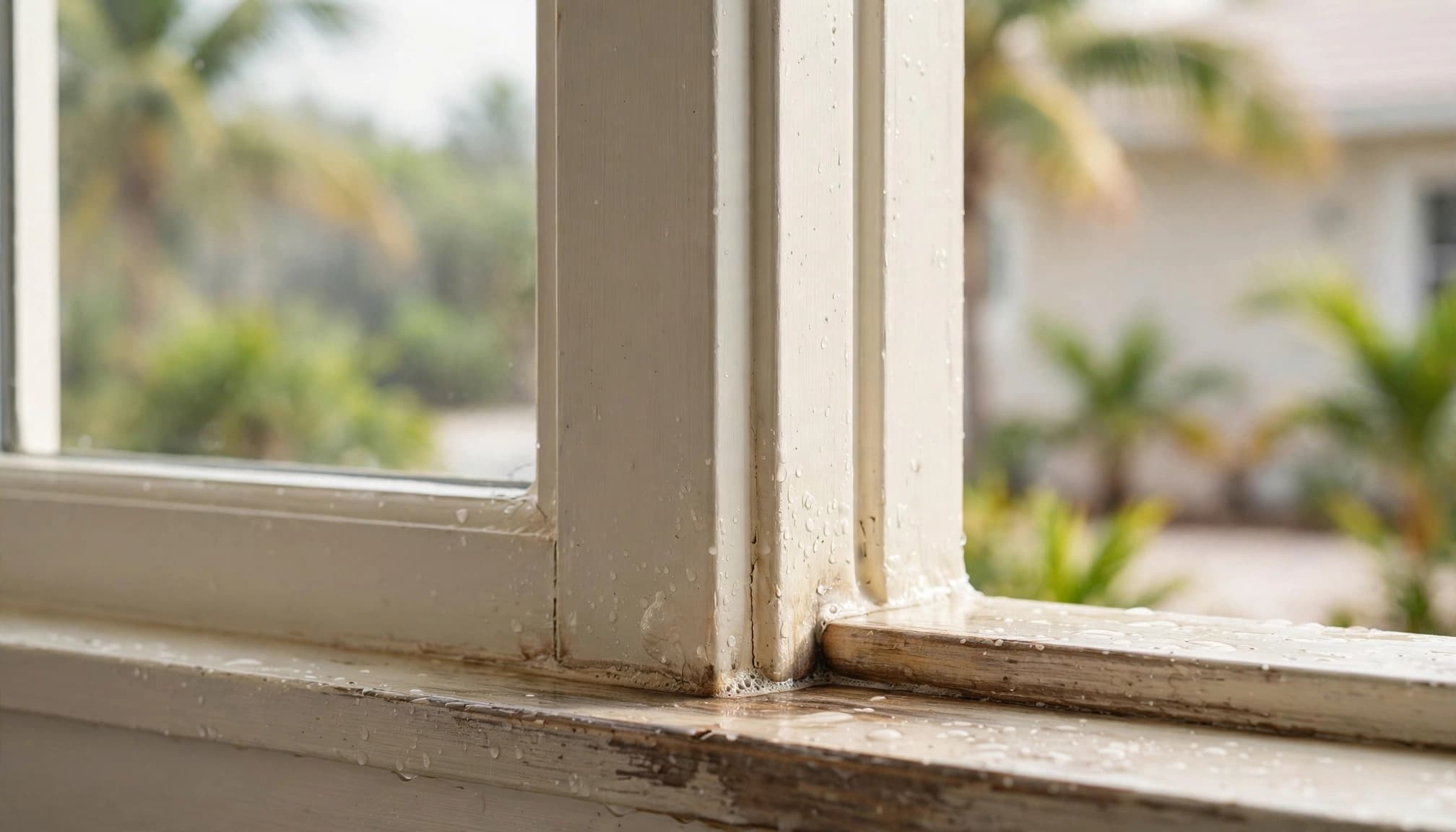
Cosmetic Warping Versus Structural Window Frame Rot
Not every change in appearance means the window requires full replacement. Paint failure, minor swelling, or a worn seal may be repairable. However, visible damage can also point to problems behind the trim.
Signs that may be mainly cosmetic
A small area of peeling paint or faded sealant may affect the finish without compromising the frame. Surface discoloration can also result from age, dirt, or previous repairs. The condition matters more when it appears with movement, dampness, or a change in operation.
Look for patterns rather than one isolated mark. A frame that remains square, stable, and dry may still support glass-only repair. The surrounding trim should also remain firm, with no soft drywall, bubbling paint, or recurring water stains.
Signs of deeper damage
A frame that bows, shifts, or no longer holds glass securely needs a broader evaluation. Persistent leaks, loose corners, crumbling wood, heavy corrosion, and damaged anchors can affect the opening itself.
Water may enter through the glass seal, frame joint, flashing, fasteners, stucco transition, or nearby wall. Replacing the pane alone will not stop water that bypasses the glass. In Bonita Springs and Estero, homeowners should pay close attention to recurring dampness around openings, particularly on exposed sides of the home.
A new pane cannot correct water that enters around the frame or through the wall.
How to Inspect a Warped or Rotting Window Frame
A careful visual inspection can help you describe the problem before scheduling service. It cannot replace a professional evaluation, especially when the window is elevated, storm-damaged, or difficult to access.
Check the sill, corners, and perimeter
Start from a safe position and inspect the exterior in good daylight. Focus on the lower sill, corner joints, fasteners, tracks, and the seam between the frame and wall.
Look for:
- Soft, swollen, or crumbling material around the sill.
- Bubbling paint, dark stains, or peeling finish.
- Rust, white corrosion, or pitting near metal parts.
- Cracked sealant, open joints, or visible gaps.
- Water marks on nearby trim, drywall, or stucco.
- Weep holes blocked by dirt or debris.
Compare the window with a nearby unit of the same type. Differences in alignment, reflection, operation, or frame condition can reveal a change that is easy to miss when viewing one window alone.
Test operation without forcing anything
Close and lock the window gently. Notice whether the sash drags, binds, fails to latch, or leaves a visible gap. On a breezy day, hold a thin tissue near the edge to check for air movement. Never use a candle or lighter to test drafts.
Do not press on cracked glass, remove trim, drill into the frame, or try to release moisture between panes. If the window is above the first floor, take photos from a safe position instead of climbing or reaching toward it.
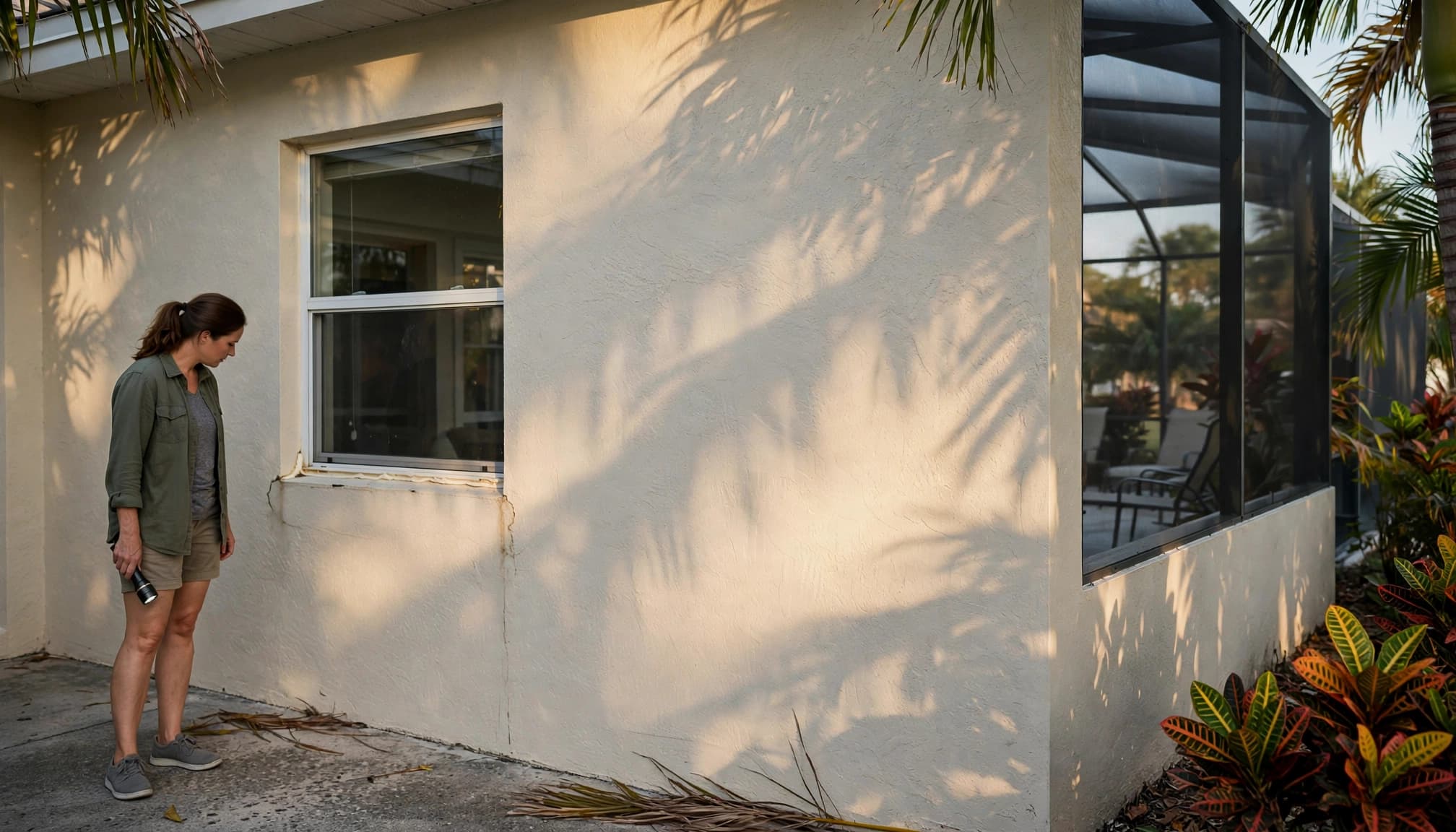
Is the Problem the Glass or the Window Frame?
A cracked pane, fogged insulated glass unit, or failed seal does not automatically mean the entire window is damaged. If the frame remains straight, stable, and watertight, glass-only replacement may preserve the existing unit.
When glass-only replacement may fit
Glass replacement can make sense when the frame is sound and the problem stays within the pane or insulated glass unit. This approach may reduce disruption and preserve custom trim, historic details, or an unusual opening.
A professional should confirm the measurements, glass type, clearances, glazing support, and perimeter seal. Older aluminum frames may not have enough space for a thicker insulated unit. A heavier pane can also create stress if the existing frame is already damaged.
Caloosahatchee Glass & Mirror provides Southwest Florida window glass replacement, along with repair and replacement for sliding doors, patio doors, storefronts, mirrors, tables, and showers.
When the complete window needs attention
Full window replacement may be more appropriate when the frame is warped, badly corroded, rotted, loose, or unable to hold new glass securely. Difficult operation, recurring leaks, damaged hardware, and weakened anchors are additional warning signs.
The opening may need attention if you see cracked stucco, damaged flashing, loose framing, or repeated repairs that have not stopped water. A complete evaluation can identify whether the problem stays with the window or extends into the wall assembly.
Retrofit or Full-Frame Replacement?
The condition of the existing opening usually determines the installation method. Two proposals may both say "replacement" while covering very different work.
Retrofit installation preserves a sound frame
A retrofit or insert installation fits a new window into the existing frame. It can limit demolition and preserve exterior finishes when the opening is dry, square, and stable.
The tradeoff is that the old frame remains in place. The visible glass area may become slightly smaller, and hidden damage can remain undiscovered if the frame is not inspected carefully. This method is better suited to a healthy opening than one with active leaks or rot.
Homeowners seeking Fort Myers replacement window services can request an evaluation of the existing frame, opening, and replacement options.
Full-frame work exposes the opening
Full-frame replacement removes more of the existing assembly. It may include repairs to framing, flashing, stucco, interior trim, or surrounding materials. Although the work can be more disruptive, it gives the installer access to conditions that a retrofit would cover.
A new unit should match the approved product, opening size, mullion details, and fastener schedule. The frame and anchoring pattern matter as much as the pane. In Punta Gorda and other exposed areas, ask how the proposed system meets the required design pressures for that particular opening.
Florida code includes an exception for some one- and two-family homes when windows and other glazed openings replaced within a 12-month period stay at or below 25% of the home's total glazed opening area. That exception does not remove product, permit, local amendment, insurance, or wind-pressure requirements. Confirm the rules before ordering or fabricating.
Maintenance That Helps Prevent More Damage
Regular care cannot correct an already weakened frame, but it can help you catch problems earlier. Maintenance also keeps drainage paths and moving parts from adding stress to the assembly.
Clean tracks and inspect seals
Rinse exterior frames and tracks to remove dirt and residue. Clear drainage openings carefully so water can leave the track. Avoid blocking weep holes with caulk or paint.
Inspect perimeter sealant for gaps, cracks, or separation. Do not cover active leaks with a new bead of caulk before identifying where the water enters. A surface patch may hide the symptom while moisture continues behind the wall.
In Naples and Bonita Springs, inspect exposed windows more often if they show corrosion, finish failure, or recurring moisture. Estero homeowners should also compare windows on different sides of the home because exposure and drainage conditions can vary.
Recheck windows after severe weather
After a major wind event, look for bent frames, loose anchors, cracked stucco, damaged seals, and new water marks. Glass can remain intact while the frame or installation shifts.
A Lehigh Acres property may have different exposure and opening conditions than a coastal home in Punta Gorda. Location alone does not determine the correct product, so the inspection should consider the opening, wall construction, size, and existing system.
For Cape Coral homeowners, Cape Coral replacement windows are one option to discuss when several parts of the window assembly have failed.
When Should You Call for Professional Service?
Request an assessment when the frame moves, the window will not lock, water returns after sealing, or damage extends into the wall. Professional help is also appropriate when the window is elevated, contains cracked glass, or forms part of a large opening.
Commercial properties need the same care. A damaged storefront frame can affect security, drainage, door alignment, and the surrounding glass system. Caloosahatchee Glass & Mirror offers commercial window glass replacement and storefront repair services for Southwest Florida businesses.
Bring photos of the frame, sill, glass, trim, and nearby wall to the appointment. Note when the issue began, whether it followed a storm, and whether the window still opens, closes, and locks normally. Ask the contractor to separate glass work, frame work, wall repairs, permitting, and finish restoration in the estimate.
Frequently Asked Questions
Can I replace window glass without replacing the frame?
Often, yes, when the frame is straight, stable, dry, and compatible with the replacement glass. A professional should check the frame before recommending glass-only work.
Does fogged glass mean the frame is rotting?
No. Fogging usually points to a failed seal within an insulated glass unit, but the frame may have separate damage. Inspect the sill, corners, perimeter, and surrounding wall before choosing a repair.
Is a warped frame always an emergency?
Not always. Minor surface movement may need timely maintenance, while a loose, leaking, or structurally weakened frame needs prompt attention. Stop using the window if it cannot lock safely or if cracked glass creates a hazard.
Should I choose impact glass because I live in Southwest Florida?
Impact-rated glass is part of a tested window system, not an isolated pane choice. The appropriate product depends on the opening, required wind pressure, approved installation details, permits, and property needs. Ask a qualified professional to evaluate the complete assembly.
Conclusion
Window frame rot usually involves more than a damaged surface. Moisture, failed seals, corrosion, shifting anchors, and hidden opening damage can affect how the entire window performs.
Start with a safe inspection of the sill, corners, tracks, frame, glass, and surrounding wall. If the frame remains square and stable, glass-only replacement may be enough. When the frame is warped, rotten, corroded, loose, or repeatedly leaking, a full-frame evaluation may protect the opening more effectively. The right repair begins with identifying where the problem actually starts.