
Florida Replacement Window Glass for Fort Myers Homes
A bright window can make a Southwest Florida room feel open, yet the same sun can reveal every flaw in aging glass. Homeowners comparing Florida replacement window glass often notice fogging, glare, color differences, or heat near a sunny opening before they know what caused it.
UV exposure and heat affect glass in different ways. UV can pass through some windows and fade nearby furnishings, while solar heat can raise temperatures and place stress on the glass, seals, frame, and surrounding materials. A careful evaluation helps separate normal appearance changes from damage that needs repair or replacement.
Key Takeaways
- Florida sunlight creates both UV exposure and heat exposure , but they are separate concerns.
- A new pane may look clearer, darker, greener, or more reflective than nearby older glass.
- Fogging between panes usually needs a closer look at the insulated glass unit and its seal.
- A crack should be addressed promptly, but sunlight alone doesn't prove what caused it.
- The best replacement depends on the opening, frame condition, orientation, room use, and desired appearance.
- A glass-only replacement may be appropriate when the frame remains sound. A full window project may make more sense when the opening has broader problems.
How Florida Sun Affects Replacement Window Glass
Daily sunlight changes what you see
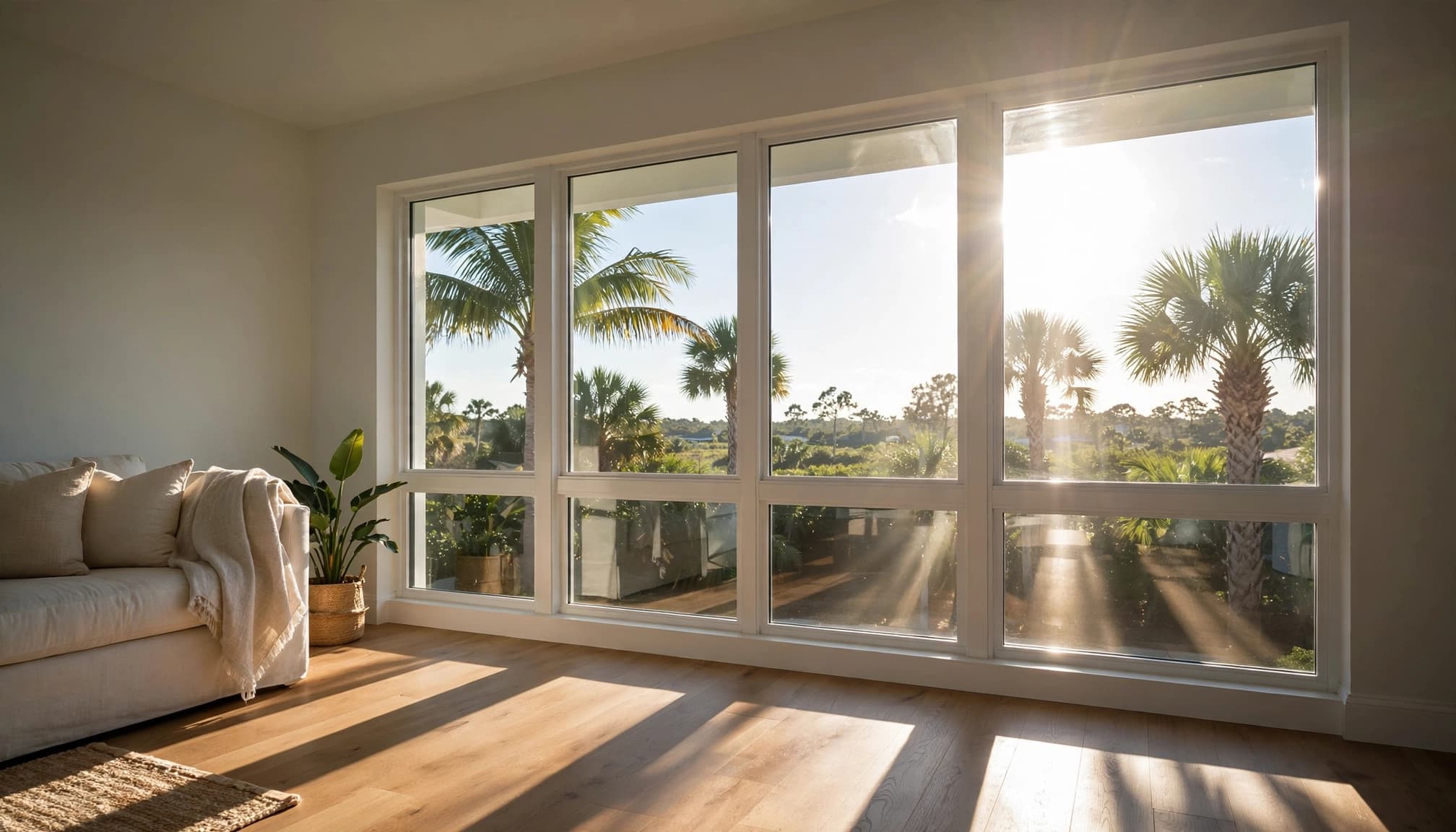
Southwest Florida homes receive strong daylight throughout the year. In Fort Myers and Cape Coral, bright sun can make a faint tint, reflection, or uneven appearance more noticeable. A replacement pane may look slightly lighter, darker, greener, or more reflective than the older glass beside it.
That difference doesn't automatically mean the new glass is defective. Glass composition, coatings, thickness, age, and viewing angle can all affect appearance. The contrast may be most obvious during morning or late-afternoon light, when the sun reflects directly toward the room.
Orientation affects glare and comfort
An east-facing window receives strong morning sun, while a west-facing opening can receive intense late-day glare. Nearby shade, roof overhangs, landscaping, and the room's layout also change what you notice.
For example, a south- or west-facing window in a Naples living room may produce sharper reflections on floors, furniture, or screens. Similar effects can occur in Fort Myers and Cape Coral homes. You can read more about strong afternoon sun and south- or west-facing windows when deciding whether glare, heat, or appearance is the main concern.
Sun exposure is one condition to consider, not a diagnosis by itself. A professional should inspect the glass and frame before linking a visible problem to solar exposure.
UV Damage and Heat Stress Are Different Problems
UV exposure can affect nearby materials
Ultraviolet radiation is part of sunlight. Over time, UV exposure may contribute to fading in flooring, upholstery, artwork, wood finishes, and other items placed near a window. The amount that enters a room depends on the glass, coatings, shading, and window design.
Some laminated or coated glass configurations can reduce UV transmission. However, performance varies by product and assembly. A replacement should be selected for the actual opening rather than by assuming every low-E, tinted, or laminated option performs the same way.
UV exposure doesn't automatically mean the glass itself will crack or fail. If you see a crack, haze, or distortion, the glass needs evaluation instead of a guess about the cause.
Heat creates a different type of stress
Solar heat can warm the pane and the air near it. Temperature differences across the glass may place stress on the pane, edge area, seal, frame, or adjacent materials. That stress can be more noticeable when part of the window is shaded while another part receives direct sun.
Heat-related discomfort may appear as a warm area near the glass, persistent glare, or a room that feels harder to cool. These signs don't prove the window has failed. Room size, insulation, shading, air conditioning, and frame condition also matter.
Low-E glass can be considered when heat gain is a concern, but the right selection depends on the opening and the desired balance between daylight, view, reflection, and indoor comfort. A darker pane isn't automatically the right answer.
UV exposure may affect furnishings, while heat affects temperature and material stress. Treating both as the same problem can lead to the wrong replacement choice.
Signs Your Window Needs Attention
Fogging between panes
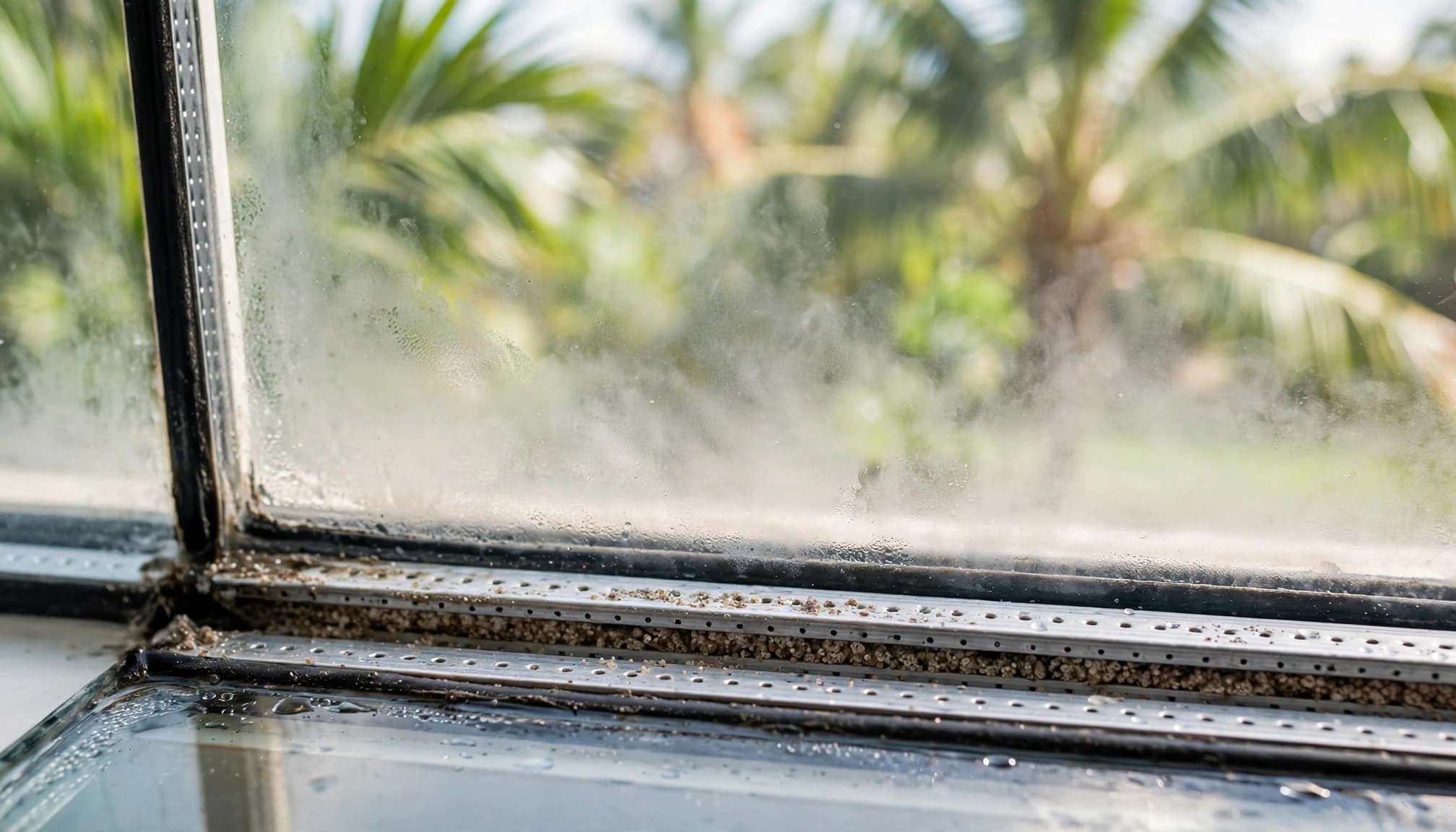
Insulated glass contains two or more panes separated by a sealed space. When moisture appears between those panes, the unit may have a seal problem. The result can look cloudy, hazy, or streaked, and normal cleaning won't remove moisture trapped inside the glass.
Exterior condensation is different. In humid Southwest Florida weather, droplets on the outside surface can occur when warm, moist air meets cooler glass. That condition doesn't automatically indicate a failed insulated unit.
Cracks, distortion, and visible damage
Cracks, chips, and broken glass create safety and weather concerns. A wavy reflection may have several possible causes, including the glass itself, a pressure change, frame movement, or an installation issue. A professional inspection can separate a normal visual characteristic from a condition that needs correction.
Watch for these signs:
- A crack that grows after temperature changes or physical impact.
- Cloudiness that remains between insulated panes.
- A sharp edge, loose fragment, or broken section.
- Reflections that look distorted across one area of the pane.
- Water intrusion, damaged seals, or deterioration around the frame.
Caloosahatchee Glass & Mirror lists Southwest Florida window glass replacement among its residential and commercial services, along with insulated glass replacement, fogged or cloudy glass, broken window repair, and sliding or patio door glass replacement.
Choosing Florida Replacement Window Glass for Each Opening
Match the glass to the window's exposure
A breakfast nook in Estero may have different needs than a west-facing family room in Bonita Springs. Start with the window's direction, the amount of shade, the room's use, and how much glare or heat you notice during the day.
Also consider the view. A tint or coating may reduce brightness, but it can change the way outdoor colors appear or make a new pane look different from nearby glass. If the window is part of a bay or bow configuration, matching several panels may require more careful measurements and visual comparison.
Older homes in Lehigh Acres may also have frames that need inspection before new insulated glass is ordered. A replacement pane must fit the existing sash and support the way the window operates.
Consider safety and the whole window system
Glass selection involves more than appearance. The size of the pane, location within the home, operating style, frame condition, and intended use all matter. A window near a door, walkway, bathroom, or large open living area may call for a different safety review than a small fixed pane.
Tempered and laminated glass also behave differently when broken. Tempered glass breaks into smaller pieces, while laminated glass holds cracked layers together. Neither label alone tells you whether a complete window system meets a specific project requirement.
For storm protection, evaluate the complete tested system, including the glass, frame, and installation. Don't assume that one glass type provides the same protection in every window.
When Repair or Replacement Makes Sense
Glass-only replacement may fit a sound frame
If the frame, sash, hardware, and surrounding opening remain in good condition, replacing the glass unit may restore the view without removing the entire window. This approach can suit a fogged insulated pane, a cracked panel, or a failed unit inside an otherwise functional window.
A bay window or arched window may also qualify for glass-only work when its custom frame remains stable. Accurate measurements are especially important for unusual shapes and multi-panel assemblies.
Broader damage may call for a larger project
Glass replacement won't correct every window problem. Water around the sill, damaged flashing, deteriorated stucco, corroded fasteners, a warped frame, or an opening that no longer operates properly may require more extensive work.
The inspection should cover the glass, sash, frame, seals, sill, and nearby wall surfaces. That review helps avoid installing a new pane into an opening that has another unresolved problem.
Caloosahatchee Glass & Mirror is a fourth-generation, family-owned glass company serving Fort Myers and communities across Lee, Collier, and Charlotte counties. The company provides licensed and insured glass repair, replacement, installation, and custom fabrication for residential and commercial properties.
FAQ About Sun Exposure and Replacement Glass
Can Florida sun cause a window to crack?
Sun exposure can create heat differences across a pane, but sunlight alone doesn't prove the cause of a crack. Impact, edge damage, frame pressure, installation conditions, and other factors may also contribute. A professional should inspect the crack pattern and surrounding frame.
Why does new glass look different from the old pane?
Age, glass makeup, coatings, thickness, tint, reflection, and viewing angle can make a replacement look different. A blue, green, darker, or more reflective appearance doesn't automatically mean the installation is wrong. Compare the pane in morning, midday, and afternoon light before deciding whether it needs review.
Does fogging always mean the whole window must be replaced?
No. Fogging between panes may involve the insulated glass unit while the frame remains usable. In that situation, glass-only replacement may be possible. If the frame, sash, sill, or surrounding opening also has damage, a larger replacement may be more appropriate.
Should homeowners replace glass before hurricane season?
A cracked or damaged pane should receive prompt attention regardless of the season. For storm-related concerns, ask how the proposed glass, frame, and installation work together. A single replacement pane shouldn't be described as a complete impact-rated system without reviewing the full assembly.
Conclusion: Get the Window Evaluated
Florida sunlight can make glare, warmth, fading, fogging, and visual differences easier to notice, but those signs don't all point to the same problem. UV exposure affects light transmission and nearby materials, while heat creates a separate concern involving temperature and stress.
Homeowners in Fort Myers, Cape Coral, Bonita Springs, Estero, Naples, Lehigh Acres, and Punta Gorda can start by documenting when the issue appears and whether it sits between the panes or on the surface. When cracks, cloudiness, distortion, or frame damage are present, request a free glass replacement estimate and have the entire opening evaluated before choosing Florida replacement window glass.