
Home Gym Wall Mirrors That Make Every Workout Better
A well-placed mirror can make a cramped workout room feel larger, brighter, and easier to use. The right home gym wall mirrors also help you check your form without turning every exercise into a guessing game.
Wall-to-wall glass can work in a spare bedroom, garage, studio, or dedicated fitness room. However, the mirror needs more than a large size. Placement, glass thickness, wall condition, edge treatment, lighting, and professional installation all affect the final result.
Key Takeaways
- Wall-to-wall mirrors can improve form checks and make a home gym feel more open.
- Use full-height mirror panels behind strength equipment, cardio machines, or movement areas.
- Leave enough clearance for safe movement and protect the mirror from direct equipment contact.
- Choose polished, seamed, or framed edges based on the room's style and traffic level.
- Professional installation helps prevent cracked glass, uneven seams, and unsafe mounting.
Home Gym Wall Mirrors: Start With the Room Layout
The best mirror design follows the way you use the room. Before measuring the wall, map out the equipment and the movements that need the most visual space.
A mirror behind a squat rack lets you check your back position and bar path. A long panel beside a yoga or stretching area gives you a better view of alignment. For a home gym with a treadmill or stationary bike, a side wall can provide visual feedback without placing glass directly behind moving equipment.
Leave a clear zone between the mirror and anything that could strike it. Dumbbells, kettlebells, weight plates, resistance bands, and adjustable benches can all damage a mirror when they hit or rub against the surface. Keep storage racks close enough for convenience, but far enough away that equipment doesn't rest against the glass.
Room proportions matter, too. A narrow gym often benefits from one continuous mirrored wall because fewer visual breaks make the space appear wider. In a larger room, two mirrored sections may work better. You can mirror the main training wall and use the second section near a mobility area.
Consider the height of the users and equipment. Full-height panels usually provide the most useful view for standing exercises, while a lower mirror may suit a workout area designed mainly for floor exercises. In rooms with tall ceilings, installing mirrors close to the ceiling can increase the sense of height, but the upper edge still needs a clean, secure finish.
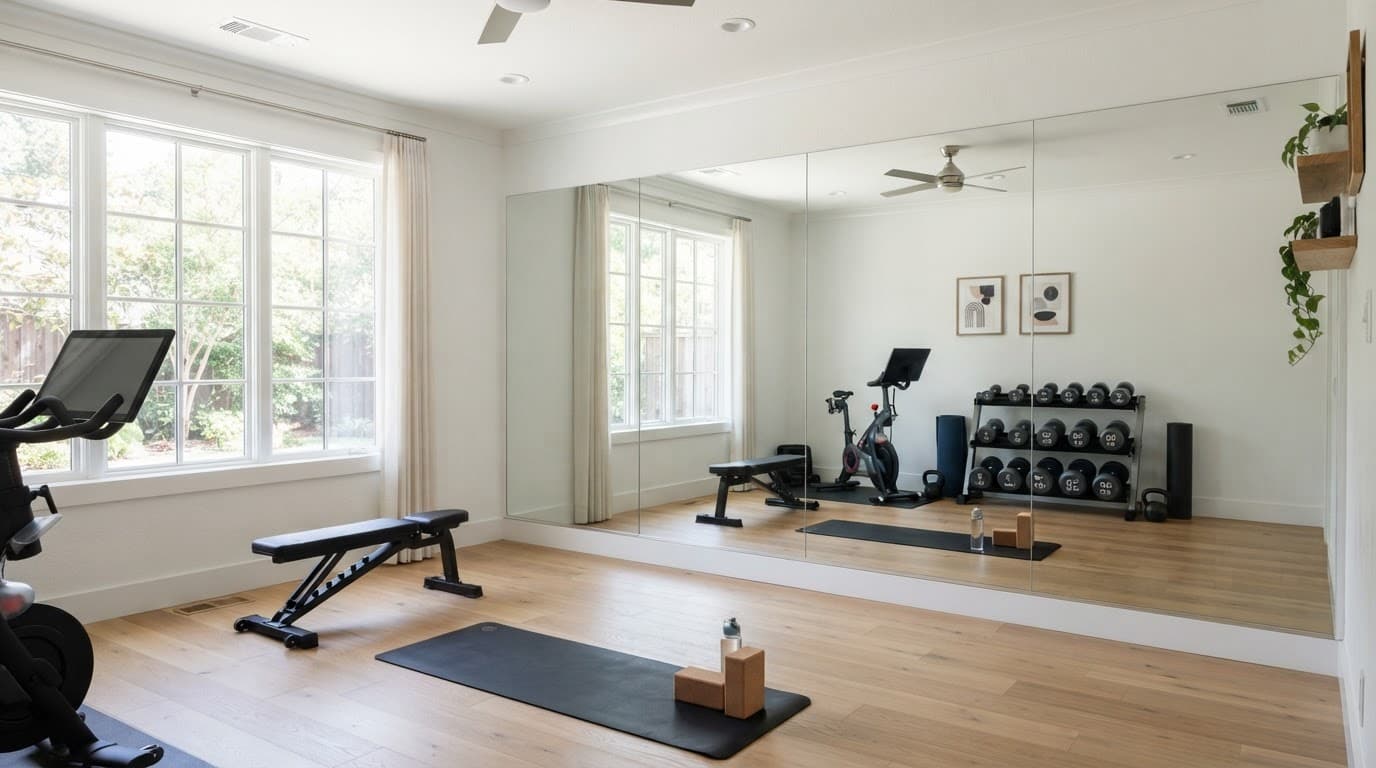
Five Wall-to-Wall Mirror Ideas for a Home Gym
A continuous mirror layout is only one option. Custom sizing allows you to match the glass to your equipment, lighting, and room design.
1. Mirror the strength-training wall
Place large mirror panels behind a squat rack, cable machine, or free-weight station. This layout gives you a direct view during squats, presses, rows, and deadlifts.
Keep the rack far enough forward to allow comfortable movement. The mirror should help you observe your form, not become a surface that plates or bars can contact.
2. Create a full-length movement studio
Use a wall-to-wall mirror beside an open floor area for yoga, Pilates, dance, stretching, or bodyweight training. A broad, uninterrupted view helps you monitor posture during lunges, planks, balance work, and mobility drills.
This design works well in a spare bedroom or converted office. It also makes the room feel less crowded when the equipment stays along the opposite wall.
3. Add a mirrored corner
Mirroring two adjoining walls creates views from different angles. This can help when you train alone and want to check alignment from the front and side.
Corner installations require accurate measurements because even a small error can create uneven seams. A glass professional can plan the meeting point and account for baseboards, outlets, trim, and wall variations.
4. Use a horizontal mirror band
A wide band of mirror across the center of the wall can suit rooms with shelving, windows, or lower ceilings. It provides a practical reflection area without covering the entire surface.
This approach also leaves room above the mirror for lighting and below it for equipment storage. Use it when a full-height installation would interfere with the room's other features.
5. Combine mirror panels with an accent wall
A mirrored section can cover the primary workout zone while an adjacent wall uses paint, wood slats, or another finish. The contrast gives the gym a finished appearance without making every wall reflective.
For a clean look, align the top edge of the mirror with a door frame, window trim, or ceiling detail. Consistent lines make the installation appear intentional.
Choose Mirror Size, Edges, and Panel Seams Carefully
Large mirrors are usually installed as multiple panels rather than one oversized sheet. The number of panels depends on wall dimensions, access to the room, handling requirements, and the design you choose.
Narrower panels may be easier to carry through hallways and doorways. Wider panels create fewer seams, which can give the room a more continuous appearance. Your installer can recommend a panel layout after checking the wall and access path.
The edge style also changes the look:
- Polished edges provide a clean finish when the sides remain visible.
- Seamed edges soften sharp edges where panels meet or end near a corner.
- Framed mirrors add structure and can complement industrial, traditional, or contemporary gyms.
- Trimmed installations conceal edges and create a built-in appearance.
Many homeowners prefer polished, frameless panels for a modern gym. However, exposed edges need careful handling during installation and cleaning. A frame or trim may provide extra protection in a busy garage gym or a room used by children.
Ask about the mirror's thickness and safety features before approving the design. The correct specification depends on the panel size, mounting method, wall surface, and local installation conditions. A professional should also inspect for bowed drywall, uneven studs, moisture, and hidden utilities before drilling.
For custom dimensions, custom glass cutting services can help match each panel to the wall, outlets, trim, and corners. Accurate fabrication reduces awkward fillers and helps keep the seams consistent.
Plan Lighting Around the Reflection
Mirrors reveal flaws in lighting as quickly as they reveal flaws in form. A single bright fixture above the mirror can create glare, shadows, and distracting reflections.
Use even, diffused lighting across the workout area. Ceiling fixtures can provide general illumination, while wall-mounted or side lighting can improve visibility during form checks. Keep exposed bulbs and strong spotlights out of the direct reflection whenever possible.
Windows also deserve attention. A mirror facing a bright window may reflect daylight into the room or create a harsh contrast between the glass and the rest of the gym. In Fort Myers, Cape Coral, and Naples, strong afternoon sun can make this more noticeable, especially in rooms with south- or west-facing windows.
Curtains, shades, or adjustable blinds can help control glare. You can also position the mirror on a wall that receives indirect light instead of direct sun.
Reflective surfaces may make a small gym look larger, but they can also reveal clutter. Plan storage before installation so loose bands, towels, and weights don't dominate the reflection. Closed cabinets and wall-mounted racks keep the mirrored view more orderly.
A mirror should support the room's function. If it reflects a bright television, bare bulb, or messy equipment corner, the benefit of the installation drops. Walk through the room at different times of day before choosing the final wall.
Why Professional Mirror Installation Matters
A large gym mirror is heavy, fragile, and difficult to align without the right equipment. Professional installation helps protect both the glass and the people using the room.
The installer needs to locate sound attachment points and choose a mounting method that suits the wall. Drywall, concrete block, plywood, and finished paneling each require different preparation. Adhesive alone may not be suitable for every large-format installation, particularly where the wall has movement, moisture, or an uneven surface.
The wall also needs to be checked for outlets, pipes, wiring, baseboards, and trim. Cutting around these features requires precise measurements. A small mistake can leave visible gaps or force an unattractive change in the panel layout.
Safe installation includes more than hanging the mirror. The glass must sit securely, remain properly supported, and avoid pressure points that could lead to cracks. The installer should also protect nearby flooring and equipment during handling.
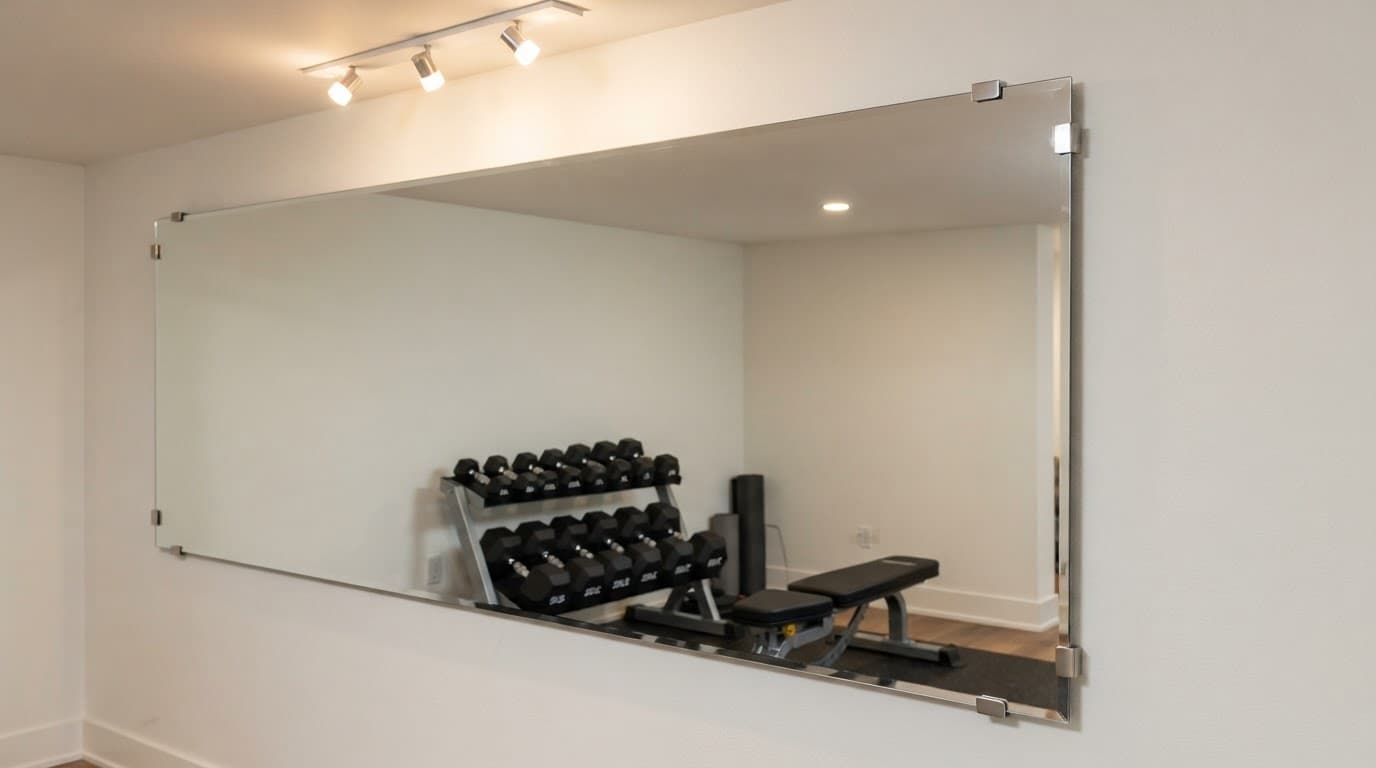
A mirror that looks level at the center can still show uneven seams at the corners. Accurate wall measurements matter before fabrication begins.
For homeowners in Bonita Springs, Estero, Lehigh Acres, and Punta Gorda, local installation can make scheduling and site assessment easier. A nearby glass company can review the room, discuss panel sizes, and identify access problems before the mirror reaches your home.
You can also review completed mirror installations to see how different panel layouts, edge styles, and room conditions affect the finished result.
Cleaning and Protecting Gym Mirrors
Home gyms collect more dust, sweat, and airborne moisture than many other rooms. Regular cleaning keeps the mirror clear, but the wrong technique can damage edges or leave streaks.
Use a soft microfiber cloth and a cleaner made for glass. Spray the cloth rather than soaking the mirror, especially near the bottom edge and panel seams. Excess liquid can reach the backing or wall if it runs behind the glass.
Avoid abrasive pads, rough towels, and harsh scrapers. They can scratch the surface or damage polished edges. Clean in broad sections, then inspect the glass from an angle to catch remaining streaks.
Keep equipment from touching the wall. Add floor mats beneath free weights and place benches far enough from the mirror to prevent accidental contact. If you move a rack, bench, or storage unit, check the clearance before pushing it back into position.
Humidity deserves attention in garage gyms and rooms near pools. Good ventilation helps reduce condensation around mirror edges and adjacent walls. If you notice darkening, lifting, cracks, or moisture near a seam, stop using the area close to the damage and request an inspection.
Make the Mirror Fit the Rest of the Home
A home gym mirror doesn't need to look commercial. The glass can match the design of the rest of your home through its proportions, edge treatment, trim, and surrounding finishes.
A frameless installation pairs well with minimalist interiors. Black or metal trim can work with a garage gym that has steel equipment and open shelving. Warm wall colors and wood accents can soften the hard surfaces in a dedicated studio.
Use the mirror to reinforce the room's layout rather than cover every available wall. One carefully planned mirrored surface usually provides more value than several small panels placed without a clear purpose.
Before ordering, measure the wall width, ceiling height, baseboard height, door swing, equipment depth, and access route. Take photos of outlets, vents, windows, and corners. These details help your glass contractor prepare an accurate estimate.
Ask whether the quote includes fabrication, edge finishing, delivery, mounting hardware, installation, cleanup, and removal of existing materials. Clear pricing makes it easier to compare options and avoid surprises.
Conclusion
The best wall-to-wall mirror design gives you a clear view of your workouts while fitting the room's layout and lighting. Start with equipment clearance, choose panel sizes that suit the wall, and select edge details that match the gym's style.
Professional installation is especially important for large panels, corner layouts, uneven walls, and rooms with active equipment. With careful planning, home gym wall mirrors can make training safer, improve form checks, and give a small workout space a more open feel.