
Why Black Bathroom Mirror Edges Appear in Florida Homes
When black bathroom mirror edges start spreading across a vanity mirror, the cause usually sits behind the glass, not on its surface. In most Florida homes, the dark border points to mirror desilvering or deterioration of the protective backing.
High humidity, repeated steam, water splashes, harsh cleaners, and poor ventilation can damage the mirror's reflective layers. Mold is possible, but it usually involves the wall or adhesive behind the mirror. Understanding the difference helps you choose the right repair instead of scrubbing a problem that cannot be cleaned away.
Key Takeaways
- Black spots along a mirror's perimeter usually indicate desilvering or backing deterioration.
- Florida's humidity and bathroom steam can enter through exposed or damaged mirror edges.
- Surface mold wipes away, while desilvering remains inside the mirror and continues to spread.
- Exhaust fans should run during showers and for 20 to 30 minutes afterward.
- A mirror with widespread edge damage usually needs replacement rather than ordinary cleaning.
What Causes Black Bathroom Mirror Edges?
A bathroom mirror has more than one visible surface. The front contains the glass, while the back holds the reflective silver layer and protective coatings. When moisture reaches those rear layers, the silver can oxidize, separate, or turn dark.
This process is called desilvering . It often begins at the outside edge because that area has less protection. Water can reach the backing through a raw cut edge, a damaged coating, a loose mounting point, or a gap between the mirror and the wall.
The damage may look like small black dots at first. Over time, those spots can join into a dark border, cloudy patches, or irregular streaks. Cleaning the front of the mirror won't remove them because the deterioration is behind the glass.
Florida bathrooms create conditions that speed up this process. Warm air holds moisture, and showers release a steady supply of steam. If that moisture stays trapped around the mirror, the backing has more opportunities to break down. Coastal homes may also experience extra corrosion pressure from salty air, especially when bathroom ventilation is weak.
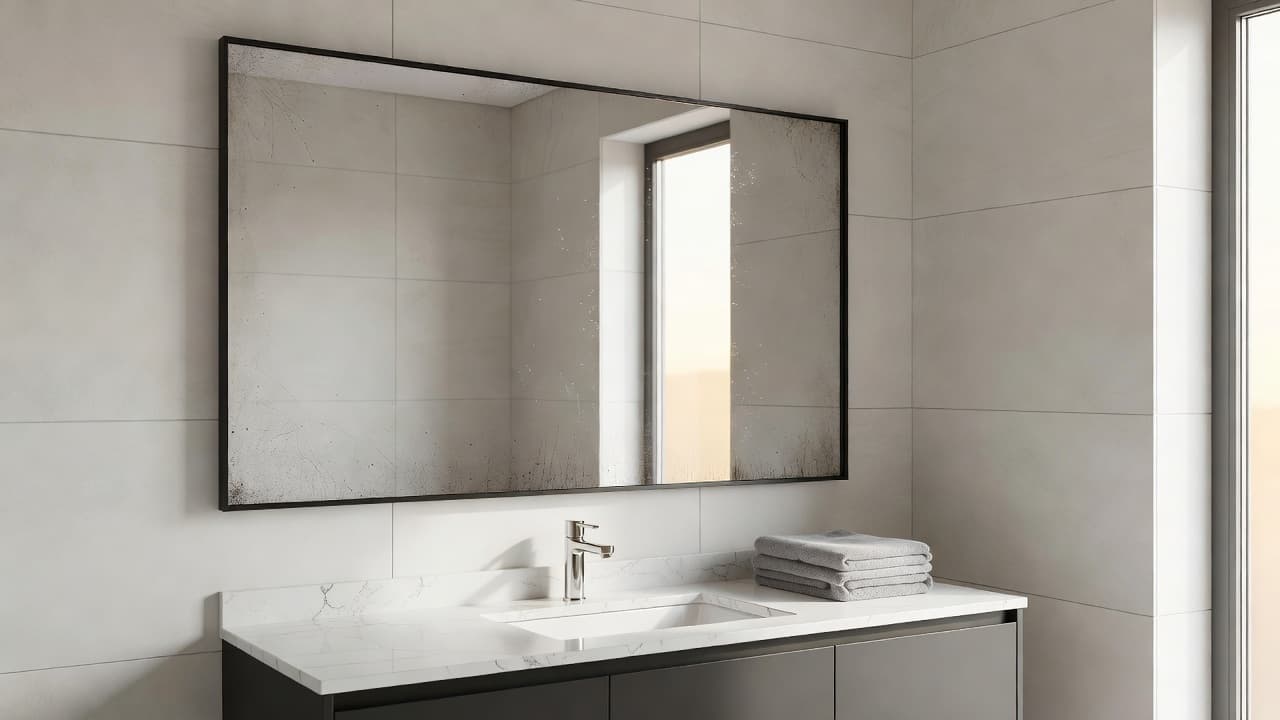
A mirror can also develop dark edges after years of cleaning with products sprayed directly onto the glass. Liquid runs downward and collects along the lower edge. If the mirror sits against a damp wall or rests on a wet backsplash, that repeated exposure can damage the backing.
Age matters, too. Older mirrors may have worn protective coatings, small edge chips, or mounting systems that allow condensation to remain trapped behind the glass. Even a well-made mirror eventually loses resistance to moisture when its edges stay wet.
How Florida Humidity Damages Bathroom Mirrors
Humidity alone doesn't always ruin a mirror. The bigger problem is repeated moisture that never has time to dry. A steamy shower raises the bathroom's moisture level, and a poorly vented room may stay damp long after the water stops running.
Bathrooms in Fort Myers, Cape Coral, Naples, and nearby communities often need more ventilation than homes in drier climates. Air conditioning removes some indoor moisture, but it doesn't replace a properly vented bathroom exhaust fan. The fan must move humid air outside, not into an attic or another enclosed space.
Run the exhaust fan while showering and keep it on for 20 to 30 minutes after the shower ends . Keep the bathroom door open afterward when privacy and household layout allow it. A small hygrometer can help you monitor indoor relative humidity, with a general home target of about 30% to 50% when practical.
Other habits can protect the mirror:
- Wipe water from the bottom edge and nearby backsplash after use.
- Spray glass cleaner onto a cloth instead of directly onto the mirror.
- Keep the exhaust fan grille clean so airflow doesn't weaken.
- Use the bathroom fan even during shorter showers.
- Repair ceiling leaks, plumbing leaks, and wet drywall quickly.
- Avoid sealing a mirror tightly against a damp wall.
A dehumidifier can help when the home remains humid despite air conditioning. It won't reverse existing desilvering, but it can reduce the moisture that causes additional damage. Check that the bathroom has adequate air movement, too. A fan cannot exhaust properly if the room has no way to draw in replacement air.
If the mirror stays fogged long after the shower, the room has a moisture-control problem that can affect more than the glass.
Desilvering or Mold? How to Tell the Difference
Black bathroom mirror edges can look like mold, especially when the damage appears in uneven patches. The location and texture provide useful clues.
Desilvering stays inside the mirror. It often appears as black, gray, bronze, or cloudy areas around the perimeter. The glass surface remains smooth when you touch it. Wiping the front with glass cleaner doesn't change the marks.
Surface mold sits on a surface. Mold may appear on the wall, caulk, frame, or adhesive behind the mirror. It can have a fuzzy, powdery, or slimy appearance. Musty odors and nearby water damage make a moisture or mold problem more likely.
A simple visual check can help, but don't pry off a large mirror to inspect the wall. Mirrors may be glued, clipped, or supported by more than one mounting method. Removing one without the right equipment can cause glass breakage and expose you to sharp fragments.
Look for signs around the mirror rather than relying on the black marks alone. The wall deserves inspection if you notice:
- Musty smells near the vanity
- Bubbling paint or swollen drywall
- Soft areas around the mirror
- Water stains on the wall or ceiling
- Loose tiles or failing caulk
- Condensation that seems trapped behind the glass
- Discoloration extending beyond the mirror's edge
Mold behind a mirror can develop when plumbing leaks, exterior wall moisture, or trapped condensation keeps the wall damp. In that situation, replacing the mirror without correcting the moisture source only hides the problem for a short time.
When the dark areas are limited to the mirror's silvered perimeter and the wall feels dry, desilvering is the more likely explanation. A glass professional can inspect the installation and tell you whether the mirror, the mounting, or the wall needs attention.
Can Black Mirror Edges Be Repaired?
Cleaning won't repair desilvering because the reflective coating has already deteriorated. Some mirror restoration methods exist, but they require removing the damaged backing and applying new reflective layers. For an installed bathroom mirror, the process may cost more and provide less predictable results than replacement.
Small edge damage may remain cosmetic if the mirror is stable and the backing isn't exposed to ongoing moisture. However, black areas usually spread when water continues to reach the damaged edge. Covering the marks with paint or a frame can hide them, but it doesn't stop the underlying deterioration.
Replacement makes more sense when the dark border is wide, the mirror is cloudy, or the damage affects your view. A replacement can match the existing wall, vanity, outlets, lighting, and trim. Custom cutting is especially useful when the mirror fills a wall section or has openings for electrical fixtures.
For help with a damaged or aging bathroom mirror, mirror replacement and glass repair can address both the glass and the installation. A professional can measure the opening, identify the mounting method, and recommend a safer replacement plan.
Before replacing the mirror, check the surrounding area for moisture. A new mirror should not go over wet drywall, a leaking supply line, or a failed backsplash seal. Correcting the source first protects the replacement and reduces the chance of seeing the same black edge return.
If you're updating the entire bathroom, mirror replacement can also coordinate with a new enclosure or other glass work. A custom bathroom shower enclosure may improve the room's appearance, but it still needs proper ventilation so steam doesn't remain trapped after each shower.
How to Prevent Mirror Desilvering After Replacement
A replacement mirror lasts longer when its edges stay dry and the room clears moisture quickly. Start with the exhaust fan. Make sure it vents outdoors and moves enough air for the bathroom's size. If the fan is noisy but weak, clean the grille and have the duct checked.
Leave space for air circulation when the mounting system allows it. Avoid pressing the mirror against a wet wall or allowing water to collect between the bottom edge and the vanity backsplash. The installer should also protect cut edges and use materials suited to bathroom conditions.
During cleaning, use a soft microfiber cloth and a mild glass cleaner. Keep liquid away from the mirror's edges, especially along the bottom. Never flood the glass or allow cleaner to run behind the mirror.
Watch for early warning signs after installation. A new foggy patch, loose corner, dark dot, or damp wall deserves attention. Early moisture repairs cost less than replacing a mirror after the backing has failed across its entire perimeter.
Florida homeowners should also inspect bathroom caulk and grout. Cracked joints around a backsplash, tub, or shower can direct water toward the wall behind the vanity. The mirror may be the first visible sign of a leak that began somewhere nearby.
Conclusion
Black bathroom mirror edges usually come from desilvering , not mold growing on the glass. Moisture enters through vulnerable edges or damaged backing, then breaks down the reflective layer from behind.
Keep Florida bathrooms well ventilated, run the fan after showers, and prevent water from pooling near the mirror. If the dark border continues to spread, replacement is usually more dependable than cleaning or covering the damage. Before installing new glass, make sure the wall and surrounding plumbing are dry so the next mirror has a better chance to stay clear.