
Backlit vs Front-Lit Vanity Mirrors for Florida Bathrooms
Florida bathrooms deal with heat, humidity, salt air, and frequent condensation. Those conditions can affect how a vanity mirror looks, performs, and holds up over time. Choosing between backlit vs front-lit vanity mirrors is about more than appearance. The right option should provide useful face lighting, handle moisture, and fit the way you use the room.
Backlit mirrors create a soft glow behind the glass, while front-lit models direct light toward your face. Both can work well in a Southwest Florida home, but they solve different problems. Your bathroom size, grooming routine, electrical layout, and coastal design preferences should guide the decision.
Key Takeaways
- Backlit mirrors create ambient light and a clean, floating appearance.
- Front-lit vanity mirrors usually provide stronger face lighting for grooming.
- Florida humidity makes moisture-resistant construction, sealed components, and anti-fog features important.
- A licensed electrician should handle hardwiring, junction boxes, and required bathroom circuit protection.
- Custom sizing helps the mirror fit double vanities, wall outlets, sconces, and shower enclosures.
Backlit vs front-lit vanity mirrors: how the light works
A backlit vanity mirror has LED lighting mounted behind the glass. The light shines onto the wall and creates a halo around the mirror's edges. This design gives the bathroom a calm, modern glow without making the mirror look bulky.
Backlighting works especially well in bathrooms with clean lines, pale tile, floating cabinets, or frameless glass. The light can make a narrow room feel more open because the mirror appears to sit slightly away from the wall. It also adds a decorative layer of light for nighttime use.
A front-lit mirror places LEDs around the front edge or within the face of the mirror. The light points into the room, so it provides more direct illumination for shaving, applying makeup, styling hair, or putting in contact lenses. Some models combine front lighting with a small rear halo.
The difference becomes clear when the bathroom's ceiling light is switched off. A backlit mirror may make the room feel inviting, but it may not illuminate your face evenly. A front-lit mirror usually gives you more usable light, although the result depends on the LED layout and mirror size.
Color temperature also affects the experience. Warm light around 2700K to 3000K can suit a relaxed coastal bathroom. Neutral light around 3500K to 4000K often gives a clearer view for grooming. If accurate color matters, look for a high color rendering index, or CRI, along with dimming controls.
A rear glow improves the room's atmosphere, but face-level lighting still matters when the mirror is your main grooming light.
Why Florida humidity changes the mirror decision
Southwest Florida bathrooms face moisture levels that can stress electrical parts, metal frames, adhesives, and wall surfaces. A mirror that performs well in a dry climate may need more careful selection in Fort Myers, Cape Coral, or Naples.
Look for the manufacturer's stated moisture-resistant rating and installation requirements. An IP rating can describe protection against dust and water, but the number alone doesn't tell you whether a specific mirror belongs in your bathroom. The product instructions should identify whether it is suitable for a damp location and how it must be installed.
Condensation is another concern. Warm, humid air can collect on a cool mirror after a shower. An anti-fog heating pad behind the glass can keep the reflective surface usable, but it adds another electrical component. Confirm that the feature has proper controls and that the mirror's wiring remains protected.
Salt air can affect exposed metal in coastal homes near Bonita Springs, Marco Island, and Punta Gorda. Choose sealed LED components and hardware designed for humid environments. Stainless steel, properly finished aluminum, and quality powder-coated surfaces typically offer better protection than unsealed metal, but the manufacturer's specifications still matter.
Ventilation helps every bathroom mirror last longer. Run the exhaust fan during a shower and for a period afterward. Keep water from pooling along the lower edge of the mirror, especially where the glass meets a backsplash or countertop.
How the two mirror styles compare
The best choice depends on whether you value atmosphere, grooming light, or a balance of both. This comparison gives you a quick starting point.
| Feature | Backlit mirror | Front-lit mirror |
|---|---|---|
| Main light direction | Toward the wall | Toward the user |
| Appearance | Soft rear halo, floating effect | Bright edge or face lighting |
| Grooming visibility | Moderate, depending on design | Usually stronger |
| Room ambiance | Calm and decorative | Brighter and more functional |
| Best fit | Modern, spa-inspired bathrooms | Daily grooming and makeup areas |
| Wall impact | Highlights tile and wall texture | Draws attention to the mirror itself |
| Common concern | May need additional face lighting | Can look brighter or more prominent |
Backlit models are a strong match for homeowners who want a quiet, spa-like bathroom. They work well above a single sink in a guest bathroom or in a primary suite with separate sconces.
Front-lit models are often better when one fixture must handle the room's main mirror lighting. They can reduce shadows caused by a ceiling fixture, especially when the LEDs run along the sides rather than only across the top.
Neither style automatically replaces all other bathroom lighting. A layered plan may include ceiling lighting, a shower light, and sconces or mirror lighting near the face. If the mirror sits above a double vanity, two smaller mirrors can provide more balanced light than one oversized unit.
Choosing the right mirror for your Florida bathroom
Start with the vanity, not the mirror catalog. Measure the available wall width, the distance between the countertop and ceiling, and the location of outlets, sconces, medicine cabinets, and plumbing access.
A mirror should fit the room's proportions. A wide horizontal shape can suit a double vanity, while a tall rectangle gives one sink a stronger vertical focus. Round and capsule-shaped mirrors soften bathrooms with hard tile lines. Custom glass fabrication allows you to match the mirror to an unusual wall, a sloped ceiling, or a vanity that isn't a standard size.
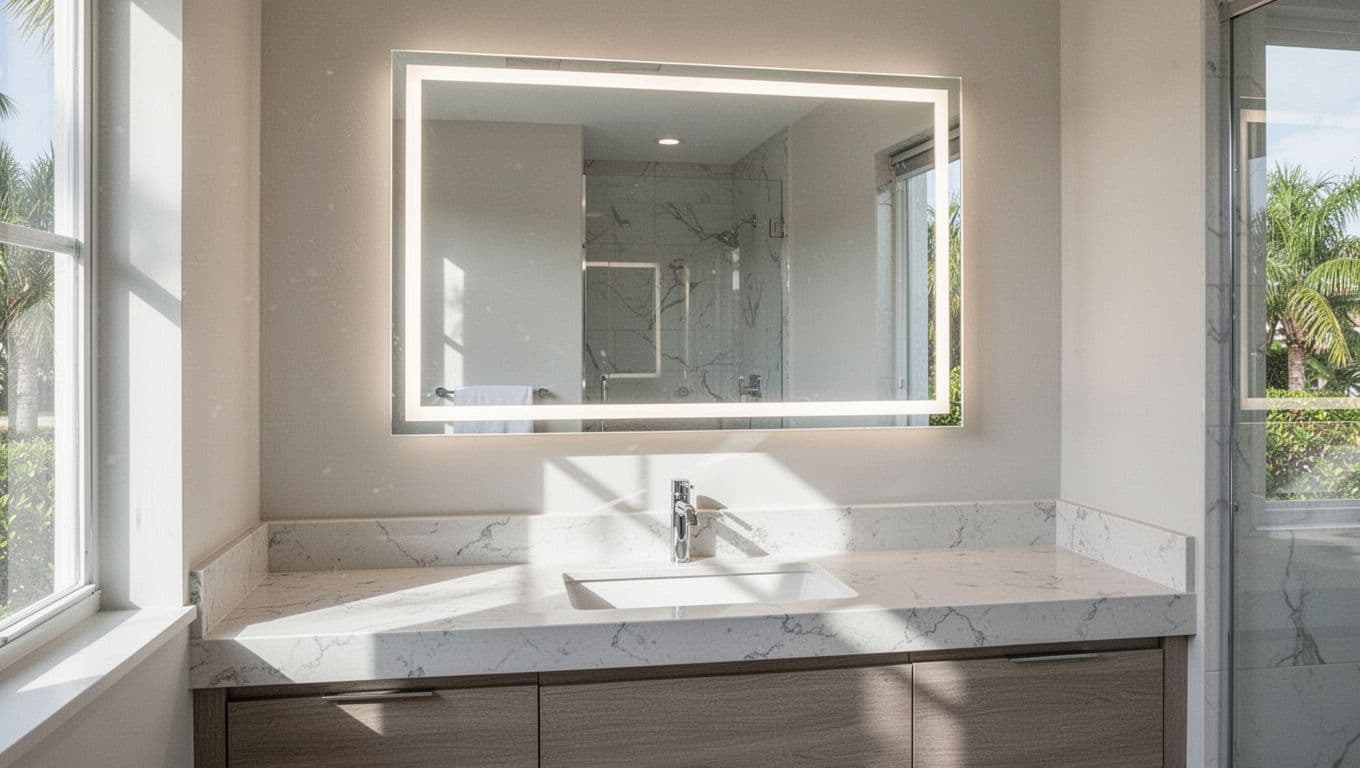
A coastal bathroom doesn't require a nautical theme. Frameless glass, light wood, white quartz, brushed metal, and soft gray tile create a clean Florida look without adding visual clutter. Matte black hardware can provide contrast, while brushed nickel and chrome pair easily with bright, reflective surfaces.
Consider the mirror's controls before installation. A wall switch keeps the front of the mirror clean. Touch controls offer convenience, but they may be less practical when your hands are wet. Dimming is useful when you want bright light for grooming and a lower setting at night.
For homeowners in Estero or Naples, a custom mirror can coordinate with a larger bathroom renovation. If the project also includes the shower, custom glass shower enclosures can match the room's clean lines and hardware finish.
Plan electrical installation before the mirror arrives
An illuminated vanity mirror needs more planning than a standard piece of wall glass. Decide whether the unit will be hardwired into a junction box or connected through an approved cord and plug. The choice depends on the product, wall access, local code, and the bathroom layout.
Have a licensed electrician review the location before the wall is closed. The electrician can confirm the junction box position, circuit requirements, switch location, and any required GFCI protection. Bathroom electrical work must also account for the fixture's distance from sinks, showers, and other water sources.
Follow the mirror manufacturer's instructions for mounting and wiring. Some products need a dedicated connection, while others use a low-voltage transformer that must remain accessible. Never bury a transformer behind finished wall material unless the installation instructions and local code allow it.
The wall itself matters, too. Heavy custom mirrors need secure attachment to studs or suitable anchors. A large illuminated mirror may require more than basic drywall hardware. The installer should check that the mounting surface is flat and that the mirror won't press against a backsplash, faucet, or cabinet door.
Measure twice before ordering. A small error can place the mirror over an outlet, leave no room for a switch, or force the lighted edge into a corner where it cannot be serviced.
Care, repairs, and custom glass details
Use a soft microfiber cloth and a cleaner made for mirrors. Spray the cloth instead of spraying directly onto the glass. Liquid can run behind the edge and affect the backing, adhesive, or electrical components.
Avoid abrasive pads, ammonia-heavy products, and excessive water around the lower seam. In a humid home, wipe away condensation after showers when practical, and keep the exhaust fan working properly.
Watch for dark spots, loose edges, flickering LEDs, or moisture trapped inside the mirror. These signs can point to damage in the reflective backing, seal, wiring, or mounting system. If the glass cracks, glass repair and replacement services can address the problem safely instead of leaving a damaged mirror in a damp room.
Custom fabrication also helps when the existing mirror has an unusual shape or when replacement glass must fit an older vanity. A precise measurement protects the tile, outlets, and surrounding finishes from unnecessary changes.
Conclusion
Backlit vs front-lit vanity mirrors come down to the type of light your bathroom needs. Backlighting adds a soft coastal feel and highlights the wall, while front lighting usually gives better visibility for daily grooming.
Florida homeowners should also look beyond style. Check moisture ratings, anti-fog features, sealed components, mounting requirements, and electrical plans before ordering. With the right size and installation, an illuminated mirror can handle the practical demands of a humid Southwest Florida bathroom while keeping the room bright, clean, and comfortable.