
Bathroom Mirror Thickness: Choosing the Right Glass
A mirror can look perfect in the showroom and still disappoint after installation if the glass is too thin for the space. The right bathroom mirror thickness affects durability, handling, edge quality, and how well a large mirror stays flat against the wall.
For most homeowners in Fort Myers and across Southwest Florida, 1/4-inch glass is the preferred choice for a premium, durable bathroom mirror . Thinner glass can work in smaller or framed applications, but large, frameless, and wall-to-wall mirrors need more support. The best choice depends on the mirror's size, design, wall, and installation method.
How thick should a bathroom mirror be?
A 1/4-inch mirror, also called 6 mm mirror glass, is the standard premium option for custom bathroom installations. Its added stiffness helps the glass resist flexing during transport, handling, and mounting. It also provides a solid, substantial feel that suits frameless vanities and oversized designs.
Some mirrors are available in 1/8-inch glass, or approximately 3 mm. This lighter option may be appropriate for a small decorative mirror inside a sturdy frame. It can also work when weight is a concern and the mirror has continuous support. However, thin glass is more likely to flex during installation and may show more distortion when used across a broad surface.
A 3/16-inch mirror, roughly 5 mm, can provide a middle option. Availability depends on the glass fabricator and the required size. For a custom bathroom mirror, ask the installer which thicknesses are available for your dimensions instead of choosing by thickness alone.
| Mirror thickness | Suitable applications | Main consideration |
|---|---|---|
| 1/8 inch | Small framed or decorative mirrors | Lighter, but more flexible |
| 3/16 inch | Medium-size mirrors where available | Middle weight and stiffness |
| 1/4 inch | Large, frameless, and custom vanity mirrors | Heavier, stronger, and more stable |
For most permanent bathroom installations, 1/4-inch glass gives the best balance of appearance, strength, and long-term performance.
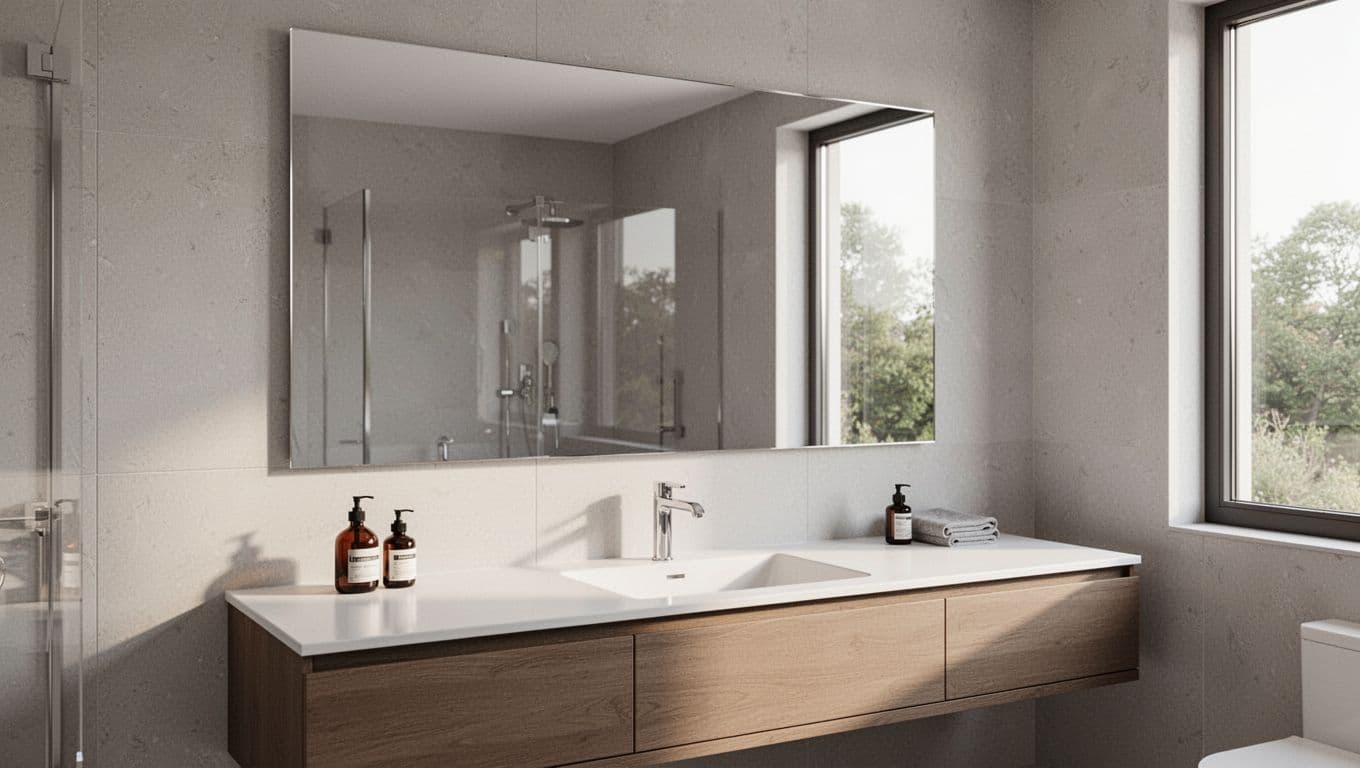
How bathroom mirror thickness changes by size and style
Mirror size often matters more than the room itself. A small 24-inch-wide mirror has different support needs than a six-foot panel spanning an entire vanity.
Small framed mirrors can sometimes use thinner glass because the frame supports the edges. The frame also covers the perimeter, which protects the mirror from direct contact with nearby objects. Even then, the glass should fit tightly and sit evenly inside the frame.
A standard vanity mirror with a polished edge usually benefits from 1/4-inch glass. This choice works well above a single sink or double vanity, especially when the mirror has no frame to protect its edges. The thicker glass feels more finished and is less prone to movement during installation.
Large frameless mirrors need careful planning. A wide sheet can flex under its own weight, and small wall irregularities may create visible pressure points. Thicker glass won't correct a bowed wall, but it gives the installer a more stable panel to position and secure.
Wall-to-wall mirrors require even more attention. The installer must account for corners, outlets, sconces, faucets, backsplash height, and access panels. If the design uses more than one piece, seams should be planned before fabrication so they fall in sensible locations.
Why 1/4-inch glass is preferred in Fort Myers
Bathrooms in Southwest Florida deal with frequent moisture, warm temperatures, and strong air conditioning cycles. These conditions don't make thin glass fail automatically, but they do make sound materials and proper installation important.
The main benefit of 1/4-inch glass is rigidity. It holds its shape better during handling and offers a more secure feel once mounted. The thicker edge also stands up better to normal cleaning and accidental contact than a narrow, delicate edge.
Weight is the tradeoff. A 1/4-inch mirror weighs about 3.3 pounds per square foot. A 4-by-6-foot mirror covers 24 square feet, so the glass alone weighs close to 80 pounds. That weight requires the right adhesive, a clean mounting surface, and suitable support.
Mirror thickness does not protect the reflective backing from moisture. The back of the mirror should stay dry, and installers should use products rated for mirror glass. Poor adhesive, water trapped behind the panel, or an unprepared wall can damage the backing regardless of whether the mirror is 1/8-inch or 1/4-inch.
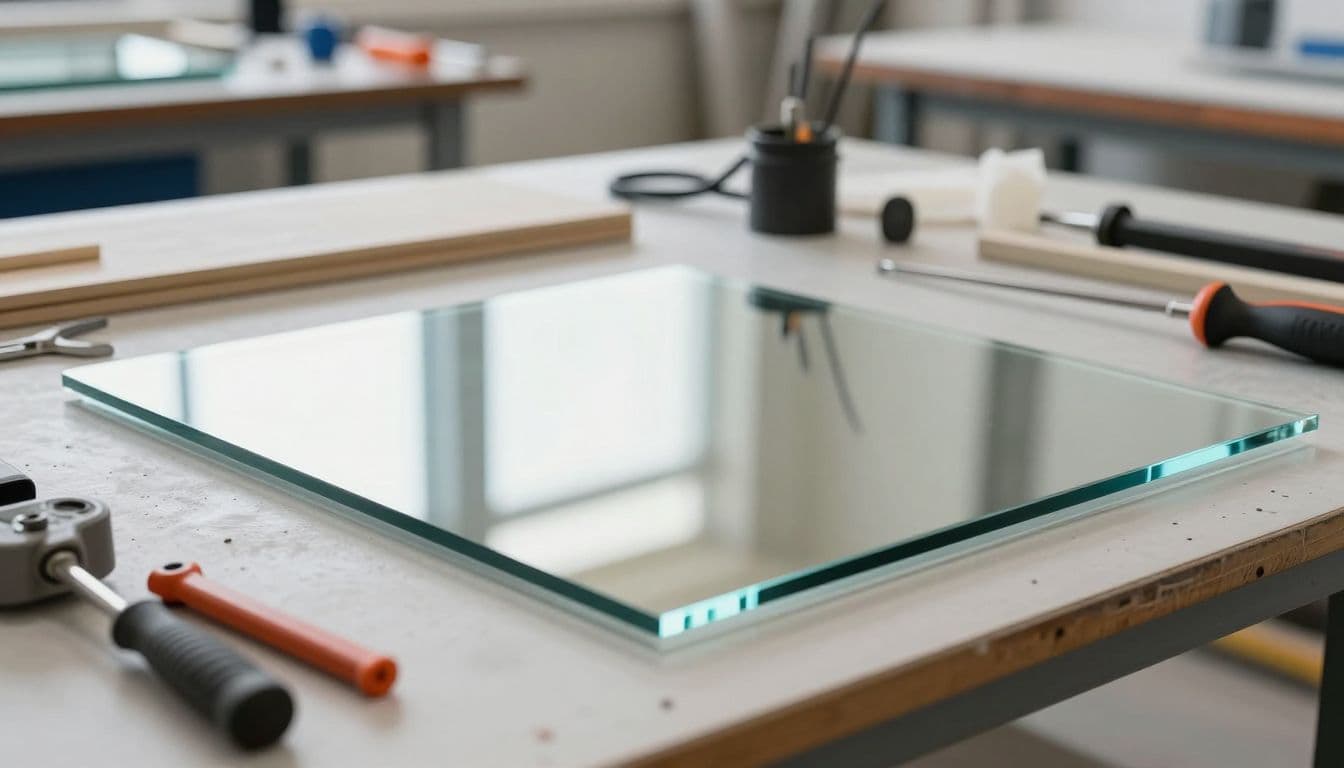
Installation guidance for large and frameless mirrors
Accurate measurements should happen before the glass is ordered. Measure the wall in several places because corners and drywall can vary. Confirm the vanity width, backsplash height, light locations, medicine cabinets, and electrical outlets.
The mirror's position matters as much as its size. Many bathrooms leave about 4 to 6 inches between the backsplash and the bottom of the mirror, but the final placement should account for the people using the room and the fixtures around it. Use this bathroom mirror height guide before approving a custom cut.
Large mirrors often need more than adhesive alone. Depending on the wall and design, a professional installer may combine mirror adhesive with bottom clips, channels, brackets, or another form of mechanical support. The method should match the mirror's weight and the wall's construction.
For a wall-to-wall installation, the wall must be clean, flat, and free from loose paint or damaged drywall. A professional should also plan how the mirror will enter the home, where it will rest during installation, and how the team will protect the finished edges.
Avoid drilling or cutting a mirror after fabrication. Holes for outlets, faucets, or sconces must be measured and ordered in advance. A small error can affect the entire installation, especially with 1/4-inch glass that cannot be trimmed casually on site.
What to confirm before ordering a custom mirror
Before approving the job, ask the glass company to confirm:
- The exact glass thickness, overall dimensions, and number of mirror panels.
- Whether the edges will be polished, beveled, seamed, or covered by a frame.
- Which mirror adhesive and support hardware the installer will use.
- How cutouts will align with outlets, lights, faucets, and medicine cabinets.
- Whether safety backing or another safety option fits the location.
- How the company will handle measurement, delivery, installation, and cleanup.
A licensed and insured glass installer can identify wall and access issues before fabrication. That early review is especially useful for large bathroom mirrors, where a measurement problem becomes expensive once the glass is cut.
Conclusion
For most homeowners, 1/4-inch bathroom mirror glass is the right choice for a premium, durable installation. Thinner 1/8-inch glass can suit small framed mirrors, while 3/16-inch glass may work for certain medium-size designs.
Size, framing, wall condition, edge treatment, and mounting support all affect the final decision. In Fort Myers and throughout Southwest Florida, a properly measured and professionally installed 1/4-inch mirror provides a stable, polished result that fits the room for years.