
Frosted vs Etched Glass for Office Privacy
Glass can make a Southwest Florida office feel open, bright, and connected. Yet clear panels can expose meetings, computer screens, and work areas to everyone in the corridor. The choice between frosted vs etched glass affects privacy, appearance, maintenance, and how easily you can change the space later.
"Frosted glass" can describe an adhesive film, a factory-made translucent pane, or a surface treated during fabrication. Etched glass is permanently altered. Before approving a sample or quote, identify the product and decide how much of each panel needs coverage.
Frosted vs Etched Glass: What Each Option Means
In many office renovations, frosted privacy means a film applied to existing glass. The film has an adhesive side and a translucent finish that scatters light. Installers can apply it to conference room walls, sidelites, doors, and storefront glazing when the existing pane is suitable.
Some manufacturers also produce translucent glass with a built-in frosted appearance. That product arrives as a finished pane, so it isn't removable like film. It may suit a new partition or replacement panel, but the glass thickness, safety rating, and exact finish need review before ordering.
Etched glass receives a permanent surface treatment. Common methods include acid etching and abrasive processes such as sandblasting. The process changes the surface of the pane instead of adding a separate layer. Acid-etched glass often has a smooth, consistent satin finish, while abrasive etching can create a different texture.
When a quote uses "frosted glass," ask which material it includes. The name alone doesn't tell you whether the treatment can be removed or whether the panel must be fabricated as a replacement.
| Factor | Frosted film | Permanently etched glass |
|---|---|---|
| Application | Installed over suitable existing glass | Fabricated as part of the glass surface |
| Reversibility | Can be removed or replaced | Cannot be removed from the pane |
| Design changes | Easy to update when needs change | Requires a new pane for major changes |
| Appearance | Can create bands, gradients, or patterns | Has an integrated, permanent finish |
| Best fit | Office retrofits and flexible layouts | New construction and settled designs |
A clear material specification prevents confusion during planning. It also helps property owners compare installation requirements instead of comparing two finishes that may not be the same product.
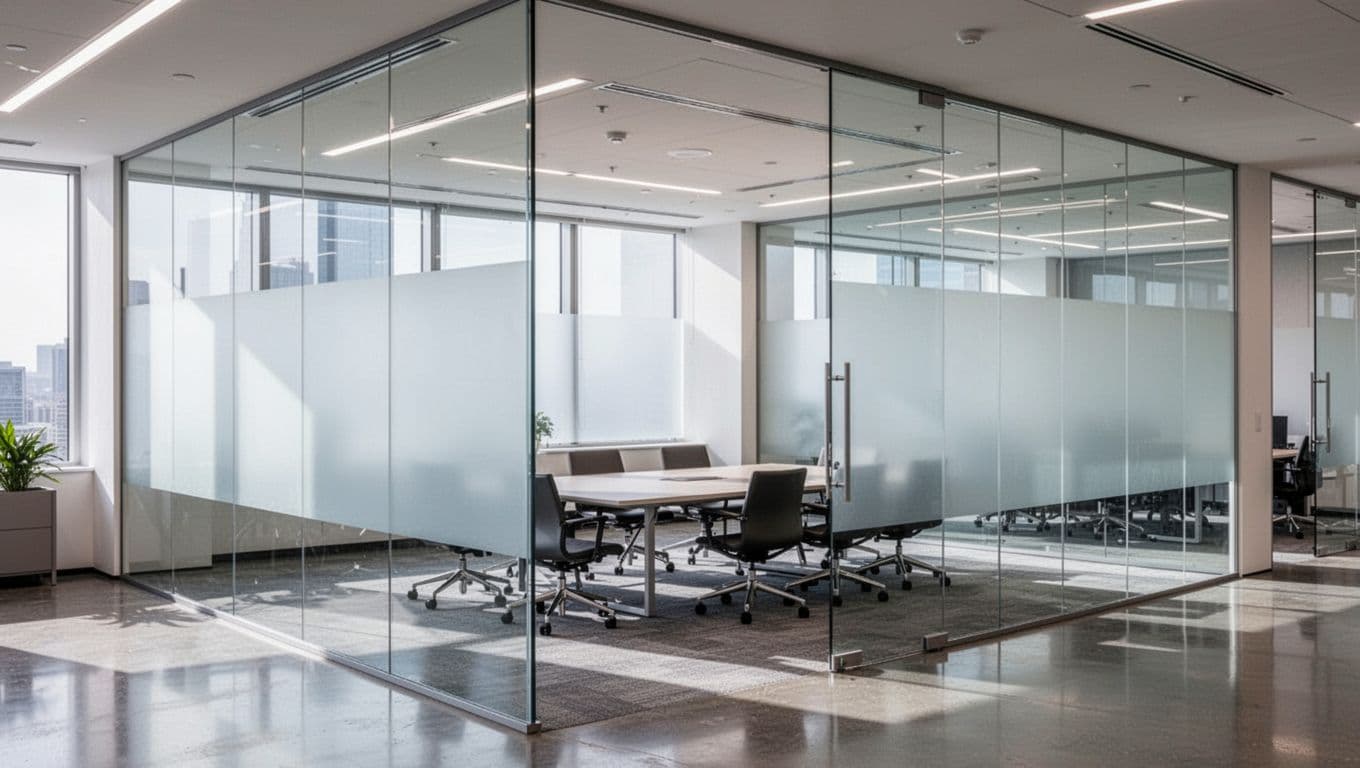
Privacy Depends on Light, Sightlines, and Coverage
Privacy treatment diffuses an image, but it doesn't create a solid wall. Someone outside may not read a document through frosted glass, yet movement, colors, and a person's outline may remain visible. Strong daylight behind someone often makes that silhouette easier to see.
Lighting can change the result. A bright conference room facing a darker hallway may reveal less detail than a person standing in front of a sunny window. Test a sample at different times, especially when windows face east, west, or an open parking area. Southwest Florida's strong sun can create sharp contrast during parts of the day.
Coverage matters just as much as the material. A narrow band at eye level can protect seated conversations while preserving borrowed light. However, it won't hide a monitor above the band or movement below it. Full or near-full coverage fits rooms where visitors could see confidential paperwork, financial records, patient information, or computer screens.
Patterns also affect sightlines. Stripes, dots, gradients, and custom shapes can mark a glass door and reduce direct views, but open areas still provide visibility. Map the viewing angles at reception, hallways, and neighboring workstations before choosing a pattern.
Visual privacy depends on light direction and treated area, not only on whether the glass is called frosted or etched.
Neither treatment provides acoustic privacy. Sound travels through doors, gaps, ceilings, and lightweight partitions. Rooms that require speech privacy may also need better door seals, acoustic partitions, or sound-absorbing finishes.
Appearance, Branding, and Design Flexibility
Frosted film gives office managers more control after installation. A contractor can cut the film into horizontal bands, geometric shapes, gradients, or a company logo. If the brand changes or the tenant rearranges the floor plan, the film can be replaced without replacing the entire glass panel, assuming the glass remains suitable.
That flexibility helps in leased offices and spaces that change often. It also allows a building owner to use a consistent privacy band across doors and sidelites. View a sample on the actual glass, because pane color, thickness, coatings, and lighting can change the final appearance.
Etching has a more integrated look. The pattern becomes part of the pane, which suits a permanent reception feature, executive conference room, medical office, or custom entry. Since the design isn't convenient to change later, review its scale, edges, and relationship to door hardware before fabrication.
For unusual sizes or custom patterns, custom glass cutting can help coordinate the design with the surrounding frame. The pattern still needs to work with hinges, handles, seals, and the required glass specification.
Durability and Maintenance in Southwest Florida
The right choice depends on how the glass will be touched, cleaned, and exposed. Offices near busy roads or coastal areas may collect dust and salt residue on exterior glazing. Indoor doors receive fingerprints, cart bumps, and frequent wiping. A film's performance depends on its quality, the glass preparation, installation, and cleaning routine.
Use a soft cloth and the cleaner recommended for the selected film. Abrasive pads, harsh tools, and aggressive scraping can mark the film or damage its edges. If a cleaning service maintains the office, share the product instructions before installation.
Permanently etched glass has no adhesive layer to bubble, peel, or lift. That makes it a strong fit for long-term installations with frequent cleaning. Still, it can scratch, and textured abrasive finishes may show oils or residue more readily than smooth acid-etched glass. Because the finish is permanent, damage or a design change usually requires a new pane.
Privacy treatment also doesn't make ordinary glass impact-rated or hurricane-rated glass. For doors, sidelites, storefronts, and other hazardous locations, confirm whether the project requires tempered or laminated safety glass. The privacy finish is one part of the assembly, not a substitute for the glass specification.
Installation and Project Planning
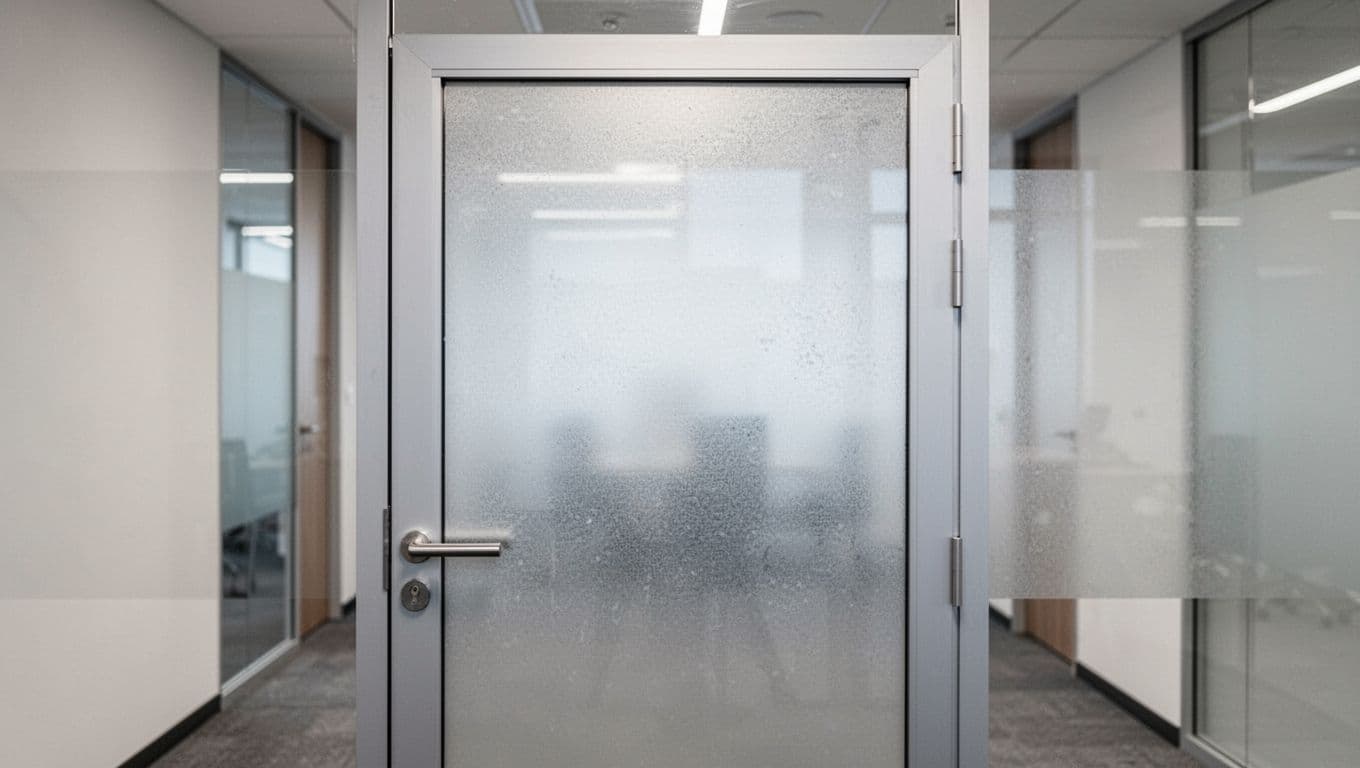
Film is often considered when existing office glass is in good condition and the privacy plan is changing. The installer still needs a clean, sound surface, accurate measurements, and access to the full glass area. Door edges, handles, gaskets, and adjacent frames need careful review so the treatment doesn't interfere with operation.
Permanent etching usually requires fabrication before delivery. If an existing panel isn't being replaced, field-applied film may be the practical route. For a new conference room or office build-out, the glass, pattern, doors, and hardware can be coordinated as one package.
Ask for the material name, coverage drawing, physical sample, cleaning requirements, and glass safety specification. Also confirm who handles removal of existing film or glass, how the work will affect office access, and whether the installation includes doors and sidelites.
A local company experienced in commercial office glass can review existing partitions, storefronts, commercial doors, and replacement needs together. That helps when privacy work is part of a larger renovation rather than a single panel.
Which Option Fits Your Office Privacy Goal?
The frosted vs etched glass decision becomes clearer when you start with the office goal instead of the finish name.
- Choose frosted film when you need a reversible retrofit, expect branding or layouts to change, or want to test partial and full coverage on existing glass.
- Choose permanently etched glass when the design should remain in place for the life of a new pane and the surface will receive regular cleaning or contact.
- Choose factory-made frosted glass when ordering new panels and you want the translucent appearance built into the glass rather than added later. Confirm how the product is made and whether it meets project requirements.
- Use partial coverage when the office needs visual separation while preserving daylight. Use fuller coverage when the room holds sensitive screens, paperwork, or meetings.
- Specify tempered or laminated safety glass separately when the location or building requirements call for it. Frosting alone doesn't provide that protection.
For many property owners, film is the practical starting point for existing offices because it allows a measured trial. Permanent etched glass fits projects with a settled design and a longer expected service life. Neither choice is automatically better. The correct option matches the privacy level, light conditions, maintenance routine, and likelihood of future changes.
Conclusion
Clear office glass can preserve daylight and openness, but it needs a privacy plan based on real sightlines. Frosted film offers flexibility for existing spaces, while permanently etched glass provides an integrated finish that won't peel or be removed. The best frosted vs etched glass choice depends on coverage, lighting, glass safety requirements, and how permanent the design should be.
Review the room at different times of day, then compare a physical sample with a coverage drawing. A well-planned treatment protects visual privacy without turning a bright office into a closed-off one.