
How to Take Custom Glass Shelf Measurements in Fort Myers
A glass shelf can be cut perfectly and still fit poorly if the opening is out of square. Accurate custom glass shelf measurements account for width, depth, thickness, edge finish, support hardware, and the clearance needed for installation.
Before you measure, decide where the shelf will sit and what it will hold. Then record each dimension clearly so a glass professional can review the details before fabrication.
Gather the Right Tools Before Measuring
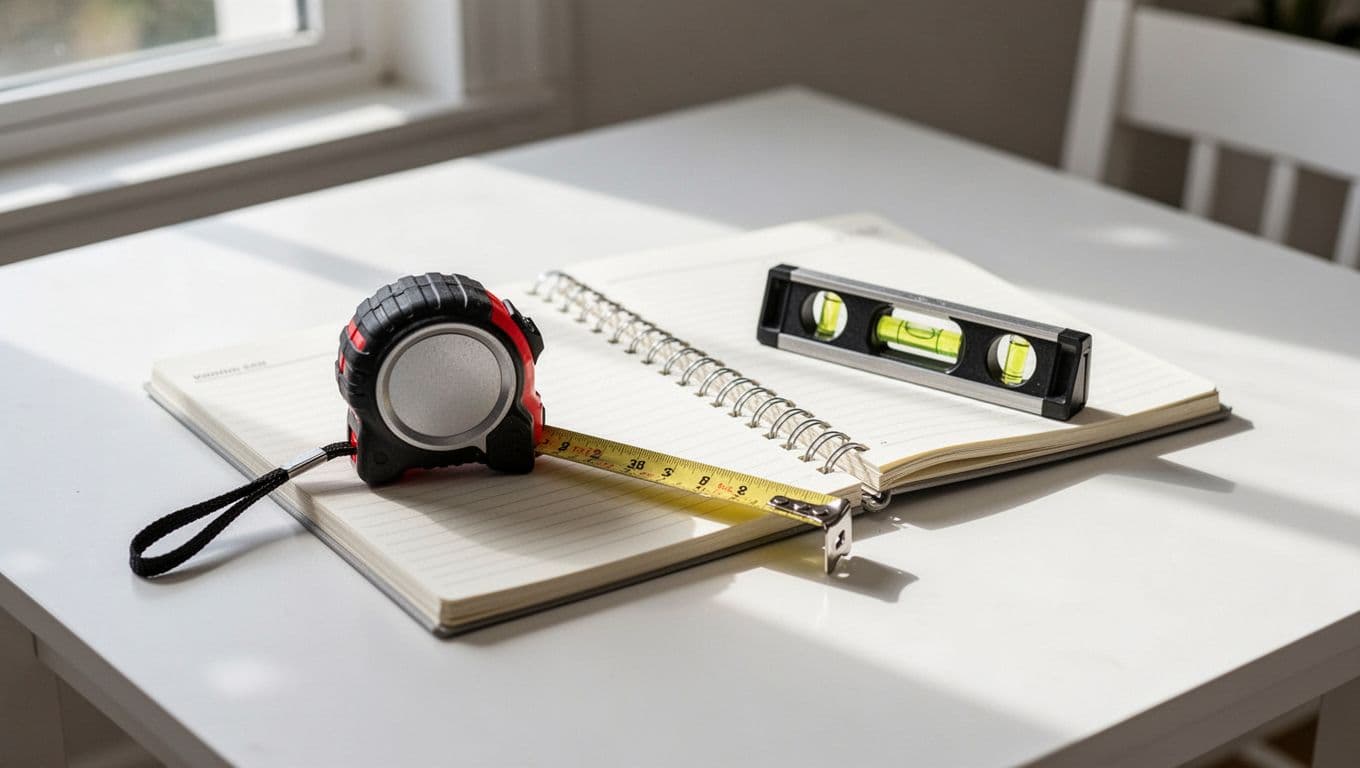
You only need a few basic tools:
- A steel tape measure that reads to at least 1/16 inch
- A small level
- A carpenter's square or straightedge
- Paper and pencil
- A flashlight for dark cabinets or wall niches
- A helper for long or wide openings
Measure the actual installation area, not a nearby shelf or trim piece. Remove items that block the corners, and check whether tile, molding, baseboards, doors, or cabinet hardware will affect the finished size.
Write measurements as width by depth, such as 24 3/8 inches by 10 inches. Note which side is the front, especially when the shelf has an angled corner or an unusual shape.
How to Take Custom Glass Shelf Measurements
Start with the opening's width. For a recessed cabinet, niche, or wall-to-wall space, measure across the front, middle, and back. If the space is taller than the shelf, measure at the top, center, and bottom as well.
Use the smallest width as your reference measurement. However, don't subtract a standard amount on your own. The correct clearance depends on the shelf design, support hardware, and how the installer plans to position the glass.
Next, measure the depth from the back wall to the front edge. Take this measurement on the left, in the center, and on the right. Obstructions such as plumbing trim, cabinet doors, tile edges, or wall irregularities may make one area shallower than another.
Then check the opening for level and square. Place the level along the back and side surfaces. For a rectangular shelf, measure both diagonals. If the diagonal measurements differ, the opening isn't square, and a perfectly rectangular pane may leave an uneven gap.
Finally, mark the support locations. Measure the distance between bracket centers, not only the overall wall width. Take a photo of the installation area and note where studs, cabinet sides, or solid backing are available.
Measuring a Recessed Cabinet or Wall Niche
A recessed shelf usually needs room to slide into position. Measure the clear opening between the finished surfaces, including tile or stone that will remain in place.
For a niche with rounded or clipped corners, create a paper or cardboard template. Keep the template aligned with the back wall, mark the front edge, and label the top, bottom, left, and right sides. A template gives the fabricator more useful information than a single width and depth measurement.
If the shelf will sit in a shower niche, mention the waterproofing system and wall finish before ordering. Drilling or anchoring in the wrong location can damage the enclosure or create a leak risk.
Measuring a Wall-Mounted Shelf
For an open shelf, measure the desired glass length and depth, then identify the bracket type and spacing. The glass may need to extend beyond the brackets, but that amount varies by hardware.
Measure the wall space around the shelf, too. Doors, light switches, artwork, and nearby cabinets can limit the usable length. A level line helps you mark a consistent installation height before the glass is made.
Choose the Glass Details Before Ordering
Dimensions are only part of the order. You also need to select the glass type, thickness, edge finish, corner shape, and support method.
Glass thickness must match the shelf's span and expected load. A longer shelf holding books needs a different design review than a short shelf displaying lightweight decor. Thickness alone doesn't determine capacity. The glass type, bracket spacing, support depth, and strength of the mounting surface matter as well.
Ask whether tempered glass is appropriate for your project. Tempered glass is heat-treated and breaks into small pieces if it shatters. However, it must be cut and drilled before tempering. Once tempered, it can't be resized or modified.
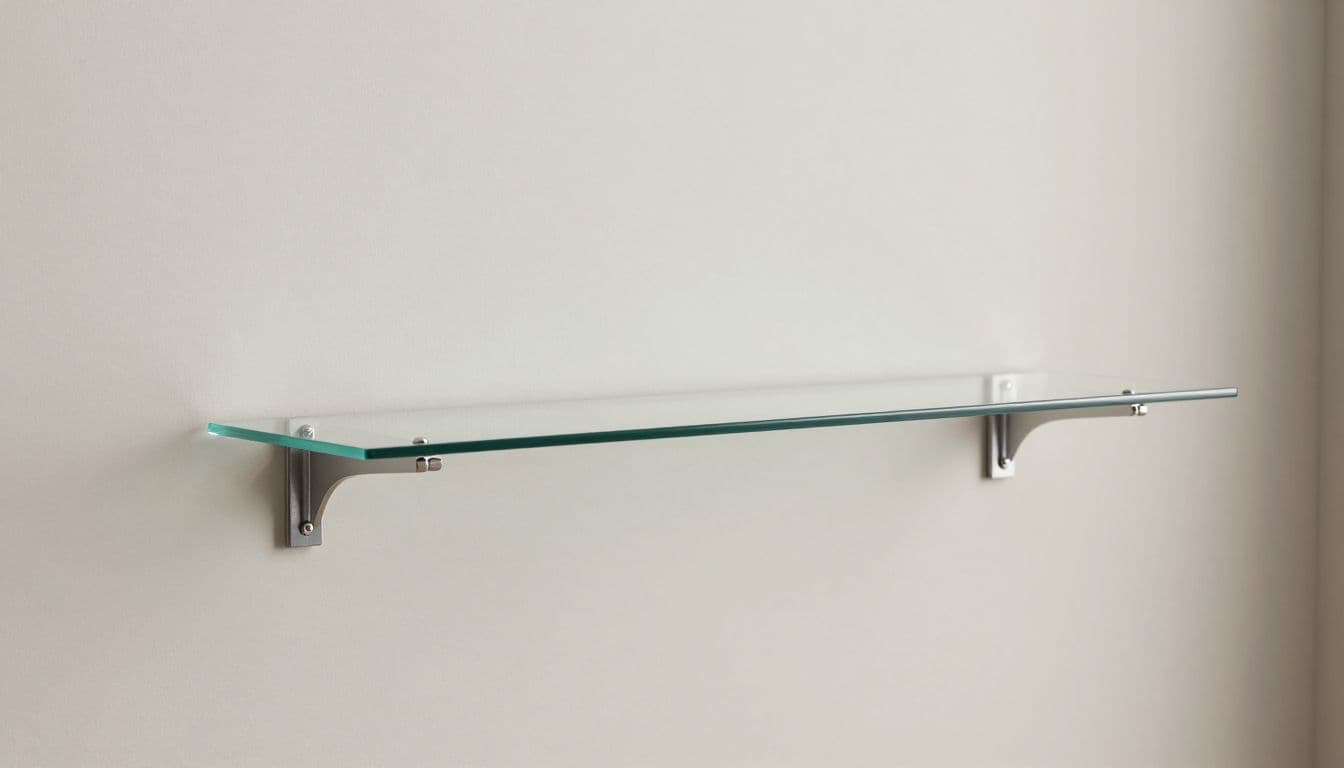
Choose a polished edge for a smooth finished look. A flat polish, beveled edge, or eased edge may suit different designs, but the choice should match the shelf's location and style. Tell the fabricator if the front corners need a radius, a clipped corner, or a notch around an obstacle.
The hardware also affects the final dimensions. Glass clips, floating shelf supports, and metal brackets each require different clearances. Confirm the hardware before finalizing your custom glass shelf measurements.
Measurement Checklist and Common Mistakes
Before sending dimensions to a glass shop, review this checklist:
- Measure width at several points and record the smallest clear opening.
- Measure depth on the left, center, and right.
- Check whether the space is level and square.
- Identify trim, tile, plumbing, doors, and other obstructions.
- Mark available studs or solid backing for wall supports.
- Record the desired edge finish and corner shape.
- Describe what the shelf will hold.
- Confirm the glass thickness and support hardware with the fabricator.
The most common mistake is measuring once and assuming the opening is uniform. Walls, cabinets, and tile rarely line up with perfect precision. Another mistake is measuring from unfinished drywall when the final surface will include tile, stone, or trim.
Don't order glass based on a rough estimate, and don't assume a 1/8-inch deduction works for every project. Also, never plan to cut, drill, or grind tempered glass after delivery. Those changes require new fabrication.
A small difference in the opening can change the fit, but an incorrect support plan can affect safety and load capacity.
When Professional Installation Makes Sense
Professional measurement and installation are a smart choice for oversized shelves, heavy loads, unusual shapes, shower niches, and walls with uncertain backing. An installer can check the substrate, verify support spacing, and account for the actual hardware before the glass is fabricated.
Ask for a written estimate that lists the glass type, thickness, edge treatment, shelf dimensions, hardware, and installation work. If the shelf will hold heavy objects, request confirmation that the proposed design suits the span and intended load.
Final Thoughts
Good custom glass shelf measurements begin with the real opening, not an assumed size. Measure in several places, record obstructions, check for square, and confirm the support system before ordering.
Tempered glass, suitable thickness, secure anchors, and professional installation all matter when safety is involved. Careful measurements give the fabricator the information needed to produce a shelf that fits cleanly and performs as intended.