
Can You Reuse Shower Glass After a Remodel?
A bathroom remodel doesn't always require throwing out an existing shower enclosure. In some cases, you can reuse shower glass and reduce material waste, but the glass must fit the updated opening and pass a careful safety inspection.
Tempered shower glass needs professional handling. Its edges, holes, panels, hinges, clips, and seals all affect whether reuse makes sense. A layout change, thicker tile, or damaged edge can turn a seemingly simple relocation into a poor fit. Start with an assessment before removing anything.
Can You Reuse Shower Glass After a Remodel?
You can reuse shower glass after a bathroom remodel when the panels remain in good condition and the new shower opening matches the original dimensions closely. The existing hardware and door swing must also work with the remodeled space.
Tempered glass is heat-treated for strength, but it can shatter if an edge suffers a chip, crack, or hard impact. Even damage that looks minor deserves attention. The edges are especially vulnerable because they are less protected than the center of the panel.
A glass professional will check the following:
- Panel dimensions and thickness
- Chips, cracks, scratches, and edge damage
- Existing holes for hinges, handles, and mounting clips
- Door alignment and swing direction
- Condition of hinges, rollers, brackets, seals, and sweeps
- Whether the new walls are plumb and square
- Changes in tile, backer board, waterproofing, or curb dimensions
A panel that worked in the original bathroom may not fit after the walls receive new tile. Tile thickness can move the finished wall outward, while a new curb or altered drain location can change the enclosure footprint.
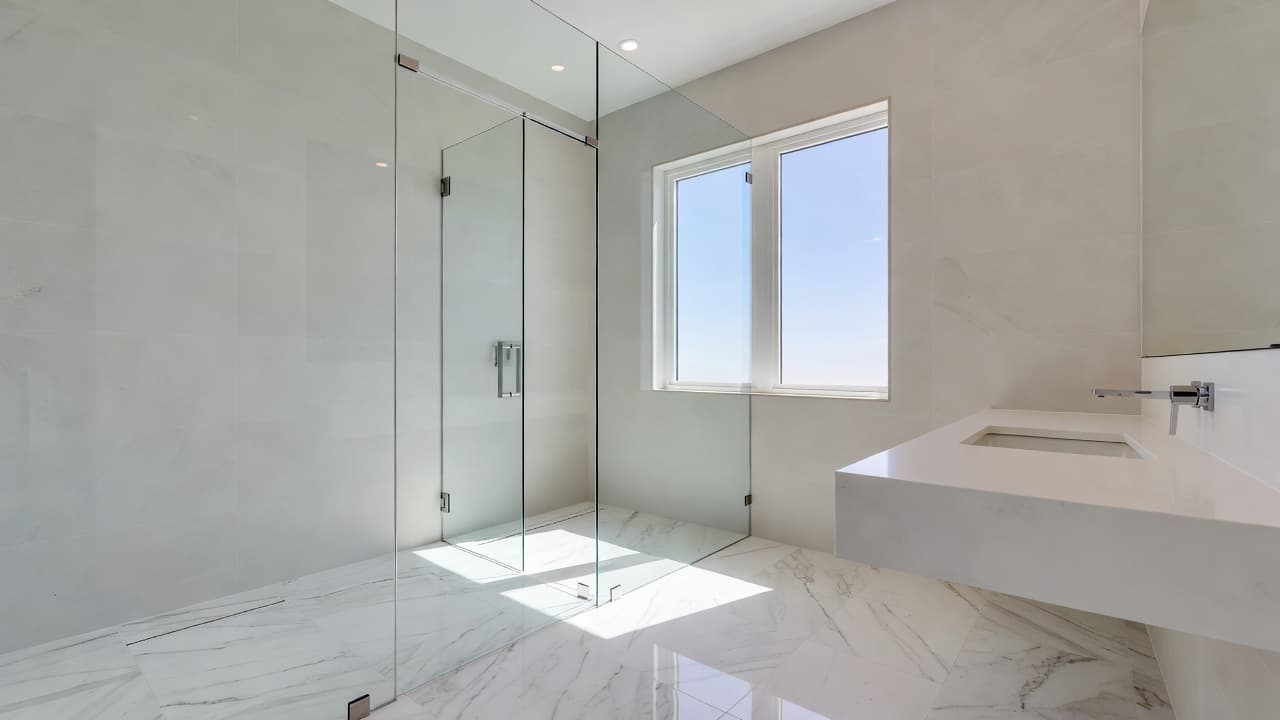
A professional can also identify whether the enclosure uses a system that allows adjustment. Some framed doors have more tolerance than custom frameless panels. Frameless glass usually depends on precise measurements, fixed holes, and exact hardware placement.
When Existing Shower Glass Is a Good Candidate for Reuse
Reuse becomes more practical when the remodel keeps the shower footprint, wall positions, and door location nearly unchanged. A basic cosmetic update, such as replacing fixtures or refreshing nearby finishes, may leave the enclosure untouched.
Good candidates often have clear panels with no visible damage and hardware that still operates smoothly. The glass should also have enough clearance for the new finished surfaces. If the old enclosure has been in place for many years, a professional should inspect it rather than relying on appearance alone.
The original installation details matter too. A glass company may need measurements, photographs, or records from the first installation. Without those details, the installer must measure the existing panels and the new opening before deciding whether they match.
Reusing shower glass can make financial sense when the enclosure remains in the same position. However, the project still includes labor for removal, transport, inspection, cleaning, adjustment, and reinstallation. New seals or hardware may also be needed.
Homeowners in Fort Myers and Cape Coral should pay close attention to metal hardware. Southwest Florida's humid, salty air can corrode hinges, screws, brackets, and rollers, especially in bathrooms near the coast. A panel may look fine while the hardware has weakened or developed difficult-to-remove corrosion.
Signs the Glass Should Be Replaced
Replacement is usually safer and more practical when any of these conditions apply:
- A panel has a crack, deep scratch, chip, or damaged corner.
- The new shower changes size or shape.
- The door must move to a different wall.
- New tile changes the opening dimensions.
- Existing holes no longer line up with the new design.
- Hinges, clips, or rollers show corrosion or movement.
- The glass has a cloudy buildup that cleaning cannot remove.
- The enclosure has recurring leaks caused by poor alignment or worn seals.
Tempered glass cannot be cut, drilled, or reshaped after manufacturing. If the new design needs a different handle hole or hinge location, the existing panel cannot be modified in the field. A replacement panel must be ordered to the correct specifications.
Why Professional Removal Matters
Removing a shower enclosure is more than unscrewing a few brackets. Installers must release the panels without twisting them, protect the edges, and prevent the glass from striking tile, stone, or another panel.
Tempered glass can break suddenly when an edge is hit. A heavy panel also needs controlled support during removal. Homeowners should avoid prying, dragging, or resting glass directly on a hard floor. Even a panel that appears sound can fail after a stressful impact.
Professional removal also protects the bathroom around the enclosure. Old silicone may hold portions of the frame or clips in place. Removing it incorrectly can pull at finished surfaces or leave damage around the curb and walls.
Once removed, each panel should be labeled and stored upright on a stable, padded surface. It should never rest flat where weight or pressure can create a break point. The glass should also stay away from tools, ladders, loose tile, and areas where people walk.
The installer can then compare the panels with the remodeled opening. This step helps catch problems before the glass returns to the bathroom. If the fit is wrong, the homeowner can choose new glass without paying for a failed installation.
For projects involving damaged panels, a company that handles glass repair and replacement can help determine whether the existing enclosure is worth saving.
Reusing Glass Versus Ordering New Panels
The right choice depends on the condition of the glass and the scope of the remodel. Reuse may lower material costs, but it doesn't eliminate the need for skilled labor or compatible hardware.
| Factor | Reuse existing glass | Order new shower glass |
|---|---|---|
| Best fit | Same opening and layout | New size, shape, or door location |
| Main cost | Removal, inspection, hardware, and installation | Fabrication, hardware, and installation |
| Design flexibility | Limited by existing panels and holes | Custom dimensions and new options |
| Risk | Existing wear or hidden edge damage | Lower concern about prior damage |
| Schedule | Depends on inspection and panel condition | Depends on measuring and fabrication |
| Hardware | May need replacement or adjustment | Can be selected for the new enclosure |
The table's main takeaway is simple: reuse works best when the layout stays the same . A major redesign usually favors new glass because custom fabrication gives the installer a precise fit.
New panels also allow changes to the enclosure style. A homeowner might replace a framed door with a frameless design, add a fixed return panel, change the handle style, or select a different glass finish. Those changes usually require new measurements and new holes.
A professional glass company can discuss both options during an estimate. Caloosahatchee Glass & Mirror provides custom shower enclosures, including custom-cut glass and installation for homes across Southwest Florida.
What Changes During a Bathroom Remodel?
A shower remodel can alter more than the visible tile. The finished opening may change after contractors remove old materials, repair framing, install backer board, or apply new waterproofing.
Wall surfaces must be plumb enough for the enclosure design. Frameless doors have less tolerance for uneven walls than some framed systems. A small change at the hinge side can affect the door's swing, seal, and contact with the curb.
The curb must also support the enclosure correctly. Its slope should direct water into the shower, not toward the bathroom floor. If the curb changes width or height, old panels may no longer sit in the proper position.
New plumbing fixtures can create another issue. A showerhead, grab bar, niche, or control valve may interfere with an existing door or panel. The glass should be planned alongside the finished bathroom, not treated as a separate item after construction ends.
Ask the remodeling contractor to leave final glass measurements until tile and other finished surfaces are complete. Measuring too early can result in incorrect panel sizes. A glass professional should take the final dimensions before fabrication or reinstallation.
Homeowners in Naples and Bonita Springs may also want to review hardware condition during this stage. Salt air and moisture can shorten the service life of exposed metal, especially when old finishes no longer protect the underlying material.
How the Reuse Process Works
A safe reuse project follows a measured sequence. The exact work varies by enclosure type, but the process usually includes these steps:
- Inspect the enclosure in place. The installer checks the panels, edges, hardware, seals, and mounting points.
- Measure the existing glass and new opening. Measurements include height, width, wall conditions, curb dimensions, and door clearances.
- Remove the panels carefully. The team supports each panel and protects the surrounding tile and finished surfaces.
- Clean and examine the glass. Silicone, mineral deposits, and hardware residue are removed so defects are easier to see.
- Confirm compatibility. The installer checks whether the panels, holes, swing direction, and hardware match the remodeled opening.
- Replace worn components. New seals, sweeps, screws, hinges, or brackets may be needed.
- Reinstall and seal the enclosure. The panels are aligned, the door is tested, and the system is sealed according to its design.
A good final inspection checks more than whether the door closes. The installer should look for stable hardware, even gaps, smooth movement, proper clearance, and water control at the bottom and sides of the door.
Reuse should never depend on forcing a panel into place. Glass does not become a correct fit through pressure or extra silicone. If the dimensions are wrong, replacement is the safer answer.
Questions to Ask Before Reusing Shower Glass
Before the remodel begins, ask the glass professional:
- Is the glass thickness known?
- Are the panels free of chips and edge damage?
- Will the finished wall dimensions stay the same?
- Can the existing holes work with the new layout?
- Does the hardware need replacement?
- Will the door swing safely without hitting fixtures?
- Who will remove, transport, store, and reinstall the glass?
- What happens if the panels fail inspection after removal?
Take clear photographs of the enclosure before demolition. Include the hinges, handle, corners, clips, bottom sweep, and wall connections. These images help the installer understand the existing system and identify parts that may need replacement.
If the remodel involves a different enclosure shape, consider custom glass cutting instead of trying to modify tempered panels. Custom fabrication can match the final opening after the tile work is complete.
Conclusion
You can reuse shower glass after a remodel when the panels are undamaged, the opening remains compatible, and the hardware is still reliable. The decision should follow a professional inspection, not a quick visual check.
Tempered glass requires careful removal and reinstallation, especially when its edges, fit, or mounting points are uncertain. For a cosmetic update with the same shower footprint, reuse may be practical. When the layout, tile thickness, curb, or door position changes, new custom glass often provides the safer and cleaner result.