
Choosing Bathroom Privacy Glass in Cape Coral
A bathroom window can brighten your morning and leave you wondering what the neighbors can see. Choosing bathroom privacy glass for your Cape Coral home starts with the actual sightlines , then the finish.
The right option should protect your privacy while preserving daylight, airflow, and manageable cleaning. Frosted, patterned, and textured glass offer different results, so start by checking the window's location before choosing a sample.
Match Bathroom Privacy Glass to Your Sightlines
Privacy needs depend on what faces the window. A pane overlooking a neighboring patio needs different consideration than a high window facing an enclosed yard.
Walk outside and look toward the bathroom from accessible viewing points. Check nearby walkways, pool decks, and neighboring windows. Then consider where you stand inside, especially around the shower and bathtub.
Height helps, but it doesn't settle every privacy concern. An elevated window can still face an upper-story room. Likewise, landscaping shouldn't be your only screen because plants change with trimming and replacement.
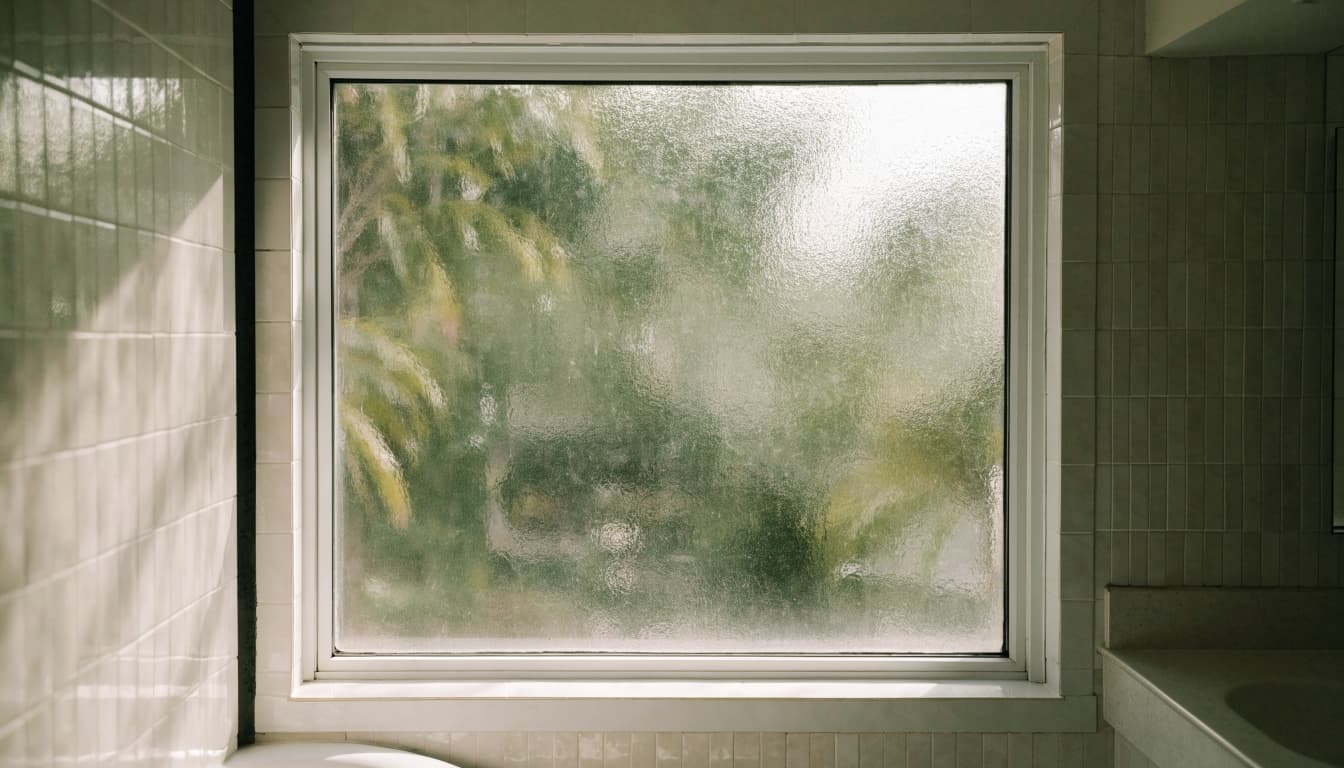
Ask to inspect glass samples under more than one lighting condition. Look through them at different distances rather than judging them against a showroom counter.
Pay attention to whether the sample hides facial details, body outlines, or only the background. Those are different outcomes, and the amount of obscuring varies by product.
A privacy sample that looks opaque against a counter may still reveal silhouettes when someone stands close behind it.
For your Cape Coral bathroom, prioritize the most exposed sightline. A decorative finish that looks attractive indoors still needs to provide the privacy you expect.
Compare Frosted, Patterned, and Textured Glass
These descriptions sometimes overlap. Patterned glass often has a textured surface, while "obscured glass" is a broader description for glass that reduces visibility.
Frosted glass gives a more uniform appearance
Frosted glass has a matte appearance that diffuses light and softens views. It's a practical starting point when you want privacy without introducing a strong decorative pattern.
However, ask what creates the frosted finish. Etched glass, sandblasted glass, and applied film are different products with different care instructions.
Compare actual samples rather than relying on the word "frosted." The finish alone doesn't establish how much detail someone can see through the pane.
Patterned glass adds a visible design
Patterned glass introduces a repeating design, such as reeds or geometric shapes. It can complement bathroom tile without adding another opaque surface.
Still, a pattern's appearance doesn't establish its privacy level. Some designs distort the view while leaving recognizable outlines.
Check the pattern from several angles. Also, confirm its orientation before fabrication, especially when vertical lines are part of your bathroom design.
Textured glass changes how the view reads
Textured glass uses surface variation to break up the view. Depending on the product, the effect may look rippled, pebbled, or irregular.
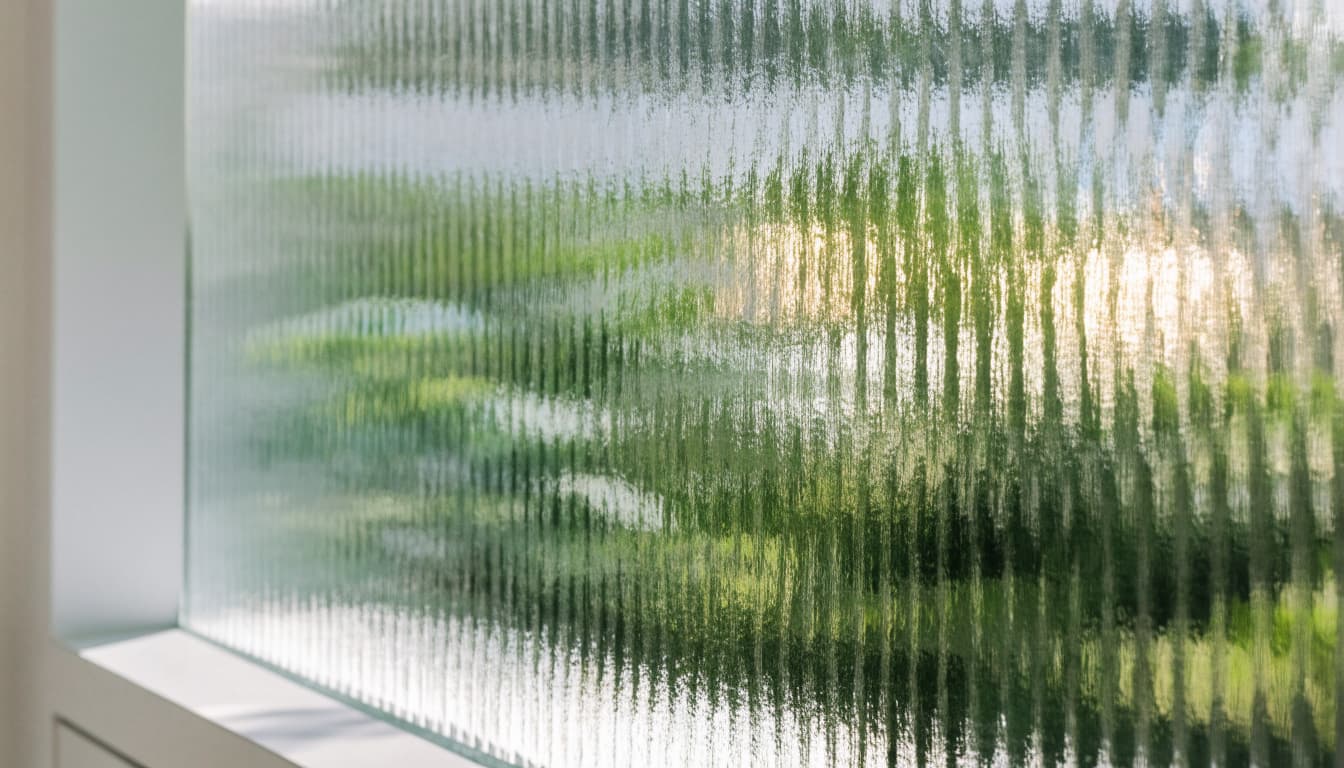
Ask which surface faces the room and how you'll clean it. That matters when the window sits near shower spray.
If you're also replacing enclosure panels, compare shower glass thickness and finishes separately. Window glass and shower enclosure glass need their own specifications.
Preserve Daylight Without Overlooking Ventilation
Privacy is only one part of the decision. Your window also affects how bright the bathroom feels and whether you can open it comfortably.
Judge light inside your bathroom
Bring samples into the room whenever possible. Compare them against your tile, paint, and vanity finishes, because showroom lighting won't reproduce your bathroom.
A shaded window already has less available daylight than an unobstructed opening. Therefore, judge the finish at the time you usually use the room.
For a bathroom with one small window, avoid choosing solely by appearance. Ask whether the proposed glass has light-transmission information, then compare that information with your priorities for privacy.
Keep an operable window usable
Replacing the glass shouldn't overlook how the window opens. Check the sash, locks, screen, and access before deciding whether a glass-only change makes sense.
Make sure shower panels, shelving, or a new mirror won't block the handle. Meanwhile, consider whether you'll still be comfortable with the view when the window is open.
Bathroom privacy glass only obscures the glazed area. Opening the sash changes the sightline, so ventilation and privacy need separate attention.
Also, evaluate the exhaust fan. A decorative glass upgrade won't address an existing ventilation problem.
Plan Carefully When the Window Is Inside a Shower
A window beside the vanity has different maintenance demands than one receiving direct shower spray. Inside a shower, the frame and surrounding construction deserve as much attention as the glass.
Inspect the sill, frame, and drainage
Have the installer assess the sill, trim, seals, and surrounding surfaces. Moisture-resistant materials and proper drainage are part of a workable shower-window layout.
Don't cover damaged trim with new glass and assume the problem is resolved. Water staining, softened materials, or recurring leakage need inspection before fabrication.
Planning a window inside a shower also means checking waterproofing and access. The window must remain reachable for cleaning and operation after the enclosure goes in.
Separate window privacy from enclosure design
An obscured window can provide privacy while clear shower panels keep the bathroom visually open. This combination lets you address the outside sightline without obscuring the tile throughout the room.
However, measure the complete layout before ordering either component. Door swings, handles, and fixed panels can interfere with window access.
Accurate field measurements help avoid those conflicts. If you're remodeling, confirm which finishes must be complete before final measurements, including tile and trim.
The window and enclosure should work together, but they don't need matching glass finishes.
Choose a Finish You Can Maintain
A good-looking sample should also fit your cleaning routine. Before ordering, ask for the care instructions for the exact glass finish, frame, seals, and any surface treatment.
Use those instructions to choose cleaners and tools. Don't assume a product suitable for smooth glass is suitable for every coating or textured surface.
Where shower spray reaches the window, remove standing water when practical. A soft cloth can help reduce residue before it dries. However, textured surfaces may need a different method than a smooth pane.
Avoid abrasive pads or harsh powders unless the manufacturer explicitly permits them. Also, ask whether the installer recommends a particular cleaning product.
For a coastal property in Cape Coral, discuss the opening's exposure to sunlight, rain, and coastal air during the site visit. Ask the installer to review the frame, seals, and hardware along with the glass.
That review matters because the privacy finish doesn't describe the condition of the surrounding window.
Keep exterior cleaning access in mind, too. A window above landscaping or beside a pool enclosure may be harder to reach than it appears from inside.
Choose a finish you can inspect and maintain on both sides, rather than judging only the interior appearance.
Decide Whether to Replace the Glass or the Window
A privacy upgrade may involve replacing the pane, an insulated glass unit, or the complete window. The existing construction determines which approach is appropriate.
Have the existing assembly inspected
When the frame and operating parts remain sound, a focused glass replacement may be possible. However, damaged frames or water entering around the opening need a broader assessment.
Ask the installer to identify the window type and available replacement options. If the opening contains an insulated unit, discuss replacement of that unit rather than treating it as an ordinary single pane.
Specify the privacy finish separately from any safety or performance requirements. Request documentation for the proposed product instead of assuming those characteristics based on appearance.
Compare quotes with the same scope
A useful estimate identifies the glass finish, work included, and responsibility for surrounding repairs. It should also distinguish glass replacement from full-window work.
Before approving the order, confirm these details:
- Ask whether removal, disposal, installation, and sealing are included.
- Confirm the pattern orientation and which surface will face indoors.
- Identify any frame, trim, or waterproofing repairs outside the glass quote.
If the project includes custom shower glass installation, request coordinated measurements and clear responsibilities for both parts.
Caloosahatchee Glass & Mirror is a fourth-generation, family-owned company serving Cape Coral from Fort Myers. Its free estimates give you an opportunity to review the opening and discuss options before ordering.
Key Takeaways for Your Window Selection
Choose the privacy level before choosing the decorative effect. Then compare samples in the bathroom, check access, and review maintenance instructions.
The most useful decisions are straightforward:
- Match the glass to the window's exposed sightlines.
- Keep daylight, ventilation, and cleaning access in the plan.
- Address frame or waterproofing problems before installing replacement glass.
A complete window assessment is more useful than choosing a finish without checking the opening.
Frequently Asked Questions
Is frosted glass completely private?
Don't assume every frosted product offers the same privacy. Its finish, lighting, viewing distance, and a person's proximity to the pane affect what remains visible.
Ask to inspect a sample under conditions that resemble your bathroom. Discuss silhouettes as well as clear visibility, because hiding detail and hiding an outline aren't the same result.
Can I keep clear shower glass with a privacy window?
Yes. Obscured glass at the window can address outside views while clear enclosure panels preserve visibility within the bathroom.
Still, confirm that the enclosure won't obstruct the window's handle or cleaning access. For a window inside the shower, include the sill, trim, drainage, and waterproofing in the project assessment.
Choose Privacy That Fits Your Cape Coral Bathroom
The right bathroom privacy glass addresses the view into your room while preserving the daylight you value. Its finish should also fit your cleaning routine and the existing window.
Before ordering, compare samples and have the opening inspected. Professional measurements and a clearly defined installation scope help turn an attractive glass choice into a practical bathroom improvement.
To discuss your Cape Coral project, contact Caloosahatchee Glass & Mirror at (239) 334-2690 for a free estimate.