
Commercial Door Floor Spring Problems in Naples
A commercial door floor spring problem can show up as a door that slams, binds, or no longer closes smoothly. Those symptoms deserve attention, but they don't identify the failed part on their own.
For a Naples business, an unreliable glass entrance can affect customers, staff, and security. The whole door assembly needs attention because the closer, pivots, glass, frame, and lock work together. Start by paying attention to how the door behaves during normal use.
How a Commercial Door Floor Spring Fits Into the Entrance
A floor spring is part of the hardware on some commercial glass doors. It sits near the floor at the pivot side of the entrance. Because much of the hardware is out of sight, a problem may first appear in the door's movement rather than as visible damage.
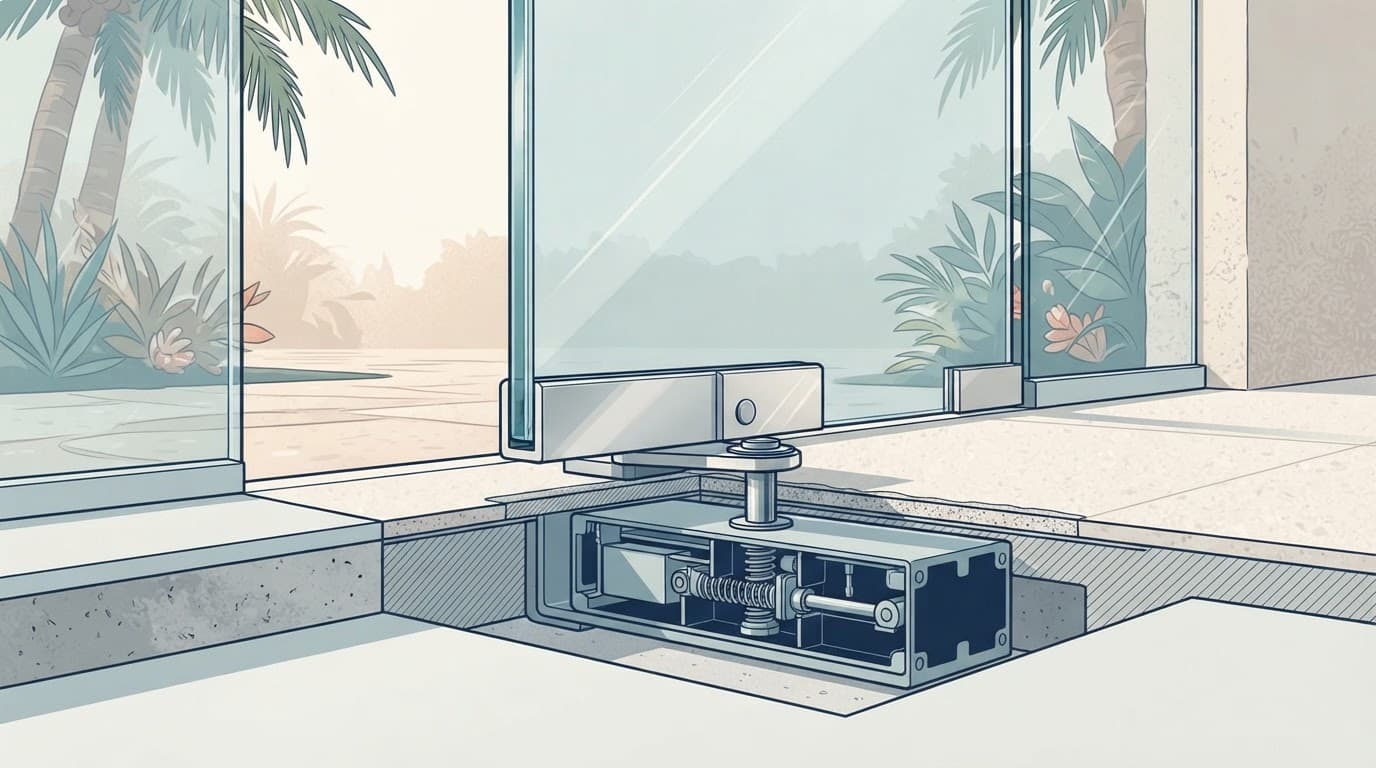
The closer is one part of the system
A commercial glass door also depends on its pivots, fittings, frame, threshold, and locking hardware. Each part needs to line up with the others. For example, a poorly set pivot can make a door bind even when the glass itself looks intact.
That connection matters when describing a problem to a door professional. Saying "the door catches near the threshold" gives a more useful starting point than assuming the closer needs replacement.
The glass needs attention, too
Commercial door glass can experience stress when fittings or pivots are out of alignment. A door that drags or strikes its surroundings needs a closer look before someone forces it through the opening.
Our guide to commercial glass door hardware options covers how pivots, locks, and other fittings work together on a storefront entrance.
A Door That Slams Shut
A glass door that closes with a hard bang is one of the more noticeable signs that an entrance needs service. The sound may occur every time someone leaves, or only after the door swings open to a certain point.
Pay attention to whether the door's closing behavior has changed. A door that once moved smoothly but now closes abruptly can catch customers off guard, especially when they're carrying bags or walking with children.
The closer is one possible part of the problem, but the sound alone doesn't establish which component needs work. The door's alignment and surrounding hardware also deserve attention.
Until a professional assesses the entrance, don't try to compensate by grabbing the glass or forcing the door through its swing. If the movement creates an immediate hazard, keep people clear and arrange service promptly. Avoid blocking a required exit.
A Door That Binds or Drags
Binding feels different from a fast-closing door. You may notice resistance when opening or closing the entrance, or hear the door contact another surface during its swing.
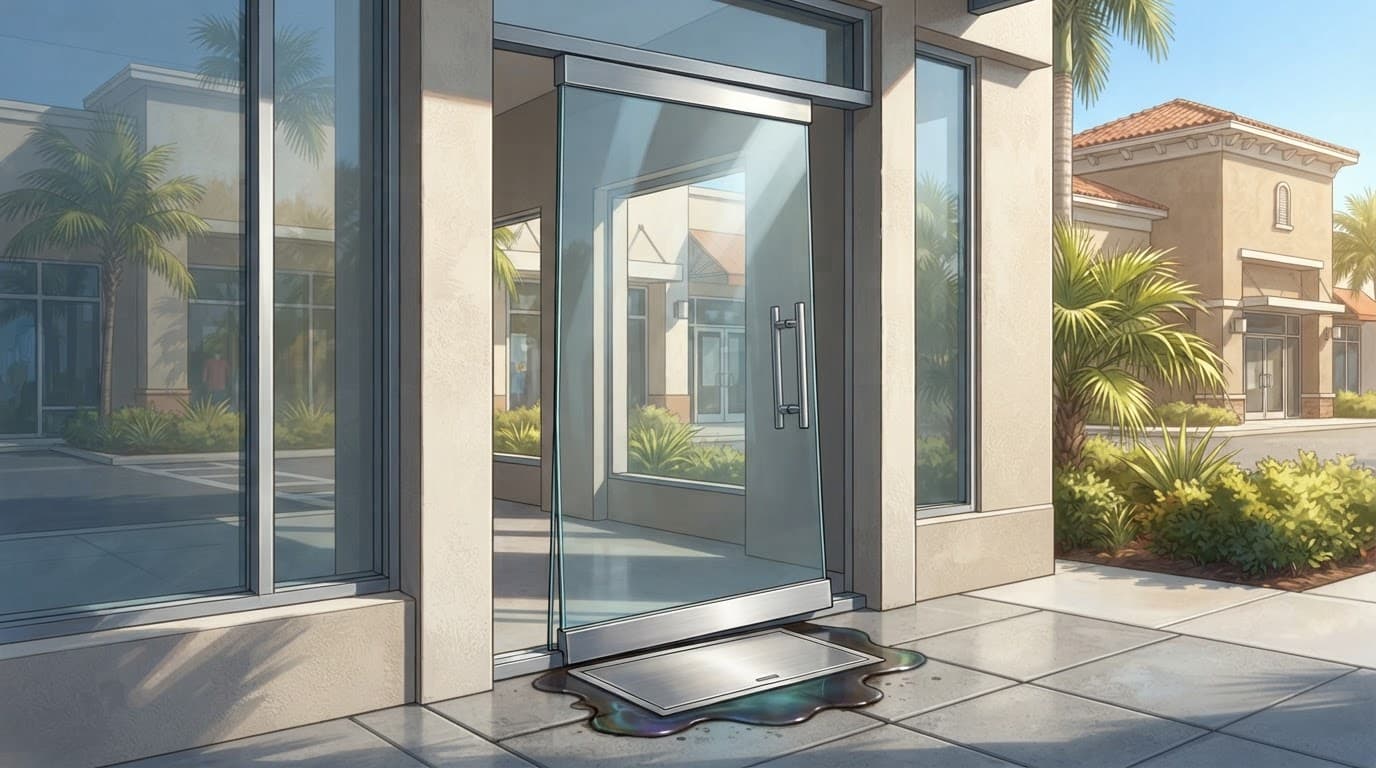
The location of the contact is useful information. A door can meet resistance near the frame, at the threshold, or where it meets an adjacent door. Poorly set pivots are one possible cause, but a professional needs to assess the assembly before identifying the problem.
Don't keep pushing a dragging glass door to make it fit. Repeated contact can place stress on the glass and hardware. Instead, note when the resistance occurs and whether the problem is getting worse.
For a Naples storefront with frequent foot traffic, early attention can prevent a minor annoyance from disrupting access throughout the day.
A Lock That Sticks or Won't Engage Easily
A sticky lock may appear to be a lock problem alone. However, the lock and its strike must meet correctly for the entrance to close and secure as intended.
If you have to pull the door toward the frame or push against it to operate the lock, the door's position may be part of the issue. The lock hardware itself can also need attention. Neither symptom proves that the floor spring has failed.
Record whether the problem occurs during opening, closing, or locking. Also note if the key turns normally when the door is open but becomes difficult to use when the door is closed. Those details help a professional understand what to examine.
Don't force a key or keep slamming the door to make the lock engage. If the entrance can't be secured, arrange service and follow your business's security procedures while keeping required exits accessible.
A Handle or Fitting That Feels Loose
A handle that shifts in your hand deserves attention, even if the glass door still opens. Customers may pull harder when a handle feels unstable, and a loose fitting can make normal use less predictable.
The movement doesn't tell you whether a floor spring is involved. It does tell you that the entrance should be assessed as a complete assembly, particularly if the door also binds or closes abruptly.
Look for obvious changes without testing the hardware by pulling or shaking it. If the glass appears chipped or cracked near a fitting, keep people away from that area and arrange glass service.
Our glass repair and replacement services include commercial glass. A hardware professional can assess the door components responsible for movement and closure.
What to Do When a Glass Entrance Feels Unsafe
A commercial entrance gets used by people who may not know there's a problem. Clear communication helps reduce the chance that someone will push on damaged glass or be surprised by an abrupt swing.
Keep people away from damaged glass
If you see a chip, crack, or loose glass fitting, stop using the affected door and keep people clear. Don't tape over damage and assume the entrance is safe for continued traffic.
If another entrance is available, direct customers to it without obstructing required exits. Your staff should know which door is affected and avoid asking visitors to hold or force it open.
Leave adjustments to a professional
Commercial glass doors are heavy, and their hardware must align with the opening. An attempt to adjust a pivot or fitting without understanding the assembly can create additional stress on the glass.
Give the professional a clear description of what you've observed. Mention any banging, resistance, lock trouble, or loose fittings, along with when the behavior started. A short video of normal operation can also show the movement without requiring you to demonstrate an unsafe door repeatedly.
What a Door Professional Looks At
A useful assessment considers the entrance as a system. The goal is to identify the source of the trouble rather than treating every symptom as proof that one part has failed.
Alignment around the opening
The door needs appropriate clearance as it moves through the opening. The frame, threshold, strike, and any adjacent door all affect how the entrance operates.
A professional can assess where contact occurs and whether the pivots and fittings are positioned properly. That matters because a door that binds at the threshold may also have trouble meeting the lock correctly.
The condition of the glass and hardware
The condition of the glass is part of the assessment, especially around fittings and edges. A chip or crack changes the scope of the job and may call for glass replacement as well as hardware attention.
A close look also helps distinguish a loose handle from a broader door movement problem. For property managers in Fort Myers and Cape Coral, documenting the symptoms before a visit can make it easier to describe the issue across multiple entrances.
When Commercial Door Glass Needs Replacement
A door hardware problem doesn't automatically mean the glass needs replacement. If the pane is intact, the issue may be limited to another part of the entrance. On the other hand, damaged glass calls for a separate assessment.
Glass-only work and the surrounding frame
The condition of the frame and fittings affects the scope of a glass replacement. A professional needs to assess the opening and take precise measurements before replacement glass is ordered.
Door panels generally require safety glazing, with limited exceptions under the applicable code. The replacement must suit the opening and its requirements. If a project calls for impact protection, that is a separate consideration involving the complete door system.
Planning the work around your business
Tell your glass provider which entrance is affected and whether the pane is cracked, chipped, or broken. Photos can help describe visible damage, although they don't show every condition around the frame or fittings.
At Caloosahatchee Glass & Mirror, our commercial glass services include storefront glass and commercial door glass replacement. We offer free estimates for glass work. Hardware concerns may also require a door professional, depending on the issue.
Give Your Glass Door Attention Early
A slamming, binding, or hard-to-lock entrance is telling you that something needs attention. The visible behavior alone won't identify a failed commercial door floor spring.
A whole-door assessment gives you a better starting point and helps protect the glass while the cause is identified.
If your business needs commercial glass repair or replacement, contact us for a free estimate. Our Southwest Florida service area includes Fort Myers and Cape Coral.