
Heat-Strengthened Glass for Fort Myers Businesses
Heat-strengthened glass may come up when you're planning a commercial storefront, office building, or window replacement. The right glass for any opening depends on more than its name: safety requirements, storm protection, and the complete window system all matter.
For a Fort Myers property owner or builder, the first step is to identify what each opening needs to do. That makes it easier to compare glass options and prepare an accurate project scope.
Where Commercial Buildings Use Glass
Glass plays different roles throughout a building. A storefront panel provides visibility for customers, while an office window may also need to control afternoon heat.
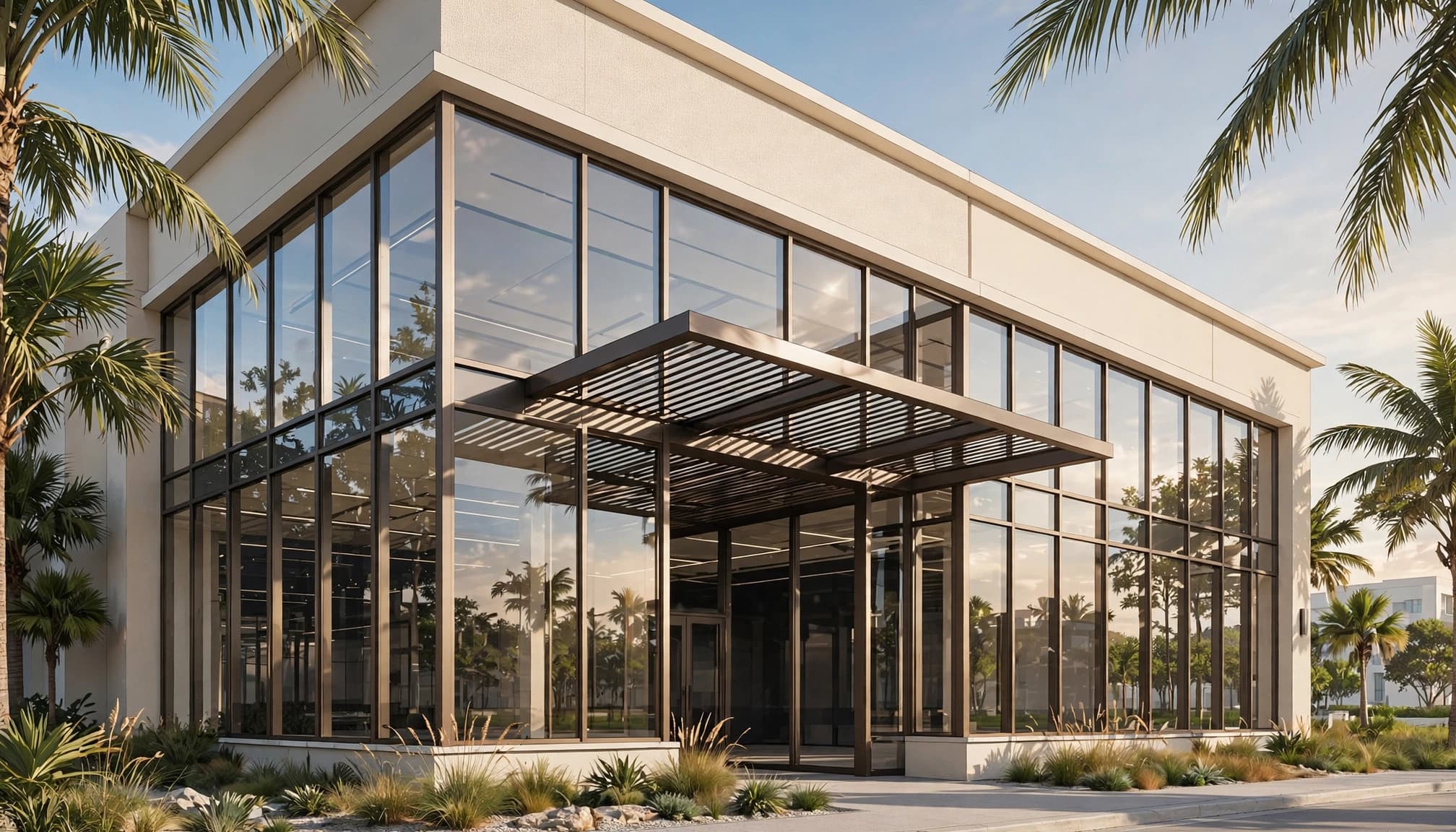
Storefronts and exterior windows
Retail stores, restaurants, and office buildings often use large glass panels to bring in daylight and make their interiors visible. The glass must fit the framing system and suit the opening's location.
A Cape Coral storefront facing a busy sidewalk has different considerations than a high window away from pedestrian traffic. Solar exposure also matters. For example, a west-facing window can admit substantial afternoon heat and glare, which may affect customer comfort.
We provide commercial storefront glass services, including single-panel replacement and complete storefront installation.
Interior walls and partitions
Glass partitions can separate offices or meeting rooms while preserving natural light. In an Estero workplace, the design may also need to account for nearby doors, walking routes, and privacy.
The intended location affects the choice of glass. A panel beside a door or close to the floor may fall under safety-glazing requirements, even if a similar-looking panel elsewhere in the building doesn't.
Tempered and Laminated Glass: Two Other Options
Fully tempered glass and laminated glass address different concerns. Understanding those differences helps when you review a commercial glazing proposal.
How tempered glass breaks
Fully tempered glass undergoes heat treatment and rapid cooling. When it breaks, it typically shatters into many small pieces rather than large, sharp shards.
Tempered glass is common in doors and other locations where a person could strike the panel. However, a broken pane can leave the opening exposed, so damaged commercial glass needs prompt attention.
How laminated glass handles damage
Laminated glass consists of glass layers bonded to an interlayer. When the glass cracks, the interlayer generally holds the pieces together and helps maintain a barrier.
Some laminated products can also help reduce noise or UV exposure. Performance depends on the product's construction. Our guide to tempered and laminated window glass explains the differences in more detail.
Safety Glass and Storm Protection Are Separate
A commercial opening may need protection against human impact, wind-borne debris, or both. Those are separate requirements, and the glass selection needs to address the opening's actual conditions.
Locations that may require safety glazing
Florida's building code identifies hazardous locations where safety glazing may be required. These include glass doors and certain panels near doors, floors, stairs, and other walking surfaces. Measurements and code exceptions affect the decision.
For a Bonita Springs renovation, changing a wall into an entryway can alter the requirements for glass beside the new door. A qualified glass professional can review the entire opening, including the panel's relationship to the door and finished floor.
Exterior openings and storm requirements
A Naples commercial property may need an exterior opening designed for wind pressure and wind-borne debris. The glass alone doesn't establish that protection. The frame, fasteners, installation, and complete assembly matter too.
Laminated glass is often part of an impact-rated system, but lamination by itself doesn't make a window hurricane-rated. Likewise, a safety-glazing designation doesn't automatically establish storm protection.
A single opening can need both compliant safety glazing and an approved impact-rated assembly.
What to Include in a Commercial Glass Proposal
A clear proposal gives property owners and facility managers a useful record of what will be installed. It also makes competing bids easier to compare.
Glass, appearance, and frame
The scope should identify the glass type and thickness, along with any coating or tint. For an insulated glass unit, it should describe the unit's construction and overall thickness.
Low-E coatings can help reduce heat transfer, while tint changes the appearance of the glass and the view through it. In a Punta Gorda office, matching the color and reflectivity of neighboring windows may matter as much as replacing a damaged pane.
The proposal should also identify whether the existing frame will remain or whether the project includes a new storefront system.
Installation and replacement details
When a window breaks, replacement glass may be possible without replacing the frame if the surrounding components remain in suitable condition. A failed insulated unit, however, generally needs replacement as a complete sealed unit.
For properties in Lehigh Acres, the project scope should account for measurements, installation, disposal, and any applicable permit or product approval. Keeping those details with the building records can also help when another panel needs attention.
Our guide to glass-only window replacement covers when retaining an existing frame may be practical.
Choose Glass for the Entire Opening
A commercial glass decision starts with the opening, not appearance alone. The location, framing, safety needs, and exterior exposure all affect the project.
At Caloosahatchee Glass & Mirror, we provide commercial glass installation, repair, and replacement. Contact us for a free estimate for your Southwest Florida property.