
How to Choose Retail Display Case Glass in Fort Myers
The right retail display case glass keeps merchandise visible while fitting the case's layout, daily use, and safety needs. In Fort Myers, strong daylight and humid conditions also make glare, fingerprints, and cleaning part of the decision.
A jewelry counter, bakery case, and display for collectible items each call for different priorities. Start with what the case must protect and how customers will view it, then choose glass construction and clarity to suit the design.
Key Takeaways
- Choose glass based on the merchandise, case shape, customer access, and expected use.
- Tempered glass breaks into small pieces, while laminated glass has an interlayer that helps hold cracked pieces together.
- Low-iron glass can reduce the green tint visible at the edges of standard clear glass.
- Plan for reflections, fingerprints, edges, and cleaning before finalizing the case design.
- Custom panels need accurate measurements, with holes and notches planned before tempering.
Start With What the Display Case Needs to Do
A display case has two jobs: show merchandise clearly and protect it from routine contact. Those priorities can differ by store. A high-end jewelry counter may call for low-distortion clarity and unobstructed views, while a busy checkout display may need durable construction and easy access for staff.
Before settling on glass, consider the case's location, how often staff open it, and whether customers will view items from above, the side, or several angles. These details affect panel size, door placement, edge exposure, and the best approach to cleaning.
Match visibility to the merchandise
Small pieces of jewelry, watches, and polished collectibles depend on fine visual detail. A slightly green edge or a strong reflection can distract from the item, especially under bright display lighting. Larger merchandise may not need the same level of color neutrality, but it still benefits from clean sightlines.
For food, cosmetics, or products with delicate finishes, consider how lighting and glass affect color. A product can appear different behind tinted or reflective glass. Review the display under the lighting that will actually be used in the store.
Plan for staff access and customer traffic
A case that looks attractive but is awkward to open can slow service and lead to rough handling. Sliding, hinged, and lift-up panels each affect access, hardware, and the amount of glass movement during daily use.
In a narrow aisle in Cape Coral, for example, a door that swings into customer space may be inconvenient. Consider how staff will reach the items and whether the case sits near a register, entrance, or crowded walkway.
Compare Tempered, Laminated, and Low-Iron Glass
Glass type affects how a panel breaks, how it looks, and what fabrication steps it requires. No single option suits every case. Match the material to the case's exposure and use rather than choosing by name alone.
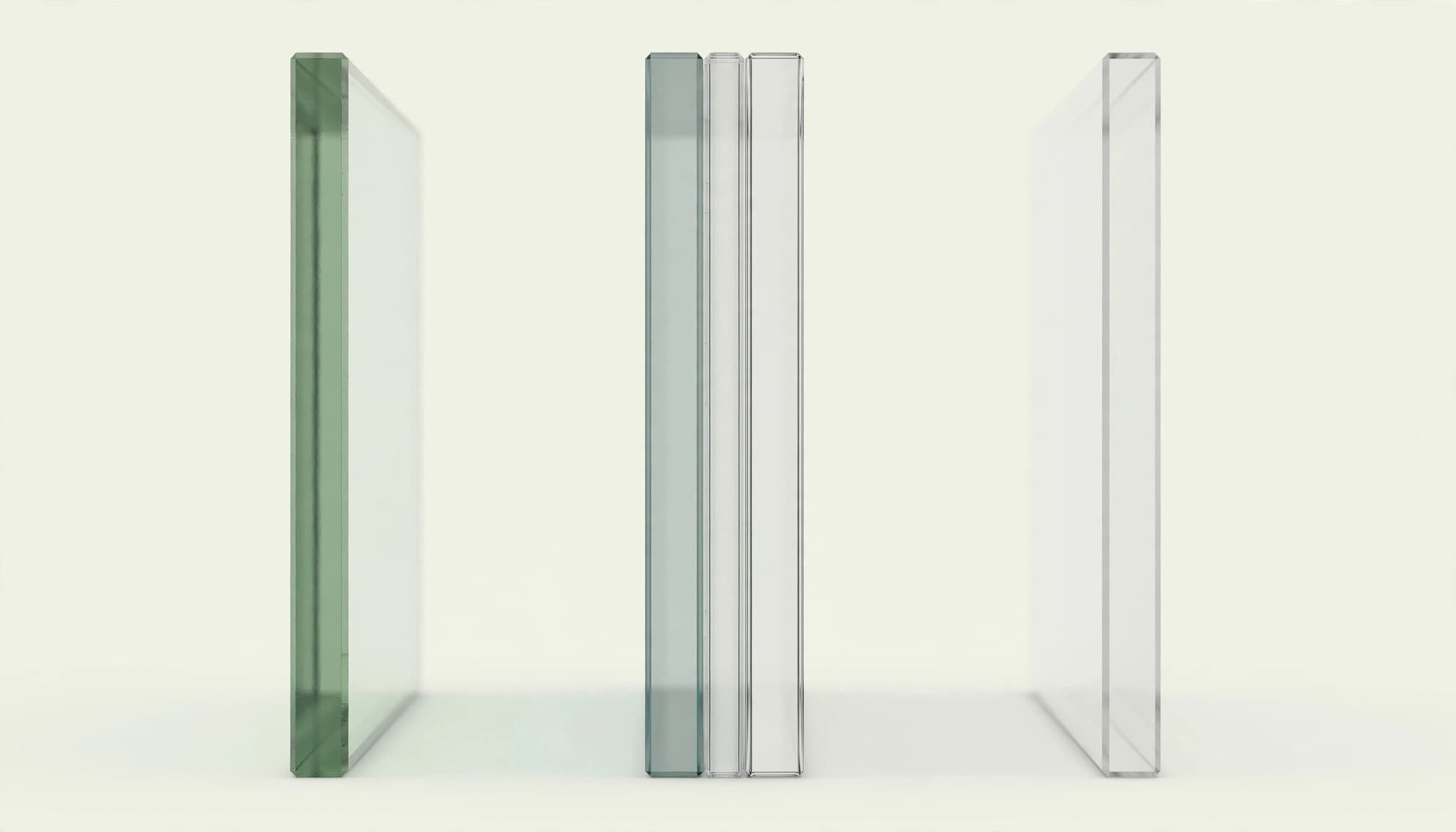
Tempered glass
Tempered glass is heat-treated and, when it breaks, it typically fractures into many small pieces rather than long, sharp shards. That break pattern makes it a common safety-glass option in various applications. However, a broken tempered panel can leave the case open, so it doesn't provide the same post-breakage retention as laminated glass.
Tempered panels also can't be cut or drilled after treatment. Any holes, notches, or shaped edges must be included in the design before the glass is tempered. Accurate measurements matter because a mislocated fitting can mean remaking the panel.
Laminated glass
Laminated glass consists of multiple glass layers joined by an interlayer. If the glass cracks, that layer helps hold the broken pieces together. This can be useful when keeping a barrier in place after damage matters.
Laminated glass may require different fabrication and hardware planning than a single tempered pane. Also, the word "laminated" alone doesn't establish a particular security or impact rating for a display case. Our article on tempered and laminated window glass discusses those materials in window applications, which have different performance needs.
Low-iron glass
Low-iron glass reduces the green cast that can appear along the edge of standard clear glass. It can be a good choice when accurate color and a nearly neutral view are important, such as for fine jewelry, art, or premium merchandise.
The difference is easiest to notice at exposed edges and through thicker panels. Low-iron glass may cost more than standard clear glass, so reserve it for cases where color fidelity or a cleaner edge noticeably improves the display.
Reduce Glare Without Hiding the Merchandise
Good visibility depends on more than glass clarity. Reflections from overhead lights, windows, and bright surfaces can cover the merchandise at certain viewing angles. In Southwest Florida, strong daylight may make those reflections more noticeable in a shop with large windows.
Consider the case position and lighting
Look at the planned case location at different times of day. A case facing a bright storefront window may reflect the exterior or nearby displays, while overhead spotlights can create bright points on the glass. Moveable lighting, diffusers, or a change in case orientation may solve the problem without changing the glass.
For a shop in Bonita Springs or Naples with strong sun through the front windows, test lighting and viewing angles before fabrication. Check the display from the customer's side, not only from behind the counter.
Choose coatings and tint carefully
Tint can reduce brightness, but it also changes how merchandise colors look. Reflective treatments can control some glare while creating a mirror-like surface from certain angles. For products where exact color matters, neutral clear glass or low-iron glass may be a better fit.
Don't expect glass alone to eliminate reflections. The surrounding light, case angle, and background all contribute. A well-planned layout often gives a clearer view than a darker pane.
Treat Safety as Part of the Case Design
Safety depends on the glass and the way it fits into the complete case. Consider who uses the case, whether it sits in a high-traffic area, how close its corners are to customers, and whether panels are fixed or movable.
Account for exposed edges and movement
Edges and corners deserve attention because they can be more vulnerable to knocks than the center of a panel. The frame, supports, hardware, and panel dimensions should work together so the glass sits securely and doors move smoothly.
A case near a crowded checkout in Estero may receive frequent bumps from bags or carts. A low case in a children's area has different exposure from a tall wall-mounted display. Those conditions should inform the material and construction choice.
Keep the whole assembly in view
The glass is only one part of the case. A panel that is appropriate on its own may not suit a design with unsupported spans, heavy doors, or hardware that puts stress on a small area. A qualified glass professional can help assess the panel, supports, and fittings as a complete project.
Our commercial glass services in Fort Myers include commercial glass work such as custom-cut panels and safety glass. The specific glass and construction should be selected for the case design and intended use.
Plan for Durability and Everyday Cleaning
Retail glass gets handled and cleaned often. Fingerprints, dust, and cleaning residue can make a well-designed case look cloudy, especially under direct lighting. A practical choice should support the store's cleaning routine as well as its appearance.
Choose a finish that suits daily care
Smooth glass is generally straightforward to wipe with a soft cloth and a suitable glass cleaner. Abrasive pads and rough tools can scratch glass or damage nearby finishes. Cleaners should also be compatible with the case's metal, wood, seals, or coatings.
If staff clean the case several times a day, consider how easily they can reach both sides of each panel. Complicated corners and narrow gaps collect dust and make routine wiping slower.
Protect the edges and hardware
The glass edges, hinges, and supports take repeated handling. A chip or crack can worsen, especially if a panel shifts or hardware loosens. Case design should avoid unnecessary edge exposure and allow fittings to support the glass without binding.
In coastal Southwest Florida, humidity and salt air can affect nearby metal components and finishes. Choose compatible hardware and keep the case clean and dry. In Lehigh Acres, as in other inland locations, frequent cleaning and everyday bumps remain important considerations.
Match Panel Size and Shape to the Display Design
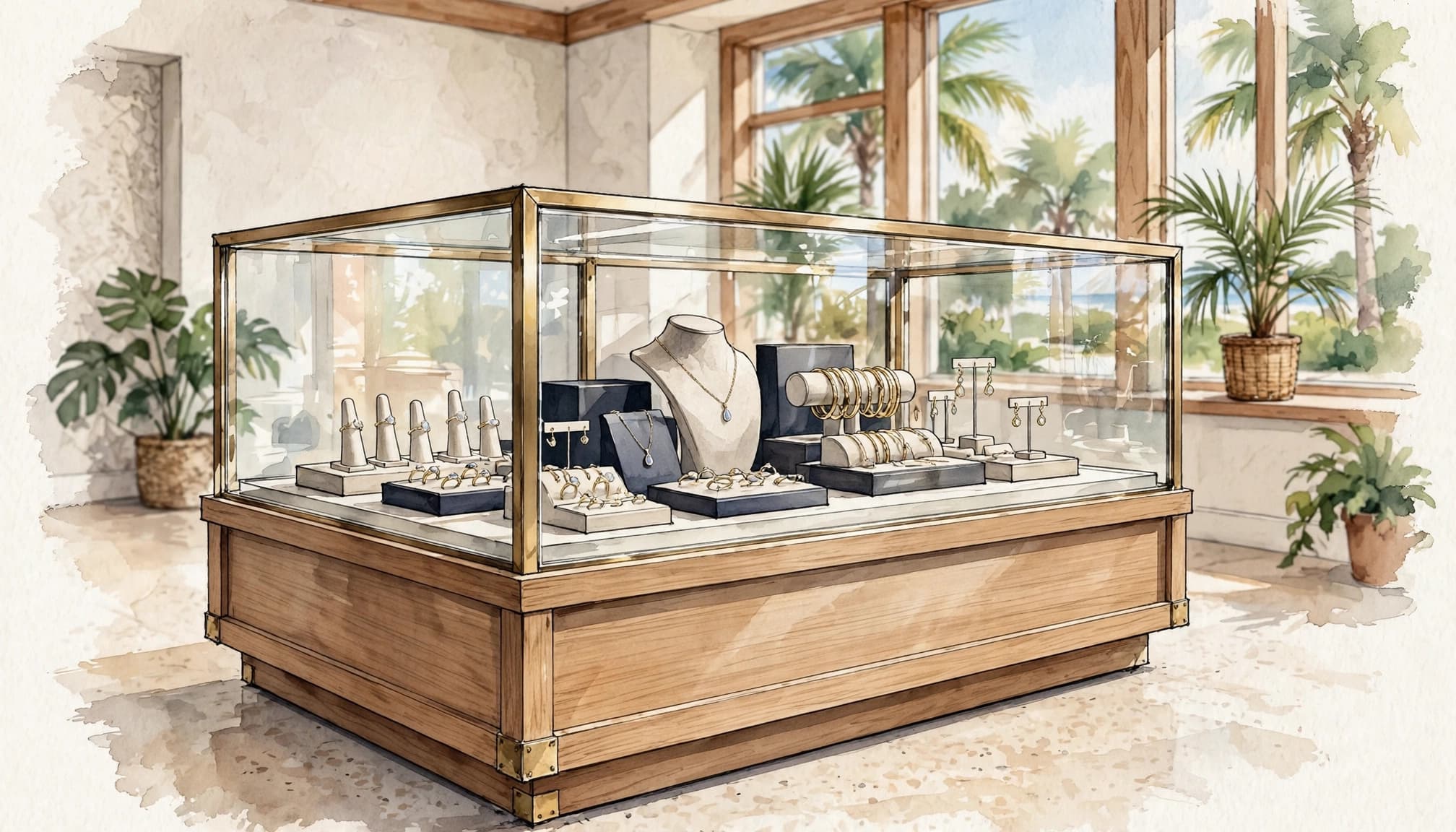
A case's appearance depends on how the glass works with the base, shelves, lighting, and merchandise. Frameless edges can create an open look, while a framed design can protect edges and provide a clear visual border. The best choice is the one that supports the display without obstructing access or sightlines.
Design around shelves, corners, and doors
Shelves affect how much weight the case must support and where customers look. Door position can change the visible front and the space staff need to retrieve items. For corner cases or angled panels, measurements and joins need to align with the overall design.
Bring the case dimensions, panel layout, and hardware plan together before choosing the glass. If the design uses custom cutouts or specialty shapes, those details should be part of the fabrication plan from the start.
Use custom glass where standard panels don't fit
A made-to-measure panel can suit an existing case, a renovation, or a distinctive display. Accurate dimensions include more than the visible width and height. The frame, clearances, panel thickness, edge treatment, and hardware all influence fit.
We offer custom glass fabrication in Fort Myers, including custom-cut glass and commercial glass fabrication. A case project should begin with its specific measurements and design requirements rather than an assumed standard size.
Make the Choice Practical for Southwest Florida
A display case in Punta Gorda may sit near a sunlit storefront, while one in a Fort Myers interior may rely mainly on artificial lighting. In either setting, plan for glare, humidity, cleaning frequency, and how customers move around the case. The location helps shape the design, but it doesn't replace careful measurement and material selection.
When comparing options, write down the merchandise, case dimensions, door style, lighting, and cleaning routine. Then consider which matters most: neutral color, post-breakage retention, ease of access, or a particular look. That short brief helps keep choices focused and makes it easier to discuss the right panel and fabrication approach.
Frequently Asked Questions
Is tempered glass suitable for every retail display case?
No. Tempered glass is one option, but the right choice depends on the case design, location, use, and desired breakage behavior. It's also important to plan holes and cutouts before tempering, since the glass can't be modified afterward.
Does laminated glass prevent a display case from breaking?
No. Laminated glass can crack, and its interlayer helps hold pieces together after breakage. That behavior doesn't make it unbreakable or establish a specific security rating for a case.
Is low-iron glass worth the extra cost?
It can be worthwhile when the green edge or color shift of standard clear glass would distract from the merchandise. For less color-sensitive products, standard clear glass may meet the display's needs.
How can I reduce reflections on a glass case?
Start by adjusting the case position and lighting. Check how the glass looks at different times of day, then consider neutral glass or carefully selected tint if reflections remain distracting.
Choose Glass That Serves the Display
The strongest choice balances visibility, breakage behavior, case design, and everyday care. Tempered, laminated, and low-iron glass each offer different benefits, so decide based on what the merchandise needs and how the case will work in the store.
Plan the glass and hardware together, and include every cutout and edge detail before fabrication. That groundwork helps the finished case look clear, fit properly, and handle daily retail use.