
Why a Window Whistles in Estero When Wind Blows
A window that whistles only when the wind blows usually has a small opening that lets moving air create a high-pitched sound. Worn weatherstripping, a gap around the frame, or a loose window component can all be possible causes.
In an Estero home, the noise may come and go with the direction and strength of the wind. Finding the opening is the first step toward choosing a repair that addresses the sound.
Why Whistling Windows Make Noise in the Wind
Wind creates differences in air pressure around your home. When pressure pushes air through a narrow opening in a window assembly, the moving air can vibrate and produce a whistle.
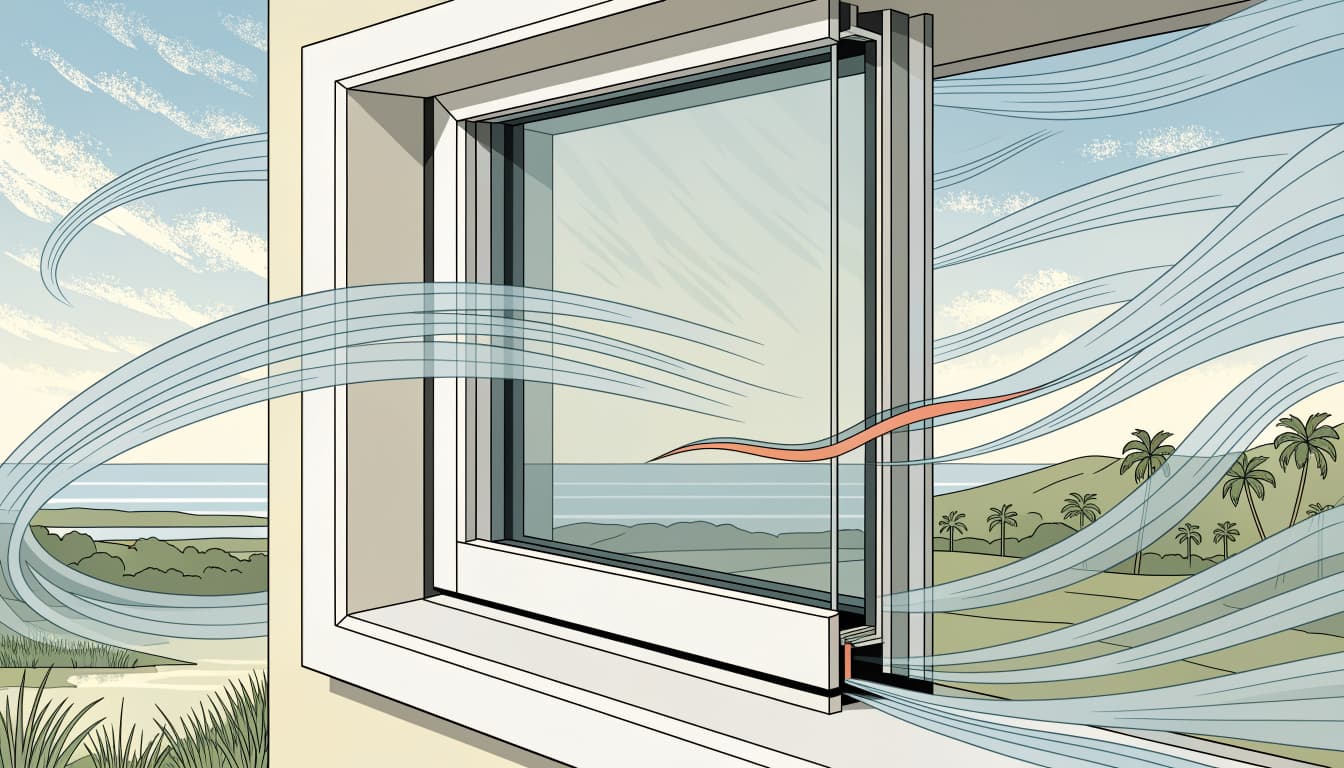
A window may stay quiet on a calm day because little air is moving through that opening. A gust can create enough pressure to make it audible. The sound may also appear only when wind hits a particular side of the house.
Indoor pressure can play a part, too. Exhaust fans and other equipment that moves air out of the home can affect the pressure difference across a window. That can change a draft, although the window opening itself still needs attention.
Common Causes of a Windy-Window Whistle
The sound alone can't identify the failed part. A close look at the sash, which is the part that holds the glass, and the frame can narrow down the possibilities.
Worn Weatherstripping or a Poorly Closed Sash
Weatherstripping fills the space between moving window parts when the sash is closed. Over time, it can become compressed, brittle, loose, or torn. A small break in that seal may let air through when gusts hit the window.
A sash that doesn't close squarely can cause a similar problem, even if the weatherstripping looks intact. Dirt in the track, worn hardware, or a lock that doesn't pull the sash snugly into position may affect the fit.
Gaps Around the Frame or Glass
Cracked exterior sealant or a gap between the window frame and the surrounding wall can create another path for air. Loose trim may also contribute to a sound that seems to come from the glass.
Check the glazing bead, the narrow strip that helps hold the pane in place, without prying or pressing on it. Loose or damaged window glazing beads can leave gaps or allow movement. If the glass moves or clicks, stop using the window and arrange an inspection.
How to Find the Source Safely
A whistle can travel along a frame, so the loudest spot isn't always the exact opening. Start indoors with the window closed and locked as it normally would be. Don't force a lock or sash that sticks.
Look and Listen Around the Sash
On a windy day, move slowly around the inside edge of the window. Listen near the top, sides, and sill, then feel for air movement with the back of your hand. Compare the suspect area with another closed window nearby.
Look for flattened or missing weatherstripping and gaps where the sash meets the frame. If the sound changes when you gently press the closed sash without touching the glass, the fit or hardware may be involved. Avoid this test if the window is damaged or unstable.
Inspect the Frame and Surrounding Trim
In daylight, look for cracked sealant, separated trim, or visible gaps around the frame. You may also see stains, bubbling paint, or moisture near the sill after rain. Take photos of anything unusual so you can show a professional.
Inspect outdoor areas only when conditions are safe and accessible from the ground. Don't climb a ladder during windy weather or reach outside through an upper-story window.
Repairs That Can Stop the Whistle
The right fix depends on where air enters. Replacing glass won't solve a separate gap around the sash or between the frame and wall.
Replace Worn Seals and Correct the Fit
Damaged weatherstripping may need replacement with a type that fits the window's profile and allows it to close properly. A sash that binds or won't lock may need a hardware or alignment repair instead.
For a small, accessible perimeter gap, a compatible exterior sealant may be appropriate. However, don't seal over drainage openings, commonly called weep holes, or moving parts. Those openings help the window manage water and must remain clear.
Address Frame Gaps and Water Entry
If the opening keeps leaking after repeated caulking, the problem may extend behind the trim. Flashing, frame joints, or the surrounding wall may need attention. Generic caulk isn't a substitute for proper flashing.
Our guide to window frame and installation considerations explains why persistent drafts and water stains deserve a closer look. That applies to homes in Fort Myers and Cape Coral as well as Estero.
When Glass Repair or a Full Window Assessment Makes Sense
A whistle doesn't automatically mean the glass needs replacement. Moisture trapped between double panes, however, points to a separate insulated-glass seal problem. Our guide to failed double-pane window seals covers the signs.
If the glass is cracked or the frame is warped, corroded, or difficult to operate, arrange a professional evaluation. Water stains and a frame that moves during operation also call for more than a surface seal.
At Caloosahatchee Glass & Mirror, we provide glass repair and replacement throughout Southwest Florida. We can assess the visible glass and window conditions before recommending a glass-related repair.
Start With the Source of the Air Leak
A wind-related whistle often points to a small opening, but several parts of the window could be responsible. A careful assessment helps distinguish worn weatherstripping from a frame gap or loose glazing component.
Notice when the sound occurs and look for drafts or visible damage. That information can help guide the right repair without replacing glass that isn't causing the noise.