
Impact-Rated Storefront Glass in Southwest Florida
Impact-rated storefront glass may be required for a Southwest Florida business when a project involves exterior openings in a wind-borne debris region. In many cases, an approved protective covering can meet the opening-protection requirement instead.
The answer depends on the property's location and the work being done. An older storefront in Fort Myers may have different requirements than a new commercial entrance in Cape Coral. The first step is understanding what Florida's building code requires for the opening.
When Florida Requires Storefront Opening Protection
The Florida Building Code, 8th Edition (2023), sets the statewide baseline for commercial building projects. It took effect on December 31, 2023, and includes requirements for protecting glazed openings in wind-borne debris regions.

For an applicable project in one of those regions, the opening generally needs impact-resistant glazing or an approved impact-resistant covering. A storefront window isn't exempt simply because it belongs to a business.
Your Address and Project Scope Matter
The code's wind-borne debris definition uses the property's location and its applicable mapped ultimate design wind speed, often written as Vult. Under a 2024 amendment, the definition includes locations within one mile of the coastal mean high-water line where Vult is at least 130 mph, and locations where Vult is at least 140 mph.
Those numbers are code design criteria, not a forecast of the next storm. The Florida code amendment provides the full definition.
New construction, a major storefront replacement, and a small repair may receive different treatment. Existing glass doesn't automatically need replacement solely because a newer code edition has taken effect.
Opening Height Affects the Test
The code distinguishes between glazing at different heights. Openings within 30 feet of grade must meet the applicable large-missile test requirements. Openings more than 30 feet above grade must meet the applicable small-missile test requirements.
Most ground-level shop windows fall within the first category. The opening-protection provisions identify recognized test standards, including ASTM E1886 and ASTM E1996.
How Impact-Rated Storefront Glass Works
Many impact-resistant storefront systems use laminated glass. Two or more layers of glass are bonded to an interlayer that helps hold the pieces together if the pane cracks.
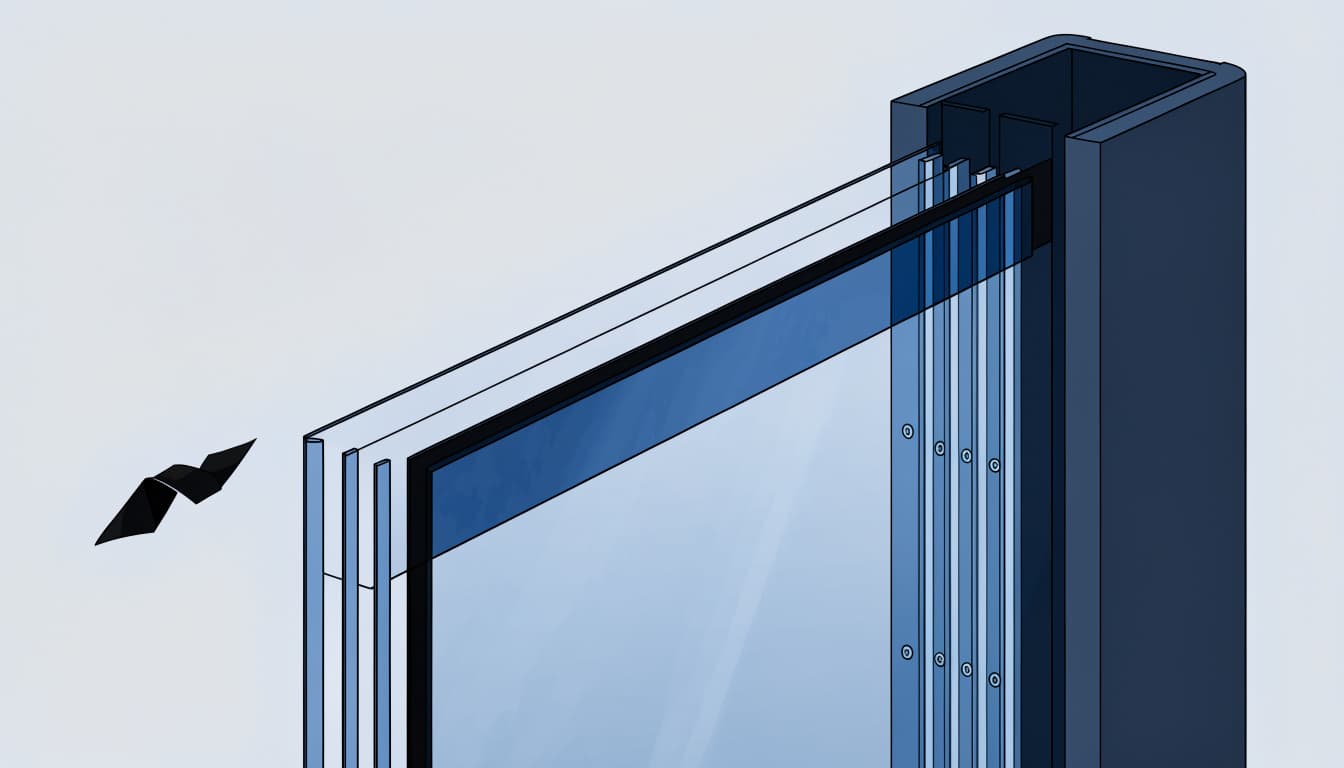
The pane can still break during a debris strike. Its purpose is to help maintain a barrier as part of a tested system, not to promise damage-free glass.
The Frame and Anchors Matter
A storefront includes more than a sheet of glass. Its frame, glazing components, connections, anchors, and surrounding structure all affect how the opening performs. A pane with an interlayer won't give an ordinary frame an impact rating.
The proposed assembly needs an approval that covers its size, configuration, and installation. That detail matters for a wide restaurant frontage in Bonita Springs, where large panes and multiple framing sections may place different demands on the system than a narrow entry.
Wind-pressure capacity is a separate consideration. The system also needs to withstand the design pressures for its location and opening.
Laminated and Tempered Glass Aren't Interchangeable
Tempered glass is a common safety-glazing choice because it breaks into small pieces. Laminated glass helps retain broken pieces through its interlayer. Either type may be appropriate for certain applications, but neither name alone establishes hurricane performance.
A commercial door may need safety glazing because people can walk into it. That same door may also need wind-borne debris protection. Our comparison of tempered and laminated glass explains the material differences in more detail.
Impact Glass or Shutters for a Storefront?
An approved shutter or other protective covering can be an option when opening protection is required. The choice depends on the condition of the existing storefront and how the business will prepare for a storm.
| Consideration | Impact-rated storefront system | Approved protective covering |
|---|---|---|
| Storm preparation | Protection remains in place | The covering must be closed or installed |
| Day-to-day appearance | Glass remains visible | Panels or shutters may be visible or stored nearby |
| Existing storefront | Often involves a new glazing system | May protect an existing opening if the system and attachment are suitable |
| Ongoing care | Glass, frames, seals, and hardware need maintenance | Panels, tracks, fasteners, and operating parts need maintenance |
Impact glass reduces the work required before a storm. A protective covering may be useful when the existing storefront is sound and the business has a dependable plan for deploying it.
For a shop in Estero, that plan might involve staff securing several large openings before closing. Removable panels also need accessible storage, while roll-down or accordion systems need working hardware. The cost comparison should include installation and the time needed for each storm preparation.
Replacing Damaged Storefront Glass
A cracked pane can create a safety and security problem even when the rest of the storefront looks intact. The right repair depends on both the damage and the construction of the existing opening.
When One Pane May Be Enough
A single panel may be replaceable when the frame and glazing components remain suitable. Our team offers glass repair and replacement for commercial properties, including broken storefront and door glass.
For an impact-rated assembly, the replacement needs to match the applicable approved system. Glass thickness alone isn't enough to identify a suitable panel. The type of interlayer, glazing method, pane dimensions, and frame details can also matter.
A damaged panel at a Punta Gorda business may be part of a larger assembly with mullions or connected doors. Replacing it without accounting for those components can compromise the opening's intended performance.
When the Frame Needs Attention
Glass symptoms don't always reveal the full problem. Loose framing, bent sections, failed seals, or movement around the opening can affect the repair. Water near the base of a storefront may point to a drainage or installation issue rather than damaged glass alone.
If the frame can't support the required replacement or has significant damage, a broader repair or new storefront system may be necessary. A professional assessment can establish the scope before custom glass is ordered.
Until damaged glass is addressed, keep people away from the affected area. Broken or shifting glass should not be handled as a routine cleanup job.
When an Optional Upgrade Makes Sense
Some projects won't trigger a requirement for impact-rated glass. A business owner may still choose it when the benefits fit the property and operating routine.
Permanent protection can be useful for a Lehigh Acres office that closes for extended periods or a Naples retailer with several large display windows. Staff won't need to attach removable panels before each storm, and the windows remain available for daylight and display use.
Laminated glass may also reduce some outside noise and ultraviolet exposure, depending on the glass package. Those benefits vary by product. An impact rating alone doesn't guarantee a particular sound rating, energy performance, or insurance discount.
There are limits to the upgrade. Impact-resistant glass isn't unbreakable, and it doesn't protect the rest of a building from every hurricane hazard. Doors, roofs, walls, and other openings still need appropriate attention.
For a business keeping its existing glass, an approved covering may be a better fit. The practical choice is the system the property can accommodate and the business can maintain.
What to Include in a Storefront Estimate
A useful estimate describes the complete opening, not only the price of a pane. Custom sizes, access equipment, demolition, trim, anchoring, and door work can all affect the installed cost.
Product and Installation Details
The proposal should identify the glass and frame system, opening dimensions, applicable product approval, and installation scope. For impact protection, it should also address the approved configuration and attachment method.
Large openings may require different framing or glass than smaller ones. Corner locations and site exposure can also affect design pressures. If an existing frame stays in place, its condition and compatibility should be part of the repair plan.
Permit requirements depend on the location and scope. Product approval information and installation drawings are commonly part of the documentation for permitted exterior-opening work.
Doors, Hardware, and Daily Access
A storefront entrance has moving parts that a fixed window doesn't. Closers, locks, hinges, and handles need to work with the selected door system and the way customers use the space.
Our guide to storefront door hardware options covers those choices. For a Cape Coral business, a replacement project is also a chance to address a door that slams, sticks, or doesn't close securely.
Consider scheduling and access in the estimate, too. A restaurant or medical office may need a clear plan for keeping an entrance usable while the work is underway.
Caring for a Commercial Glass Storefront
Impact-rated systems need routine attention after installation. Inspect visible glass and framing for cracks, loose components, deteriorated seals, or movement. Keep drainage paths clear where the system includes them, and address door hardware that no longer operates smoothly.
After severe weather, look for damage from a safe location. A pane that remains in place can still have cracks or frame damage that require professional attention. Photograph visible damage when records are needed for a property claim.
Coastal conditions can also affect exposed hardware. At properties near the water in Fort Myers or Bonita Springs, salt residue and moisture make cleaning and maintenance important parts of the storefront's care.
If you notice recurring leaks, don't assume the glass is the source. The frame, seals, surrounding wall, and drainage details may all need assessment.
Choosing Protection for Your Business
Florida's opening-protection rules depend on the property's wind-borne debris region and the scope of the project. When protection is required, an approved impact-resistant storefront or protective covering may provide a compliant path.
The most useful decision starts with the complete opening : glass, frame, attachment, and the way your business operates. Our commercial glass services include storefront installation and replacement throughout Southwest Florida.