
How to Secure Broken Window Glass in Lehigh Acres
To secure broken window glass until replacement, keep everyone clear , avoid disturbing the pane, and arrange professional protection for any exposed opening. If glass is loose or the frame is damaged, leave the area untouched rather than attempting a repair.
In Lehigh Acres, a broken window can expose your home to rain and unwanted entry as well as sharp fragments. The safest response starts with controlling access, then addressing the opening without putting pressure on the remaining glass.
Key Takeaways
- Keep children, pets, and visitors away from both sides of the damaged window.
- Don't remove hanging shards, operate the window, or apply tape or glue to cracked glass.
- Arrange prompt professional help when glass moves, pieces remain loose, or the opening leaves your home exposed.
Temporary protection doesn't restore the window's original performance. Professional assessment determines whether the job needs replacement glass, frame repairs, or a complete window unit.
Keep People and Pets Away From the Window
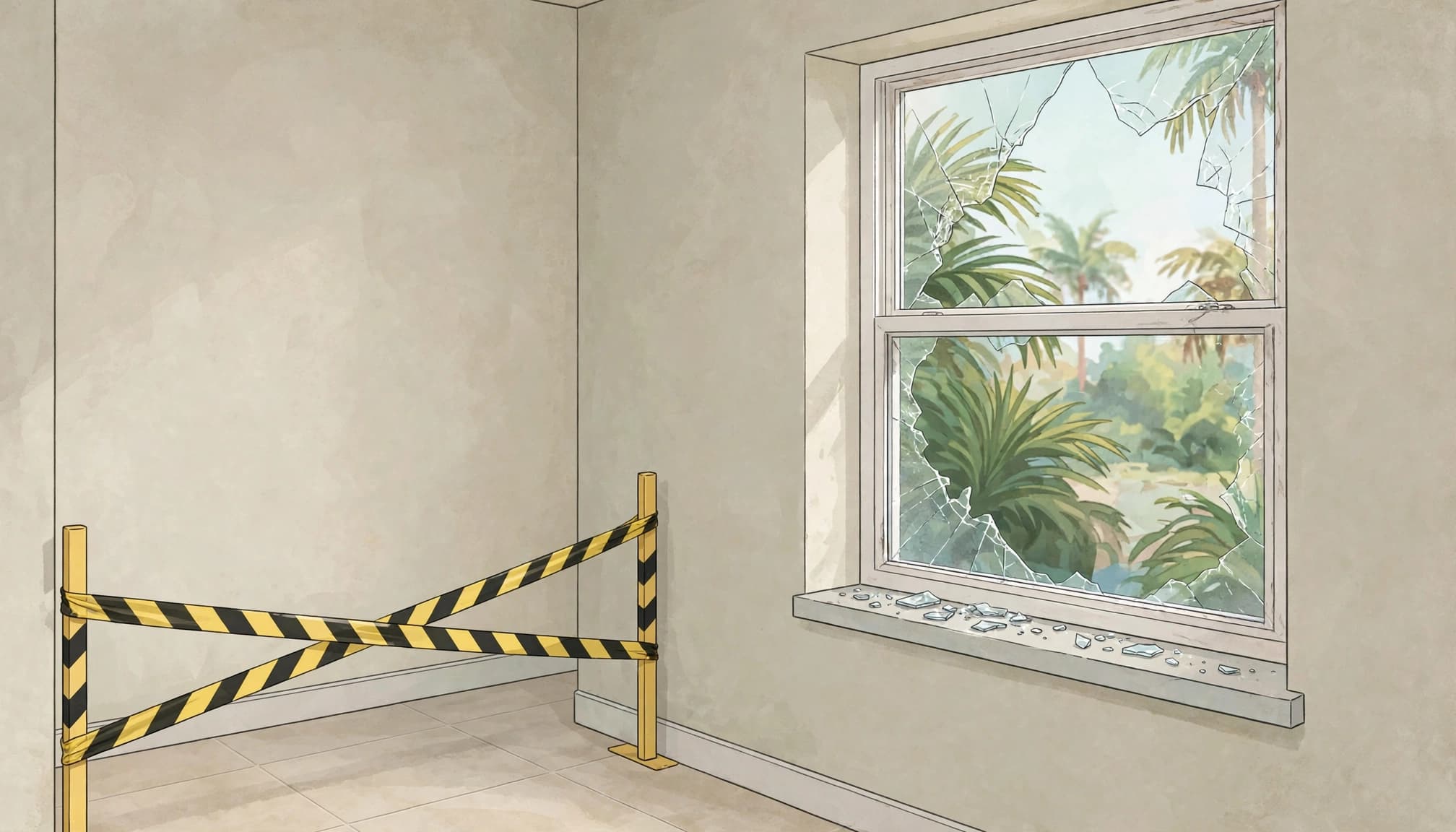
Close Off the Affected Room
Move children and pets into another room before approaching the damaged area. If you can close the room's door without going near broken glass, do so. Let everyone in the household know which room is off-limits.
Also consider the outside of the window. Keep people away from the area beneath it, including walkways, patios, and planting beds where fragments may have landed. A warning inside the house won't protect someone approaching from the yard.
Leave the Window and Nearby Furnishings Alone
Don't open or close the sash, test its lock, or press against the frame. Movement can disturb glass that still appears attached.
Leave curtains and blinds alone when they touch the damaged pane. Pulling them aside could drag loose pieces into the room. Similarly, don't move furniture directly beneath hanging glass just to make cleanup easier.
If the window blocks your normal route through the home, use another route. Keeping access restricted matters more than recovering items beside the opening.
Handle the Hazard Without Handling the Pane
Leave Attached Shards for a Professional
Broken glass can remain caught in glazing materials or rest loosely against the frame. Its position doesn't tell you whether it will stay there.
Avoid bare-hand contact, and don't reach into the opening to remove individual pieces. Don't sweep fragments out of tight frame channels or pull away a cracked section that seems ready to fall. Removing one piece can disturb others.
Our guidance on what to do when glass cracks also explains why bowing, rattling, and loose glass need prompt attention.
Keep Floor Debris Separate From the Window Problem
Fragments on the floor create a second hazard, but cleanup shouldn't put you beneath unstable glass. Keep the affected floor area out of use, including any path where someone might walk barefoot.
Don't begin cleanup directly below a pane with loose sections. Instead, tell the responding professional where fragments have spread, including nearby furniture or outdoor surfaces.
A floor that looks clear doesn't prove the opening is safe. Remaining glass and damaged window components still need assessment before you reopen the room.
Protect the Opening From Weather and Intrusion
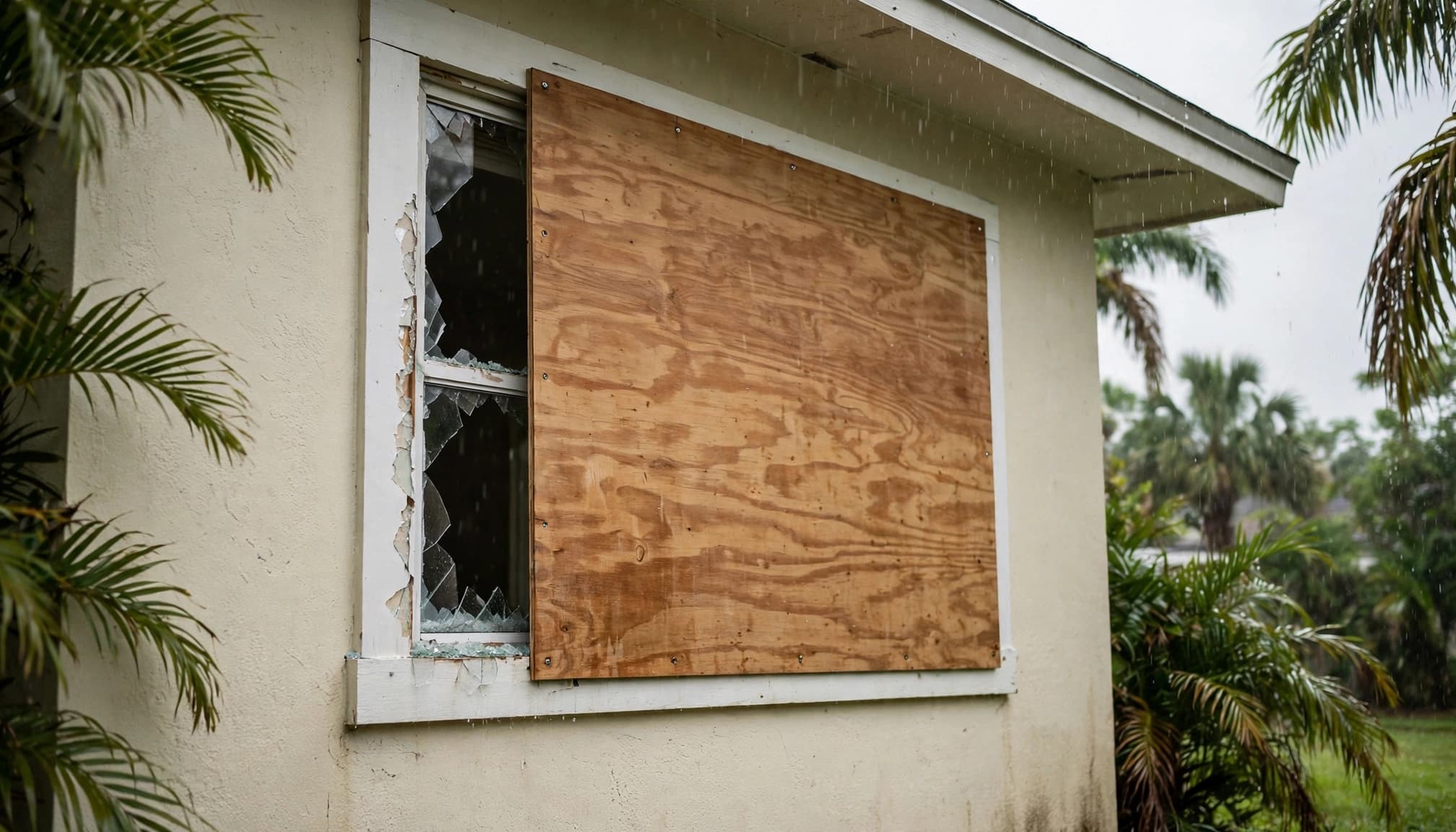
Arrange Protection That Fits the Damage
When glass is missing, describe the exposed opening when requesting service. Explain whether rain is entering, whether the window faces a public walkway, and whether anyone can reach it from outside.
Ask for professional assessment of temporary protection before permanent replacement. The appropriate approach depends on remaining glass, frame stability, access, and surrounding construction.
Don't lean objects against the pane or attach a homemade brace to cracked glass. Also, don't attempt exterior work during active lightning, strong winds, or heavy rain.
Account for Security and Emergency Escape
A temporary cover isn't a working window lock or a restored window assembly. If the opening leaves the house accessible, treat security as an immediate concern rather than assuming a covering solves it.
Bedroom windows need extra care because they may provide an emergency escape route. Tell the professional when the damaged opening serves a sleeping room. Don't improvise a permanent obstruction across that route.
In Cape Coral and other Southwest Florida communities, storm protection depends on the complete window system. Glass, frames, anchors, and installation work together. A temporary cover doesn't establish that the damaged opening can withstand hurricane conditions.
Know When the Situation Needs Urgent Help
Arrange urgent glass service when the pane bows, rattles, sheds pieces, or has large unsupported sections. A frame that visibly shifts or pulls away from the opening also needs immediate attention.
Other situations deserve a faster response:
- Rain is entering an occupied room or spreading toward electrical equipment.
- The opening allows someone to enter the property.
- Falling glass threatens a doorway, walkway, or neighboring space.
Don't touch wet electrical equipment or step through water to reach it. If someone has a serious injury, an intruder may still be present, or there is immediate danger, call 911.
Glass service and emergency response address different problems. Don't wait for a replacement appointment when the situation threatens someone's safety.
If weather conditions make access unsafe, stay away from the damaged room and exterior area. Attempting to reach an exposed window during severe weather can create another emergency.
Prepare Useful Information for the Service Call
Once everyone is safe, gather details without touching the window. Identify the room, floor level, approximate number of damaged panes, and whether glass remains in the opening. Mention nearby stairs, landscaping, or other access obstacles.
Photos help us understand the job before the visit. From a safe position, photograph the entire window, visible damage, surrounding frame, and any readable manufacturer label. Don't climb, lean through the opening, or move loose glass to get a better image.
Also explain whether the window operated normally before the break. A sash that already stuck, dropped, or failed to lock may need attention beyond new glass.
Our guide to planning a window glass replacement describes how glass type, measurements, and access affect the work. Photos support scheduling, but a technician still needs accurate field measurements before ordering replacement glass.
Call Caloosahatchee Glass & Mirror at (239) 334-2690 to discuss the damage and request a free estimate. If you rent, notify the property manager promptly so repair authorization can move forward. Describe any immediate exposure clearly rather than reporting only that the window is cracked.
Decide Whether the Glass or Whole Window Needs Replacement
Glass-Only Replacement Can Preserve a Sound Frame
A broken pane doesn't automatically require removing the entire window. When the frame, sash, and drainage remain sound, replacing the glass may address the damage while preserving the existing assembly.
For a double-pane window, the repair generally involves replacing the sealed insulated glass unit. It isn't a matter of fitting a household replacement pane into one side.
Our glass repair and replacement services include replacing damaged window glass while retaining existing frames whenever their condition allows.
Frame Damage and Water Entry Change the Scope
Warping, rot, serious corrosion, loose corners, and recurring leaks can point to a larger window problem. New glass won't correct water entering around the frame or through nearby wall materials.
Mention staining, swollen trim, bubbling paint, or repeated dampness during the inspection. These clues help distinguish broken glass from a broader water-management failure.
For homes in Naples and nearby communities, glass replacement within an existing frame depends on the assembly's condition. Impact-rated openings also require compatible replacement components. Stronger glass alone doesn't repair damaged anchoring or restore an unsuitable frame.
Avoid Quick Fixes That Delay Proper Repair
Tape, glue, drilled holes, and improvised braces aren't suitable repairs for a cracked pane. Applying them also means working close to unstable glass. Don't press on a crack to see whether it moves or try to hold separated sections together.
Likewise, don't assume that glass held together by an interlayer is ready for normal use. Laminated construction can retain broken pieces, but the damaged window still needs professional evaluation.
Keep records without disturbing the scene. Safe-distance photos taken before work begins can document the damaged glass, frame condition, and visible water entry. If a suspected break-in caused the damage, follow police directions before anyone changes the area.
Finally, avoid treating a temporary covering as permission to postpone replacement indefinitely. The covering doesn't correct the broken pane, restore window operation, or resolve damage hidden around the opening. Keep the room restricted until the professional has addressed those hazards.
Frequently Asked Questions
Can I Tape Cracked Glass Until Replacement?
Don't rely on tape to stabilize cracked glass. Applying it requires contact near the damage, and tape doesn't repair the pane. Leave the glass undisturbed and arrange assessment instead of trying to hold it together yourself.
Can I Sleep in a Room With a Broken Window?
Use another room while loose glass, weather exposure, or an unsecured opening remains. This matters especially when the damaged window provides an emergency escape route. A temporary covering doesn't resolve every safety issue associated with sleeping beside the opening.
Does a Small Crack Need Attention?
Yes. Temperature changes, vibration, or another impact can extend a crack. Avoid operating the window or touching the damaged area. Arrange inspection even when no pieces have fallen, because appearance alone doesn't reveal the pane's stability or the condition of its edges.
Keep the Area Safe Until Replacement Is Complete
The safest way to secure broken window glass starts with restricted access and minimal disturbance. Leave attached shards alone, arrange suitable professional protection, and treat exposed openings or moving glass as urgent concerns.
Replacement should address the actual damage, whether that means a new glass unit or broader window work. Keeping people away until that assessment and repair are complete protects more than the opening. It protects everyone who uses the room.