
Naples: Reduce UV Fading Without Darkening Your Room
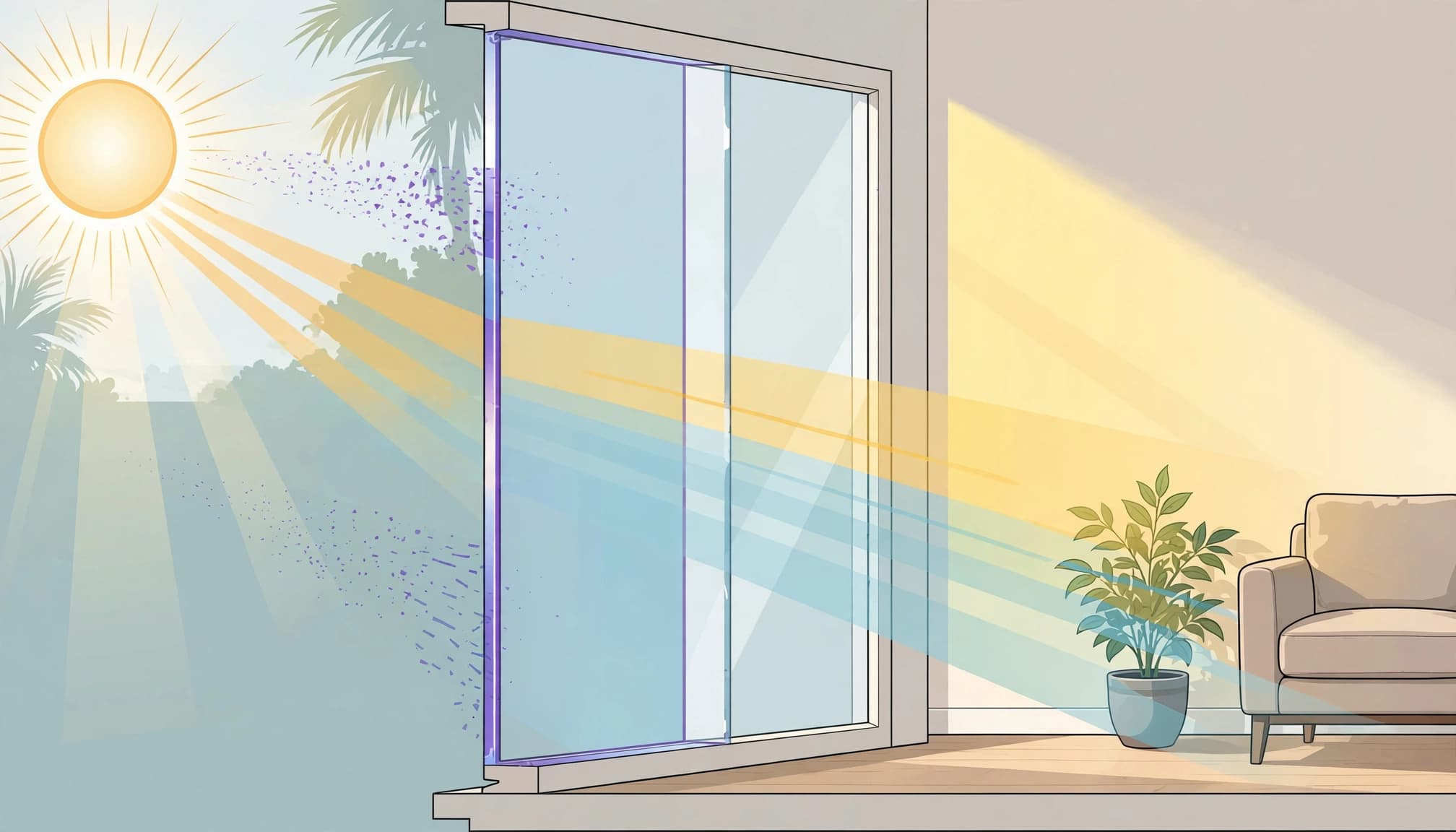
Yes, suitable window glass and clear UV window film can reduce UV-related fading while allowing plenty of daylight inside. The goal is selective protection , so blocking ultraviolet radiation doesn't require heavily tinted windows.
For Naples homeowners, that balance matters when strong sunshine reaches hardwood floors, upholstery, or artwork. Start by separating UV protection from brightness, glare, and heat control.
UV Protection and Room Brightness Are Different
Sunlight contains visible light and invisible energy. Glass and films affect different parts of that sunlight, so appearance alone doesn't reveal performance.
UV filtering versus visible-light transmission
UV protection describes how much ultraviolet radiation a product keeps out. Visible-light transmission, often shortened to VLT, describes how much visible light passes through.
A higher VLT generally means more daylight enters through the glass. Therefore, a product can provide substantial UV filtering without looking dark. However, the finished appearance also depends on the existing glass, coatings, and reflections.
Dark tint, glare, and heat control
Darker tint reduces visible light, which can help with glare but also changes indoor brightness and color.
Meanwhile, solar heat gain coefficient, or SHGC, describes how much solar energy enters through a window. Lower SHGC generally means less solar heat gain. UV filtering, daylight, and heat control need separate consideration because one rating doesn't describe all three.
Clear UV Window Film or Replacement Glass?
The practical choice depends on whether your existing windows are sound or already need repair. Adding film and replacing glass solve different problems.
Clear film for serviceable windows
Clear UV window film adds a filtering layer to existing glass. It's worth considering when fading is the main concern and you want to retain generous daylight.
However, "clear" doesn't guarantee an invisible finish. Some films introduce a slight color cast or reflection, especially beside untreated panes.

Film must also suit the glass construction and existing coatings. An incompatible film can increase thermal stress. Professional selection and installation matter, particularly with insulated or already-coated glass.
Low-E and laminated replacement glass
When glass is damaged or its insulating seal has failed, replacement provides an opportunity to improve performance.
Low-E glass uses a thin coating to reduce radiant heat transfer while allowing visible light through. Some coatings also reduce UV transmission. Our guide to Low-E coatings and natural light covers the balance between daylight and solar control.
Laminated glass contains an interlayer between glass layers that can reduce UV transmission. The result depends on its construction, tint, and coatings. Compare tempered and laminated window glass when safety and UV protection both matter.
Neither a second pane nor an "energy-efficient" label alone establishes fading protection.
Southwest Florida Sun Requires More Than UV Control
UV exposure contributes to fading, but visible light, heat, exposure time, and material sensitivity also affect deterioration. Fabrics, wood finishes, photographs, and dyes don't all respond alike.
Clear UV protection can reduce one cause of fading while leaving a rug exposed to hours of strong visible sunlight.
In Naples, an unshaded west-facing family room needs a different approach than a shaded breakfast nook. East-facing windows receive morning sun, while western exposures often create pronounced afternoon glare and heat.
Nearby trees, roof overhangs, screens, and water reflections also affect conditions at each opening. Therefore, choosing identical glass throughout the home may overlook important differences.
For vulnerable furnishings, combine UV control with targeted shading during direct sun. Moving artwork away from sunbeams and repositioning rugs can also reduce concentrated exposure.
Before choosing a finish, observe the room during its brightest hours. Notice whether the main problem is glare, heat, fading, or a combination.
Key Takeaways
- Clear UV-filtering options can reduce UV exposure without requiring dark tint.
- Compare UV performance, visible-light transmission, and solar heat gain separately.
- Match film or replacement glass to the existing window, room exposure, and furnishings.
- Use shading where sensitive materials receive prolonged direct sunlight.
Frequently Asked Questions
Does tempered glass automatically protect against fading?
Tempering changes how glass breaks; it doesn't automatically provide UV control. Its fading-related performance depends on other features, such as coatings or laminated construction. Similarly, ordinary insulated glass doesn't block every wavelength that can damage interior finishes. Safety glazing and sunlight control require separate consideration.
Can UV film fix fogging between window panes?
Film doesn't repair a failed insulated-glass seal. Moisture trapped between panes points to a problem within the sealed unit. Depending on the window design and frame condition, replacing the insulated glass unit may restore the view without replacing the entire frame. Film addresses sunlight transmission rather than seal failure.
Keep the Daylight, Reduce the Exposure
A bright room can have meaningful UV protection, but the right solution depends on the existing glass and sunlight exposure. Balanced performance means considering fading, daylight, and heat together.
At Caloosahatchee Glass & Mirror, we offer free estimates for glass repair and replacement. If your windows already need attention, we can help you consider replacement glass suited to your Southwest Florida home.